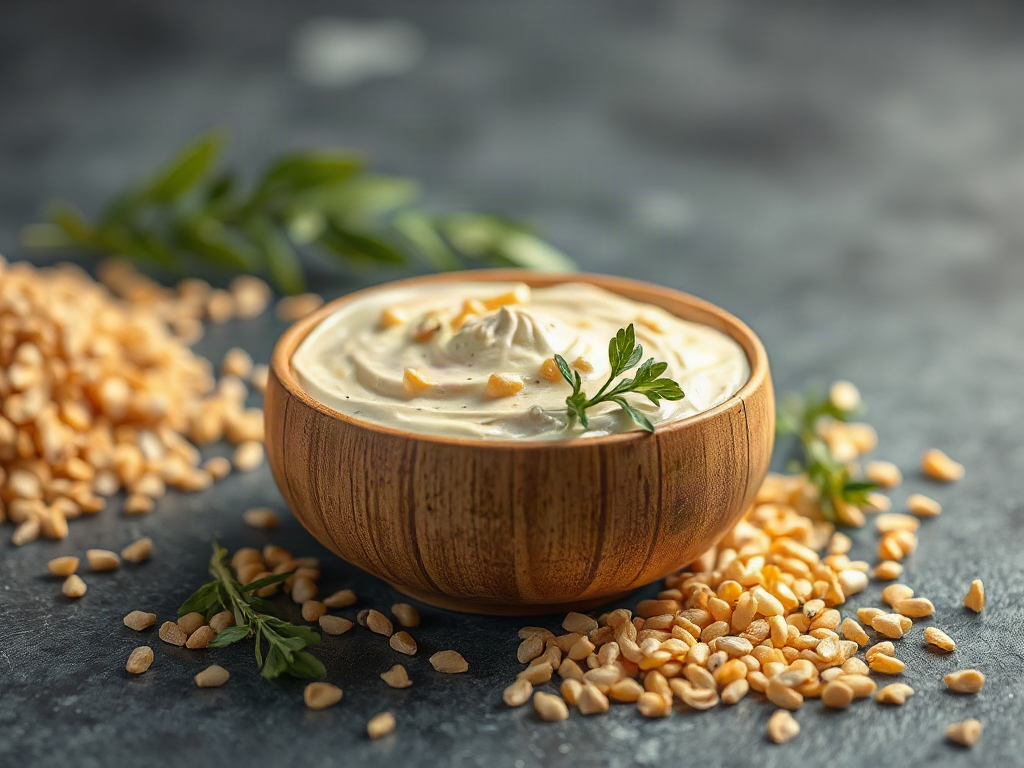
Tahini nutrition combines unsaturated fats, protein, minerals, and sesame compounds, but its calcium content varies substantially with seed hull retention, formulation, and serving size. Unhulled tahini generally contains more calcium because much of the seed’s calcium is concentrated in the outer layer, while hulled products are often smoother and milder. Organic sesame sourcing addresses certified farming and handling practices rather than guaranteeing higher mineral levels or freedom from all pesticide exposure. Compare the product’s nutrition label, ingredient list, organic certification, country of origin, and batch testing information instead of judging quality from front-label claims alone.
What Does Tahini Provide Nutritionally?
Tahini is a concentrated sesame-seed paste whose nutritional profile reflects both the seed and the amount eaten. Its calories come largely from fat, with smaller contributions from protein and carbohydrate. Most of that fat is unsaturated, although tahini also contains some saturated fat. It provides minerals associated with sesame, including calcium, iron, magnesium, phosphorus, copper, and zinc, as well as naturally occurring sesame lignans such as sesamin.
Concentration changes how tahini fits into a meal. A spoonful adds more energy than the same volume of a watery sauce or chopped vegetable, yet it also adds flavor and texture that can make vegetables, legumes, and whole grains more satisfying. For example, tahini mixed with lemon juice, water, garlic, and herbs produces a dressing that spreads a modest portion across a grain bowl. Eating it directly from the jar makes portions harder to judge because the paste is dense and does not occupy much space.
Tahini should be evaluated as a whole food ingredient rather than as a calcium supplement in paste form. It may contribute useful minerals, protein, and unsaturated fat, but the amount of any nutrient depends on the serving and the particular product. Someone relying on tahini as a major calcium source should compare the stated calcium amount with other foods in the day, such as calcium-set tofu, yogurt or fortified plant alternatives, canned fish with edible bones, and selected leafy vegetables. Dietary needs and absorption differ, so a registered dietitian or clinician can help when calcium intake is a medical concern.
Processing affects eating quality more obviously than it changes the basic identity of the food. Lightly roasted sesame may produce deeper flavor, while raw or minimally heated seeds often taste more delicate. Grinding releases oil and creates the creamy texture; natural oil separation is therefore not evidence that the product has spoiled or lacks quality. Stirring a separated jar until the solids and oil recombine usually restores a consistent texture.
A common mistake is treating every sesame product as nutritionally interchangeable. Sweetened sesame spreads, tahini sauces, and hummus contain other ingredients that alter their nutrient density, sodium, and serving size. Plain tahini should normally list sesame seeds as its only ingredient, although salt is present in some versions. Check the actual product record rather than transferring values from a generic database entry to a different formulation.
Why Does Calcium Vary Between Tahini Products?
Calcium differences among tahini products are driven chiefly by whether the sesame hull remains before grinding. The outer portion of the seed contains a substantial share of its calcium, so paste made from whole, unhulled seeds commonly provides more calcium than paste made from hulled kernels. That distinction can produce a meaningful label difference even when both jars contain nothing except sesame.
Higher total calcium does not automatically mean that the body absorbs every milligram. Sesame hulls contain oxalates and other compounds that can bind some minerals during digestion. Nutrient absorption is affected by the food matrix, the rest of the meal, and individual physiology. For practical shopping, the nutrition label is useful for estimating intake, but it should not be interpreted as a guarantee of absorbed calcium or a treatment claim.
Hulled and unhulled tahini also differ in flavor and texture. Hulled tahini is generally paler, smoother, and less bitter, which can make it easier to use in dressings, sauces, baked goods, and hummus. Unhulled tahini tends to taste more assertive and may feel slightly coarser, but it can be appealing when mineral content and a pronounced sesame flavor have priority. A household that dislikes the bitterness of whole-seed paste may use less of it, erasing some of its theoretical nutritional advantage.
| Product feature | Likely practical effect | What to verify |
|---|---|---|
| Hulled sesame | Smoother, milder paste; often less calcium | Calcium value on the jar |
| Unhulled sesame | Stronger flavor; generally more total calcium | Whole-seed wording and serving size |
| Added salt | Higher sodium and a more seasoned taste | Ingredient list and sodium value |
| Tahini-based sauce | Diluted sesame content with variable additions | Ingredients and amount per serving |
Serving-size mismatches are another source of confusion. Two labels can appear different because one reports a larger serving, uses different rounding, or applies a different regional labeling format. Compare calcium per equal weight when possible, not just the displayed percentage of a daily value. Database entries also represent specific samples rather than every jar sold under the broad name “tahini.”
The best sign that a product meets a calcium-focused goal is a clearly stated value supported by an appropriate serving, not simply the words “whole,” “natural,” or “traditional.” If calcium is absent from the label, contact the producer for current product data. Do not assume that color alone reliably identifies hull status; roasting, seed variety, and milling can also affect appearance.
Does Organic Sesame Change Tahini Quality?
Organic certification describes how sesame is grown and handled under an applicable certification system; it does not establish a superior nutrient profile. Certified operations must follow defined production and recordkeeping requirements, and processed products must meet labeling rules for organic claims. The certification is meaningful for shoppers who prioritize specified agricultural practices, but it does not predict calcium concentration, flavor, freshness, or mineral absorption.
Organic also should not be read as “no pesticides ever.” Organic standards restrict which substances and methods may be used, while allowing certain approved inputs. Residues can also arise through environmental drift, shared infrastructure, or handling. A certified seal therefore answers a production-method question, not every question about contamination. Buyers seeking residue information should look for transparent testing policies or ask the manufacturer whether finished lots or incoming seeds are screened.
Sesame sourcing has practical complications beyond the organic claim. Seeds may be grown in one country, hulled in another, and milled or packed elsewhere. A country-of-origin statement may refer to the seed, the final processing step, or the packing location depending on the product and governing rules. Brands that identify seed origin, processor relationships, certification body, and lot traceability offer more decision-useful information than those using broad phrases such as “responsibly sourced” without definitions.
Food safety remains relevant for both conventional and organic sesame. Tahini is a low-moisture food, but low moisture does not make it sterile. Past food-safety concerns involving sesame products are a reason to value preventive controls, hygienic processing, supplier verification, and lot identification. Organic certification and food-safety testing perform different jobs; neither substitutes for the other. Consumers cannot audit a factory from a label, but they can favor manufacturers that publish contact details, identify lots, issue clear recall notices when necessary, and answer questions about pathogen controls.
Price creates a genuine tradeoff. Organic tahini may cost more because of certified supply, segregated handling, auditing, and market availability. Paying that premium can align with a buyer’s farming priorities, but it should not be justified by an unsupported promise of more calcium. If the budget only permits one priority, decide whether the goal is organic production, verified calcium, preferred taste, or stronger traceability. Those features sometimes overlap, but they are not equivalent.
How to Compare Tahini Labels and Sourcing
A useful tahini comparison starts with the product’s intended role. For regular hummus or a smooth sauce, hulled paste may offer the most workable texture. For someone specifically seeking more calcium from sesame and comfortable with stronger flavor, an unhulled product with a declared calcium value may be the better candidate. Organic certification matters when production methods are a purchasing priority, while traceability and testing deserve separate scrutiny.
Use a short label-and-sourcing check rather than relying on front-of-pack language:
- Confirm the product type. Look for plain tahini rather than a sweetened spread or prepared sauce.
- Read the ingredients. Sesame alone provides the clearest baseline; note added salt, oils, sugar, or flavorings.
- Identify hull status. Seek explicit “hulled,” “unhulled,” or “whole sesame seed” wording instead of guessing from color.
- Normalize the serving. Compare calcium, sodium, energy, and protein using equal weights where labels differ.
- Verify organic claims. Look for a recognized certification mark and certifier information appropriate to the market.
- Assess traceability. Check for seed origin, lot coding, manufacturer contact information, and a clear response about safety or residue testing.
Freshness is best judged after opening through aroma, flavor, storage history, and the use-by information, not through oil separation. Tahini should smell nutty and characteristic of sesame. A distinctly rancid, paint-like, or stale odor suggests fat oxidation; discard it rather than masking the flavor in a sauce. Use a clean, dry utensil, close the lid firmly, and follow the manufacturer’s storage directions because recommendations differ among products.
Real-world performance can be tested without committing to a large jar. Buy the smallest available size, stir it thoroughly, and try it in both a diluted dressing and an undiluted application. A paste that emulsifies smoothly with water and lemon may suit sauces even if it is too bitter to eat plain. Conversely, a highly roasted tahini may taste excellent on toast but dominate delicate hummus. Nutritional suitability and culinary suitability both influence whether the jar is used consistently.
Watch for failure signals in the buying process: an organic logo with no identifiable certification context, calcium claims that cannot be reconciled with the nutrition panel, vague sourcing language, no lot code, or a company unable to explain whether the seeds are hulled. None alone proves poor quality, but several together weaken confidence. A credible product makes its most important claims easy to verify and does not use organic status as a substitute for nutrient data or safety controls.
Conclusion
Choose tahini by separating three questions that packaging often blends together: what nutrients the jar reports, whether the seeds retain their hulls, and what its sourcing claims actually verify. Unhulled paste may be preferable when a higher declared calcium amount matters, while hulled tahini often wins on smoothness and mild flavor. Organic certification can support production-method preferences, but it neither guarantees more calcium nor replaces food-safety controls and traceability.
Before buying, compare equal serving weights, inspect the ingredient list, verify certification, and look for clear origin and lot information. Then test whether the flavor works in the foods you regularly prepare. A product that matches both the nutritional goal and the intended recipe is more useful than one selected from a single front-label claim.
Frequently Asked Questions
Is tahini a good source of calcium?
Tahini can contribute calcium, especially when made from unhulled sesame, but amounts vary widely. Use the jar’s calcium value and serving size rather than assuming every tahini provides the same amount.
Does unhulled tahini contain more calcium?
It generally contains more total calcium because the sesame hull retains a substantial portion of the mineral. Its stronger, sometimes bitter flavor and mineral-binding compounds are relevant tradeoffs.
Is organic tahini more nutritious than conventional tahini?
Organic certification does not by itself establish higher calcium, protein, or other nutrient levels. Hull status, seed characteristics, formulation, and serving size are more informative for nutritional comparison.
What should plain tahini contain?
Plain tahini commonly contains only ground sesame seeds. Some products add salt, while sauces and sweetened spreads may include oils, sugar, water, stabilizers, or flavorings.
Does separated oil mean tahini has spoiled?
No. Oil separation is normal in many sesame pastes and usually resolves with thorough stirring. Rancid or unusually stale odors, off flavors, or storage contrary to label instructions are more relevant warning signs.