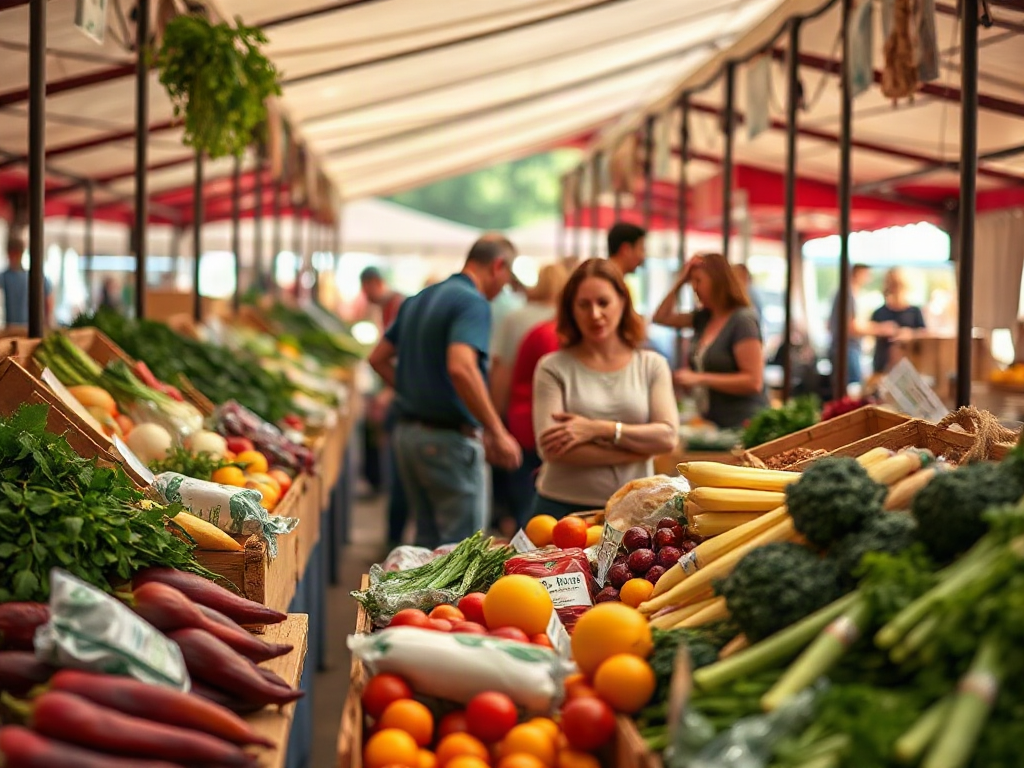
Verifying organic claims at farmers markets means distinguishing certified organic status from informal growing descriptions by checking the seller’s exact wording, asking who certified the farm, and matching the answer to the products being sold. A farm may use organic methods without being certified, while “organic” on a product or display can imply a regulated claim depending on how it is presented. Ask whether the farm is certified, request the certifier’s name when applicable, and clarify whether the seller grew the item or sourced it elsewhere. Treat vague answers, mixed signage, and claims that confuse “natural” with “organic” as reasons to seek documentation or choose another vendor.
What an Organic Claim Actually Tells You
An organic claim at a farmers market can describe a certified production system, an informal farming philosophy, or a seller’s imprecise marketing language. Those categories are not interchangeable. A vendor who says, “We do not spray synthetic pesticides,” may be describing one practice, not claiming that every input, seed, soil amendment, storage method, and handling procedure meets organic requirements.
Certification is the clearest distinction. A certified operation has been reviewed under the applicable organic program by an authorized certifier and must maintain records and follow production and handling rules. Certification does not mean the farm never faces pests, crop failures, or contamination concerns. It means the operation is accountable to a defined standard and inspection process. For a shopper, that difference matters more than a rustic sign or a farm’s attractive growing story.
“Natural,” “chemical-free,” “sustainable,” and “grown without pesticides” also do not automatically mean organic. “Chemical-free” is especially weak language because water, minerals, and many naturally occurring substances are chemicals. A small farm may honestly use practices that resemble organic agriculture while choosing not to pursue certification because of cost, scale, paperwork, or local sales rules. That may be a reasonable buying choice, but it should be described accurately.
Consider two tomato vendors. One displays a current certification name and explains that the tomatoes were grown on the certified farm. The other says the tomatoes are “organically grown” but cannot explain whether the farm is certified, what the phrase means, or where the tomatoes came from. The second seller may still be conscientious, but the shopper has less verifiable information. The useful question is not whether the table looks trustworthy; it is whether the claim can be connected to a specific farm, standard, and product.
Readers comparing market claims with supermarket packaging may also benefit from reviewing verifying organic claims at farmers markets alongside the details below. The same word can carry different practical meaning depending on whether it appears on a regulated package, a farm sign, or a spoken answer.
Questions That Reveal How a Farm Uses the Term
The best market conversation is specific and neutral. Ask, “Are you certified organic, or do you use organic methods without certification?” This gives the seller two accurate ways to answer without forcing a yes-or-no response that may hide an important distinction. If the vendor says the farm is certified, ask for the certifier’s name or look for it on the farm’s displayed materials. If the vendor is not certified, ask which practices they want shoppers to understand.
Follow-up questions should focus on the actual item you are considering. Ask whether the seller grew it, whether another farm supplied it, and whether all products at the table share the same production status. A farm may grow its leafy greens under one system while reselling fruit from a different supplier. Mixed sourcing is not automatically improper, but clear separation and explanation matter.
Useful questions include:
- Which farm grew this item?
- Is the farm currently certified, and if so, by whom?
- Does the certification cover this crop or only a particular part of the operation?
- Are any products resold, and are they identified separately?
- What do you mean when you describe this item as organic?
The seller’s response is often more informative than the sign. A knowledgeable vendor can usually explain the wording, identify the farm, and distinguish certification from personal practice. A vague response such as “everything here is clean” does not answer the question. Nor does a claim that certification is unnecessary because the farm is small; that may explain the business decision, but it does not establish certified status.
Avoid turning the exchange into an inspection. The goal is not to demand a full pesticide log from a busy stall. It is to identify the claim being made and decide whether the available evidence meets your standard. Someone prioritizing certified status may buy only from a verified certified vendor. Someone prioritizing local methods and direct relationships may accept a noncertified farm after discussing inputs and sourcing. Both choices are clearer when the terminology is not blurred.
Signs, Certificates, and Seller Documentation
Signs can provide useful clues, but they are not equal to documentation. A table card that says “certified organic” should identify the relevant farm or business rather than merely display an organic-looking logo. A certification name, certificate copy, or official listing can make the claim more checkable. If the sign says “grown using organic practices,” read it as a description of methods unless the seller separately confirms certification.
Documentation should match the business structure. A farm selling its own certified crops should be able to connect the certification to its operation. A vendor selling products from several farms should identify which farm supplied each item and avoid presenting the entire table as one certified operation unless that description is accurate. A reseller’s personal assurance is weaker than traceable sourcing information because the reseller may not control how the product was grown.
Online verification can help when the seller provides a certifier or farm name. Use the certifier’s official information or an appropriate government directory rather than relying on an unaffiliated badge, screenshot, or social-media statement. Listings can change, so check whether the operation appears current and whether the name corresponds to the farm you are visiting. A directory result that cannot be matched to the seller’s business deserves clarification before purchase.
Imagine a market booth displaying “organic berries” beside berries labeled with a different farm name. The first priority is to ask whether both farms are certified and which operation produced the berries. If the vendor cannot identify the source, the claim is difficult to verify even if the booth itself is located at a reputable market. Conversely, a small sign with a clear farm name and a calm, consistent explanation may provide more useful information than elaborate branding.
Do not assume that a certificate answers every question. Certification concerns the covered operation and applicable standards; it does not guarantee that every item at a market was grown there or that the product is fresher, safer, or nutritionally superior. Organic status and food-handling quality are separate considerations. Clean display practices, temperature control for perishable foods, protection from contamination, and honest sourcing still deserve attention. Readers can use the verification questions for market sellers even after finding a certification reference.
How to Handle Ambiguous or Mixed Claims
Ambiguous claims should lead to a narrower decision, not an argument. If a vendor cannot establish certified status, treat the product as noncertified unless the seller clearly uses a different, accurate description such as “grown without synthetic pesticides.” That approach prevents a pleasant conversation or attractive packaging from becoming accidental proof.
Mixed claims are common at markets. A sign may say “organic farm,” while individual bins lack farm names. A vendor may use “organic” in conversation but “naturally grown” on receipts. The discrepancy may be a communication error, a seasonal change, or a real sourcing problem. Ask which wording the farm stands behind and whether it applies to the specific item. If the answer changes depending on the question, pause before buying on the strength of the claim.
Budget and availability create legitimate tradeoffs. Certified products may cost more, and a local noncertified farm may offer better traceability than a distant product with a familiar label. Those are separate values, not evidence that one category is always superior. Decide what you are prioritizing: formal certification, local origin, direct contact with the grower, farming practices, price, or a combination. Then ask questions that test that priority.
A sensible response to uncertainty is to buy a small quantity, record the farm name, and investigate the certification information later. That is more useful than making a sweeping judgment about the entire market. If a claim concerns a processed item such as jam, bread, or prepared food, ask who made it and whether ingredients are certified separately. The farm’s growing practices may not establish the status of a prepared product.
Common mistakes include treating “no pesticides” as a complete organic answer, assuming every item on a farm’s table has the same status, and believing that certification guarantees superior taste or nutrition. Certification addresses production and handling standards, not every quality attribute shoppers care about. Clear terminology lets you weigh organic status alongside freshness, food safety, origin, and price rather than using one label as a substitute for all of them.
A Practical Market-Day Verification Checklist
A short sequence keeps the conversation manageable when a market is crowded. Begin with the exact product, then identify its grower and the meaning of the claim. Only after those points are clear should you spend time checking a certificate or comparing the purchase with another stall.
- Read the wording. Separate “certified organic” from “organic methods,” “natural,” and other informal descriptions.
- Identify the source. Ask whether the seller grew the item or bought it from another farm.
- Ask about certification. If certified, request the certifier’s name and determine whether it applies to the farm and product in question.
- Check for mixed status. Find out whether different crops, suppliers, or prepared foods are covered by different claims.
- Compare the answer with the display. Inconsistent signs, unexplained logos, or changing descriptions are reasons to seek clarification.
- Make a deliberate choice. Buy based on the level of evidence you require, not on the appearance of the booth alone.
The checklist is most useful when it produces a clear stopping point. If the seller answers directly and the documentation aligns with the claim, you have a reasonable basis for the purchase. If the seller cannot name the farm, uses certification language loosely, or treats “natural” as equivalent to organic, choose whether the uncertainty fits your priorities. There is no need to accuse the vendor; simply select a different item or stall.
Keep notes if you shop regularly. A farm name, crop, certification detail, and date can help you recognize reliable vendors and notice seasonal changes. The same farm may alter suppliers, expand into prepared foods, or change certification status. Returning customers can ask better questions over time, while vendors benefit when shoppers distinguish careful transparency from unsupported marketing.
For a broader comparison of claim language and market conversations, revisit verifying organic claims at farmers markets before your next visit. The practical goal is not perfect certainty about every farm; it is a defensible buying decision based on the specific product and the evidence the seller can provide.
Frequently Asked Questions
Does a farmers market sign saying “organic” prove certification?
No. Ask whether the farm is certified and which certifier covers the operation. A sign may use informal wording that describes practices rather than certified status.
Can a small farm use organic methods without certification?
Some small farms may choose not to certify and may describe their practices honestly. Their methods and certified organic status are separate questions, so ask what the farm means by its wording.
What should I ask if a vendor sells products from several farms?
Ask which farm produced the specific item, whether that farm is certified, and how products from different sources are identified at the stall.
Is “grown without pesticides” the same as organic?
No. That phrase addresses one possible practice and does not describe every requirement associated with organic production and handling.
What should I do when a seller gives an unclear answer?
Ask one specific follow-up question, such as who grew the item or who certified the farm. If the claim remains unclear, treat it as unverified and choose according to your priorities.
Conclusion
Reliable market shopping depends on separating certification from informal farming language. Read the exact claim, identify the grower, ask whether certification applies to the particular item, and check that the seller’s explanation matches the display. “Natural,” “chemical-free,” and “grown without pesticides” may describe meaningful practices, but they do not independently establish certified organic status. Mixed tables and prepared foods deserve extra questions because the farm’s status may not cover every product being sold. If documentation is unavailable, make a conscious choice based on your priorities rather than treating uncertainty as proof. A brief, respectful conversation can reveal more than a prominent sign, and keeping notes on transparent vendors makes future market visits faster and more consistent.
Further Reading
Authoritative Sources
- Market Claims: Understanding Food and Farm Labels
organicfarmersassociation.orgThis webinar will convene leaders from major certification and verification programs to explain what widely used labels mean, how they are earned, ...
- Protecting the Validity of 'Organic' at Your Market
farmersmarketcoalition.orgTo ensure that vendors at a farmers' market are using “organic” correctly, managers can ask them to sign a statement that they have followed ...
- How to find certified organic produce with confidence
ossaorganic.comPro Tip: The most defensible approach is to cross-verify claims with official certifier records rather than relying on packaging alone. A ...
- Organic Labeling at Markets: A Compliance Guide
uniteworldwideinc.comWhen a vendor displays a sign boasting organic status, they are entering a legal framework governed by the National Organic Program (NOP). For ...