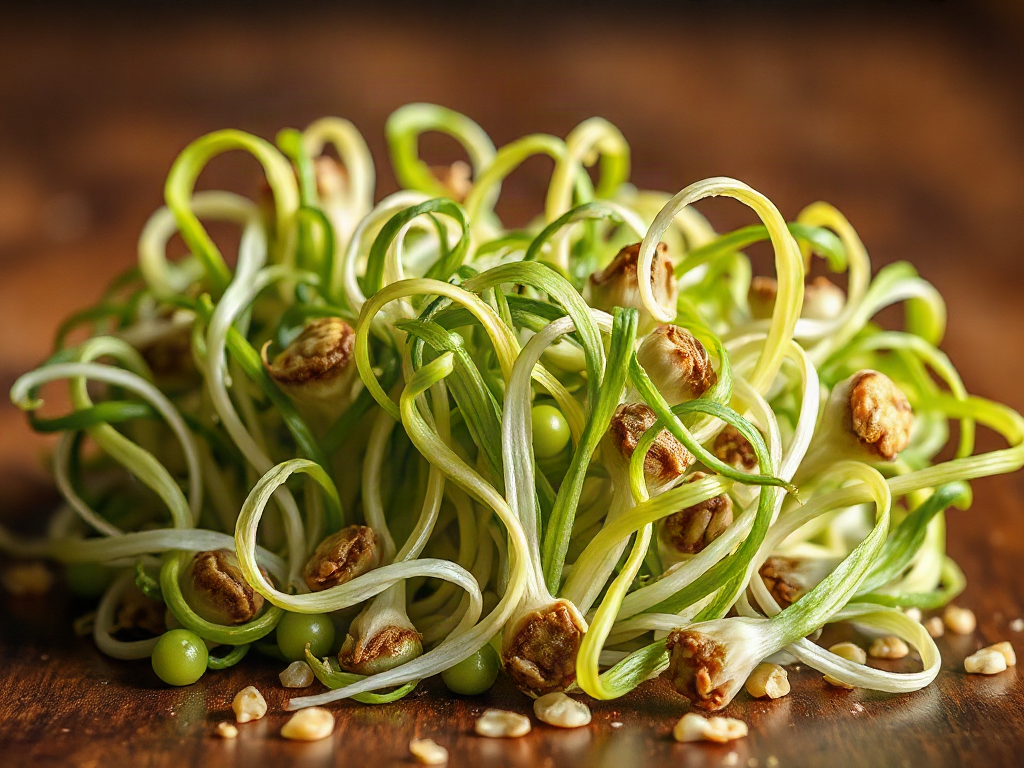
Organic sprout nutrition and safety tradeoffs vary by seed type, growing conditions, and whether the sprouts are eaten raw or cooked. Alfalfa, broccoli, mung bean, and lentil sprouts can contribute vitamin C, vitamin K, folate, fiber, and plant compounds, but warm, humid sprouting conditions can also support bacterial growth. Organic certification addresses specified production practices; it does not make raw sprouts free from pathogens. Refrigeration and clean handling limit additional growth but cannot reliably remove contamination established inside or on the seed.
What Nutrients Do Different Sprouts Provide?
Sprouts are newly germinated seeds, and their nutritional profile depends heavily on the plant, serving size, and preparation. Treating all sprouts as nutritionally interchangeable obscures useful differences. Tender alfalfa sprouts are mostly used as a light topping, broccoli sprouts are valued for glucosinolate-related compounds, and sturdier mung bean or lentil sprouts contribute more substance to a meal. Any comparison should account for the amount people actually eat rather than relying on an impressive nutrient value that applies to a much larger portion.
Germination activates enzymes and changes the seed as stored carbohydrate and protein begin supporting a young plant. Some vitamins and plant compounds may increase or become more available during this process, while other components are consumed or transformed. The result is not a universal nutritional upgrade. The changes differ by species, germination time, light, temperature, and laboratory measurement. Sprouting also does not turn a small garnish into a complete source of protein, minerals, or dietary fiber.
| Sprout type | Practical nutritional contribution | Common use | Relevant tradeoff |
|---|---|---|---|
| Alfalfa | Vitamin K and small amounts of several micronutrients | Sandwiches and salads | Usually eaten raw and in modest portions |
| Broccoli | Vitamin C, vitamin K, and glucosinolate-derived compounds | Salads, bowls, and garnishes | Research interest does not establish disease treatment |
| Mung bean | Vitamin C, folate, fiber, and some protein | Stir-fries, soups, and noodle dishes | Cooking changes texture but offers a safety advantage |
| Lentil | Fiber, folate, and plant protein | Warm grain bowls and cooked dishes | May be less tender than delicate sprouts |
A practical meal assessment asks what the sprouts add and what remains missing. A sandwich with a thin layer of alfalfa sprouts still needs a meaningful protein source and other vegetables. A bowl containing cooked lentil sprouts, whole grains, and roasted vegetables has a different nutritional role because the portion and overall composition are larger. Likewise, broccoli sprouts may supply interesting phytochemicals, but they should not be presented as a substitute for varied cruciferous vegetables or medical care.
The common mistake is choosing sprouts solely because germination is assumed to make them categorically more nutritious than mature vegetables. Mature broccoli, cabbage, beans, and leafy greens often provide larger, easier-to-measure servings with fewer raw-sprout safety concerns. Use sprouts for their particular flavor, texture, and nutrient contribution, while judging the whole meal. If the objective is dependable fiber or protein, legumes and vegetables in ordinary portions are usually easier to plan around.
Why Can Raw Sprouts Carry Foodborne Pathogens?
Raw sprouts present a distinctive hazard because the conditions needed for germination—moisture, warmth, time, and available nutrients—can also permit harmful bacteria to multiply. Contamination may begin with the seed before sprouting, arise from water or equipment, or occur during handling. A small initial contamination can therefore become more consequential during several days of growth even when the finished sprouts look crisp and smell normal.
The location of contamination complicates control. Microorganisms may be present in seed crevices or internal tissues where ordinary rinsing cannot reach them. Washing finished sprouts can remove loose soil or surface material, but it should not be treated as a reliable decontamination step. Vinegar, lemon juice, and improvised household rinses do not provide dependable control of pathogens throughout a batch. Refrigeration slows further bacterial growth; it does not reverse multiplication that already occurred during germination.
Visual inspection has limits for the same reason. Slime, discoloration, wilting, or a sour odor are valid reasons to discard sprouts, but the absence of spoilage does not establish microbiological safety. Foodborne pathogens do not necessarily change appearance, aroma, or taste. Sampling one sprout from the package cannot verify the rest, and tasting a questionable batch adds exposure rather than resolving uncertainty.
Cooking changes the risk calculation more meaningfully than rinsing. Mung bean sprouts added early enough to a stir-fry to become thoroughly hot are a different choice from raw alfalfa sprouts scattered over a finished sandwich. Briefly warming the exterior while the sprouts remain cool in the center is less dependable than thorough cooking. Exact heating requirements depend on the dish and sprout density, so the practical aim is even heating rather than a token pass through a hot pan.
Higher-risk diners warrant a more conservative choice. Pregnant people, young children, older adults, and people with weakened immune systems may face more serious consequences from foodborne infection. For a meal served to one of these groups, thoroughly cooked sprouts—or a mature vegetable with a lower raw-sprout hazard—are generally more appropriate than a raw garnish. The frequent mistake is assuming that fresh appearance, local production, home growing, or organic labeling removes the biological conditions that make germinated seeds challenging.
Does Organic Certification Change Sprout Safety?
Organic certification and foodborne-pathogen control answer different questions. An organic label indicates that the sprouts and their production fall under applicable organic standards, including restrictions and requirements concerning agricultural inputs and handling. It does not certify that a package is sterile, pathogen-free, more nutrient-dense, or safe to eat raw for every person.
The distinction matters at the store. A shopper may reasonably prefer certified organic sprouts because of production-method priorities, yet that preference should remain separate from the decision to eat them raw. Organic and conventionally produced sprouts both undergo the same basic germination process, and bacteria do not respond to marketing categories. Sanitary seed sourcing, controlled water, clean equipment, worker hygiene, environmental monitoring, and cold-chain management are more directly related to microbial risk than the organic status alone.
Organic status also does not create a predictable nutritional advantage. Nutrient levels can vary with cultivar, age at harvest, light exposure, storage time, and portion size. A certified organic broccoli sprout and a conventionally grown broccoli sprout may differ, but the label by itself does not reveal the magnitude or direction of that difference. Claims that organic sprouts are automatically richer in vitamins or protective compounds go beyond what a shopper can infer from certification.
Consider two packages: one bears an organic seal but has condensation, damaged packaging, and an approaching use-by date; the other is not organic but is cold, dry-looking, intact, and intended for a cooked stir-fry. A shopper whose first priority is immediate food safety has stronger reasons to reject the compromised package than to favor its production label. If organic methods are also a priority, the sound choice is to locate an organic package that passes the same freshness and handling checks—not to relax those checks.
Home-grown organic sprouts require the same separation of values. Buying organic seed and sanitizing jars may improve control over selected inputs and cleanliness, but it cannot guarantee that seed is free from contamination. The warm countertop environment remains favorable to microbial growth. People who decide to sprout at home should use seed sold for sprouting, follow supplier directions, keep equipment meticulously clean, prevent cross-contamination, and discard questionable batches. Those measures reduce avoidable errors but do not make raw sprouts a zero-risk food.
How to Buy, Store, and Serve Sprouts More Safely
Good handling begins by deciding whether the sprouts will be served raw or thoroughly cooked. That choice has more safety significance than whether the package is organic. For a household without higher-risk diners, raw sprouts may remain an informed preference, but the residual risk cannot be washed away. For a mixed-age gathering, a childcare meal, or food prepared for an immunocompromised guest, choosing cooked mung bean sprouts or omitting sprouts avoids placing the burden on diners to identify a hidden ingredient.
At purchase, select refrigerated sprouts in intact packaging. Avoid containers with excessive liquid, obvious damage, slime, darkened growth, or unpleasant odor. Check the date and choose a package size that can be used promptly rather than keeping an open container for an extended period. Loose sprouts introduce additional handling questions, while sealed packaging provides useful labeling and date information; neither format guarantees the absence of pathogens.
Transport sprouts home without leaving them in a warm car, then refrigerate them promptly according to the package instructions. Keep the container away from leaking raw meat, poultry, seafood, and unwashed produce. Use clean hands and utensils, and return unused sprouts to refrigeration rather than allowing the package to remain on the counter throughout meal preparation. Discard the product when package instructions direct, or earlier if spoilage appears.
A compact serving checklist keeps priorities clear:
- Identify the diner. Use a cooked alternative for anyone at elevated risk from foodborne illness.
- Inspect the package. Reject damaged, warm, slimy, discolored, or foul-smelling sprouts.
- Prevent cross-contamination. Separate sprouts from raw animal foods and use clean preparation surfaces.
- Cook when risk reduction matters. Heat the sprouts thoroughly and evenly rather than adding them after cooking.
- Respect cold storage and dates. Refrigerate promptly and follow the producer’s storage and use instructions.
Signs that handling is working include a consistently cold product, clean utensils, an intact package, and a serving plan matched to the diner. Signs of failure include broken refrigeration, pooled liquid, extended room-temperature holding, cross-contact with raw foods, or reliance on rinsing as the primary safety control. When the storage history is uncertain, discarding the sprouts is more defensible than attempting to rescue them through washing.
The nutrition tradeoff need not be framed as raw sprouts or no vegetables. Cooked mung bean sprouts retain culinary value in noodle dishes and stir-fries, even though heat may reduce some heat-sensitive nutrients. Shredded cabbage, thinly sliced radish, mature broccoli, leafy greens, or cooked legumes can supply crunch, volume, fiber, and micronutrients without recreating every characteristic of sprouts. The best alternative is the one that fits both the meal and the health profile of the people eating it.
Frequently Asked Questions
Are organic sprouts safer than conventional sprouts?
Not necessarily. Organic certification concerns defined production practices, but it does not guarantee that sprouts are free from harmful bacteria. Packaging condition, sanitation, refrigeration, intended preparation, and the diner's vulnerability remain central safety factors.
Does washing raw sprouts make them safe?
Rinsing may remove loose debris, but it cannot reliably eliminate bacteria lodged within seeds or established during germination. Washing should not replace thorough cooking when risk reduction is the priority.
Which sprouts are best suited to cooking?
Mung bean and lentil sprouts hold up well in stir-fries, soups, and warm bowls. Their sturdier texture makes thorough heating more practical than with delicate alfalfa sprouts.
Can you tell whether sprouts are contaminated by smelling them?
No. A bad smell, slime, or discoloration signals spoilage and warrants disposal, but harmful pathogens may be present without sensory changes. Fresh appearance cannot confirm safety.
Who should avoid raw sprouts?
Pregnant people, young children, older adults, and people with weakened immune systems are generally advised to choose thoroughly cooked sprouts or an alternative vegetable because foodborne illness may be more serious for them.
Conclusion
Sprouts deserve evaluation as both a food and a growing environment. Their nutrient contribution can be worthwhile, particularly when the type and portion fit the meal, but germination creates a microbial hazard that appearance, rinsing, or an organic label cannot resolve. Prioritize the diner’s vulnerability first, followed by the decision to serve the sprouts raw or thoroughly cooked. At the store, reject compromised packages; at home, maintain refrigeration, clean handling, and separation from raw animal foods. Use organic certification to inform production-method preferences rather than as proof of superior nutrition or pathogen control. When uncertainty is unacceptable, cooked mung bean or lentil sprouts, mature cruciferous vegetables, leafy greens, cabbage, or legumes offer practical ways to retain nutritional and culinary value with a different risk profile.