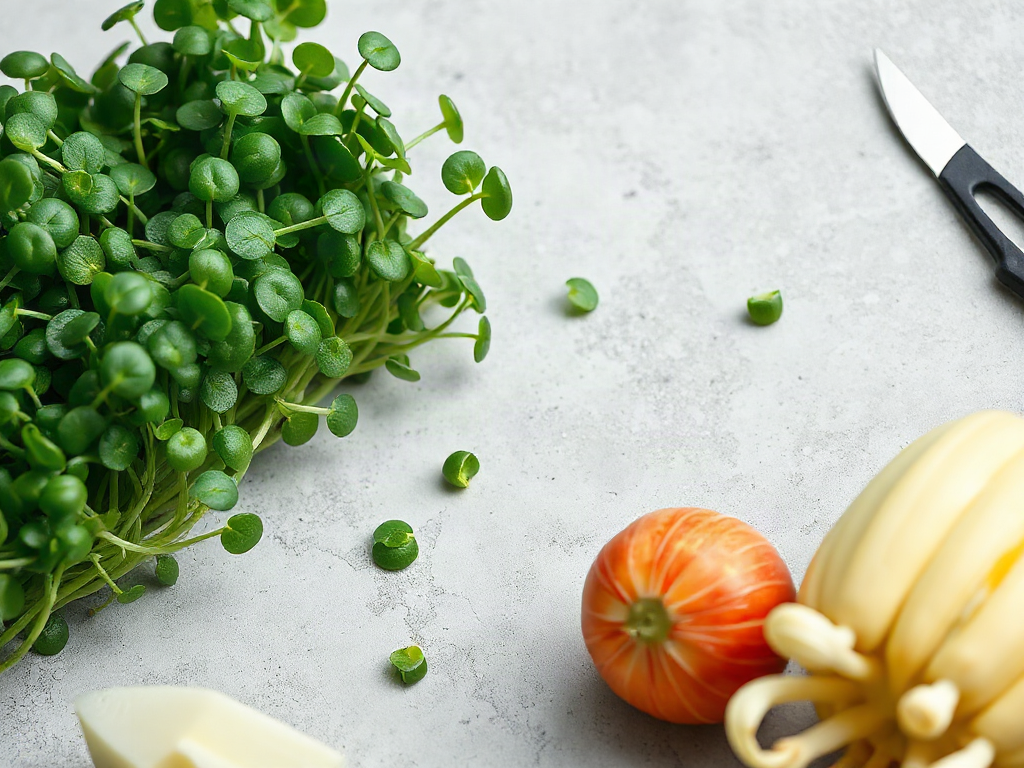
Organic microgreens and mature greens provide different nutritional advantages rather than a universal winner. Microgreens may contain concentrated amounts of certain vitamins, carotenoids, and polyphenols by fresh weight, but levels vary widely by species, growing conditions, harvest age, and storage. Mature greens usually provide more food volume and fiber per typical serving, making them practical foundations for salads, cooked dishes, and regular vegetable intake. Choose microgreens for flavor and nutrient variety, then pair them with substantial portions of mature kale, spinach, lettuce, or other vegetables instead of treating a small garnish as a nutritional replacement.
How Does Nutrient Density Differ?
Microgreens are young vegetable or herb seedlings harvested after their first leaves appear, while mature greens are harvested after the plant develops further. That difference in growth stage changes water content, plant metabolism, texture, and the balance of nutrients and protective compounds. It does not create one predictable nutritional advantage across every crop.
Some microgreens can be concentrated sources of vitamin C, vitamin K, carotenoids, tocopherols, and polyphenols relative to the same fresh weight of a mature plant. Young tissues draw on stored seed resources while producing compounds needed for rapid growth and protection. The result may be a high concentration of selected compounds in a small amount of fresh tissue. Radish microgreens, for example, do not have the same profile as broccoli, cilantro, or red cabbage microgreens, and none should be treated as representative of the entire category.
Mature greens have a different practical strength: people commonly eat much larger portions of them. A bowl of romaine, a serving of cooked collards, or several handfuls of spinach contributes more total plant material than a scattering of microgreens. Mature leaves can therefore deliver substantial fiber, folate, minerals, carotenoids, and other compounds even when a microgreen has a higher concentration of one nutrient per unit of weight.
The comparison also depends on the unit used. Nutrients measured per 100 grams may favor a concentrated microgreen, but 100 grams of microgreens is far more than the garnish-sized portion many people use. Comparing an ordinary microgreen portion with an ordinary mature-green serving gives a more realistic picture of what reaches the plate.
| Comparison Point | Microgreens | Mature Greens |
|---|---|---|
| Typical culinary role | Accent, topping, or small salad component | Main salad base, side dish, or cooked vegetable |
| Nutrient pattern | Some compounds may be concentrated by weight | Broader intake often comes from a larger serving |
| Fiber contribution | Usually limited by the small portion | Often greater in a practical serving |
| Best use | Adding flavor, color, and plant variety | Providing vegetable volume and meal structure |
A common mistake is turning a laboratory comparison into a claim that all microgreens are categorically more nutritious. A better reading is compound-specific, crop-specific, and portion-aware. Notice which nutrient is being compared, whether the values use fresh or dry weight, and whether the serving resembles the amount you would actually eat.
Why Does Serving Size Change the Comparison?
Serving size often determines whether a nutritional difference is meaningful at the meal level. A dense nutrient value per gram can look impressive while contributing little if the food is consumed by the pinch. Mature greens are less concentrated in some comparisons, yet their larger customary portions may deliver more total fiber and comparable or greater amounts of several micronutrients.
Consider a grain bowl topped with a small cluster of broccoli microgreens. The topping contributes flavor, texture, and selected plant compounds, but it does not provide the physical volume of a side salad or a cup of cooked greens. Replacing the bowl’s mature vegetables with that topping would reduce vegetable quantity, even if the microgreens compare favorably for a particular vitamin on a weight basis.
Preparation further changes the calculation. Cooking collapses mature leafy vegetables, allowing a person to eat more leaf tissue in a modest volume. Heat and water can reduce some heat-sensitive or water-soluble vitamins, especially when greens are boiled and the liquid is discarded. At the same time, cooking can soften fibrous tissue and make a substantial serving easier to consume. Steaming, sautéing, or incorporating cooking liquid into soup limits some losses, although no method preserves every nutrient equally.
Microgreens are generally eaten raw, so their measured nutrients are not exposed to cooking heat. Raw use is not automatically nutritionally superior: it simply avoids one source of change. Freshness, refrigeration, washing, and the time between harvest and eating still affect quality. Microgreens that become slimy or wilted are not made valuable by a favorable nutrient-density figure.
Use three checks when reading a comparison:
- Measurement basis: Determine whether values are reported by fresh weight, dry weight, or serving.
- Actual portion: Compare the quantity you expect to eat rather than equal weights alone.
- Meal displacement: Ask whether microgreens are supplementing a vegetable serving or replacing it.
The practical target is not to maximize one nutrient number. It is to build meals with enough vegetable volume, useful variety, and preparation methods you will repeat. Microgreens work especially well when they expand that variety without crowding mature vegetables off the plate.
Which Growing and Storage Variables Matter?
Plant identity matters more than the label “microgreen” or “mature green” alone. Brassica crops such as broccoli, mustard, kale, and red cabbage differ from peas, sunflowers, beets, basil, and cilantro in both flavor and chemical composition. Even two cultivars from the same species can produce different nutrient profiles.
Growth conditions add another layer of variation. Light exposure, temperature, water availability, growing medium, harvest timing, and postharvest handling can influence plant composition. Organic production describes a regulated farming system and allowed inputs; it does not guarantee that a given leaf contains more of every vitamin or mineral than a conventionally produced counterpart. Nutrient content still reflects the crop, environment, maturity, freshness, and analytical method.
That distinction prevents a frequent purchasing error: assuming the organic label settles the nutritional comparison. Organic certification may be important to a buyer for production-method reasons, but it should not be used as a stand-in for freshness, crop identity, or serving size. An older organic package with condensation and deteriorating leaves may be a poorer practical choice than fresher greens that fit the buyer’s needs and budget.
Storage is particularly consequential for microgreens because they are tender, have a large exposed surface area, and are often sold ready for raw use. Select packages with crisp stems and leaves, no slime, and little excess moisture. Refrigerate them promptly, follow the package date and storage directions, and discard material that smells sour or shows decay. Mature greens also need refrigeration, but sturdy heads such as cabbage or romaine may tolerate storage better than delicate seedlings.
Food safety deserves equal attention. Microgreens are not the same as sprouts: sprouts are typically germinated in warm, humid conditions and eaten with the seed and root, whereas microgreens are cut above the growing medium after leaf development. Both are commonly consumed raw, however, so clean production and handling remain relevant. Washing may remove soil and debris but should not be assumed to eliminate every microbial hazard. People with heightened vulnerability to foodborne illness should seek individualized advice from a qualified healthcare professional about raw produce choices.
Prioritize visible freshness, reliable refrigeration, clean handling, and a crop you will actually eat. Those checks provide more decision value than trying to infer exact nutrient levels from the word “organic” on the package.
How Should You Choose Greens for Real Meals?
The strongest meal strategy assigns each form of green a job it performs well. Mature greens provide bulk and flexibility, while microgreens supply concentrated flavor, visual contrast, and another plant variety. Combining them avoids the false choice created by asking which one should replace the other.
For a lunch salad, use romaine, spinach, arugula, or shredded kale as the base, then add radish or mustard microgreens for a peppery finish. In a warm meal, serve sautéed collards or bok choy as the main vegetable and add a small amount of pea shoots after cooking for freshness. A sandwich can hold both a substantial lettuce layer and a modest cluster of microgreens rather than relying on a few seedlings as its only vegetable.
Cost changes the decision. Microgreens are often more expensive per ounce and may spoil quickly after opening. If the grocery budget is tight, spending primarily on mature greens usually buys more edible vegetable volume. A smaller package of microgreens can still be worthwhile when its strong flavor replaces a less nutritious garnish or encourages use of a salad base already on hand. Buying more than can be eaten before deterioration defeats both the nutrition and budget goals.
Texture and flavor should guide crop selection. Sunflower and pea microgreens tend to be substantial and mild, while mustard and radish types can be sharp. Mature kale and collards tolerate cooking; delicate lettuces are better raw. Choosing an appealing combination improves the likelihood that the produce will be consumed rather than discarded.
A practical buying and meal-building sequence is:
- Choose a mature green suited to the planned dish and serving size.
- Add one microgreen variety only when its flavor and texture improve the meal.
- Check the package for dryness, intact leaves, refrigeration, and usable shelf life.
- Plan raw microgreens for the first meals after purchase and sturdier greens for later.
- Rotate plant families over time rather than repeatedly buying one fashionable crop.
Signs that the approach is working include eating a meaningful quantity of vegetables, using packages before they spoil, and enjoying enough variety to maintain the habit. Warning signs include counting a garnish as a full vegetable portion, buying expensive seedlings without a meal plan, or choosing solely from claims about exceptional nutrient density. For most households, the useful outcome is a complementary mix: mature greens carry the meal, and microgreens broaden it.
Conclusion
Nutritional comparisons between microgreens and mature greens only become useful when crop type, measurement basis, ordinary portion, and freshness are considered together. Concentration per gram can highlight the distinctive chemistry of young plants, but it does not erase the fiber, volume, affordability, and versatility supplied by mature leaves.
Build meals around a substantial vegetable portion first. Add microgreens when their flavor, texture, or plant variety makes that meal better, and purchase only what can be used while crisp and fresh. Treat organic certification as information about production methods rather than proof of a fixed nutritional advantage. A varied rotation of well-handled greens is more practical than searching for a single superior stage of plant growth, and it reduces the risk that an impressive nutrient comparison will overshadow the amount actually eaten.
Frequently Asked Questions
Are microgreens always more nutritious than mature greens?
No. Some varieties contain higher concentrations of selected nutrients by weight, but results differ by crop, nutrient, harvest stage, and handling. Mature greens may contribute more total nutrition because customary servings are larger.
Can microgreens replace a serving of leafy vegetables?
A garnish-sized amount is not an equivalent replacement for a bowl of salad or a substantial cooked serving. Use microgreens to complement mature vegetables unless you are eating them in genuinely comparable quantities.
Does organic certification mean microgreens contain more nutrients?
Organic certification identifies a production system, not a guaranteed nutrient level. Species, cultivar, light, harvest age, freshness, storage, and serving size can all affect the nutritional result.
Should microgreens be washed before eating?
Follow the producer’s package instructions and use clean hands and utensils. Rinsing can remove debris, but it should not be treated as a way to make spoiled or poorly handled produce safe.
Which type of green offers better value?
Mature greens usually offer more food volume per dollar, while microgreens may justify their price as a strongly flavored accent. Value depends on whether the entire package is eaten before quality declines.