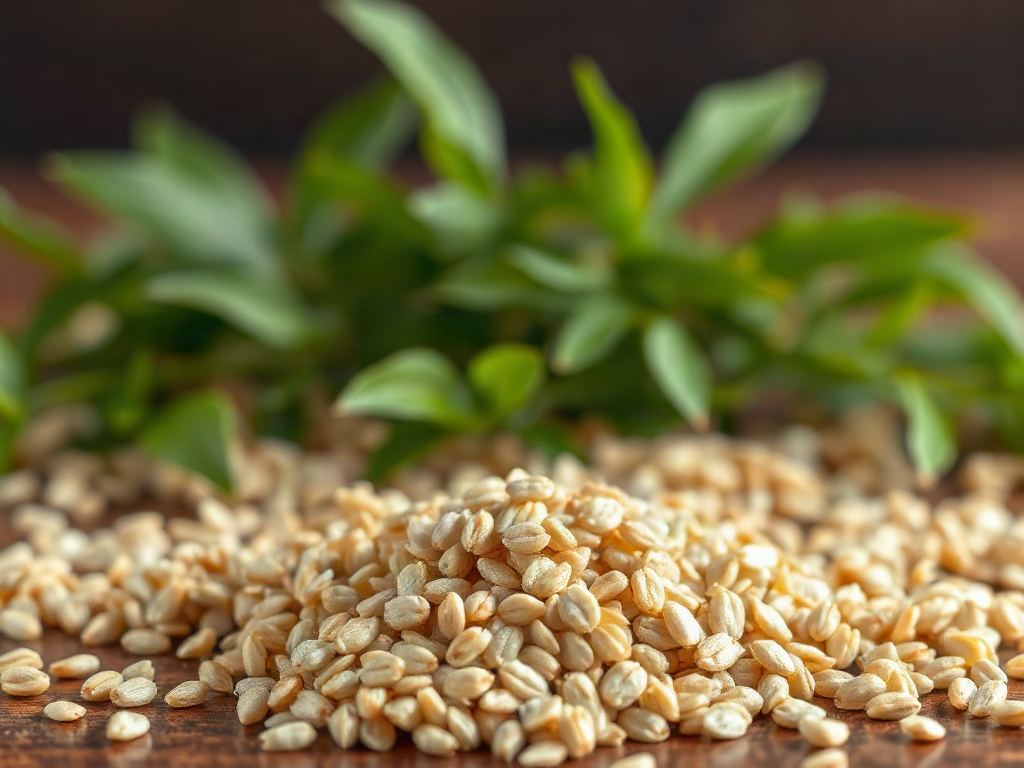
Buckwheat groat nutrition and cooked yield measurements change mainly because cooking adds water: the total nutrients in the pot remain broadly similar, while calories, protein, fiber, and minerals become less concentrated per gram or cup. One cup of dry groats commonly produces about 2.5 to 3 cups cooked, although roasting, simmering time, liquid ratio, and drainage can shift the result. For reliable meal planning, weigh the dry groats, weigh the finished batch, and divide both totals by the number of portions. Do not compare a dry 100-gram nutrition entry with 100 grams cooked, because their water contents are substantially different.
What Nutrients Do Buckwheat Groats Provide?
Buckwheat groats are the hulled seeds of buckwheat, a pseudocereal rather than a botanical wheat. Their useful nutritional features include carbohydrate, fiber, plant protein, and minerals such as magnesium, manganese, copper, and phosphorus. Buckwheat also contains naturally occurring plant compounds, including rutin. Exact amounts vary with the database entry, brand, processing method, and whether the listed food is raw, toasted, or cooked.
Despite its name, pure buckwheat does not inherently contain wheat gluten. That distinction can make plain groats useful for people choosing gluten-free grains, but it does not guarantee that every packaged product is suitable for someone with celiac disease or a medically necessary gluten-free diet. Cross-contact can occur during growing, milling, transport, or packaging. A package carrying an appropriate gluten-free claim is more informative for that purpose than the ingredient name alone.
The protein in groats contributes to the total protein content of a meal, but buckwheat should not be treated as a direct substitute for a concentrated protein food. A bowl combined with lentils, eggs, yogurt, tofu, fish, or another substantial protein source creates a different meal than groats served alone. The same practical distinction applies to fiber: intact or minimally broken groats generally provide more food structure than refined buckwheat flour, while a heavily processed buckwheat snack may contain added sodium, fat, or sugar.
Preparation changes the eating experience without creating extra nutrients. Toasted groats, sometimes sold as kasha, have a stronger flavor and often remain more distinct after cooking. Untoasted groats taste milder and may soften more readily. Both can fit a varied diet, but brand-specific nutrition labels should take priority when calculating a serving because roasting and processing can affect moisture and the weight represented by a cup.
A common mistake is calling buckwheat a high-protein replacement for beans or animal protein based only on its protein quality or amino-acid profile. Portion size still controls how much protein reaches the plate. Treat groats primarily as a nutrient-containing starch and whole-food grain alternative, then build the meal with vegetables, a suitable protein, and fats according to individual needs.
Why Do Dry and Cooked Nutrition Values Differ?
Cooking primarily changes buckwheat’s water content and serving weight. When dry groats absorb simmering liquid, the finished batch becomes heavier and larger even though no additional buckwheat has been added. Nutrients are therefore spread across more grams and more cups. This is why 100 grams of cooked groats usually appears to contain fewer calories and less protein than 100 grams dry.
The comparison is misleading unless the food states match. One hundred grams dry represents far more groats than 100 grams cooked because much of the cooked weight is water. A better comparison follows the same batch from beginning to end. If 100 grams of dry groats are cooked only in water and all edible material is retained, the entire cooked batch should contain approximately the nutrients attributed to those 100 dry grams. Dividing that batch into three equal portions assigns about one-third of the batch totals to each portion.
Small differences can still arise. Starch residue may remain on a sieve after rinsing, groats can stick to the saucepan, and excess cooking liquid may be discarded. Conversely, broth, milk, oil, butter, salt, or sweeteners add nutrients or sodium that are absent from a plain-water database entry. These additions belong in a meal calculation separately rather than being attributed to buckwheat itself.
Volume introduces another source of error. A cup of loosely spooned dry groats may not weigh the same as a cup that has settled during storage. Cooked groats can also be fluffy, compacted, wet, or drained. Weight is consequently more repeatable than cup volume when someone is tracking intake closely or scaling a recipe.
| Measurement basis | What it represents | Best use |
|---|---|---|
| Dry weight | Groats before added cooking water | Calculating a full recipe from a package label |
| Cooked weight | Groats plus retained water | Dividing a prepared batch into repeatable portions |
| Dry volume | An approximate amount before cooking | Routine recipes when precision is not critical |
| Cooked volume | A variable amount affected by moisture and packing | Quick serving estimates |
The most frequent failure is selecting a cooked database entry while logging the dry weight, or selecting a dry entry for a cooked portion. Check the food state, units, and serving description together. If a database value conflicts with the package, use the package for that product and calculate the cooked portion from the measured batch yield.
How Much Cooked Buckwheat Do Dry Groats Make?
One cup of dry buckwheat groats typically yields roughly 2.5 to 3 cups after simmering, but this is a kitchen-planning range rather than a fixed conversion. A common starting method uses about two measures of liquid for one measure of dry groats. The final yield depends on how much liquid is absorbed, how much evaporates, and whether the groats are drained.
Untoasted groats can become soft and cohesive, especially when stirred frequently or cooked beyond tenderness. Toasted groats are often easier to keep separate. A wide uncovered pan loses more water than a covered saucepan, while a long resting period allows additional liquid to move into the seeds. These differences can change cooked weight even when two cooks begin with the same dry quantity.
For a practical example, suppose a recipe starts with one cup dry and produces 2.75 cups cooked. If four people share the entire batch equally, each receives a little under 0.7 cup. The nutritional calculation should divide the dry batch totals by four; it should not multiply a dry one-cup entry by each person’s cooked cup measurement. If the same starting amount produces three cups on another day, the full batch still began with the same groat quantity, but each cooked cup contains slightly less buckwheat because it holds more water.
Use the following process when yield consistency matters:
- Measure the dry amount. A kitchen scale gives the most repeatable starting point.
- Record the added liquid. Use the package directions as the initial ratio because products can differ.
- Cook to the intended texture. Keep lid use, heat, and resting time consistent between batches.
- Weigh the edible result. Exclude the pot and include only the groats that will be served.
- Record the actual yield. Use that batch-specific number rather than assuming every preparation triples.
A yield that is much lower than expected may indicate vigorous boiling, an uncovered pot, scorching, or groats left behind in the pan. A very high yield with a soupy texture suggests excess liquid or insufficient resting and draining. Neither result automatically means the food is unsafe or nutritionally poor, but both make volume-based portions less dependable. Adjust liquid in small increments on the next batch rather than forcing a universal ratio onto every product and cooking setup.
How to Measure Buckwheat Portions Accurately
Batch weighing is the clearest way to connect a dry nutrition label with a cooked serving. Record the dry quantity used, calculate the nutrition for that amount, and weigh the finished groats after cooking. A serving’s share of the finished weight determines its share of the original nutrient total.
For example, imagine the cooked batch weighs 720 grams and the desired serving weighs 180 grams. That portion is one-quarter of the batch because 180 divided by 720 equals 0.25. Multiply each full-batch value—calories, carbohydrate, fiber, protein, fat, and any tracked minerals—by 0.25. Added oil, broth, or other ingredients should first be included in the full recipe total if they remain in the finished food.
This method is more reliable than applying a generic cooked-cup entry to every preparation. It also accommodates different textures. A drier pilaf and a soft breakfast porridge may begin with equal dry weights but finish at very different cooked weights. Their total groat-derived nutrients are comparable, yet equal 150-gram servings will not represent equal amounts of dry buckwheat.
When a scale is unavailable, divide the cooked batch by volume immediately after fluffing it in a consistent way. If the pot contains three level cups and the recipe is intended for six portions, assign one-half cup to each. This approach is adequate for ordinary meal planning, though it is less precise because compacting and retained liquid alter cup measurements.
Prioritize the measurement method according to the decision being made. Dry cups and estimated cooked yields are usually sufficient for choosing a saucepan or planning how many people a side dish will serve. Measured batch weights are more useful for consistent meal prep, detailed nutrient tracking, or recipes that must be reproduced. For blood glucose management, kidney-related dietary restrictions, food allergies, or another medical nutrition concern, generalized online conversions should not replace individualized advice from a qualified clinician or registered dietitian.
Check three details before accepting any calculation: whether the nutrition entry describes dry or cooked groats, whether the listed weight matches the amount actually measured, and whether other ingredients were added. Calculations are working when portions add back up to the full batch and repeated cooking produces similar yields. If the portions exceed the recipe total or the same dry amount creates sharply different serving values, the likely issue is mixed measurement states, moisture variation, or an incorrectly selected database entry.
Frequently Asked Questions
How much cooked buckwheat does one cup of dry groats make?
One dry cup commonly produces about 2.5 to 3 cooked cups. Product type, liquid ratio, pan shape, lid use, cooking time, and draining can move the result outside that range.
Should buckwheat be measured dry or cooked?
Measure it dry when using a package label or calculating the full recipe. Weigh it cooked when dividing the completed batch into consistent portions.
Why does cooked buckwheat have fewer calories per 100 grams?
Absorbed water adds weight without adding calories. A 100-gram cooked portion therefore contains less actual buckwheat than 100 grams of dry groats.
Are toasted buckwheat groats nutritionally different from raw groats?
They are broadly similar, but roasting and initial moisture can affect label values, flavor, cooking behavior, and cup weight. Use the label for the product being prepared.
Does rinsing buckwheat remove nutrients?
Rinsing may wash away loose surface starch and fine particles, but it does not remove most of the groat itself. Drain thoroughly so extra rinse water does not distort the cooking ratio.
Conclusion
Reliable buckwheat calculations begin by keeping dry and cooked measurements separate. Use the package’s dry serving information for the amount placed in the pot, then measure the finished batch before assigning portions. Expect roughly 2.5 to 3 cups cooked from one dry cup, but record the actual yield when texture, meal preparation, or nutrient tracking requires consistency.
Water retention explains most apparent differences between dry and cooked nutrition entries. Added oil, broth, milk, sweeteners, and discarded liquid create additional changes that should be counted on their own. A kitchen scale reduces uncertainty, while level cup measures remain practical for ordinary cooking. The next time groats are prepared, note the dry weight, cooking liquid, final weight, and number of portions; those four details create a reusable conversion tailored to the specific product and method.