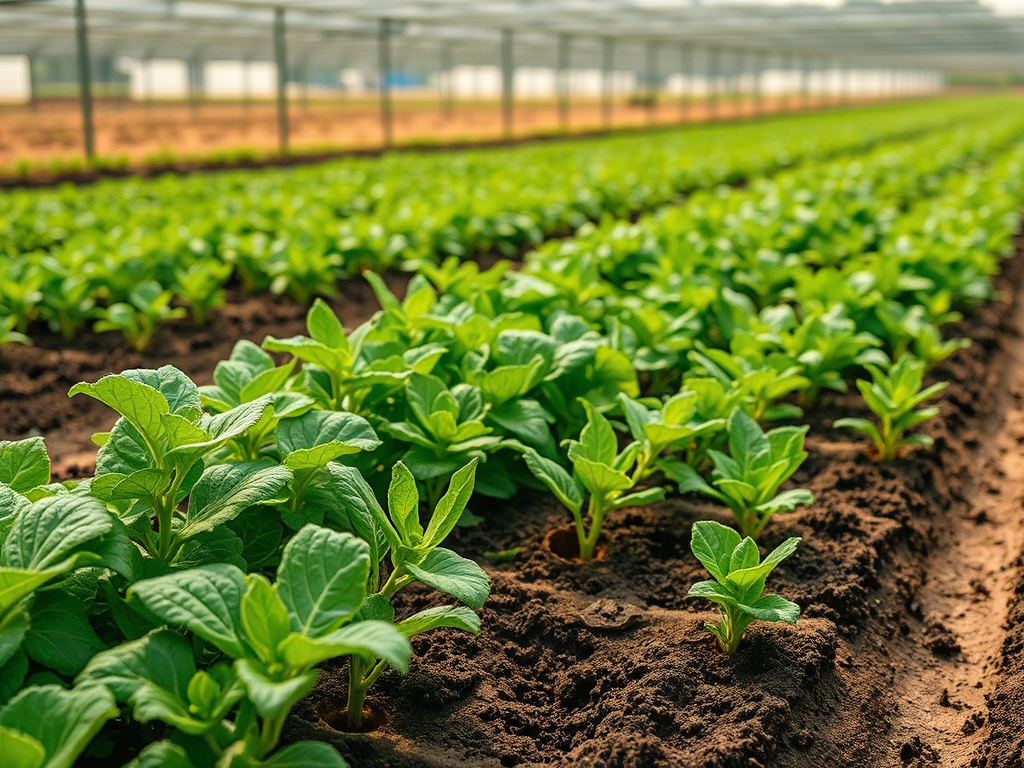
The effects of climate change on organic food production include greater heat stress, irregular rainfall, expanding pest pressure, soil degradation, and more difficult weed management. Organic farms may face added constraints because they generally cannot rely on synthetic fertilizers or many conventional pesticides to respond quickly to changing conditions. Resilience depends on practices such as cover cropping, compost management, crop diversity, water-efficient irrigation, shade planning, and locally appropriate varieties. These methods can protect soil structure and reduce some risks, but they require labor, reliable water access, good timing, and careful monitoring. Consumers and growers should judge climate impacts by crop, region, season, and farm management rather than assuming that every organic operation faces the same outcome.
Climate Pressures Reshaping Organic Farms
Climate change affects organic food production through several connected pressures rather than one uniform problem. Higher temperatures can shorten the useful growing period for cool-season crops, disrupt flowering, increase evaporation, and reduce animal comfort. Rainfall may arrive in fewer, heavier events, leaving fields waterlogged briefly and dry soon afterward. Drought, wildfire smoke, flooding, and unseasonal frosts can each damage crops at a different stage of development.
Organic farms are not automatically more vulnerable or more protected. Their exposure depends on location, soil type, irrigation access, crop selection, farm size, and available labor. A diversified vegetable farm with deep soil and dependable water may handle a hot spell better than a monoculture operation, while a small farm on shallow soil may struggle despite careful management. Comparing organic and conventional production without accounting for these conditions leads to weak conclusions.
Heat changes crop timing and quality in practical ways. Lettuce may bolt before reaching market size, tomatoes may experience poor fruit set during very hot nights, and apples may face altered flowering schedules that affect pollination. Grapes, grains, legumes, and pasture crops also respond differently to heat and moisture patterns. A farmer who plants according to historical dates may find that germination, flowering, or harvest no longer occurs under the conditions expected.
Climate pressure also changes pest and disease patterns. Warmer winters may allow some insects or pathogens to survive in greater numbers, while storms can spread disease between fields. Organic growers can use approved biological or botanical controls where appropriate, but those tools often work best when applied early and with accurate identification. A common failure is waiting until visible damage is widespread, then assuming that an organic input alone can reverse the loss.
Useful planning begins with a field-level risk assessment. Growers should review the crops most sensitive to heat, the periods when water demand peaks, drainage after intense rain, and the availability of backup labor during narrow planting or harvesting windows. The same assessment supports readers researching the effects of climate change on organic food production because it shows why regional examples matter more than broad claims about organic farming as a whole.
Soil, Water, and Crop Health Under Stress
Soil condition is one of the strongest links between climate risk and organic yields. Soil with stable organic matter, living roots, and good aggregation can absorb more rainfall, hold moisture between storms, and resist erosion better than compacted or bare ground. Those properties do not eliminate drought or flooding, but they can widen the margin before plants experience severe stress.
Water management presents a difficult balance. Too little water limits growth, concentrates salts in some irrigated soils, and weakens plants. Too much water can reduce oxygen around roots, delay field access, wash away nutrients, and increase fungal disease. Drip irrigation may deliver water more precisely than overhead systems, but it requires investment, maintenance, filtration, and a dependable source. Mulch can slow evaporation, yet organic mulch may harbor pests or delay soil warming when applied too early.
Organic fertility management is also affected by weather. Compost, manure, and cover crops release nutrients according to moisture and temperature. Heavy rain can move soluble nutrients beyond the root zone, while drought can slow decomposition and nutrient availability. Applying more material is not a reliable response: excess nutrients can create runoff risks and imbalanced growth. Testing soil and, where useful, plant tissue gives growers better information than judging fertility from leaf color alone.
Crop health depends on matching varieties and planting dates to the new conditions. A variety selected for cool springs may perform poorly when spring heat arrives early, while a heat-tolerant cultivar may mature too slowly in a short northern season. Succession planting can spread risk, but it requires seed availability, labor, and enough water for multiple establishment periods. Protected structures offer another option, although poorly ventilated tunnels can become hotter than outdoor fields.
A practical monitoring routine should connect observations to decisions. Check soil moisture below the surface, inspect leaves for early pest or disease signs, record irrigation use, and note when flowering or harvest occurs. Signs that a strategy is working include more even plant growth, less runoff, faster recovery after heat, and fewer emergency interventions. Warning signs include persistent midday wilting, crusted soil, standing water, repeated crop failure at the same growth stage, or increasing dependence on last-minute inputs.
Weak assumptions often cause avoidable losses. “Organic soil” is not a permanent condition, and compost alone cannot compensate for poor drainage or an unsuitable crop. Likewise, efficient irrigation cannot solve a depleted water source. The priority should be improving the interaction between soil structure, crop choice, and water scheduling rather than purchasing a single climate solution.
Organic Practices That Build Resilience
Resilient organic production usually comes from a layered system: living soil, diverse crops, planned water use, habitat management, and flexible timing. No single practice works equally well in every climate. Cover crops can protect soil from erosion and add roots during otherwise bare periods, but they also consume moisture and may be difficult to terminate without adequate equipment. Their value is highest when species, planting date, and termination timing fit the farm’s water budget.
Crop diversity reduces dependence on one harvest window. A farm might combine heat-tolerant beans, early greens, storage crops, and perennial plantings so that one weather event does not determine all annual income. Diversity is not risk-free: it increases record keeping, seed sourcing, harvest complexity, and market coordination. The sensible comparison is not diversity versus simplicity in the abstract, but whether added crop types reduce a specific vulnerability enough to justify their operational cost.
Agroforestry, hedgerows, shade cloth, and windbreaks can moderate conditions around selected crops. Shade may protect leafy greens during heat, while windbreaks can reduce desiccation and soil movement. Yet excessive shade can reduce light, competing trees may use water, and dense vegetation can complicate equipment access. Site design must consider sun position, root competition, airflow, fire risk, and maintenance rather than treating every tree or hedge as automatically beneficial.
Integrated pest management is especially valuable when weather alters insect cycles. The process involves identifying the pest correctly, scouting at useful intervals, protecting beneficial organisms, removing breeding sites where practical, and using an approved control when monitoring shows that action is warranted. Planting flowers for beneficial insects may support biological control, but it does not guarantee that pest numbers will remain below damaging levels. Timing remains decisive.
Farmers can organize adaptation priorities in a compact sequence:
- Protect the soil first: reduce prolonged bare ground, compaction, and runoff.
- Secure the most vulnerable water periods: identify when germination, flowering, or fruit enlargement needs reliable moisture.
- Adjust crop and variety choices: use local trial results and extension guidance rather than labels alone.
- Spread timing and market risk: combine planting dates or crops when labor and demand allow.
- Measure results: record yield, quality, irrigation, pest pressure, and labor before expanding a practice.
Small farms may need low-cost changes such as wider mulch trials, improved drainage outlets, or revised planting dates before investing in infrastructure. Larger operations may gain more from water storage, protected production, sensor-supported irrigation, or breeding partnerships. The right approach is the one that addresses the farm’s limiting factor and can be maintained during its busiest season.
Production Tradeoffs and Consumer Decisions
Climate impacts can affect price, appearance, availability, and consistency in organic food markets. A heat wave may reduce the supply of cosmetically uniform produce without eliminating edible food. Flooding can interrupt deliveries, while drought may push farms toward crops that require less water or have more reliable storage value. Consumers may notice smaller quantities, changing harvest dates, or substitutions in community-supported agriculture boxes.
Organic certification and climate resilience describe different aspects of production. Certification addresses the rules governing permitted inputs and management practices; it does not guarantee immunity from drought, flood, pest outbreaks, or supply disruption. Some organic methods may improve soil and biodiversity, but outcomes vary with implementation. Conversely, a conventional farm may use water-saving or soil-conserving methods that also reduce climate exposure. Production claims should be evaluated separately rather than collapsed into a simple organic-versus-conventional judgment.
Growers face real tradeoffs when adapting. More cover crops can improve protection but compete for water. More crop diversity can spread biological risk but increase labor and postharvest handling. A tunnel can protect against rain but require ventilation, repairs, and energy for certain operations. Replacing a familiar cultivar may reduce heat damage while creating new market or disease-management problems. Adaptation decisions are strongest when they compare the likely risk reduction with cost, labor, water demand, and failure consequences.
Consumers can make more informed choices by asking seasonal and regional questions. Buying produce in its local harvest period may reduce the need for long storage and gives growers a better chance of supplying crops under suitable conditions. Accepting varied sizes and minor cosmetic defects can widen the market for weather-affected harvests, although food safety concerns should never be dismissed. Direct farm communication, seasonal shares, and transparent sourcing can reveal whether a producer is investing in soil, water, and crop diversity, but consumers should avoid demanding practices that are unsuitable for that farm’s climate.
Readers using the effects of climate change on organic food production as a purchasing question should focus on traceability, seasonal availability, and the producer’s stated management priorities. A label can provide useful information, but it cannot describe every climate risk or adaptation measure. Readers comparing environmental impacts should also distinguish farm practices from transportation, refrigeration, packaging, food waste, and the amount of food actually consumed.
The most common mistake is treating resilience as a marketing guarantee. A resilient farm can still lose a crop, raise prices, or limit supply after an extreme event. Stronger systems reduce vulnerability over time; they do not promise uninterrupted production. That distinction supports more realistic buying decisions and more constructive conversations between farms and customers.
Frequently Asked Questions
Does climate change affect organic farms more than conventional farms?
Not universally. Exposure depends on region, crop, water access, soil condition, infrastructure, and management. Organic restrictions may limit some rapid-response inputs, while soil-building practices may reduce certain risks.
Which climate threats are most difficult for organic food production?
Drought, extreme heat, intense rainfall, flooding, altered pest cycles, and unusual frosts can all be serious. The most damaging threat varies by crop and the timing of the event.
Can cover crops protect organic farms from climate change?
Cover crops can reduce erosion, improve soil structure, and support moisture retention, but they may compete for water or be difficult to terminate. Their success depends on species and timing.
Does organic certification mean a farm is climate-friendly?
No. Certification and climate performance are different measures. Organic practices may support soil or biodiversity in some systems, but energy use, irrigation, transport, crop choice, and farm management also matter.
What can consumers do when climate disruptions reduce organic supply?
Buy seasonally, accept reasonable variation in appearance, use direct or transparent sources, reduce household food waste, and avoid assuming that a label alone explains a farm’s climate impact.
Conclusion
Climate change is reshaping organic food production through heat, water instability, soil loss, pest shifts, and disrupted crop timing. The strongest response is not a single input or certification claim but a coordinated system built around healthy soil, precise water management, crop diversity, appropriate varieties, and early monitoring. Each practice carries limits: cover crops need water and timely termination, diversification adds labor, and protected structures require ventilation and maintenance. Growers should measure which risk causes the greatest losses before investing, while consumers can support seasonal, transparent, and less wasteful purchasing patterns. Organic production may become more resilient when its methods are matched to local conditions, but no farm can guarantee stable yields through every extreme event.