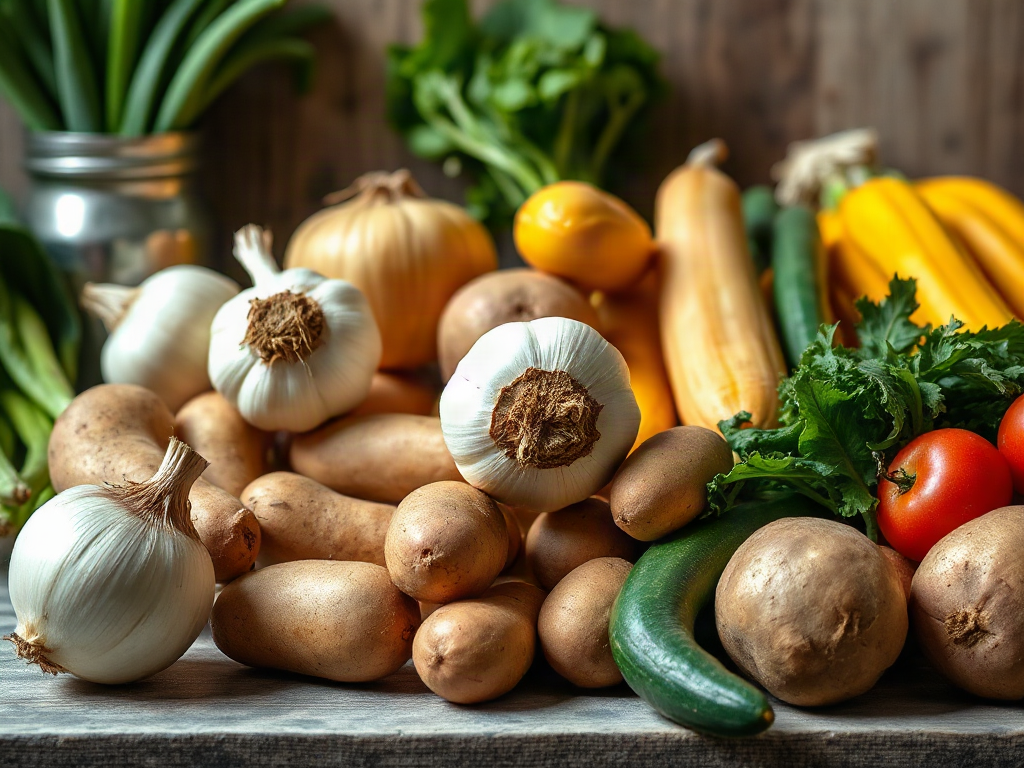
Whole, unwashed onions, garlic, winter squash, sweet potatoes, and firm potatoes usually tolerate countertop storage longer than leafy greens, tomatoes, cucumbers, or cut vegetables. Their dense structure and relatively low surface moisture slow softening and microbial spoilage, especially in a cool, dry, shaded, well-ventilated spot. Store onions and garlic separately from potatoes, keep sweet potatoes away from cold drafts, and use a breathable basket rather than a sealed plastic bag. Check for soft spots, leaking, mold, sprouting, or strong odors every few days; a vegetable that was bruised, washed, or cut will deteriorate much sooner than an intact one.
The Vegetables That Hold Up Best on a Countertop
The strongest countertop candidates are intact vegetables with firm tissue, protective skins, and modest moisture loss. Whole onions, garlic, winter squash, sweet potatoes, and mature potatoes generally last longer at room temperature than tender vegetables because their outer layers slow dehydration and damage. Storage time still depends on the vegetable’s condition when purchased, the warmth of the kitchen, and whether the item has been washed or bruised.
Winter squash, including acorn, butternut, and spaghetti squash, is particularly suited to a counter or pantry shelf. Its hard rind protects the edible interior, although a cut squash should be refrigerated. Onions and garlic also perform well in dry surroundings with air circulation. Their papery skins are useful protection, but trapped humidity can encourage mold around the neck or roots.
Firm potatoes and sweet potatoes are durable but need different treatment. Potatoes prefer a cool, dark, ventilated area and may develop green color or unwanted sprouting under light. Sweet potatoes can suffer chilling damage in very cold storage, so a moderately cool countertop location may be more suitable than the refrigerator for short-term holding. They should remain dry and away from direct sun.
Hard vegetables such as whole carrots, beets, and turnips may sit briefly on a countertop, but refrigeration usually preserves quality better. Their tops should be removed because leafy growth draws moisture from the root. A common mistake is treating every firm vegetable as interchangeable; a dry onion basket is appropriate for onions but not for a damp bunch of carrots or leafy greens.
For a quick comparison, the best countertop choices are usually:
- Winter squash with an unbroken rind
- Dry onions and garlic with intact skins
- Whole potatoes kept away from light
- Sweet potatoes in a dry, moderately cool place
- Uncut, firm tomatoes when flavor is prioritized over maximum storage time
Tomatoes deserve a qualification. They can remain on the counter and often taste better there than when chilled, but they are not as long-lasting as onions or squash. Use the countertop for tomatoes that need to finish ripening, then move very ripe ones to the refrigerator if a short extension is more valuable than peak texture.
Why Dryness, Temperature, and Airflow Matter
Countertop storage works best when it slows two competing processes: water loss and microbial growth. A vegetable may spoil because it becomes limp and shriveled, or because moisture collects on its surface and supports mold. Hard-skinned vegetables tolerate this balance better than delicate produce, but no vegetable benefits from heat, sunlight, or stagnant air.
Relative humidity is a major dividing line. Onions, garlic, and winter squash need a dry environment because their outer layers are already designed to protect them. Sealing them in a plastic bag traps moisture and can leave condensation against the skin. A wire basket, mesh bag, or open paper sack usually provides a better compromise. By contrast, carrots and beets lose water quickly on a dry counter, so refrigeration in a suitable container is generally the better choice.
Temperature changes the result. A warm kitchen speeds respiration and softening, particularly in potatoes and tomatoes. A sunny windowsill adds heat even when the room itself feels comfortable. The space beside a stove or dishwasher is therefore a poor storage location. A shaded cabinet with ventilation may be more reliable, provided it is not humid and does not trap ethylene-producing items against sensitive vegetables.
Airflow matters because damaged vegetables release moisture and create localized dampness. Do not pile onions beneath a leaking squash or press potatoes into a crowded bowl. Give each item enough room for air to move around it, and rotate the older pieces forward. The goal is not maximum exposure to air; excessive airflow can shrivel produce. The practical target is gentle ventilation without condensation.
Ethylene can complicate countertop storage. Ripe tomatoes, bananas, and some fruits release the gas, which can accelerate quality changes in nearby sensitive items. Separating tomatoes from potatoes and keeping produce groups in their own containers reduces unnecessary interaction. This does not mean every vegetable must be isolated, but crowded mixed-produce bowls make it harder to identify which item is causing softening or moisture.
Readers comparing which vegetables tolerate countertop storage longest should therefore judge the storage environment as carefully as the vegetable itself. A dry, shaded, ventilated counter can outperform a warm pantry, while a humid counter can shorten the life of even a durable squash.
How to Store Each Long-Lasting Vegetable
Preparation begins before the vegetables reach the counter. Choose pieces that are firm, dry, and free from cuts, bruises, wet patches, or visible mold. Do not wash durable vegetables before storage unless you plan to use them promptly; surface water can settle into crevices and shorten their usable life. Brush away loose soil gently rather than scrubbing the skin.
Onions and garlic
Keep onions and garlic in a breathable container in a dark, dry place. Separate them from damp vegetables and inspect the necks and roots periodically. Softness, leaking, fuzzy mold, or a sharp unpleasant odor indicates deterioration. Do not store onions directly beside potatoes for long periods if a cooler, drier alternative is available, because the combined moisture and gases can encourage faster quality loss.
Potatoes and sweet potatoes
Potatoes need darkness to reduce greening, and a ventilated bin is preferable to a sealed container. Avoid washing them until use. Sweet potatoes should also stay dry, but they are more vulnerable to cold damage than ordinary potatoes, so a cool kitchen cabinet may be a better short-term location than a refrigerator. Neither should be stored where sunlight or appliance heat reaches them.
Winter squash
Set squash on a shelf rather than directly on a damp counter. Avoid stacking heavy items on the rind, and turn pieces occasionally so a hidden soft patch does not go unnoticed. A small surface blemish does not automatically mean the whole squash is unusable, but a spreading soft area, leaking liquid, or mold calls for caution. Once cut, cover the flesh and refrigerate it.
Tomatoes
Place tomatoes stem-side up in a single layer away from direct sun. Refrigeration can dull texture and aroma, so the counter is reasonable for firm or ripening tomatoes. Very soft tomatoes should be used soon rather than retained as a long-storage vegetable. Store them separately from vegetables that need a dry, stable environment.
A useful routine is to assign one basket to dry storage and one refrigerator zone to moisture-sensitive roots. Mark the date only when you buy more than you can remember, and use the oldest sound items first. The mistake to avoid is relying on a fixed number of days; a bruised onion in a warm kitchen may fail before an intact onion in a cool cupboard.
For readers building a broader system around countertop vegetable storage, the priority order is simple: protect dry vegetables from moisture, protect potatoes from light, protect tender items from heat, and refrigerate anything cut or visibly wet.
When Countertop Storage Stops Being a Good Choice
Countertop storage is a quality decision, not a rule that every vegetable must follow. Move produce to refrigeration when the room is warm, the counter receives sunlight, humidity is high, or the vegetables will not be used soon. Refrigeration is usually the better option for leafy greens, broccoli, cauliflower, green beans, mushrooms, zucchini, cucumbers, and cut vegetables because their water loss and softening occur quickly at room temperature.
Some compromises are worth making. A tomato may taste better after ripening on the counter, while a cucumber may retain useful texture longer in the refrigerator. A potato should not be placed in a bright decorative bowl simply because it is convenient. A winter squash can occupy a counter for weeks under suitable conditions, but a cut squash belongs in cold storage even if the remaining portion looks clean.
Inspect stored vegetables rather than waiting for an obvious failure. A small soft spot, sprout, wrinkle, or color change may signal that quality is declining, though the appropriate response depends on the vegetable and the extent of the damage. Mold, spreading decay, leaking liquid, or a strong off odor are stronger reasons to discard the affected item. Do not let one deteriorating vegetable remain in contact with the rest.
Countertop storage also changes how much you should buy. If your kitchen stays warm, purchase fewer potatoes and onions at a time and replenish them more often. If you have a shaded, ventilated area, buying a whole winter squash may be practical. This approach reduces waste without assuming that countertop storage can replace refrigeration.
Use this compact check before leaving a vegetable out:
- Whole and dry: suitable candidates include onions, garlic, squash, and some potatoes.
- Cut, washed, or bruised: use promptly or refrigerate as appropriate.
- Light-sensitive: keep potatoes in darkness.
- Moisture-sensitive: give onions, garlic, and squash ventilation.
- Soft, moldy, leaking, or foul-smelling: isolate and assess immediately rather than mixing it with sound vegetables.
That check is more reliable than a universal shelf-life chart because household conditions vary. The best storage method is the one that matches the vegetable’s structure, the room’s conditions, and your expected use date.
For additional storage guidance, consult produce-handling information from the USDA, university extension services, and recognized food-safety organizations. These sources can clarify refrigerator temperatures, handling of cut vegetables, and quality changes for specific varieties.
Frequently Asked Questions
Which vegetables last longest on a countertop?
Whole winter squash, dry onions, garlic, potatoes, and sweet potatoes are among the more durable choices when kept dry, shaded, and ventilated.
Should onions and potatoes be stored together?
Separate storage is usually preferable because moisture and gases in a crowded shared container may speed sprouting or spoilage.
Can sweet potatoes stay on the counter?
Yes, for short-term storage in a dry, moderately cool, shaded place. Avoid dampness, direct sun, and very cold conditions.
Do tomatoes last longer in the refrigerator?
Cold storage may extend usable time for very ripe tomatoes, but it can reduce their texture and aroma. Firm tomatoes generally ripen better on the counter.
What should never remain on the counter for long?
Cut vegetables, leafy greens, mushrooms, broccoli, and other tender or moisture-sensitive items usually keep better in the refrigerator.
Conclusion
Whole onions, garlic, winter squash, potatoes, and sweet potatoes are the most dependable countertop vegetables when the location is dry, dark or shaded, and well ventilated. Their durability comes from firm tissue and protective skins, not from immunity to spoilage. Keep potatoes away from light, keep onions and garlic away from trapped humidity, and move cut or wet vegetables into appropriate cold storage. Check the basket regularly for soft spots, mold, leaks, sprouting, and odors, then use older sound items first. Tomatoes can remain on the counter for better ripening and flavor, but they need faster attention than squash or onions. Matching the container and location to each vegetable will reduce waste more effectively than following a single universal storage timetable.