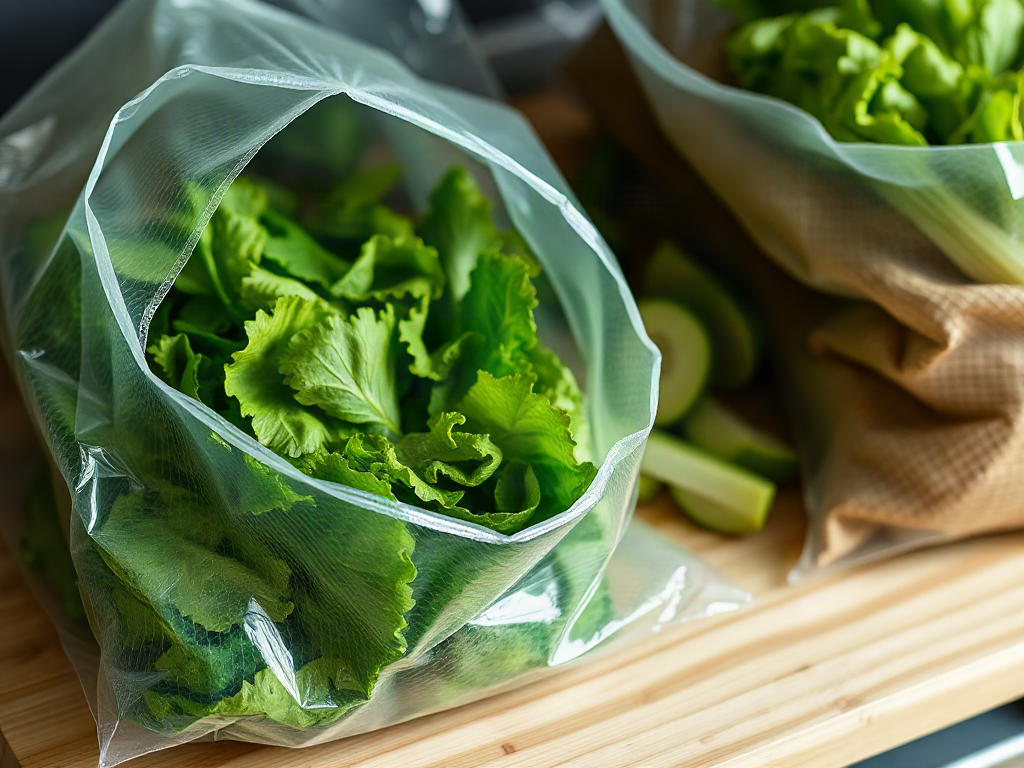
Organic greens retain nutrients best in perforated bags when they are cooled quickly, kept slightly humid, and protected from excess condensation and physical damage. Small openings allow some moisture and respiratory gases to escape, reducing the wetness that accelerates decay while limiting dehydration compared with an open container. Refrigeration, shade before chilling, gentle handling, and avoiding tightly packed or warm bags matter more than the bag material alone. Leafy greens should be stored unwashed when possible, or dried thoroughly after washing, because surface water encourages bacterial growth and tissue breakdown.
Why Perforation Affects Green Quality
Perforated bags influence nutrient retention by changing the small environment around leafy greens. After harvest, leaves remain living tissue: they respire, lose water, and gradually use stored carbohydrates. A bag with limited openings can slow moisture loss compared with uncovered storage, while allowing enough air exchange to reduce the accumulation of water vapor and heat. The useful balance is neither a sealed pouch nor a completely exposed pile.
Leafy greens such as spinach, kale, arugula, chard, romaine, and loose-leaf lettuce are particularly sensitive to handling conditions because their large surface area loses water readily. Wilting is mainly a quality problem rather than a direct measure of every nutrient change, but dehydration often occurs alongside loss of crispness and declining vitamin-sensitive compounds. Bruising creates another problem: damaged cells leak fluid, soften faster, and may develop localized decay.
A perforated bag works best when its openings match the quantity and condition of the greens. A small amount of dry, intact spinach may do well in a lightly vented produce bag. A crowded bag containing wet leaves can still develop condensation because the leaves release moisture faster than the openings remove it. By contrast, very large holes may keep the package dry but allow rapid wilting, especially in a refrigerator with moving air.
Readers comparing storage options should avoid assuming that “more ventilation” is automatically better. An open bowl may prevent trapped condensation but expose leaves to refrigerator air and nearby odors. A sealed plastic bag may preserve humidity briefly but create a damp interior. Perforation is a compromise, and its performance depends on temperature, leaf condition, packing density, and how long storage lasts.
That makes organic greens nutrient retention in perforated bags a handling question as much as a packaging question. The bag should support rapid cooling and moderate humidity, not serve as a substitute for careful harvest, transport, or preparation.
Temperature, Moisture, and Nutrient Loss
Temperature is usually the first storage variable to control because warmth accelerates respiration and quality decline. Greens left in a sunny vehicle, warm kitchen, or unrefrigerated delivery box may lose freshness before they ever enter a perforated bag. Cooling them promptly after harvest or purchase generally gives the package a better starting point than trying to correct a warm, wilted product later.
Moisture requires a narrower balance. High humidity helps reduce water loss and preserves leaf firmness, but free water on the leaves encourages sliminess and decay. Condensation often forms when warm greens are placed directly into a cold refrigerator or when wet leaves are packed tightly. The droplets may look harmless at first, yet they keep surfaces wet and create conditions in which damaged tissue breaks down quickly.
Water-soluble nutrients, including vitamin C and some B vitamins, are vulnerable to losses associated with prolonged storage, tissue damage, and later washing or cooking. Light-sensitive pigments and other plant compounds may also change as leaves age. The exact pattern differs by crop and handling history, so a bright green appearance should not be treated as a complete nutrient test. Good packaging mainly slows quality deterioration; it does not preserve every compound indefinitely.
For example, freshly harvested kale that is dry on the surface and chilled soon after harvest may remain usable in a vented bag for several days. A bag of rinsed arugula packed while visibly wet may develop soft edges much sooner, even if both bags are kept in the same refrigerator. The difference is not the organic label or the perforation count alone; it is the combination of surface water, tissue fragility, air movement, and time.
Use the following priority order when conditions are less than ideal:
- Move greens out of heat and direct sunlight quickly.
- Remove damaged leaves that are leaking, slimy, or heavily bruised.
- Keep leaves dry on the surface while retaining moderate humidity.
- Avoid compressing the bag or filling it beyond a loose, breathable layer.
- Use older greens first rather than mixing them with a fresh batch.
These steps support nutrient retention indirectly by slowing the chain of wilting, bruising, microbial spoilage, and repeated handling. They also make it easier to identify whether a storage problem comes from excess water or excessive drying.
Choosing and Using Perforated Bags
A useful perforated bag is clean, food-safe, and vented enough for the amount of produce inside. There is no universal hole pattern that suits every green. Tender baby greens release moisture and bruise easily, while sturdy kale or collard leaves tolerate somewhat more handling. A bag that works for dry kale may be too restrictive for a dense load of freshly washed spinach.
Pack greens loosely rather than pressing them into a compact mass. Air pockets do not need to be large, but leaves should not be crushed against one another. If a bag is visibly fogged inside, open it briefly in a clean preparation area, inspect the leaves, and remove excess moisture with a clean towel or salad spinner. Do not repeatedly open and close a warm bag without a reason; each handling cycle can introduce contamination and physical damage.
Washing before storage is a tradeoff. Prewashing can make healthy eating more convenient, but residual water shortens the useful storage window. If greens are washed in advance, drying is the decisive step. Spin or pat them until the surfaces are no longer wet, then place them in the vented bag with a dry absorbent towel if appropriate. Replace the towel when it becomes damp rather than leaving accumulated moisture against the leaves.
Unwashed storage is often simpler for people who can rinse greens immediately before eating. The outside of the bag should remain clean, and raw produce should be kept away from leaking meat, seafood, or poultry packages. Organic production does not mean produce is free from soil organisms or handling contamination, so storage packaging should not be confused with a sanitation step.
Perforated bags also differ from rigid containers. A container protects delicate leaves from crushing and can be useful for salad mixes, but it may trap more humidity unless its lid is vented. A bag conforms to the contents and uses less space, yet it offers less protection from compression. Choose a bag when humidity control and flexibility are priorities; choose a vented container when fragile leaves are being transported or stacked.
Test the setup by checking the leaves rather than judging the package by appearance alone. Firm, dry-surfaced leaves with no sour odor suggest a workable balance. Limp leaves without wetness point toward excessive moisture loss or storage time, while slick surfaces, strong odors, and rapidly darkening edges indicate that the greens should be discarded rather than “saved” by adding more ventilation.
Storage Mistakes and Practical Checks
The most common failure is packing greens while they are warm and wet. Cooling slows deterioration, but refrigeration does not instantly remove surface water. A crowded bag then becomes a humid chamber, and the leaves at the center receive less air movement than those near the openings. Separating large volumes into smaller bags can work better than forcing one full bag to handle all the moisture.
Another mistake is storing greens near the refrigerator door or against a cold surface without checking the local conditions. Door shelves experience repeated temperature changes, while contact with an icy wall can damage tender leaves. A stable refrigerator shelf is generally more suitable, provided the bag is not crushed beneath heavier items. Greens should be kept away from foods with strong odors because leafy tissue can absorb unwanted aromas.
Do not rely on a calendar alone. Inspect storage every day or two, especially after washing. Look for yellowing, translucent wet spots, mushy stems, unpleasant odor, and slimy texture. A few dry, wilted leaves may be usable after trimming and immediate preparation, but decay should not be spread through a fresh batch. When one leaf is leaking or decomposing, examine neighboring leaves closely because contact transfers moisture and microbes.
A simple home comparison can reveal what your refrigerator is doing. Divide similar greens into two clean batches: place one in a lightly perforated bag and the other in a vented rigid container. Keep both in the same area, avoid washing them beforehand, and check surface dryness, firmness, odor, and visible decay at regular intervals. The comparison is not a laboratory nutrient test, but it can identify which package gives your particular greens fewer quality failures.
Use perforated storage for organic greens when you can control dryness, temperature, and packing density. Choose a different arrangement when leaves are already saturated, badly bruised, or intended for immediate cooking. The practical goal is not to maximize storage time at any cost; it is to preserve edible quality while minimizing waste and unnecessary handling.
What Nutrient Retention Can and Cannot Mean
Better freshness does not guarantee a fixed nutrient profile. Nutrient retention depends on the crop, harvest maturity, time since harvest, temperature history, light exposure, washing, cutting, and cooking. Perforated packaging addresses only part of that chain. It may help maintain texture and reduce the conditions that speed deterioration, but it cannot reverse nutrient changes that occurred during a long warm transport period.
Preparation after storage matters as well. Cutting greens increases exposed surface area and releases cellular fluids, so whole leaves generally offer more protection than chopped leaves during storage. Rinsing immediately before use can reduce the time that water sits on the tissue. Gentle cooking may make some greens easier to eat, but prolonged heating and cooking water can reduce heat-sensitive or water-soluble nutrients. The appropriate method depends on the green and the meal, not on a claim that raw or cooked is always superior.
For a practical meal, use tender greens soon after purchase in a salad, while directing sturdier kale or collards toward a cooked dish later in the week. Pairing greens with beans, eggs, tofu, grains, or another protein source can make the meal more substantial, but packaging does not alter the nutritional role of those foods. People with medical conditions or specialized dietary needs should use individualized advice rather than treating storage guidance as nutrition treatment.
The best indicator of a successful storage routine is a consistent reduction in premature wilting, wet decay, and discarded leaves. If greens remain crisp but develop repeated condensation, increase drying and reduce bag density before enlarging the perforations. If they stay dry but wilt rapidly, the package may be too open, the refrigerator air may be too dry, or the greens may have entered storage already dehydrated.
For more context, see organic greens nutrient retention in perforated bags alongside your own observations of crop type and refrigerator conditions. A modest, repeatable routine usually outperforms a complicated packaging experiment.
Frequently Asked Questions
Do perforated bags preserve more nutrients than sealed bags?
Not automatically. Perforations may reduce condensation while retaining moderate humidity, but the result depends on leaf moisture, packing density, temperature, and storage time.
Should organic greens be washed before putting them in a perforated bag?
They can be stored unwashed and rinsed before eating, or washed and dried thoroughly first. Wet leaves packed into a bag are more likely to develop sliminess and decay.
Why do greens wilt inside a perforated bag?
Wilting may result from excessive ventilation, dry refrigerator air, long storage, or greens that were already dehydrated before packaging. A looser humidity barrier may be reducing water loss too little.
Is condensation inside the bag a nutrient problem?
Condensation is mainly a quality and spoilage warning. Persistent droplets keep leaf surfaces wet, which can accelerate softening and decay that may accompany broader nutrient deterioration.
What is the best way to store delicate salad greens?
Keep them chilled, dry on the surface, loosely packed, and protected from crushing. A lightly vented bag or vented container can work, but inspect frequently and use damaged leaves promptly.
Conclusion
Perforated bags are useful because they balance two competing needs: leafy greens need enough humidity to limit wilting, but they also need an escape route for excess moisture. Rapid cooling, dry surfaces, gentle handling, and a loose pack should come before adjusting the number or size of openings. Check for fogging, wet spots, soft tissue, odor, and yellowing rather than assuming a bag is working because it is labeled breathable. Use delicate greens sooner, keep sturdier leaves for later meals, and avoid storing damaged produce with a fresh batch. These habits may help preserve freshness and reduce waste, while realistic nutrient expectations recognize that packaging cannot undo heat, age, bruising, or prolonged storage.