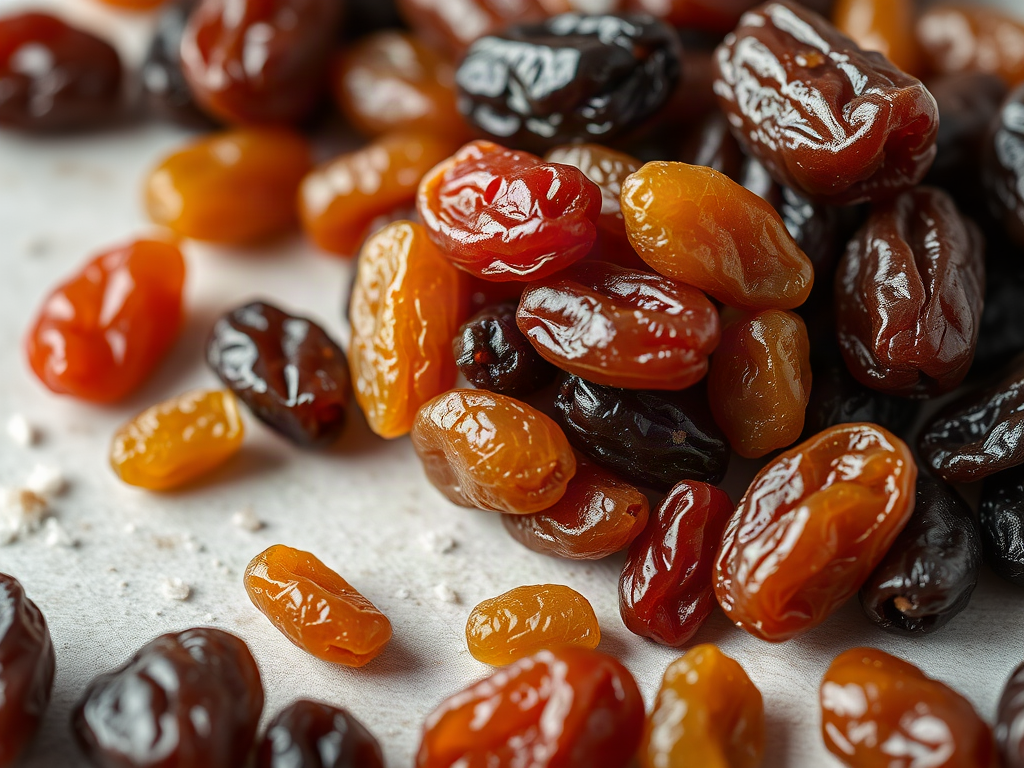
Raisin nutrition combines fiber, potassium, iron, and plant compounds with concentrated sugars created when grapes lose most of their water during drying. The smaller volume makes raisins easy to eat quickly, so a modest handful can deliver far more carbohydrate than the same apparent portion of fresh grapes. Their fiber and intact fruit structure distinguish them from candy, but they can still raise blood glucose and add substantial energy when portions are unchecked. Measuring a serving, pairing raisins with protein or fat, and choosing unsweetened products can make them easier to fit into meals and snacks.
How Does Drying Change Raisin Nutrition?
Drying changes the nutritional experience of grapes primarily by removing water, not by turning the fruit into a fundamentally different food. A grape is mostly water and occupies considerable space for the carbohydrate it contains. Once dried, the fruit shrinks, becomes shelf-stable, and packs more naturally occurring sugar and energy into each bite. This concentration explains why equal-looking volumes of grapes and raisins are not nutritionally equivalent.
The practical issue is eating speed. A person may finish a small box of raisins in a few minutes, while the number of fresh grapes from which it was made would require more chewing and feel more physically substantial. Raisins still contain fiber and portions of the grape’s minerals and plant compounds, but the reduced volume provides less immediate stomach-filling capacity. That does not make raisins nutritionally empty; it makes portion awareness more consequential.
Some nutrients tolerate drying better than others. Minerals such as potassium and iron remain in the food, while heat, oxygen, processing method, and storage can affect more fragile compounds. Exact values vary by grape variety and product, so a current nutrition label or a food-composition database is more useful than assuming every raisin product is identical. Dark natural raisins, golden raisins, and specialty varieties may also be processed differently, although their central nutritional tradeoff remains similar: useful fruit components in a compact, sugar-dense form.
| Food characteristic | Fresh grapes | Raisins | Practical implication |
|---|---|---|---|
| Water content | High | Low | Raisins provide less volume per bite. |
| Sugar per spoonful | Lower | Higher | A small scoop can supply substantial carbohydrate. |
| Chewing and eating pace | Usually slower | Often faster | It is easier to exceed the intended portion with raisins. |
| Storage | Perishable | Shelf-stable | Raisins are convenient for travel and pantry use. |
A common mistake is counting a full bowl of raisins as interchangeable with a full bowl of fresh fruit. Compare products by weight or by the serving printed on the package rather than by visual volume. For routine use, portioning raisins before eating is more reliable than reaching repeatedly into a large bag. If the measured amount looks surprisingly small, adding it to another food—rather than enlarging the raisin portion—usually creates a more satisfying result.
Are Raisin Sugars Different From Added Sugars?
The sugars in plain raisins occur naturally within dried fruit tissue, whereas added sugars are incorporated during manufacturing or preparation. That distinction matters because plain raisins also supply fiber, minerals, and fruit-derived compounds. It does not mean their sugars become metabolically irrelevant. Digestive enzymes still make their carbohydrate available for absorption, and the concentrated form can contribute a meaningful amount of sugar in a small serving.
Whole-food structure creates a more nuanced comparison than “fruit sugar is harmless” or “all sugar is identical.” Raisin fiber and chewy texture may slow consumption compared with juice, syrup, or soft candy. At the same time, raisins are less bulky than fresh fruit and can be consumed more quickly than many intact fruits. Their nutritional context is therefore better than that of pure sugar, but their compactness still deserves attention.
Plain and sweetened dried fruit also need to be separated. Some flavored dried-fruit products contain added sweeteners, coatings, or juice concentrates. The front of a package may emphasize fruit while the ingredient list reveals additional sugar sources. For raisins, a short ingredient list is usually enough: raisins may be the only ingredient, with oil occasionally used to reduce sticking. Golden varieties may include a preservative used to maintain their lighter color, which matters to people who are sensitive to sulfites or have been advised to avoid them.
Dental exposure is another tradeoff. Raisins are sticky and can remain around tooth surfaces longer than watery fruit. Frequency may matter as much as the amount: grazing on raisins throughout the afternoon repeatedly exposes the mouth to fermentable carbohydrate. Eating them with a meal, drinking water afterward, and maintaining normal oral hygiene may be more sensible than treating them as an all-day desk snack. Raisins should not be assumed to cause a specific dental outcome on their own, because total diet and oral-care habits also matter.
The most useful label check has three parts:
- Serving size: Compare the listed amount with what you actually pour.
- Total and added sugars: Confirm whether sweetness comes only from the fruit or also from added ingredients.
- Ingredient list: Look for coatings, sweeteners, preservatives, or flavorings relevant to your needs.
Replacing candy with plain raisins can add fiber and minerals, but an unlimited substitution misses the concentration issue. The better comparison is a measured amount of raisins versus the snack it replaces, considered alongside hunger, meal timing, dental exposure, and total carbohydrate needs.
How Do Portion Size and Meal Context Affect Blood Glucose?
Blood glucose response depends on the amount eaten, the rest of the meal, and the individual—not simply on whether a food is classified as natural. A larger raisin portion supplies more available carbohydrate than a small garnish. Eating that portion alone may produce a different response from mixing a modest amount into a meal containing protein, fat, and additional fiber.
Consider two breakfasts. Raisins eaten by the handful alongside sweetened cereal create a concentrated combination of dried fruit and refined carbohydrate. A smaller amount stirred into plain oatmeal with nuts adds sweetness while the oats, nuts, and controlled portion provide a broader meal structure. The second meal is not automatically appropriate for everyone, but it illustrates how raisins can function as an ingredient rather than the entire carbohydrate source.
People managing diabetes, insulin resistance, reactive symptoms, or prescribed carbohydrate targets may need more individualized decisions. “Natural sugar” is not a dependable basis for estimating a glucose response. Package carbohydrate information, the measured portion, medication timing, physical activity, and personal monitoring data may all be relevant. A registered dietitian or diabetes-care clinician can help translate those factors into an appropriate amount without treating raisins as either forbidden or unrestricted.
For people without a clinical carbohydrate plan, a simple process keeps the decision grounded:
- Place the intended amount in a small bowl or add it directly to the meal instead of eating from the package.
- Pair it with a food that contributes protein or fat, such as unsweetened yogurt, nuts, seeds, or cheese.
- Check whether the combination holds hunger until the next planned meal or snack.
- Reduce the raisin amount or change the pairing if the snack encourages repeated eating rather than satisfying hunger.
Signs that the approach is working are practical rather than dramatic: the portion is consistent, the raisins replace rather than supplement another sweet food, and the meal remains satisfying. A failing pattern often looks like frequent refilling, combining raisins with several other sweetened ingredients, or relying on a large serving because the snack lacks protein and volume.
Raisins can be particularly useful when compact energy is the goal. Hikers, endurance participants, or people who need portable food may value their shelf stability and quick carbohydrate. Someone sitting at a desk with little appetite may prefer fresh fruit for its water and larger volume. Neither choice is universally superior; the appropriate form depends on whether concentration is an advantage or a constraint.
How to Choose and Use Raisins Well
Raisins work best when their role is decided before they are poured. They can sweeten a dish, supply portable carbohydrate, or add chewiness to savory and sweet recipes. Problems arise when a garnish quietly becomes a large snack or when multiple concentrated sweet ingredients accumulate in the same meal.
For breakfast, use raisins to replace part of another sweetener rather than adding them on top of brown sugar, sweetened granola, and flavored yogurt. Plain yogurt with raisins and walnuts provides a different balance from a fruit-flavored yogurt topped with sweetened cereal and dried fruit. In oatmeal, cinnamon and chopped nuts can distribute flavor so that fewer raisins are needed in each spoonful.
At lunch or dinner, raisins can add contrast to grain salads, slaws, lentil dishes, or roasted vegetables. A spoonful dispersed through several portions contributes bursts of sweetness without making raisins the main ingredient. In baked goods, however, dried fruit does not automatically convert a cookie or sweet bread into a low-sugar food. Flour type, added sweeteners, fats, and portion size still determine the broader nutritional profile.
Organic and conventional raisins have the same central concentration issue. Organic certification addresses production standards; it does not mean the product contains less naturally occurring sugar or requires no portion awareness. Choose organic raisins when those farming standards fit your priorities and budget, but evaluate nutrition with the same label-reading process used for conventional products.
Use this compact buying and serving checklist:
- Prefer plain raisins when you do not want added sweeteners or flavor coatings.
- Inspect the declared serving and measure it at least once to calibrate your usual pour.
- Choose individual boxes for portion convenience, not because packaging changes the sugar concentration.
- Combine raisins with minimally sweetened foods rather than stacking several sources of sweetness.
- Store them sealed; discard products showing moisture damage, mold, an unusual odor, or insect activity.
Parents and caregivers should also consider texture and developmental readiness. Dried fruit is chewy and sticky, and suitability depends on a child’s age, chewing ability, supervision, and professional feeding guidance. Cutting or softening raisins may be appropriate in some situations, but it does not remove every choking concern. When there is uncertainty, advice from a pediatric clinician or qualified feeding professional is more appropriate than relying on a package image.
The soundest routine is flexible: fresh fruit when volume and hydration are priorities, raisins when portability or concentrated energy is useful, and measured amounts when they serve mainly as a flavor accent. That approach preserves their convenience and nutritional value without granting dried fruit a misleading health halo.
Conclusion
Raisins occupy a useful middle ground: they retain fiber, minerals, and fruit structure, yet drying makes their sugars and energy much more compact than those in fresh grapes. The priority is not eliminating them but using their concentrated form deliberately. Check the ingredient list, compare your actual amount with the labeled serving, and avoid stacking raisins with several other sweetened foods.
Choose fresh fruit when water and greater food volume better match your appetite. Choose raisins when shelf stability, portability, or compact carbohydrate is genuinely useful. For everyday meals, treat them as a measured ingredient and pair them with foods that add protein, fat, or additional fiber. Anyone following a clinical carbohydrate plan should base portions on individualized guidance rather than the assumption that naturally occurring sugar has no effect.
Frequently Asked Questions
Are raisins considered added sugar?
Plain raisins contain naturally occurring fruit sugars, not added sugar. Sweetened or flavored dried-fruit products may contain additional sweeteners, so check both the ingredient list and the added-sugars line.
Are raisins healthier than candy?
Plain raisins provide fiber, minerals, and fruit compounds that most candy lacks, but they remain concentrated in sugar and energy. Compare measured portions rather than treating raisins as unlimited.
Can people with diabetes eat raisins?
Raisins may fit some individualized eating plans, but their compact carbohydrate content requires attention to portion size, meal composition, medication, and personal glucose response. A diabetes-care professional can provide tailored guidance.
Is it better to eat raisins alone or with another food?
Pairing a measured amount with nuts, plain yogurt, cheese, oats, or another substantial food often creates a more balanced snack or meal than eating raisins by the handful.
Do organic raisins contain less sugar?
No. Organic status describes production practices rather than lower natural sugar concentration. Variety, drying, serving size, and added ingredients are more relevant to the nutrition label.