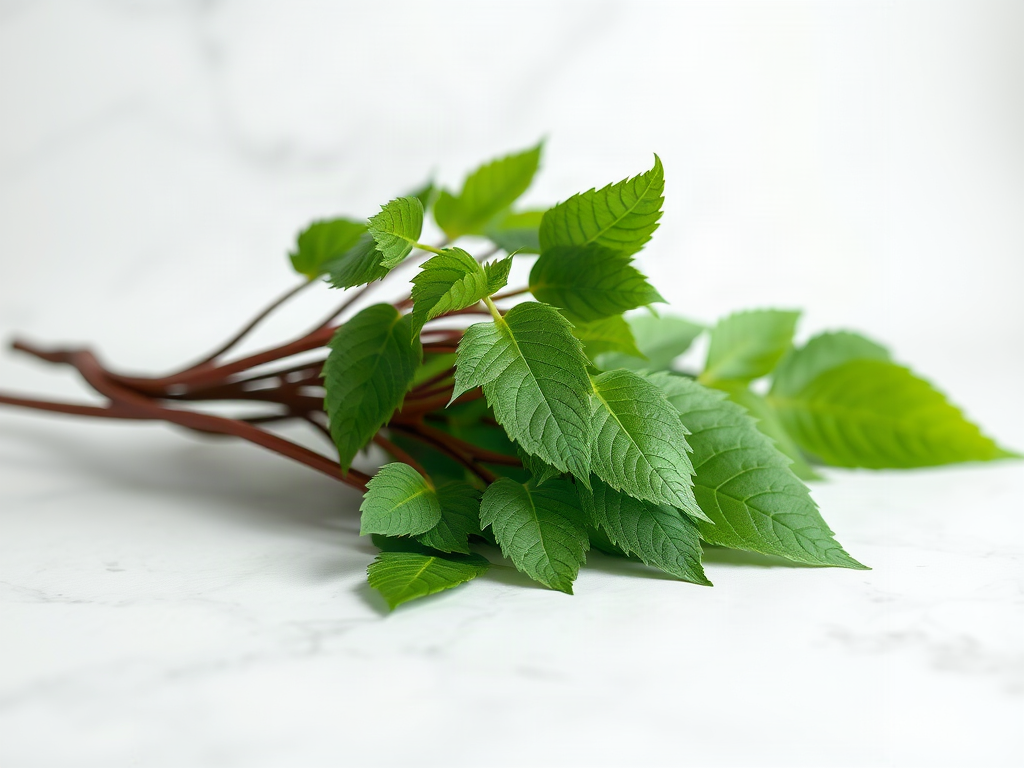
Organic moringa nutrition is most defensible as a source of plant nutrients, including fiber, minerals, carotenoids, and polyphenols, rather than as a treatment for disease. Drying concentrates some components by weight but can reduce heat-sensitive vitamins, while actual intake depends on the small serving used and substantial product-to-product variation. Human evidence for blood sugar, cholesterol, inflammation, or other clinical benefits remains limited and does not justify replacing established care. Choose a product with credible organic certification and contaminant testing, treat label claims cautiously, and review concentrated use with a clinician if you are pregnant, take medication, or manage a medical condition.
What Nutrients Does Moringa Provide?
Moringa leaves contain a varied mixture of nutrients and plant compounds, but the meaningful amount in a meal depends on whether the leaves are fresh, cooked, or dried into powder. The leaves can provide fiber, protein, minerals, carotenoids, and polyphenols. Fresh leaves may also contribute vitamin C and folate, although handling, storage, heat, and drying can change their levels. A nutrient-rich plant is not automatically a concentrated source of every nutrient in the portion a person normally consumes.
Powder creates a common interpretation problem. Removing water makes dried moringa look nutritionally dense per 100 grams, yet a consumer may use only a spoonful in oatmeal or a smoothie. Comparing a 100-gram laboratory profile with a small household serving exaggerates the practical contribution. The better calculation starts with the amount actually eaten, the product’s serving size, and the nutrient quantities listed for that serving.
Preparation affects the result as well. Heat-sensitive compounds may decline during drying or cooking, while minerals generally remain because they are not destroyed by heat. Carotenoids and other fat-soluble compounds may be used more effectively as part of a meal containing some fat, such as moringa stirred into lentils with olive oil or added to eggs. That does not mean oil transforms moringa into a medicine; it simply places the food within a meal that supports ordinary digestion of fat-soluble substances.
Moringa also contains antinutritional compounds found in many plants. These can interact with mineral availability, although the relevance depends on processing, total diet, portion, and frequency. A person eating varied meals with beans, grains, vegetables, fruit, nuts, and animal foods or fortified alternatives should assess moringa as one ingredient within that pattern, not as the sole answer to a nutrient gap.
A useful comparison is moringa powder versus familiar whole foods. Leafy vegetables offer water, volume, and a recognizable serving; beans provide substantial fiber and protein; dairy foods or fortified alternatives may deliver more predictable calcium per serving. Moringa can add variety and flavor, but it should not displace foods that provide larger, measurable amounts of a needed nutrient. The common mistake is judging the powder by an impressive nutrient list without checking serving-level quantities or the rest of the diet.
Does Organic Certification Change Moringa’s Nutrition?
Organic certification primarily addresses how an agricultural product is grown, handled, and documented; it does not establish that moringa contains more vitamins, minerals, or therapeutic compounds. Nutrient composition can vary with plant variety, soil conditions, maturity at harvest, climate, leaf selection, drying temperature, storage time, and laboratory method. Those variables can matter more to the finished powder than the word “organic” by itself.
Certification may still have practical value. A credible organic seal gives consumers a defined production claim that is subject to an established certification system. It is more informative than unverified phrases such as “naturally grown” or “chemical-free.” Even so, organic status does not demonstrate freedom from microbes, heavy metals, undeclared ingredients, or handling failures. Agricultural products can encounter contamination during cultivation, drying, milling, transport, or packaging regardless of farming method.
Consider two jars of leaf powder. One carries an organic certification but gives no lot number, testing information, origin, or storage guidance. The second is also certified and provides a traceable batch, a clear ingredient statement, contact information, and evidence that the manufacturer checks identity and contaminants. The second product offers more decision-relevant information, even if both display the same organic claim. Conversely, a nonorganic food is not automatically less nutritious or unsafe merely because it lacks organic certification.
Marketing often blurs three separate questions: how the crop was produced, what nutrients the serving contains, and whether the product produces a health outcome. Organic certification answers part of the first question. A reliable nutrition label or laboratory analysis may inform the second. Controlled human research is needed for the third. Treating one type of evidence as proof of all three leads to inflated expectations.
Prioritize verifiable details rather than decorative language. Check whether the named ingredient is leaf powder, extract, seed oil, or a blend because these are not nutritionally interchangeable. Look for the certifier’s identity, a lot or batch code, a realistic serving, manufacturing contact information, and independent testing where available. Avoid assuming that “raw,” “detox,” “superfood,” or a high antioxidant value guarantees a meaningful health effect. If organic production is personally important, certification can guide the purchase; it should not be used as a shortcut for judging potency, purity, or clinical benefit.
What Do Human Studies Actually Show?
Human research on moringa does not currently support broad conclusions about treating or preventing disease. Laboratory experiments can identify antioxidant activity or biological effects in cells, while animal studies can explore possible mechanisms. Those findings may justify further research, but they cannot establish that a typical serving of leaf powder will produce the same outcome in people.
Clinical questions commonly concern blood glucose, cholesterol, blood pressure, inflammation, or nutritional status. The available human literature has important constraints, including small samples, short study periods, differing preparations, inconsistent doses, and limited replication. A study using a standardized extract cannot automatically validate a retail leaf powder, tea, capsule, or mixed supplement. Likewise, a change in a laboratory marker is not necessarily evidence of fewer symptoms, improved daily function, or reduced disease risk.
Study design determines how much confidence a result deserves. Random assignment, a suitable comparison group, adequate blinding, clearly defined outcomes, transparent reporting, and independent repetition strengthen a claim. Without these features, changes may reflect normal variation, concurrent diet changes, medication use, participant expectations, or selective reporting. Positive findings deserve interest, but not certainty beyond what the methods can support.
A practical scenario shows the distinction. Someone with elevated blood glucose may see a claim that moringa “balances sugar” and add powder to a fruit-heavy smoothie while continuing prescribed medication. The smoothie’s total carbohydrate content, medication timing, overall eating pattern, and individual response are more immediately relevant than an uncertain supplement claim. Moringa should not prompt a medication change, and unexplained changes in glucose readings require clinical review rather than self-directed dose adjustments.
The same restraint applies to antioxidant language. Measuring antioxidant capacity in a test tube does not show that a product prevents oxidative damage or disease in a person. Digestion changes plant compounds, absorbed quantities may be small, and the body regulates them through complex metabolic pathways. Foods containing polyphenols can still belong in a varied diet, but the laboratory measurement is not a clinical guarantee.
Readers can assess a moringa claim with three questions: Was the evidence from humans? Was the tested preparation comparable to the product being sold? Did the research measure a meaningful health outcome rather than only a laboratory signal? If any answer is no or unclear, treat the claim as preliminary. The most common evidence error is moving directly from “contains biologically active compounds” to “produces a proven therapeutic benefit.” Those statements require different levels of proof.
How to Evaluate and Use Moringa Products
A sound purchase begins with product identity and traceability, not the largest collection of health promises. Moringa leaf powder is a food-like ingredient, whereas concentrated extracts and multi-ingredient capsules may deliver different compounds in less transparent amounts. Tea infusions may extract only part of what is present in the leaf. Decide whether the goal is culinary variety, a specific nutrient contribution, or a hoped-for clinical effect; only the first two can usually be assessed from ordinary product information.
Use a compact label check before buying:
- Identity: Confirm the plant part and whether it is powder, extract, tea, oil, or a blend.
- Serving: Compare nutrient claims with the amount you will realistically consume.
- Traceability: Look for a batch code, manufacturer contact, origin information, and an intact date label.
- Verification: Prefer credible certification and contaminant testing over vague purity statements.
- Claims: Reject products presented as replacements for medication or treatment.
For culinary use, begin with a modest amount consistent with the package directions because moringa has a strong green, slightly bitter flavor and concentrated powders may cause digestive discomfort in some people. It can be mixed into lentil soup, savory oatmeal, yogurt, or a bean dish. Adding it to a balanced meal makes its role easier to judge than swallowing several capsules while changing multiple other habits at once.
Signs that the approach is working are practical rather than dramatic: the product fits meals, the flavor is acceptable, the label’s serving contributes a nutrient you actually need, and no adverse symptoms appear. Signs to stop and reassess include persistent nausea, diarrhea, rash, dizziness, unexpected changes in monitored health values, a missing batch identifier, damaged packaging, or claims that encourage abandoning professional care. Report a suspected product-related reaction through the appropriate health channel and seek medical attention for severe symptoms.
Extra caution is reasonable during pregnancy or breastfeeding, for children, before surgery, and when using medicines that affect blood glucose, blood pressure, blood clotting, or other closely monitored conditions. Different plant parts and extracts should not be assumed to share the safety profile of ordinary leaf servings. A pharmacist or clinician can review possible interactions using the exact product label, which is more useful than asking about “moringa” without the form, ingredients, and serving.
Budget also matters. If the purpose is general nutrient intake, compare the cost per realistic serving with spinach, kale, beans, eggs, fruit, or fortified foods. A costly powder with uncertain nutrient quantities may offer less value than foods with clearer labels and larger normal portions. Choose moringa because it has a defined place in meals or meets a production preference—not because an expensive package implies stronger evidence.
Frequently Asked Questions
Is organic moringa more nutritious than conventional moringa?
Organic certification does not by itself establish higher nutrient levels. Variety, growing conditions, harvest timing, processing, storage, and serving size can all affect the finished product.
Does moringa powder count as a multivitamin?
Not reliably. It contains several nutrients, but amounts vary and a normal serving may provide much less than values quoted per 100 grams. It should not replace a supplement prescribed for a documented deficiency.
Can moringa lower blood sugar or cholesterol?
Human evidence is limited and inconsistent, so moringa should not be treated as proven therapy. People using medication or monitoring these markers should discuss concentrated products with a clinician.
Is moringa leaf powder safe to use every day?
Food-level leaf use may be tolerated by many adults, but universal long-term safety and an ideal daily amount are not established. Follow the product directions and stop if adverse symptoms develop.
What should a trustworthy moringa label show?
Look for the plant part, complete ingredient list, realistic serving, manufacturer contact, batch code, date information, credible organic certification, and accessible contaminant-testing details.
Conclusion
Moringa can be treated sensibly as a leafy plant ingredient with fiber, minerals, carotenoids, and polyphenols, not as a shortcut around a varied diet or established medical care. Judge its nutritional value from the form and amount actually consumed rather than a 100-gram profile or an antioxidant slogan. Organic certification may satisfy a production preference, but traceability, accurate identification, sensible serving information, and contaminant controls remain separate quality questions.
Before purchasing, identify the plant part, compare serving-level nutrients with ordinary foods, and look for a batch code and credible verification. Use leaf powder as a modest culinary addition if it fits the diet. Treat disease-related claims as preliminary, and bring the exact label to a pharmacist or clinician when pregnancy, medication, surgery, or a monitored condition makes interactions or adverse effects more consequential.