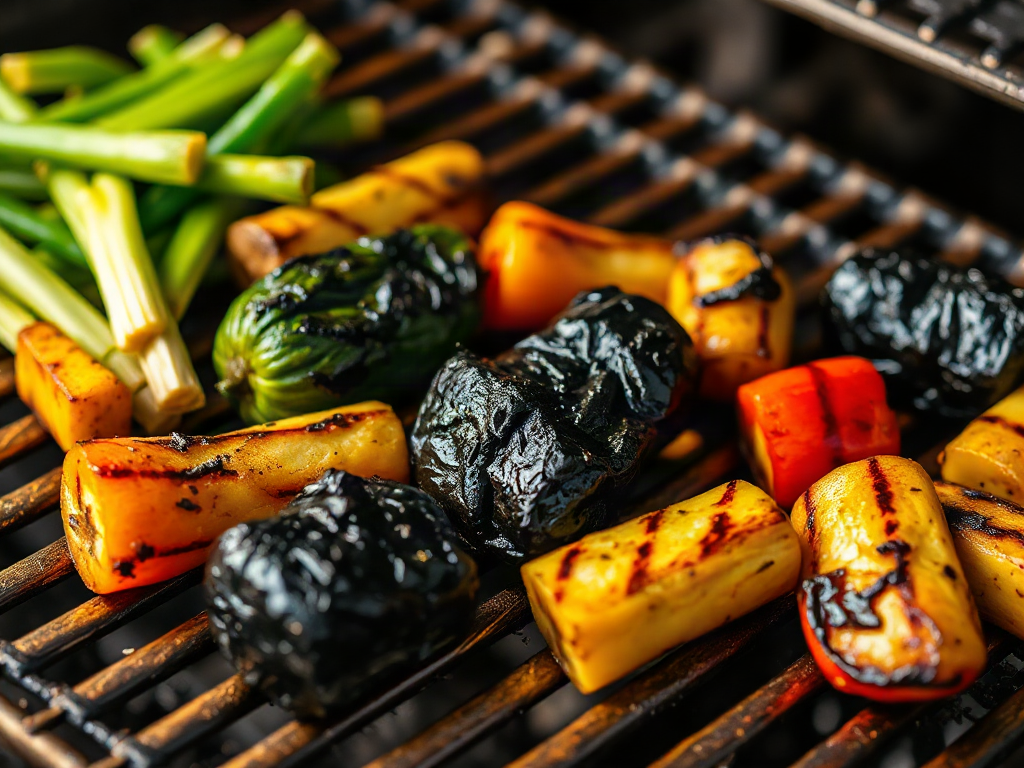
Grilling organic vegetables and char exposure are best managed by using moderate heat, short cooking intervals, frequent turning, and removing heavily blackened portions before serving. Char develops when sugars and surface moisture meet intense heat, while smoke deposits additional compounds onto food when fat, marinades, or drippings flare. Choose firm vegetables, cut them into evenly sized pieces, oil them lightly, and place them over a clean grate rather than active flames. A browned, tender surface is a practical stopping point; thick, brittle, fully black crusts should not be treated as a desirable sign of doneness. Organic certification does not remove the need to control heat, smoke, or cooking time.
How Char Forms on Grilled Vegetables
Vegetable char is the result of intense surface heating, not a special quality created by organic farming. As water evaporates from the outer layer, sugars and other plant compounds concentrate and brown. With more heat or more time, that browned surface dries further and turns dark. The difference between appealing grill marks and an overly black crust often comes down to surface temperature, distance from the flame, and how long the cut remains untouched.
Smoke exposure adds a separate pathway. Dripping oil, sugary glaze, or vegetable juices can strike the heat source and create smoke that settles on the food. Direct flames may blacken one edge quickly while the interior remains firm, especially with thick onion rounds, halved eggplant, or large pieces of winter squash. A dark mark is not automatically evidence of dangerous cooking, but a brittle, widespread black layer signals that the surface has gone beyond ordinary browning.
Organic vegetables respond to the grill in the same physical way as conventionally grown vegetables. Organic status may matter to a shopper’s farming and production preferences, but it does not make high-heat cooking immune to scorching. Treating an organic label as a safety shortcut is a weak assumption. Heat control, clean equipment, and sensible portioning still determine how much char and smoke reach the finished food.
For example, a thin slice of zucchini can soften before its exposed face becomes deeply dark, while a thick sweet potato wedge may need indirect heat first and a brief direct finish. The best target is usually a tender center with localized browning rather than a uniformly black exterior. Readers comparing methods can use grilling organic vegetables and char exposure as a practical reference point when adjusting heat and timing.
Choosing Heat, Cuts, and Cooking Surfaces
Heat selection should follow the vegetable’s thickness and water content. Quick-cooking items such as asparagus, scallions, snap peas, and thin zucchini slices can handle a short period over direct heat. Dense pieces such as carrots, beets, potatoes, and cauliflower generally benefit from partial cooking or indirect grilling before they are exposed to a hotter zone. This two-stage approach limits the time the surface spends close to the point of scorching.
Uniform cuts matter because uneven pieces force a compromise: the smaller portions darken while the larger ones remain undercooked. Cut mushrooms into substantial pieces rather than thin shavings, halve small peppers, and slice onions thick enough to hold together. A lightly oiled basket or perforated pan can be useful for small vegetables, but it may produce less direct browning than a grate. Foil packets reduce direct char and can retain moisture, yet they also remove the grilled surface many people want.
A clean, well-heated grate helps release food and produces more predictable marks. A dirty grate can add burnt residue to otherwise well-prepared vegetables, while excessive oil can trigger flare-ups. Brush vegetables with a thin coating rather than allowing oil to pool. Sugary sauces should usually be added near the end because honey, sweet barbecue sauce, and fruit-based glazes darken faster than the vegetable beneath them.
Consider a mixed platter containing bell pepper, broccoli florets, and potato wedges. Putting everything over the hottest zone at the same time is likely to overcook the pepper before the potato is tender. A better sequence is to soften the potatoes away from direct flame, add broccoli later, and finish the peppers briefly over the hotter area. This preserves contrast in texture and reduces the temptation to keep already-browned pieces on the grill. The same principle applies when using grilling organic vegetables and char exposure guidance for a crowded backyard grill.
Reducing Smoke and Excessive Blackening
Smoke reduction begins before the vegetables reach the grate. Trim loose leaves, drain wet marinades, and pat vegetables dry enough to remove excess surface liquid. Moisture itself does not create harmful char, but it can prolong cooking and encourage a cook to increase the heat while waiting for browning. A thin coating of neutral oil improves contact with the grate; a heavy coating increases the chance of dripping and flare-ups.
Use separate heat zones when possible. A direct zone provides browning, while an indirect zone gives dense pieces time to cook through without constant flame contact. If flames rise, move the vegetables rather than pressing them down or adding more oil. Closing the lid briefly can reduce oxygen, but it may also trap smoke, so the grill still needs enough ventilation to prevent a smoky, sooty surface.
Turning frequency is a useful control rather than a nuisance. Leaving a vegetable untouched can create a strong mark, but repeated inspection helps prevent one side from becoming brittle. Asparagus and thin eggplant slices may need quick turns; large corn cobs can rotate gradually. Tongs are preferable to piercing softer vegetables, since punctures release juice and make flare-ups more likely. If a marinade contains sugar, reserve part of it for brushing after the surface has already developed color.
One common mistake is using visible smoke as a flavor target. A little clean smoke may add complexity, but thick gray smoke from burning fat or residue is not a sign that the grill is working better. If smoke becomes acrid, move the food, scrape away loose debris when safe, and lower the heat. Another mistake is assuming that a grill mark means the whole vegetable is properly cooked. Check tenderness separately with a fork or knife, especially for dense roots and thick stems.
Serving Decisions and Practical Char Checks
Before serving, inspect the darkest areas rather than judging the entire vegetable by its most attractive grill marks. Light brown patches and narrow dark lines generally indicate controlled surface browning. Broad black areas that crumble, taste bitter, or have a hard burnt texture are a reason to trim the exterior or discard the affected piece. Removing a small scorched edge can preserve the rest of a tender vegetable, but scraping away a thick, widespread crust is not a way to reverse severe overcooking.
Texture provides another useful check. Properly grilled zucchini should be tender but not collapsed, peppers should have softened flesh with some structure, and cauliflower should be browned at the edges while remaining substantial inside. A vegetable that is black outside and raw within needs a method change, not merely more time over the same flame. Move it to indirect heat, lower the temperature, or use a covered pan to finish the center.
Serving order also affects quality. Vegetables continue to soften from retained heat, so transferring them to a cool platter can prevent delicate pieces from becoming limp. Acidic ingredients such as lemon juice or vinegar can brighten smoky flavors, while herbs, yogurt-based sauces, or beans can make a heavily grilled assortment more balanced. These additions do not erase burnt flavors, but they can complement moderate browning without encouraging extra time on the grill.
A practical pre-service check includes four questions:
- Is the center tender enough for the vegetable being served?
- Are the darkest areas browned or brittle and bitter?
- Did flare-ups expose the food to sustained direct flame?
- Would trimming, separating, or replacing one piece improve the platter?
These checks are more useful than chasing a uniform appearance. A mixed grill will naturally contain different colors and textures. Prioritize even cooking, limited flare-ups, and removal of clearly burnt portions over dramatic black marks. For additional preparation comparisons, readers can revisit grilling organic vegetables and char exposure alongside the specific vegetable’s thickness and moisture level.
Frequently Asked Questions
Does buying organic prevent harmful char from forming?
No. Organic vegetables can still blacken when exposed to intense heat, direct flame, sugary sauces, or dripping oil. Cooking conditions, not certification, determine surface charring.
Should all black grill marks be removed?
Small dark marks may be acceptable when the vegetable is tender and not bitter. Trim broad, brittle, powdery, or strongly burnt areas rather than treating heavy blackening as a sign of doneness.
What is the best heat for grilling dense vegetables?
Use indirect or moderate heat to cook the center, then finish briefly over direct heat for color. This is generally more reliable than leaving thick pieces over a hot flame from the beginning.
How can smoke be reduced on a vegetable grill?
Clean the grate, drain wet marinades, use only a thin layer of oil, and move food away from flare-ups. Add sugary glazes late and avoid letting grease or residue burn beneath the vegetables.
Is a grill basket safer than placing vegetables directly on the grate?
A basket can reduce losses of small pieces and make turning easier, but it does not prevent scorching or smoke exposure. Heat level, oil quantity, and cooking time still require attention.
Further Reading
Readers seeking more detail should consult food-safety information from government agencies, university extension programs, and recognized cancer or nutrition organizations. Look for material that distinguishes ordinary browning from heavily charred food, explains safe grill operation, and discusses practical ways to limit smoke and flare-ups without claiming that organic certification changes the behavior of high heat.
Conclusion
Good grilled vegetables do not need a fully black exterior to taste smoky or well cooked. Use the vegetable’s thickness to choose between direct and indirect heat, keep cuts reasonably uniform, and control oil, marinades, and flare-ups before they create heavy smoke. Judge the finished food by both tenderness and surface condition: localized browning can add flavor, while brittle black crusts and bitter patches deserve trimming or replacement. Organic certification remains a purchasing choice, not a substitute for heat management. A reliable next cook is simple: prepare a two-zone grill, cook dense pieces gently, finish softer pieces quickly, turn before surfaces become brittle, and inspect the darkest spots before serving.