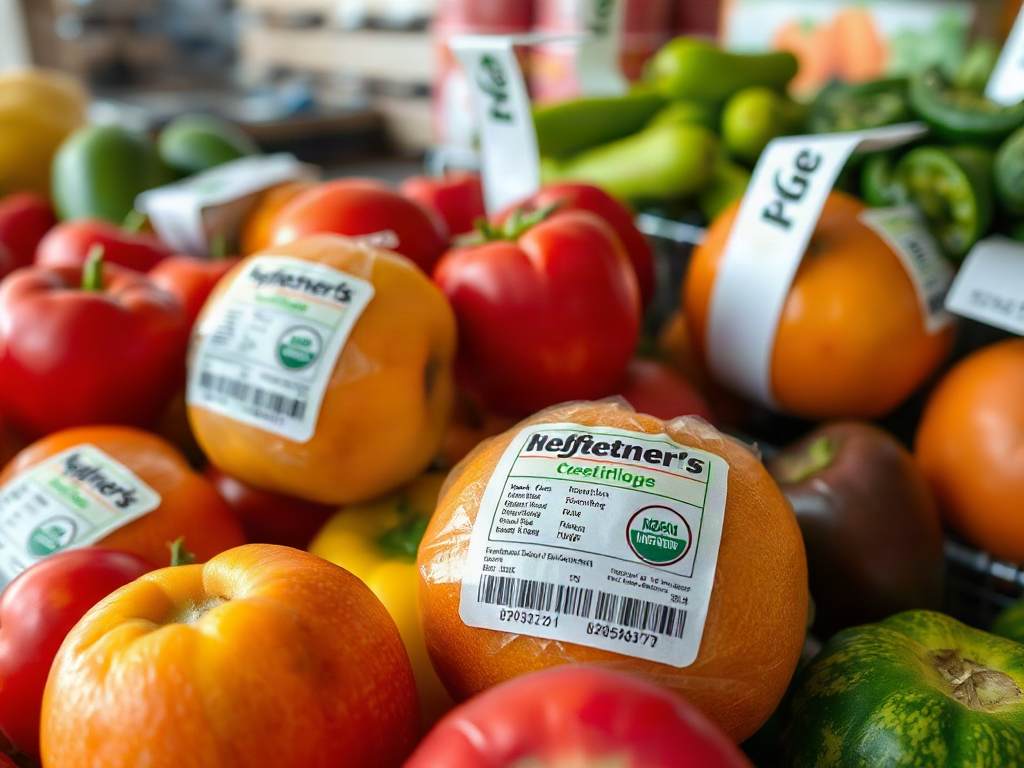
Organic produce labels for imported fruits identify the farming claim, certifying authority, and country of origin, but the word “organic” alone does not explain how the fruit entered the market. Check the official organic seal or certifier name, read the origin statement, and distinguish “organic” from “natural,” “non-GMO,” or vague retailer language. Imported fruit may be certified under an approved foreign system or through an authorized certifier, while packaging and stickers can create confusion when produce is repacked. Compare the label with the store sign, keep the receipt if the claim appears inconsistent, and contact the certifier or relevant food authority when verification matters.
What Imported Fruit Labels Actually Tell You
Labels on imported fruit usually communicate several different facts at once: a production claim, a business or certifier identity, and the place where the fruit was grown. Those details should be read separately. A label that says “organic” addresses the production standard claimed by the seller; it does not automatically identify the farm, explain the supply chain, or tell you whether the fruit was grown domestically.
Country-of-origin information is especially useful because imported fruit often passes through wholesalers, distributors, and repacking facilities before reaching a store. A package may show a brand based in one country while the fruit itself was grown somewhere else. A small sticker, carton mark, or nearby sign may provide the origin statement, but shoppers should not treat the brand address as the growing location.
Organic certification also has limits. It generally concerns how the crop was produced and handled under the applicable organic rules. It is not a guarantee that the fruit traveled a short distance, was harvested recently, tastes better, or has a particular nutrient profile. Imported organic mangoes, bananas, avocados, or kiwifruit may satisfy the relevant certification requirements while still having long transportation routes.
That distinction matters when a shopper is balancing organic status against freshness, price, packaging, or environmental preferences. For instance, someone choosing imported organic berries for a specific production standard may accept a higher price and longer transit time. Someone prioritizing local harvest timing may choose conventional fruit from a nearby farm instead. Neither choice can be made from the word “organic” alone.
For a broader labeling comparison, readers can use organic produce labels for imported fruits as a reference point when reviewing similar claims across different types of fruit.
How to Check Organic Certification and Country of Origin
The most reliable approach is to inspect the complete label rather than relying on a large front-of-package claim. Look for the organic designation, the certifier or responsible business information when provided, and a clear country-of-origin statement. On loose produce, check the bin sign or ask the produce department to confirm which sign applies to which fruit.
In the United States, organic operations are generally overseen through the national organic certification system, including certifying agents authorized to inspect and certify operations. Imported products may be certified through an approved arrangement or certifier recognized under the applicable rules. That does not mean every foreign label will look identical. A foreign organic seal, a private certification mark, or a retailer’s description may appear alongside other information.
A useful verification sequence is:
- Identify the exact claim: determine whether the package says organic, made with organic ingredients, natural, pesticide-free, or something less specific.
- Find the origin: look for “Product of,” “Grown in,” or equivalent country wording rather than a company address.
- Check the certifier or seal: note the name or mark and avoid assuming that a green logo is an official organic seal.
- Compare the display: make sure the shelf sign, package, and produce actually refer to the same item.
- Ask for clarification: contact the retailer or certifier when the claim and origin information conflict.
For example, a carton of imported organic avocados might show an organic seal, a packing company, and a country of origin. The packing company’s address does not replace the origin statement. If the carton is opened and individual fruit is placed in a mixed display, the store should still be able to identify which fruit corresponds to the organic claim. A loose avocado beside conventionally grown fruit is not automatically organic because the surrounding display contains organic packages.
A common mistake is treating a product code as proof of certification. Produce codes can assist store operations and identification, but shoppers should not use a number alone as a definitive certification record. The full label and the retailer’s documentation carry more practical weight.
Common Label Confusion at Stores and Markets
Imported fruit labels become confusing when marketing language, certification language, and origin information appear close together. Terms such as “natural,” “farm fresh,” “sustainably grown,” and “non-GMO” may describe attributes that are meaningful to a shopper, but they do not automatically mean that the fruit is certified organic. A product can carry one claim without carrying the others.
Packaging can also create an unintended impression. A carton decorated with leaves, soil imagery, or a farm illustration may look environmentally focused while offering no certification information. Conversely, a plain label may provide a valid organic claim and a clear origin statement without using appealing imagery. Visual design is a poor substitute for reading the text.
Retailers sometimes place imported fruit in displays organized by type rather than by production method. Organic and non-organic versions may sit in adjacent bins, particularly for bananas, citrus, or avocados. If the sign is ambiguous, ask whether the sign applies to the whole display or only to a specific variety and package. The answer is more dependable than inferring status from location.
Repacking creates another point of confusion. Fruit can be sorted or packed by a company whose name differs from the grower’s name. That arrangement is not automatically suspicious; it simply means the label may contain several identities. The key question is whether the organic claim applies to the actual fruit in the package and whether the origin statement identifies where it was grown.
Consider two shopping situations. A sealed package of imported organic grapes gives the shopper a defined label to inspect. A loose display of grapes with one sign may require more attention, especially if different origins or production methods are nearby. The sealed package may cost more and use additional packaging, while the loose option may reduce packaging but provide less immediate information. A careful shopper weighs both the labeling clarity and the practical tradeoff.
Another weak assumption is that imported organic fruit is automatically less trustworthy than domestic organic fruit. Origin alone does not establish whether a certification claim is valid. The better test is whether the product carries understandable certification information and whether the retailer can resolve discrepancies. Readers comparing labels can also consult organic produce labels for imported fruits before making a decision based on a country name alone.
A Practical Buying Checklist for Imported Fruit
A short inspection at the display can prevent most label mistakes. The priority is not to memorize every logo; it is to connect the claim to the exact fruit being purchased. Start with the physical item, then move outward to the package, sign, and retailer information.
Use this checklist when the distinction matters:
- Match the item: confirm that the sticker, package, or bin sign describes the fruit in your hand.
- Read the production claim: separate certified organic wording from natural, clean, local, or pesticide-related marketing language.
- Locate the origin statement: identify the growing country, not merely the distributor or importer address.
- Inspect condition: bruising, mold, leaking packages, or damaged seals are separate quality concerns and are not resolved by organic status.
- Ask about mixed displays: find out whether organic and conventional items share the same bin or shelf.
- Keep documentation: retain the package or receipt if a certification or origin discrepancy needs follow-up.
Freshness deserves its own judgment. A long transport route may affect firmness, ripeness, or remaining storage time, but the label generally will not tell you exactly how many days the fruit has traveled. Examine the fruit and consider how soon it will be eaten. Imported organic fruit that is still firm may suit a household planning to ripen it over several days; soft or damaged fruit may be a poor choice regardless of certification.
Price is another tradeoff. Certification, handling, packaging, seasonality, and transport can all influence the shelf price. A higher price does not prove stronger certification, and a lower price does not prove that a claim is false. Compare the actual information provided rather than using price as a proxy for legitimacy.
For households with a strict organic budget, prioritize the fruits that will be purchased most often and use the label to distinguish genuine certification from vague advertising. For households focused mainly on reducing packaging, loose fruit may be preferable, but the shopper should confirm the production method with the retailer. The right choice depends on which attribute has priority, not on a single label word.
When a Label Does Not Settle the Question
Some labels remain unclear even after careful reading. A missing seal does not necessarily prove that a product is not organic, particularly when fruit is sold loose, but it does leave the shopper with less immediate evidence. A prominent seal also does not answer every question about freshness, labor conditions, transportation, or environmental impact.
When information conflicts, ask a precise question: “Does this exact fruit have organic certification, and which country was it grown in?” That wording is more useful than asking whether the store carries organic produce generally. If the employee cannot verify the answer, choose a clearly labeled package or a different item rather than guessing.
Online product listings create similar problems. A website may combine information for several sizes, origins, or suppliers, especially when inventory changes seasonally. Read the current product description and inspect the delivered package. If the physical label differs materially from the listing, contact the seller before relying on the claim.
Shoppers should also avoid treating certification as a food-safety guarantee. Organic and conventional fruit both require sensible handling: wash produce under running water when appropriate, keep cut fruit refrigerated, and discard fruit with advanced spoilage. Washing does not convert a conventional product into an organic one, and organic status does not make damaged fruit suitable to eat.
Official government organic programs, certifier directories, and consumer food-safety resources are better verification tools than social-media posts or unexplained label charts. A retailer’s produce manager may resolve a display error quickly, while a certifier or government office may be more appropriate for a repeated or serious labeling concern. The practical goal is not to investigate every sticker; it is to avoid paying for a claim that the seller cannot support.
Use organic produce labels for imported fruits as part of a wider shopping decision that includes origin, condition, storage needs, price, and the credibility of the information presented.
Frequently Asked Questions
Does imported fruit need a different organic label?
Not necessarily. The appearance may differ by market or certifier, but the product should provide credible organic certification information under the applicable system.
Does “natural” mean the fruit is organic?
No. “Natural” and “organic” are separate claims, so a natural label should not be treated as proof of organic certification.
Where can I find the country of origin?
Check the package, produce sticker, carton, or bin sign for wording such as “Grown in” or “Product of.” A distributor’s address may identify the seller rather than the growing country.
Are loose imported fruits harder to verify?
They can be. Ask the produce department whether the sign applies to the exact fruit and whether organic and conventional items have been mixed in the display.
Does organic certification guarantee fresher imported fruit?
No. Certification addresses production and handling standards, not a guaranteed harvest date, transport duration, ripeness, or shelf life.
Conclusion
Reading imported fruit labels well means separating three questions: how the fruit was produced, where it was grown, and whether the claim applies to the exact item being purchased. Check the certification wording or seal, find the country-of-origin statement, and treat retailer signs, packaging artwork, and company addresses as supporting details rather than proof by themselves. Loose displays deserve extra attention when organic and conventional fruit sit together. Certification also should not be used as a shortcut for judging freshness, transport time, price, or food handling. When a claim remains unclear, ask the produce department for specific verification or choose a package with complete information. That small pause makes the purchase more transparent without assuming that imported or domestic origin alone determines quality.