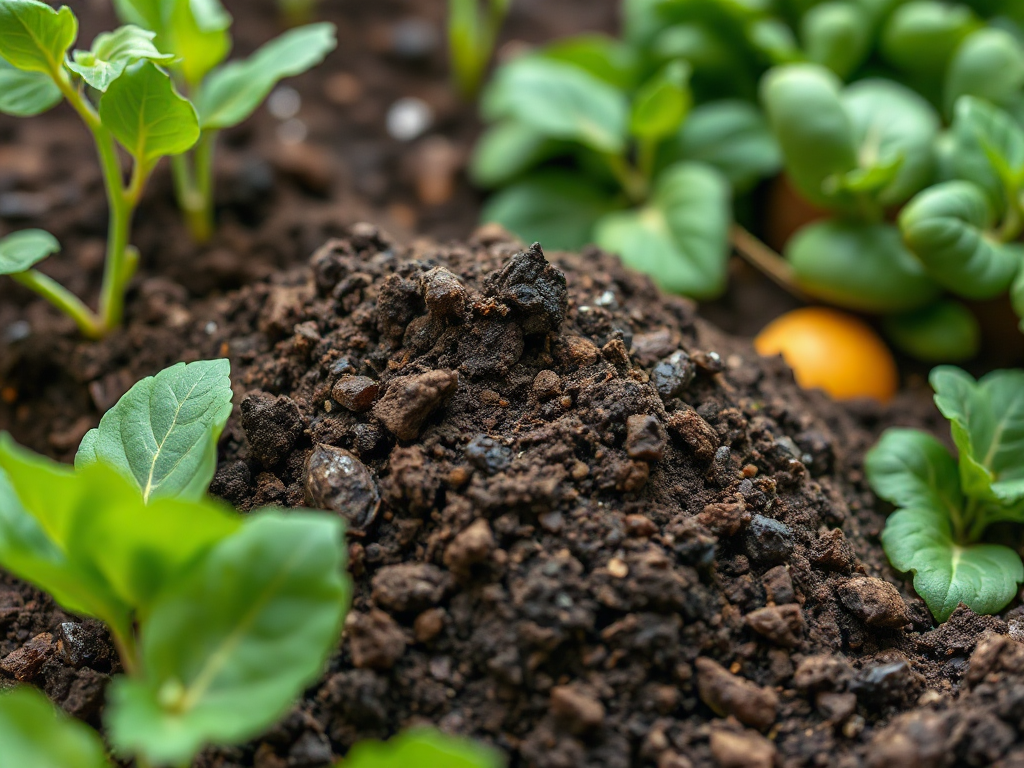
The impact of soil health on organic produce quality is reflected in nutrient availability, crop flavor, texture, and postharvest durability. Living soil supplies plants with balanced minerals, water, air, and microbial activity, while compaction, erosion, salinity, or depleted organic matter can restrict roots and produce uneven results. Organic certification controls permitted production methods, but it does not by itself guarantee that every crop has the same nutrient profile or taste. Shoppers can make better judgments by considering seasonal freshness, variety, harvest timing, and farm practices rather than treating the organic label as a complete quality score. Soil testing, compost management, cover crops, and careful irrigation are practical priorities for growers seeking more consistent produce.
What Healthy Soil Contributes to Produce Quality
Soil health describes the soil’s continuing ability to support plants, manage water, cycle nutrients, and sustain biological activity. It is not simply a measure of how dark the ground looks or how much fertilizer has been added. A productive soil profile usually combines organic matter, stable structure, mineral nutrients, adequate pore space, and organisms that break down residues and interact with plant roots.
Those features influence produce quality before a crop is harvested. Soil with good aggregation allows roots to explore deeper layers and find water during short dry periods. It also drains excess water more effectively than compacted ground, reducing the swings between saturation and drought that can stress plants. Microbial activity helps release nutrients from organic materials, although the timing and amount of that release depend on temperature, moisture, soil texture, and the material used.
A tomato grown in loose, well-managed soil may develop steadily, while a tomato grown in compacted soil may face shallow rooting and irregular water access. The difference does not prove that one organic tomato is automatically more nutritious, but it explains why farm conditions can affect size, firmness, flavor, and consistency within the same certified production system.
Growers assessing the impact of soil health on organic produce quality should look beyond a single soil test number. Useful observations include whether water infiltrates instead of pooling, whether roots are dense and well distributed, whether earthworm activity is present, and whether crops show repeated nutrient or moisture stress. A common mistake is adding compost or an approved fertilizer without identifying the limiting condition. Extra nutrients cannot correct compaction, poor drainage, or an irrigation pattern that repeatedly leaves roots waterlogged.
Nutrients, Flavor, Texture, and Crop Development
Soil health affects produce quality mainly by shaping root access to water and nutrients during crop development. Plants need a range of elements, including nitrogen, phosphorus, potassium, calcium, magnesium, and sulfur, along with smaller amounts of micronutrients. Healthy soil does not mean that every nutrient is abundant. It means nutrients are available in useful proportions and under conditions roots can reach.
Flavor is especially sensitive to crop maturity, variety, water supply, and harvest timing. Leafy greens grown under excessive nitrogen may produce abundant foliage without delivering the flavor or texture a grower wants. Conversely, nutrient shortages can limit growth and create pale, tough, or poorly formed leaves. Fruit crops can also respond to uneven moisture with cracking, blandness, or soft texture. These outcomes cannot be assigned to soil alone because weather, genetics, temperature, and postharvest handling remain influential.
Consider carrots grown in two fields. In deep, friable soil, roots may develop a more uniform shape and can be harvested with less breakage. In a compacted field, roots may fork or remain short even when the plants receive adequate fertilizer. A grower might respond by applying more nutrients, but loosening traffic patterns, improving organic matter, and correcting the depth of compaction may offer a more relevant solution.
Quality also involves shelf life. Strong plant growth and balanced calcium and water management may contribute to firmer tissues, but freshness after harvest depends heavily on cooling, cleanliness, humidity, packaging, and transport. It would be misleading to assume that soil health guarantees longer storage. The practical lesson is to separate field quality from handling quality: healthy soil supports a better starting point, while careful harvesting and storage protect that advantage.
Consumers comparing organic and conventional produce should avoid treating flavor or nutrient content as a guaranteed label difference. Variety and freshness may matter more than production label in a particular purchase. Seasonal greens from a nearby farm can taste better because they were harvested recently, while an organic item transported over a long distance may lose quality through age and temperature changes.
Organic Practices That Build or Weaken Soil
Organic production often uses practices that can improve soil condition, including compost applications, cover crops, crop rotation, reduced disturbance, mulching, and diversified plantings. Their value comes from how they alter the soil environment over time. Cover crops can protect the surface from erosion and add roots during periods when a cash crop is absent. Compost can contribute organic material and nutrients, while crop rotation can interrupt repeated pressure from particular pests and diseases.
None of these practices works automatically. Poorly finished compost may introduce unwanted contaminants or create nutrient imbalances, and repeated applications can raise phosphorus or salts. A dense cover crop may compete for water if it is terminated too late. Reduced tillage can protect structure in some systems, yet it may not solve severe compaction caused by heavy equipment. Organic methods still require measurement, timing, and adaptation to local soil conditions.
Farmers should prioritize diagnosis before inputs. A useful sequence is:
- Test soil pH, organic matter, salinity, and major nutrient levels through a suitable laboratory.
- Inspect compaction, drainage, rooting depth, and infiltration in representative areas rather than sampling only the easiest field location.
- Match compost, mineral amendments, irrigation, and cover-crop choices to the specific limitation identified.
- Compare crop performance across seasons instead of judging one harvest after a single practice change.
The tradeoff is that soil-building practices often require time, labor, land, and careful scheduling. A small grower may not be able to maintain a long rotation or purchase specialized equipment. In that situation, protecting the most intensively used beds, reducing foot and vehicle traffic, adding modest amounts of verified compost, and keeping soil covered may be more realistic than attempting every recommended practice.
Another misconception is that organic certification itself measures soil quality. Certification addresses production rules and permitted inputs; it is not a universal grade for fertility, microbial diversity, flavor, or nutrient density. Two organic farms can follow compliant methods while having very different soil types, climates, irrigation systems, and management histories. The impact of soil health on organic produce quality therefore depends on actual field conditions, not the label alone.
How Shoppers and Growers Can Judge Quality
Shoppers rarely have direct access to a farm’s soil records, so practical quality judgments should combine freshness cues with reasonable questions. Look for firm, naturally colored produce appropriate to its type, intact leaves, and minimal signs of dehydration, bruising, or decay. A farmers market vendor may be able to explain harvest timing, crop rotation, cover crops, or compost use. Those answers provide context, but they should not be treated as proof of a specific nutrient advantage.
For growers, quality monitoring is more precise. Track field location, planting date, variety, irrigation events, harvest date, defects, and storage performance. Repeated patterns are more informative than isolated impressions. If lettuce wilts quickly, the issue may involve harvest heat or inadequate cooling rather than poor soil. If carrots fork in the same strip each year, compaction or stones deserve investigation. If tomatoes crack after irregular rain, water management and variety selection may matter as much as fertility.
A useful comparison is between visible quality and hidden quality. Appearance can reveal damage, disease, maturity, and handling, but it cannot reliably reveal vitamin content or soil biological activity. Laboratory nutrient analysis can answer narrower questions, yet results vary with variety, maturity, sampling, and storage. Claims that one growing method always produces superior nutrition overlook these variables.
When resources are limited, growers should prioritize the factors most likely to affect the crop being produced:
- Correct severe drainage, compaction, pH, or salinity problems before fine-tuning minor nutrients.
- Protect soil from erosion and bare-surface drying with living roots, residue, or appropriate mulch.
- Use irrigation that keeps moisture reasonably consistent without saturating the root zone.
- Harvest at a suitable maturity and cool perishable produce promptly.
Signs that a soil-management plan is working include more uniform rooting, improved infiltration, fewer recurring nutrient symptoms, and steadier crop performance across changing weather. Signs of failure include increasing salt levels, persistent ponding, declining yields despite more inputs, or repeated defects in the same field areas. Those signals call for a revised diagnosis, not simply a larger application of an approved product.
Frequently Asked Questions
Does healthy soil make organic produce more nutritious?
Healthy soil can improve nutrient availability and crop development, but nutrient content also depends on variety, maturity, weather, and handling. A higher nutrient value should not be assumed from soil condition or organic certification alone.
Can soil health change the flavor of organic fruits and vegetables?
It may contribute by supporting balanced growth and reliable water access. Flavor is also strongly shaped by genetics, harvest timing, temperature, and postharvest freshness.
Is organic produce always grown in healthy soil?
No. Organic rules regulate production methods and permitted inputs, but farms can differ in soil structure, fertility, drainage, and management quality.
Which soil problems most often reduce produce quality?
Compaction, poor drainage, erosion, unsuitable pH, salinity, and uneven moisture can restrict roots or create inconsistent growth. Testing and field observation help identify the dominant problem.
What can a home gardener do to support soil health?
Use mature compost based on soil needs, keep soil covered, avoid working wet ground, rotate plant families, and water consistently. A soil test is more useful than adding amendments by guesswork.
Conclusion
Soil health is a foundation for dependable organic produce, but it is not a guarantee of superior flavor, nutrition, or storage life. The strongest effects usually come through root growth, water regulation, nutrient availability, and resistance to repeated field stress. Growers should address compaction, drainage, pH, salinity, and organic matter before chasing minor improvements with additional inputs. They should then protect quality through appropriate varieties, harvest timing, cooling, and storage. Shoppers can use freshness and handling cues, ask practical questions at local markets, and avoid assuming that certification alone describes the condition of a farm’s soil. Evaluating the complete chain—from field management to the produce bin—gives a more accurate picture of quality and leads to better purchasing and growing decisions.