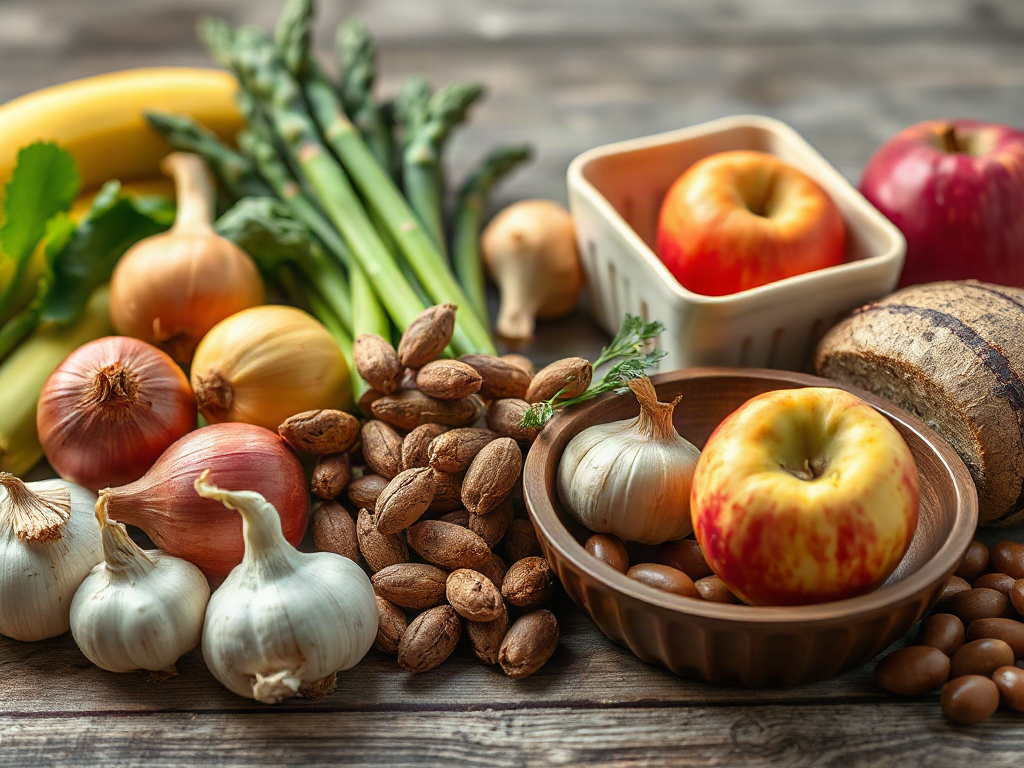
Produce choices for increasing prebiotic fiber intake should center on onions, garlic, leeks, asparagus, Jerusalem artichokes, green bananas, apples, and legumes, while portions and preparation determine tolerance. These foods supply fermentable carbohydrates such as inulin, fructooligosaccharides, and resistant starch that gut microbes can use, but increasing them abruptly may cause gas or bloating. Add one unfamiliar high-fiber choice at a time, keep edible skins on when practical, and distribute servings across meals rather than concentrating them in one dish. Cook onions, garlic, asparagus, or artichokes if raw produce causes discomfort, and use slightly green bananas or cooled potatoes for resistant starch. Persistent digestive symptoms warrant advice from a qualified clinician.
How Prebiotic Fiber Works in Produce
Prebiotic fiber is a type of nondigestible carbohydrate that can be fermented by microorganisms in the large intestine. Unlike fiber that mainly adds bulk, fermentable fibers provide a substrate for microbial activity. The result may include short-chain fatty acids and other fermentation products, although the response varies with the person, the food, the serving size, and the existing gut ecosystem.
Produce supplies several relevant forms. Onions, garlic, leeks, asparagus, and Jerusalem artichokes contain fructans, including inulin and fructooligosaccharides. Slightly green bananas contain more resistant starch than fully ripe bananas, while cooked-and-cooled potatoes can develop additional resistant starch as their starch structure changes during cooling. Apples and citrus contribute pectin, a soluble fiber that can also be fermented.
The useful question is not whether one food is universally “best.” It is whether a choice provides fermentable fiber in a form the reader can eat consistently. A few spoonfuls of cooked leek may be more practical than a large raw onion salad for someone prone to bloating. Similarly, a greenish banana may fit breakfast better than a specialty tuber that is difficult to find.
A weak assumption is that all fiber-rich produce has the same effect. Fiber type, ripeness, cooking, portion size, and meal composition all change the experience. Readers looking for a broader produce choices for increasing prebiotic fiber intake can use variety as the organizing principle: rotate plant foods rather than forcing one ingredient every day.
Produce Choices Worth Prioritizing
Alliums are a practical starting point because onions, garlic, shallots, and leeks can be added to ordinary meals. Their fructans remain relevant after cooking, although heat changes texture and flavor. A sautéed onion base, roasted garlic, or sliced leek in soup can provide a manageable introduction without requiring a new recipe. Garlic-infused oil may add flavor, but it should not be treated as a meaningful replacement for the fiber in the whole garlic clove.
Asparagus and Jerusalem artichokes offer additional inulin-type fibers. Asparagus works in a side dish, grain bowl, or omelet, whereas Jerusalem artichokes can be roasted or blended into soup. Jerusalem artichokes are sometimes called sunchokes; their concentrated fermentable carbohydrate content can be difficult for sensitive individuals. A small serving is more sensible than treating them as an unlimited “gut health” food.
Fruit choices broaden the pattern. Apples provide pectin, especially when the skin is retained and thoroughly washed. Firm bananas generally provide more resistant starch than very ripe bananas, whose starch has converted to simpler sugars. Pears and citrus also contribute soluble fiber, though a person with a sensitive digestive system may respond differently to each fruit.
Legumes are not produce in the narrow grocery-store sense, but they are valuable alongside produce because beans, lentils, and chickpeas contribute fermentable fibers and resistant starch. Pairing lentils with cooked onions and asparagus creates a more diverse fiber meal than relying on a single apple. The tradeoff is that legumes may produce more gas for some people, so canned beans rinsed well or smaller portions may be easier than a large serving of dried beans.
- For a mild entry: try a small apple portion, firm banana, cooked carrot, or a modest serving of asparagus.
- For concentrated fructans: use onion, garlic, leek, or Jerusalem artichoke in measured amounts.
- For resistant starch: consider slightly green banana or properly chilled cooked potato.
- For broader diversity: combine two or three plant sources instead of repeatedly increasing one food.
The common mistake is choosing the most concentrated option because it sounds more powerful. A food that causes discomfort and is abandoned has less practical value than a milder choice eaten regularly. The best selection is the one that fits budget, availability, cooking time, and digestive tolerance.
Portions, Preparation, and Tolerance
Portion size is often the deciding factor when increasing fermentable fiber. Gut microbes ferment these carbohydrates, and fermentation produces gas as well as potentially useful metabolites. A sudden jump from a low-fiber pattern to large servings of onions, beans, artichokes, and green bananas can create bloating even when the foods themselves are nutritious.
Introduce one major change at a time and hold the portion steady for several days before adding another concentrated source. This makes it easier to identify whether symptoms relate to a particular food, the total fiber increase, or another meal component. A practical sequence might be cooked asparagus with lunch, followed later by a small serving of lentils, rather than adding four unfamiliar foods in one day.
Cooking can improve texture and palatability, but it does not make every fermentable carbohydrate disappear. Roasting onions or steaming asparagus may be more comfortable than eating them raw, while overcooking produce can soften texture without necessarily solving sensitivity. For potatoes, cooling after cooking changes starch structure, but reheating does not mean the food becomes unsuitable; the amount of resistant starch retained depends on the food and preparation.
Retaining skins can increase total fiber in apples and potatoes, provided the produce is washed and the skin is acceptable to eat. Peeling may be reasonable when texture, contamination concerns, or digestive tolerance makes the skin impractical. Fresh, frozen, and canned produce can all contribute; canned fruit packed in syrup is a different nutritional choice from whole fruit, while canned vegetables may contain added sodium that should be considered.
A useful tolerance checklist is compact:
- Choose one new fermentable-fiber food.
- Begin with a modest serving and eat it with a familiar meal.
- Drink fluids normally rather than forcing excessive amounts.
- Notice bloating, pain, stool changes, and whether symptoms persist.
- Reduce the portion or pause the food if symptoms are troublesome, then seek professional guidance for recurring problems.
People with diagnosed gastrointestinal conditions, significant food intolerance, or persistent pain should not use a general fiber plan as a substitute for individualized care. A low-FODMAP approach, for example, may temporarily restrict several fructan-rich foods, so the right choice depends on the purpose and the supervision involved.
Building a Practical Daily Pattern
A sustainable pattern distributes prebiotic sources across meals. Breakfast might include a firm banana with oats; lunch could use a lentil salad with cooked leek; dinner might feature roasted asparagus, potatoes, and another vegetable. This arrangement provides variety without requiring an unusually large serving of one ingredient.
Meal context matters. Fiber-rich produce eaten with protein, fats, and other carbohydrates may feel more satisfying and may slow the pace of eating, but adding rich sauces or large amounts of highly processed food can obscure what is causing digestive discomfort. Keep the first trial meal simple enough that the response is interpretable. An onion-heavy restaurant meal, for instance, is a poor test of onion tolerance because the dish may also contain large amounts of fat, alcohol, or sweeteners.
Budget and availability should shape the plan. Onions, potatoes, apples, cabbage, and bananas are often easier to find than Jerusalem artichokes. Frozen asparagus or frozen mixed vegetables can reduce waste, and canned lentils can shorten preparation time. Organic purchasing may be a personal preference, but the prebiotic-fiber value comes primarily from the food’s fiber composition, not from an assumption that an organic label changes fermentation.
Track what works rather than chasing a perfect food list. A simple note can record the produce, approximate portion, preparation method, and digestive response. Improvement in regularity may be one useful sign, while persistent pain, diarrhea, constipation, or unexplained weight change calls for medical assessment rather than continued experimentation.
Use this priority order when choices compete: first select foods you can obtain and prepare consistently; next increase variety; then adjust portions and cooking method. Readers can connect this approach with a personalized produce choices for increasing prebiotic fiber intake plan by changing only one variable at a time. The frequent failure mode is treating prebiotic fiber as a short-term cleanse. It is better approached as a gradual feature of ordinary meals.
Frequently Asked Questions
Which produce is highest in prebiotic fiber?
Onions, garlic, leeks, asparagus, Jerusalem artichokes, firm bananas, apples, and cooked-cooled potatoes are useful choices, though their fiber types differ.
Can prebiotic produce cause gas?
Yes. Fermentation can produce gas, particularly after a sudden increase in onions, garlic, legumes, or artichokes. Smaller portions and gradual changes may improve tolerance.
Is raw produce better than cooked produce?
Not necessarily. Cooking may make onions, asparagus, and other foods easier to eat, while cooling cooked potatoes can increase resistant starch. Choose the preparation you tolerate and repeat.
Do organic foods contain more prebiotic fiber?
The organic label does not by itself establish a higher prebiotic-fiber content. Variety, food type, ripeness, edible skins, and serving size matter more for this purpose.
How quickly should fiber intake increase?
Increase gradually, introducing one concentrated source at a time. If pain, persistent diarrhea, severe constipation, or other ongoing symptoms occur, consult a qualified clinician.
Conclusion
Build prebiotic fiber intake around produce you can eat consistently, not the most concentrated ingredient on a food list. Onions, garlic, leeks, asparagus, firm bananas, apples, potatoes, and legumes offer different fermentable fibers, so rotating them creates a more practical pattern than relying on one food. Begin with modest servings, use cooking to improve comfort, and distribute choices across meals. Keep skins when suitable, compare fresh with frozen or canned options, and remember that organic status does not determine prebiotic function. A brief food-and-symptom record can reveal whether a portion or preparation needs adjusting. Digestive symptoms that persist or interfere with daily life deserve individualized medical advice rather than increasingly restrictive self-experimentation.
Further Reading
Authoritative Sources
- 12 Prebiotic Foods to Support Your Digestive System
naturemade.comIn general, eating a wide range of plant foods (fruits, vegetables, grains, beans and seeds) will increase your prebiotic fiber intake.
- Food as Medicine: Prebiotic Foods
chop.eduWhen increasing the amount of prebiotic fiber in the diet, remember to start with a small amount (1/4 usual serving) and gradually increase portions and number ...
- Health Effects and Sources of Prebiotic Dietary Fiber - PMC
pmc.ncbi.nlm.nih.govPrebiotic dietary fibers act as carbon sources for primary and secondary fermentation pathways in the colon, and support digestive health in many ways.
- Best Prebiotic Foods for Gut Health (And How to Eat Them)
cleaneatzkitchen.comThe best sources include garlic, onions, leeks, bananas, oats, asparagus, and beans. Aim for 2-3 servings daily as part of your overall fiber ...