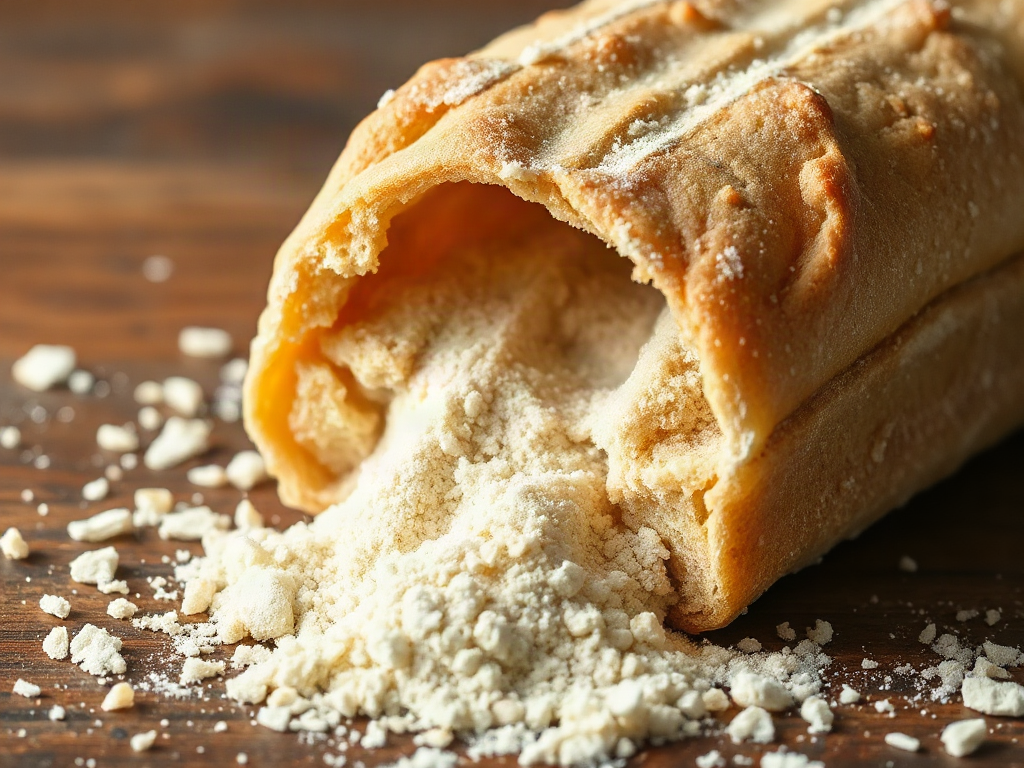
Whole wheat flour nutrition and baking performance are linked because the bran and germ add fiber, minerals, and flavor while also interrupting gluten development and absorbing more water than refined flour. Successful baking therefore depends on adequate hydration, a short resting period, controlled mixing, and realistic substitution levels. Bread usually needs stronger gluten management than muffins, pancakes, or cookies, while finely milled flour often produces a lighter texture than coarse flour. For dependable results, weigh the flour, adjust liquid gradually, and judge dough consistency rather than assuming whole wheat behaves like all-purpose flour.
What Does Whole Wheat Flour Contribute Nutritionally?
Whole wheat flour contains the grain’s bran, germ, and starchy endosperm, whereas refined wheat flour is made primarily from the endosperm. Keeping all three components changes both the nutrient profile and the way the flour behaves in a recipe. The bran supplies much of the grain’s dietary fiber, the germ contains oils and several micronutrients, and the endosperm contributes starch and gluten-forming proteins.
The practical nutritional distinction is not simply that one flour is “healthy” and another is not. Whole wheat flour generally provides more naturally occurring fiber and retains more of the grain’s magnesium, zinc, and other compounds removed during refining. Refined flour may be enriched with selected nutrients, but enrichment does not reconstruct the intact grain or replace its original fiber. The nutritional effect of a baked food still depends on the complete recipe, portion, and eating pattern. A whole wheat cookie can contain more fiber than its refined-flour counterpart while remaining a dessert rich in added sugar and fat.
Whole wheat flour also varies by wheat class and milling method. Hard wheat typically has more protein suited to yeast bread, while soft whole wheat is often a better fit for cakes, biscuits, and tender quick breads. White whole wheat flour is milled from a lighter-colored wheat variety; it is still a whole-grain flour rather than refined white flour. Its flavor is usually milder, which can make it easier to use in recipes where conventional whole wheat tastes too assertive.
Freshness deserves attention because the germ’s natural oils make whole wheat flour more vulnerable to flavor deterioration than refined flour. A stale, bitter, musty, or paint-like aroma is a reason not to bake with it. Store flour in an airtight container away from heat and light, and refrigerate or freeze it when storage will be prolonged. Let a sealed container approach room temperature before opening if condensation is a concern.
A common mistake is to evaluate nutritional value by flour color alone. Dark bread may contain coloring or only a modest amount of whole grain, while pale white whole wheat flour can contain the complete kernel. Ingredient lists are more useful: look for wording such as “whole wheat flour” rather than relying on names like wheat bread or multigrain. For home baking, choose the flour according to both the desired nutrient profile and the structure the recipe must produce.
How Do Bran and Germ Change Baking Performance?
Bran and germ make dough heavier, thirstier, and less extensible than dough made solely with refined flour. Bran particles compete for water and physically interfere with a continuous gluten network. The germ contributes flavor and fat, while the entire flour carries more components that dilute the concentration of gluten-forming proteins in each cup. These effects explain why a direct one-for-one substitution may produce a loaf that is dense, dry, or slow to rise.
Gluten develops when wheat proteins hydrate and are mixed or folded into an elastic network. That network must stretch enough to hold carbon dioxide during fermentation. In whole wheat dough, sharp or coarse bran particles can interrupt that network, especially when the dough is underhydrated. Adding extra yeast does not correct the underlying structural problem. It may accelerate gas production without giving the dough enough strength to retain that gas.
Particle size changes the result. Finely milled whole wheat flour usually disperses more evenly and can produce a less coarse crumb. Coarser flour creates a heartier texture and may need more time for the bran to soften. Neither type is automatically better: fine flour suits sandwich bread and tender muffins, while a coarse grind may be welcome in rustic loaves where pronounced grain character is part of the goal.
The effect is different in quick breads and cookies because those products do not rely on a large gluten network. Banana bread, pancakes, and muffins can often accommodate whole wheat flour more easily, particularly when the batter includes ingredients that contribute moisture. Cookies require a different judgment. Greater water absorption can reduce spread and make a cookie thicker or drier, so adding liquid blindly may alter the intended shape. A test batch is more informative than assuming every formula needs the same correction.
Signs of poor flour management are fairly visible. Bread dough that tears immediately, feels stiff despite complete mixing, and barely expands may lack water or rest time. A batter that becomes unusually thick after standing may need a small liquid adjustment before baking. At the other extreme, a dough that flows like batter after added water may have been overcorrected. Additions should be gradual, with enough time between them for the flour to absorb moisture.
The misleading assumption is that denser bread proves whole wheat cannot produce a good rise. Flour strength, milling fineness, hydration, fermentation, shaping, and pan dimensions all influence volume. A well-managed whole wheat loaf may remain more substantial than white bread, but it should not be unpleasantly dry or compact.
Hydration, Mixing, and Resting Methods That Work
Consistent whole wheat baking begins with accurate measurement and staged hydration. A kitchen scale avoids the large variation caused by packing flour into a measuring cup. Once flour and liquid are combined, a rest allows bran and starch to absorb water before the baker decides whether the mixture is genuinely too wet or too dry.
For yeast dough, combine the flour with most or all of the recipe’s water and let the mixture rest briefly before intensive kneading, provided the formula and schedule allow it. Salt and yeast handling can vary by recipe, so follow the formula rather than applying one rigid sequence. After the rest, the dough often feels smoother and less sticky without added flour. Adding handfuls of flour at the first sign of tackiness is a frequent cause of dry bread.
Mixing should build strength without treating the dough as if force alone can overcome bran. Moderate kneading, stretch-and-folds, or periodic folds during bulk fermentation can organize gluten while limiting oxidation and overheating. The dough is developing when it becomes more cohesive, holds a rounded shape, and stretches farther before tearing. A perfect translucent window may be harder to achieve with visible bran, so that test should not be the only standard.
A practical bread workflow is:
- Weigh the ingredients. Record the flour and liquid amounts so successful adjustments can be repeated.
- Reserve a little liquid. Mix first, then add the remainder only if the dough stays firm after resting.
- Allow absorption time. Give the flour a short rest before making a final judgment about consistency.
- Develop strength progressively. Knead or fold until the dough is elastic enough to retain gas without becoming hot or ragged.
- Watch the dough, not only the clock. Fermentation is ready to advance when the dough has expanded, feels aerated, and retains an indentation appropriately for the recipe.
Quick breads need restraint rather than gluten development. Mix muffins, pancakes, and loaf cakes only until dry pockets disappear. Whole wheat batter may thicken during a short rest, but prolonged standing can be counterproductive when chemical leaveners are already active. If the batter looks much stiffer than the original recipe intends, add liquid in small increments instead of making a large correction.
Temperature and humidity create another constraint. Flour stored in a dry environment may take up more water, while flour from a humid kitchen may need less. Eggs, fruit purées, yogurt, and sweeteners also contribute water differently, so a universal liquid addition would be false precision. Record the actual consistency and result: a good loaf has an evenly set crumb rather than a gummy center, while a well-balanced muffin is moist but not pasty.
The main failure mode is correcting texture too early. Bran absorbs water over time, and an initially sticky dough can become manageable after resting. Conversely, a batter that looks ideal at mixing may become too thick before baking. Build a pause into the process, then make small, observable adjustments.
How Much Whole Wheat Flour Should You Substitute?
The right substitution level depends on whether the recipe relies on flour for strong structure, tender texture, controlled spread, or only modest thickening. Replacing part of the refined flour is the lowest-risk starting point because it reveals how a familiar recipe responds without demanding a complete reformulation. Full replacement is more successful when the recipe was designed for whole wheat from the outset.
| Application | Practical Starting Approach | What to Monitor |
|---|---|---|
| Yeast bread | Begin with a partial substitution | Dough elasticity, water absorption, rise, and crumb density |
| Muffins and quick breads | Partial or higher substitution often works | Batter thickness, mixing time, and moisture after cooling |
| Pancakes and waffles | Use partial substitution for a lighter result | Pourability, tenderness, and browning |
| Cookies | Test a partial batch first | Spread, edge texture, and dryness |
| Delicate cakes | Choose soft or finely milled flour and substitute cautiously | Volume, crumb tenderness, and grain flavor |
A sandwich loaf designed around all-purpose or bread flour presents a different challenge from banana bread. The loaf needs an extensible gluten network to hold fermentation gases, so replacing all the flour may require changes to liquid, mixing, fermentation, and shaping. Banana bread receives much of its moisture from fruit and does not need the same elastic structure, making a larger substitution less disruptive. Even there, excess mixing can produce toughness.
Flavor is a legitimate decision factor rather than a defect to hide. Conventional whole wheat flour brings nutty, wheaty, and sometimes tannic notes that pair naturally with oats, nuts, seeds, molasses, warm spices, or robust savory ingredients. White whole wheat offers a gentler transition in lightly flavored pancakes or sandwich rolls. Blending whole wheat with refined flour may be preferable when a very airy crumb or delicate flavor is central to the food.
Use the original recipe as the control. Change the flour first, then evaluate before modifying sweetener, fat, leavener, and baking temperature at the same time. Multiple simultaneous changes make it impossible to identify why the result improved or failed. Keep brief notes on flour type, weight, liquid adjustment, rest time, dough feel, and finished texture.
Success is not measured only by maximum whole-grain percentage. A flour blend that produces bread people enjoy and bake regularly may be more useful than a full substitution that yields a dry loaf. Increase the proportion gradually when the crumb remains tender, the dough holds gas, and the flavor suits the recipe. Step back or select a purpose-built whole wheat formula when the product becomes persistently dense, crumbly, gummy, or poorly shaped.
Frequently Asked Questions
Is whole wheat flour more nutritious than all-purpose flour?
Whole wheat flour retains the bran and germ, so it generally supplies more fiber and more of the kernel’s naturally occurring micronutrients. The nutritional quality of the finished food still depends on its other ingredients and serving size.
Can whole wheat flour replace all-purpose flour one for one?
It can in some recipes, but texture and liquid needs may change. Partial substitution is safer for delicate cakes, cookies, and unfamiliar bread formulas; recipes developed specifically for whole wheat are more dependable for full replacement.
Why did whole wheat flour make my bread dense?
Common causes include insufficient hydration, inadequate gluten development, coarse bran, premature shaping, or adding extra flour to sticky dough. Rest the hydrated flour before adjusting consistency and judge fermentation by dough expansion rather than time alone.
Is white whole wheat flour a refined flour?
No. White whole wheat flour is typically milled from a lighter-colored wheat variety while retaining the bran, germ, and endosperm. Its milder flavor should not be confused with refined white flour.
Should whole wheat flour be refrigerated?
Refrigeration or freezing is useful for longer storage because the germ contains oils that can develop stale flavors. Keep the flour airtight and discard it if it smells bitter, musty, or otherwise unpleasant.
Conclusion
Whole wheat flour works best when nutrition goals and product quality are treated as connected decisions. Select hard wheat for breads that need strength, consider soft or finely milled flour for tender baking, and use white whole wheat when a milder flavor matters. Weighing flour, allowing time for water absorption, and making small liquid adjustments address more problems than simply adding yeast or leavener.
Start with a partial substitution in a familiar formula and change one variable at a time. Record how the dough or batter feels, then evaluate rise, spread, crumb, moisture, and flavor after cooling. If full replacement repeatedly produces a compromised result, choose a recipe formulated for whole wheat rather than forcing a refined-flour recipe to behave identically. The useful target is a baked food with satisfying texture and flavor that also retains more of the wheat kernel.