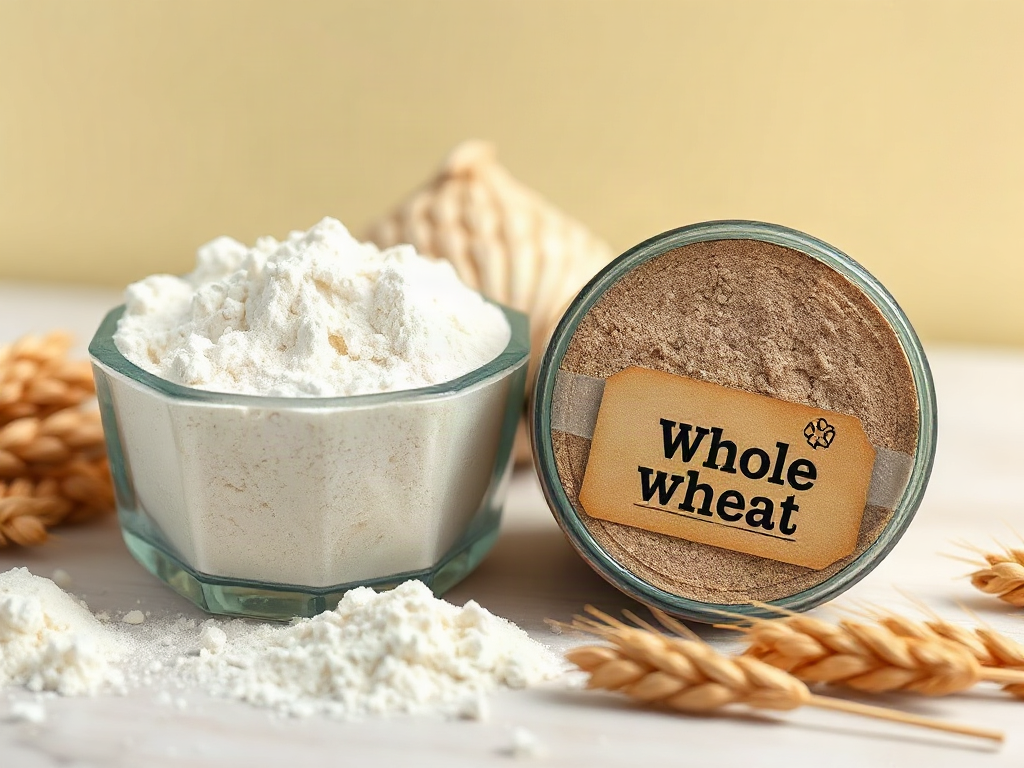
Whole wheat flour generally provides more fiber, magnesium, zinc, and naturally occurring B vitamins than all-purpose flour because it retains the bran and germ, while all-purpose flour is milled mainly from the endosperm. Enriched all-purpose flour has selected nutrients added back, commonly iron and several B vitamins, but enrichment does not restore the original fiber or full range of grain compounds. Whole wheat flour is usually the stronger choice for nutrient density and fullness; all-purpose flour offers a lighter texture and more predictable gluten development. For everyday baking, replacing 25% to 50% of all-purpose flour with whole wheat flour often balances nutrition, flavor, moisture, and structure.
Which Nutrients Separate the Two Flours?
The largest nutritional difference comes from which parts of the wheat kernel remain after milling. Whole wheat flour contains the bran, germ, and starchy endosperm. Standard all-purpose flour consists primarily of endosperm, although its precise nutrient profile varies by brand, wheat blend, bleaching status, and enrichment.
Keeping the bran gives whole wheat flour substantially more dietary fiber. The germ and bran also contribute magnesium, zinc, vitamin E, and an assortment of naturally occurring plant compounds. All-purpose flour still supplies carbohydrate and protein, but much of the kernel’s fiber and several micronutrients are removed when the bran and germ are separated.
| Comparison Point | All-Purpose Flour | Whole Wheat Flour |
|---|---|---|
| Kernel components | Mainly endosperm | Bran, germ, and endosperm |
| Fiber | Lower | Higher |
| Magnesium and zinc | Generally lower | Generally higher |
| Added nutrients | Often enriched with selected iron and B vitamins | Usually relies on nutrients naturally present in the grain |
| Texture | Fine, light, and relatively neutral | Coarser, denser, and more pronounced in flavor |
| Typical baking behavior | Stronger rise and softer crumb in many recipes | Greater water absorption and a heartier crumb |
Protein deserves closer attention than a simple whole wheat-versus-white label allows. Both flours contain gluten-forming proteins, and their protein levels may overlap. An all-purpose flour formulated for bread-like strength can contain as much or more protein than a softer whole wheat product. Protein percentage therefore depends on the wheat variety and brand, not solely on whether the flour includes the whole kernel.
Calories are often similar enough that they should not drive the choice. Whole wheat flour is not inherently a low-calorie substitute, nor does it turn a sugar- and fat-rich baked item into a balanced meal. Its practical advantage is the retention of fiber and micronutrients. Compare the Nutrition Facts panel by the same weight, such as grams per serving, because loosely filled measuring cups can conceal differences in density.
A useful label check starts with the ingredient list. “Whole wheat flour” or another whole-grain flour should appear as the primary ingredient when a product is presented as whole grain. Terms such as “wheat flour,” “unbleached wheat flour,” or “multigrain” do not independently establish that the flour contains the entire kernel.
How Do Milling and Enrichment Change Nutrition?
Refining improves consistency and softness by removing the bran and germ, but those same steps alter the flour’s nutritional composition. The endosperm is rich in starch and contains protein, while the outer and germ portions hold much of the kernel’s fiber, oils, minerals, and vitamin E. The result is a flour that behaves smoothly in dough and batter but no longer represents the intact grain.
Enrichment partially addresses losses from refining. Enriched all-purpose flour commonly has specified B vitamins and iron added after milling, subject to the product’s formulation and local requirements. Those additions can make enriched flour a meaningful source of the listed nutrients. They do not make it nutritionally identical to whole wheat flour, because enrichment does not usually replace the removed fiber, magnesium, vitamin E, or every compound originally present in the grain.
Fortification and enrichment are also easy to misread. A nutrient appearing at a higher label value in enriched flour does not prove that refining improved the grain. It may reflect an added amount, while nutrients not included in the enrichment formula remain lower. The ingredient list may name substances such as reduced iron, folic acid, niacin, riboflavin, or thiamin; the exact list should be checked rather than assumed.
Whole wheat flour presents a different storage constraint. Oils in the germ are nutritionally useful but make the flour more susceptible to stale or rancid flavors than refined flour. A bitter, paint-like, or noticeably musty aroma is a warning that quality has deteriorated. Buying an amount that will be used promptly, sealing it against moisture and odors, and refrigerating or freezing it for longer storage can protect flavor. Let chilled flour approach room temperature before opening its container if condensation is likely.
Bleached versus unbleached is a separate question from whole versus refined. Both bleached and unbleached all-purpose flour generally have the bran and germ removed. Bleaching changes color and baking behavior through treatment or aging methods, but choosing unbleached all-purpose flour does not restore whole-grain fiber. The more informative decision is whether the ingredient is whole grain, refined and enriched, or refined without enrichment.
The practical label sequence is straightforward: identify the first ingredient, review fiber per serving, note whether the flour is enriched, and compare serving weights. This avoids the common mistake of treating package color, words such as “natural,” or a darker-looking flour as proof of whole-grain content.
How Do the Flours Affect Fullness and Digestion?
Whole wheat flour’s additional fiber can slow eating and digestion, add bulk, and make a flour-based meal more filling than a comparable refined-flour version. The effect depends on the complete food, however. Particle size, added sugar, fat, protein, portion size, cooking method, and the foods served alongside it all shape digestion and the post-meal response.
A whole wheat pancake served with plain yogurt, fruit, and nuts is nutritionally different from a large whole wheat pastry rich in sugar and butter. Likewise, all-purpose flour used to thicken a vegetable-and-bean soup represents a small part of a fiber-rich meal. Flour type matters, but it cannot be evaluated sensibly without the recipe and portion.
Finely milled whole wheat flour may be digested more quickly than intact or coarsely cracked wheat because grinding increases the surface area available to digestive enzymes. It still retains the kernel’s fiber, but “whole grain” does not guarantee a uniform blood-glucose effect. People who monitor glucose for medical reasons should use their clinician’s advice and their own appropriately collected readings rather than assuming every whole wheat product produces the same response.
Increasing whole wheat intake abruptly may cause gas, bloating, or changes in stool for someone accustomed to little fiber. A gradual substitution—such as replacing one-quarter of the all-purpose flour before moving toward one-half—allows the recipe and the digestive system to adjust. Adequate fluid intake also matters as dietary fiber rises. Persistent or severe digestive symptoms warrant individualized medical assessment rather than repeated flour experimentation.
Neither flour is suitable for someone who must avoid wheat or gluten because of celiac disease, a diagnosed wheat allergy, or another clinically established reason. Whole wheat contains gluten; retaining more of the kernel does not make it gluten-free. All-purpose flour labeled organic is also still wheat flour and does not resolve gluten-related restrictions.
For routine meals, prioritize the pattern rather than expecting a single substitution to carry the diet. Whole wheat tortillas with beans and vegetables, whole wheat muffins containing fruit and modest added sugar, or a mixed-flour pizza crust paired with vegetables and protein put the flour in a more complete context. A common failure is adding whole wheat flour while leaving oversized portions and large amounts of added sugar unchanged, then expecting the ingredient swap alone to transform the food.
Which Flour Should You Choose for Cooking and Baking?
The best choice depends on whether nutritional density, delicate texture, strong volume, cost, flavor, or familiarity has priority in the specific recipe. Whole wheat flour is a practical default for breads, pancakes, waffles, muffins, crackers, and rustic crusts when a nutty flavor and firmer structure are welcome. All-purpose flour remains useful for tender cakes, fine pastries, smooth sauces, and recipes calibrated around its predictable absorption.
A direct one-for-one volume substitution can fail because whole wheat bran and germ absorb more water and interfere with the continuous gluten network that traps gas. Dough may become stiff, while cakes or muffins may turn dry and heavy. Adding more liquid can address absorption, but excess mixing or indiscriminate liquid additions can create a gummy interior instead.
For a recipe not designed for whole wheat flour, use this compact trial process:
- Begin with 25% substitution. Replace one-quarter of the all-purpose flour by weight with whole wheat flour while keeping the other ingredients stable.
- Assess hydration. If the batter is unusually thick or the dough feels dry, add liquid in small increments rather than making a large correction.
- Allow a short rest. Resting batter or dough gives bran time to absorb water before the final consistency is judged.
- Check the baked result. Good signs include an even crumb, adequate rise, clean slicing, and moisture that remains pleasant after cooling.
- Increase gradually. Move toward 50% or higher only if the structure, flavor, and moisture still suit the food.
Failure signs are specific: spreading cookies may need less liquid or more chilling; a tight bread loaf may need improved hydration, more fermentation time, or a formula written for whole wheat; crumbly muffins may reflect too little moisture or overbaking. Whole wheat pastry flour can work better for tender muffins, pancakes, and some cookies because it is milled from softer wheat, but it is not interchangeable with stronger flour in every yeast bread.
White whole wheat flour offers another middle path. It is made from a lighter-colored wheat variety but still includes the whole kernel. Its flavor is often milder than conventional red whole wheat flour, making it useful for households adjusting to whole-grain taste. It should not be confused with refined white flour merely because its color is pale.
Budget and waste also deserve attention. A flour with a theoretically stronger nutrient profile provides little value if its flavor leads to discarded food or its germ oils become rancid in storage. Buy smaller bags during experimentation, use a kitchen scale for repeatable substitutions, and record liquid changes. For many kitchens, a blend of whole wheat and all-purpose flour is the most durable compromise: more fiber and whole-grain character without sacrificing the texture that makes the recipe acceptable.
Conclusion
Choose flour by combining nutritional priorities with the demands of the recipe. Whole wheat flour retains the full kernel, making it the more direct route to additional fiber and a broader naturally occurring nutrient profile. Enriched all-purpose flour still contributes carbohydrate, protein, and listed added micronutrients, while producing the lighter texture many baked foods require.
Check ingredient lists and serving weights instead of relying on package color or vague wheat claims. When changing an established recipe, replace 25% of the all-purpose flour first, observe hydration and crumb, and increase the share only when the result remains enjoyable. Store whole wheat flour carefully and buy quantities that match actual use. A repeatable mixed-flour approach is often more useful than forcing a complete substitution that compromises texture or creates waste.
Frequently Asked Questions
Is whole wheat flour always healthier than all-purpose flour?
Whole wheat flour generally retains more fiber and several naturally occurring micronutrients, but the complete recipe and portion still matter. A whole wheat dessert can remain high in added sugar or saturated fat.
Can whole wheat flour replace all-purpose flour one for one?
Sometimes, but results vary. Starting with a 25% substitution is safer because whole wheat flour absorbs more liquid and can produce a denser crumb. Increase the proportion after checking moisture and structure.
Does enriched all-purpose flour have nutrients?
Yes. Enriched flour commonly contains added iron and selected B vitamins, and it naturally retains starch and protein. It usually has less fiber and fewer retained grain components than whole wheat flour.
Is white whole wheat flour the same as all-purpose flour?
No. White whole wheat flour contains the bran, germ, and endosperm of a lighter-colored wheat variety. All-purpose flour is refined primarily from the endosperm.
How should whole wheat flour be stored?
Keep it tightly sealed in a cool, dry place and refrigerate or freeze it for longer storage. Discard flour with bitter, musty, or paint-like odors, which may indicate deterioration.