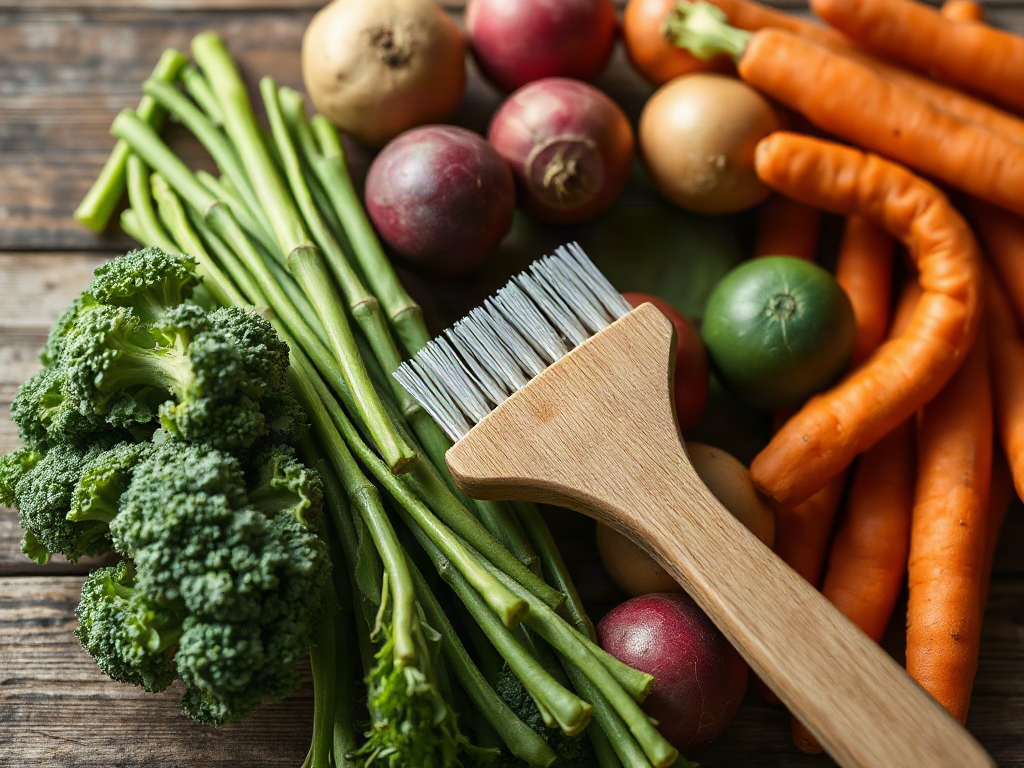
A produce brush is appropriate for firm vegetables with sturdy, uneven, or ridged surfaces that can hold soil, such as potatoes, carrots, sweet potatoes, beets, cucumbers, and winter squash. Use it under cool running water with gentle pressure, especially when the vegetable will be eaten with its skin or cut after washing. A brush is unnecessary for delicate leafy greens, mushrooms, berries, and thin-skinned vegetables that can bruise or trap water. Clean the brush between uses, avoid soap and household cleaners, and discard vegetables with soft rot or visible mold rather than trying to scrub the problem away.
Which Vegetables Benefit From a Produce Brush
A produce brush is most useful when a vegetable has a firm exterior with grooves, pores, ridges, or a rough surface where soil and debris can remain after rinsing. Root vegetables such as potatoes, carrots, parsnips, and beets are common examples because they grow in or near soil. A brush can also help clean the textured skin of winter squash and the ridges on some cucumbers before slicing.
The purpose is mechanical removal, not disinfection. Running water loosens particles, while soft or medium bristles reach shallow crevices that fingers may miss. That distinction matters: a brush does not make spoiled produce safe, remove every microorganism, or replace clean hands and utensils. It is simply a practical aid for removing surface dirt from vegetables that can tolerate controlled friction.
Skin use is a useful decision point. If a potato will be peeled, a quick rinse may be enough to remove loose soil before peeling, although brushing can reduce the amount transferred to the peeler or cutting board. If the potato will be roasted whole, brushing deserves more attention because the skin remains part of the meal. The same reasoning applies to carrots, sweet potatoes, and beets prepared with their skins intact.
Choose a brush when all three conditions are present:
- The vegetable is firm enough to withstand light pressure.
- The surface has dirt-holding texture or visible soil.
- The skin will be eaten, or surface debris could transfer during cutting.
A common mistake is treating every unpeeled vegetable as a scrubbing project. A smooth, clean cucumber may need only a thorough rinse and hand rubbing. Excessive brushing can create small abrasions that shorten quality after washing, particularly when the vegetable will be stored rather than cooked immediately. For more specific washing decisions, compare the surface and firmness of each item rather than applying one rule to the entire shopping bag.
How to Brush Vegetables Without Damaging Them
Effective brushing begins with preparation: wash your hands, inspect the vegetable, and rinse away loose soil before applying the bristles. Holding a muddy potato directly under a brush can grind grit across the skin. A preliminary rinse reduces that friction and makes it easier to see whether remaining material is actually dirt or a damaged area.
Use cool or lukewarm running water and gentle, short strokes. Rotate the vegetable so the brush reaches its entire surface, including the stem end, root end, and natural indentations. A firm carrot can tolerate more brushing than a tender zucchini. The goal is a visibly clean surface, not a polished or scraped skin. Stop when loose soil and residue are gone.
Consider a potato with soil embedded around its eyes. A brush can reach those shallow recesses more effectively than a flat palm, but pushing hard into the eyes may tear the skin. A sweet potato has a similarly uneven exterior but may bruise under force. With beets, brushing under water is useful because dry soil can be stubborn; rinsing first prevents unnecessary abrasion and reduces splashing.
After brushing, rinse the vegetable again and dry it with a clean towel if it will be stored. Drying matters because wet surfaces can deteriorate more quickly during refrigeration, particularly when the skin has been scuffed. If the vegetable is going straight into a pot or oven, drying is mainly a cooking preference rather than a washing requirement.
Do not use dish soap, bleach, detergent, or surface cleaners on vegetables. These substances are not needed for ordinary produce washing and can leave residues or create an exposure concern. Commercial produce washes are not a substitute for physical rinsing and brushing. A clean brush, running water, and appropriate handling are the simpler combination for firm vegetables.
Signs that the technique is working include removal of visible soil without gouged skin, a brush that moves smoothly rather than scraping, and no transfer of grit to the hands after rinsing. If bristles are pulling skin away, the vegetable is softening, or dirty water is being pushed into cracks, reduce pressure or switch to hand rubbing.
When a Brush Is the Wrong Tool
A produce brush is not appropriate for delicate vegetables whose leaves, skin, or structure can tear under friction. Leaf lettuce, spinach, herbs, and other tender greens are better handled by separating leaves and rinsing them thoroughly in clean water. Scrubbing can bruise plant tissue and make washing less effective by compacting or tearing leaves.
Mushrooms also call for restraint. Their porous surfaces and fragile caps can be damaged by aggressive brushing, while soaking may affect texture. A brief rinse or careful wiping, depending on visible soil and preparation, is generally more suitable than treating them like a potato. The same caution applies to soft tomatoes, ripe avocados, and tender zucchini with easily marked skin.
Thin-skinned vegetables create a different tradeoff. Bell peppers and smooth cucumbers may benefit from rubbing with clean hands under running water, but a stiff brush can leave scratches around the surface. Green beans can be rinsed and handled individually; brushing adds little value and may break the pods. The best method is the least aggressive one that removes visible dirt before preparation.
Some vegetables should not be washed until needed because moisture can shorten storage quality. Washing a firm root vegetable before immediate cooking is different from washing an entire supply for the week. If storage is the priority, remove loose soil gently, keep the produce dry as appropriate for that vegetable, and wash it shortly before use. If it has already been washed, dry it well and follow suitable storage practices.
Another weak assumption is that brushing removes hazards that are inside the vegetable or associated with spoilage. It does not. Surface cleaning cannot correct internal decay, deep mold growth, chemical contamination, or damage that has allowed deterioration to spread. Soft spots, leaking areas, unpleasant odors, and extensive mold are reasons to evaluate the vegetable for disposal rather than intensify scrubbing.
The internal link when a produce brush is appropriate for vegetables is especially useful when deciding between brushing, hand rubbing, and simple rinsing. Match the tool to the surface: rough and firm favors a brush; tender, leafy, porous, or easily bruised favors gentler handling.
Cleaning, Storage, and Safety Limits
The brush itself can become a transfer point if food residue and soil remain in its bristles. After use, rinse it thoroughly under running water, remove trapped debris, and allow it to air-dry in a clean location. Do not leave it submerged in standing water or tucked wet inside a drawer. Replace it when bristles become flattened, cracked, heavily stained, or difficult to clean.
Separate cleaning tools from items used for dishes, bathrooms, or household surfaces. A brush intended for vegetables should have a clear purpose and should not be exposed to cleaning chemicals. If more than one person prepares food, a labeled or distinctive brush can prevent accidental misuse.
Washing produce before cutting is particularly valuable for firm vegetables. Cutting first can carry surface debris across the flesh through the knife blade. A brushed potato or squash should still be placed on a clean cutting surface, and hands should be washed after handling visibly dirty produce. Rinsing the knife or board is sensible if soil has contacted either one.
A simple decision sequence keeps the process proportionate:
- Inspect the vegetable for firmness, visible soil, bruising, and spoilage.
- Decide whether the skin will be eaten or whether cutting could transfer debris.
- Rinse away loose material before brushing.
- Use gentle strokes only on firm, textured surfaces.
- Rinse again, dry when storage follows, and clean the brush.
Organic status does not determine whether a brush is appropriate. Organic and conventionally grown vegetables can both carry soil or handling residue, and neither category makes scrubbing automatically necessary. Washing also does not mean a vegetable must be peeled; peeling is a culinary choice that may change texture and nutrient content, while washing addresses surface cleanliness.
Readers comparing washing methods can use the related reference when a produce brush is appropriate for vegetables alongside their normal kitchen routine. Prioritize removing visible soil, preventing cross-contamination during cutting, and avoiding damage that accelerates decay. A brush is useful when it solves a specific surface problem, not because more friction is always safer.
Frequently Asked Questions
Should potatoes be scrubbed with a produce brush?
Yes, a brush is useful for firm potatoes with soil or debris on the skin, especially when they will be roasted or otherwise eaten unpeeled. Rinse first and use light pressure.
Can a produce brush be used on carrots?
Yes. Firm carrots can usually tolerate gentle brushing under running water, particularly around the top and any shallow grooves. Hand rubbing is sufficient for smooth, clean carrots.
Should leafy vegetables be scrubbed?
No. Separate and rinse leafy greens under running water instead. Bristles can bruise, tear, or damage their delicate leaves.
Does brushing vegetables remove pesticides?
Brushing and rinsing remove some surface material, but they do not guarantee removal of all residues. Do not use soap or household chemicals on produce.
How should a vegetable brush be cleaned?
Rinse away soil and food particles after every use, inspect the bristles, and let the brush air-dry completely. Replace it if it becomes damaged or cannot be cleaned effectively.
Conclusion
A produce brush earns its place when a vegetable is firm, textured, and carrying soil or residue that hand rubbing may not remove. Potatoes, carrots, beets, sweet potatoes, and winter squash are practical examples, especially when their skins will remain during cooking. Rinse first, brush lightly under running water, rinse again, and dry the vegetable if it will be stored. Use gentler handling for greens, mushrooms, tomatoes, and other fragile vegetables, and do not expect brushing to repair spoilage or replace hygienic preparation. Clean and air-dry the brush after use. The most reliable approach is selective: use friction where the surface can tolerate it and where it solves a visible cleaning problem.