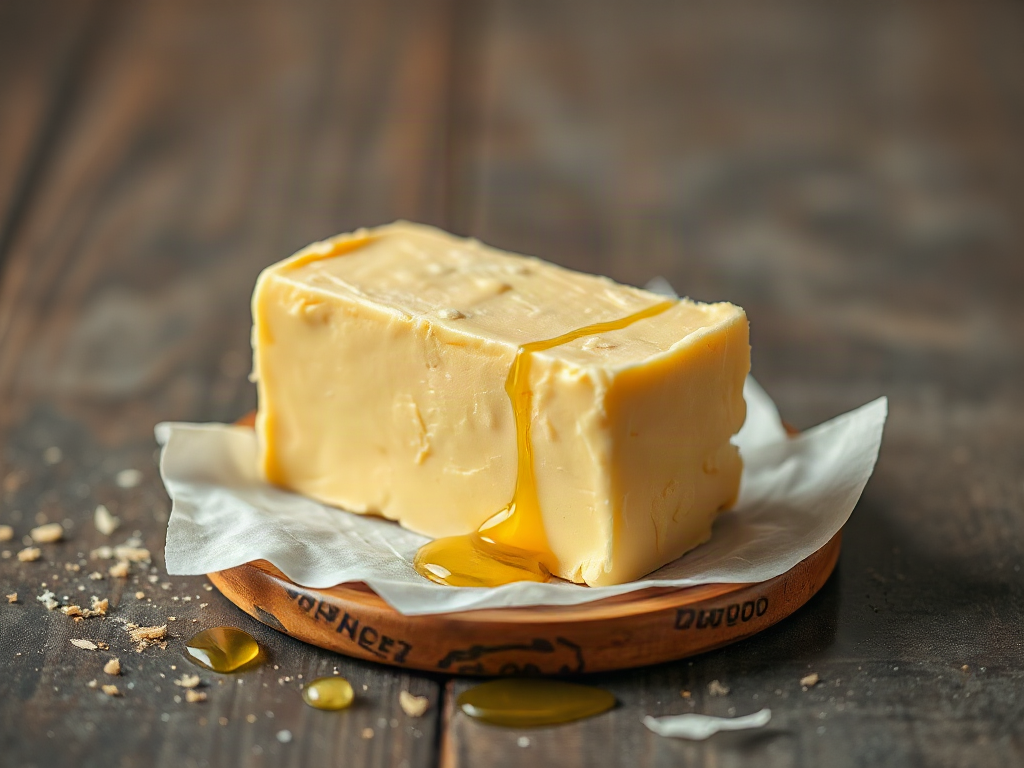
Ghee versus butter is mainly a choice between concentrated milk fat and a less concentrated fat that retains water and milk solids. Ghee generally supplies slightly more total and saturated fat per spoonful, tolerates higher cooking temperatures, and contains very little lactose or milk protein; butter offers familiar flavor, lower fat density by volume, and better performance in many baked goods. Neither should be treated as a major vitamin source or an unrestricted “healthy fat.” Choose according to cooking method, dairy sensitivity, portion size, and the rest of your diet, while prioritizing unsaturated fats such as olive oil, nuts, seeds, and avocado more often.
How Do Ghee and Butter Differ?
Ghee is made by heating butter until its water evaporates and its milk solids separate from the fat. The solids are then strained away, leaving a concentrated cooking fat. Butter remains an emulsion containing milk fat, water, and small amounts of milk proteins and sugars. That processing difference explains most of the contrast in fat density, storage behavior, flavor, and cooking performance.
Removing water means a tablespoon of ghee contains more fat than the same volume of butter. The difference is modest in an ordinary serving, but it becomes more meaningful when someone pours freely, cooks several dishes with it, or assumes that ghee can be used without measuring because it is marketed as traditional or minimally processed. A jar labeled organic, grass-fed, cultured, or artisanal does not change the basic fact that both foods are concentrated sources of fat.
The removed milk solids also affect tolerance. Ghee normally contains much less lactose and casein than butter, so some people who have difficulty digesting small amounts of lactose may find it easier to use. That does not make ghee reliably safe for a milk allergy. Trace milk proteins may remain, manufacturing practices vary, and an allergy can involve very small exposures. Anyone managing a diagnosed allergy should use products and guidance appropriate to that condition rather than testing ghee as a casual substitute.
Flavor provides another practical distinction. Butter tastes creamy and releases browned, nutty notes when its milk solids cook. Ghee already has a toasted character, with intensity varying by how long it was heated. A spoonful can be noticeable in lentils, rice, roasted vegetables, or eggs, while butter may integrate more gently into mashed potatoes, sauces, toast, and baked goods.
A common misconception is that clarification transforms butter into a fundamentally different class of dietary fat. It does not. Most of the fatty acids remain similar because ghee begins as butter. Clarification changes concentration and removes components that burn readily, but it does not convert saturated fat into unsaturated fat. When comparing the two, processing and culinary use matter more than wellness labels.
Fat, Calories, and Nutrients Compared
The most useful comparison starts with equal measured volumes and the product label in hand. Formulations and serving declarations vary, but ghee typically has about 14 grams of fat per tablespoon, while butter commonly has roughly 11 to 12 grams. Ghee therefore tends to provide more calories and saturated fat per tablespoon because it contains little water. Exact values should come from the package or a recognized food-composition database rather than from a generic online chart.
| Comparison Point | Ghee | Butter |
|---|---|---|
| Total fat by equal volume | Usually higher | Usually lower because water remains |
| Dominant fat pattern | Substantial saturated fat with some monounsaturated fat | Substantial saturated fat with some monounsaturated fat |
| Lactose and milk proteins | Very low after clarification, but not guaranteed absent | Present in small amounts |
| Fat-soluble vitamins | Small, product-dependent amounts | Small, product-dependent amounts |
| Sodium | Usually low unless salt is added | Depends strongly on salted versus unsalted |
Both fats may contribute vitamins A, E, and K in variable amounts, but normal culinary portions rarely make either one the most efficient way to meet vitamin needs. Animal feed, season, fortification, and processing can alter the amount. Claims that one spoonful provides exceptional micronutrient value often emphasize the presence of a nutrient without considering how much is present or how much saturated fat accompanies it.
Ghee and butter also contain short-chain fatty acids, including butyrate. These compounds are biologically interesting, yet their presence does not establish that eating more ghee or butter produces a specific digestive benefit. The colon normally receives butyrate made when intestinal microbes ferment certain fibers. Beans, oats, vegetables, fruit, and other fiber-containing foods address that pathway differently and should not be displaced by added fat.
Saturated fat deserves context rather than a single-food verdict. Replacing butter or ghee with an unsaturated fat such as olive, canola, or avocado oil changes the overall fatty-acid pattern of a meal. Replacing either one with refined starch or added sugar is a different exchange and should not be assumed to improve the meal. People managing elevated LDL cholesterol or cardiovascular risk can discuss individual targets with a clinician or registered dietitian.
The practical mistake is comparing unequal servings. A thin pat of butter on toast and two tablespoons of ghee used to fry breakfast are not interchangeable exposures. Measure the amount actually used for several days, check saturated fat on the label, and assess the complete eating pattern rather than deciding from the ingredient name alone.
Which Works Better for Cooking and Baking?
Ghee is usually the more forgiving option for higher-heat cooking because its water and milk solids have been removed. Those milk solids are the part of butter most likely to brown and eventually burn. Ghee can therefore work well for sautéing spices, searing paneer, roasting cauliflower, or frying an egg when a cook wants buttery flavor without rapid scorching.
Heat tolerance is not permission to overheat the pan. Any cooking fat can degrade when held at excessive temperatures, and visible smoke is a cue to lower the heat, improve ventilation, and consider starting again. Product quality, age, pan temperature, and cooking duration all influence performance. A listed smoke point is a useful approximation, not a guarantee that every brand behaves identically.
Butter is often preferable when its water and milk solids serve a culinary purpose. In cookies and cakes, the water contributes steam and the fat-to-water ratio affects spread, tenderness, and structure. Substituting ghee tablespoon for tablespoon can produce a greasier dough, alter spread, and remove some of butter’s characteristic dairy notes. A recipe developed for ghee may perform well, but an improvised one-to-one swap is less predictable.
For stovetop cooking, technique can preserve butter’s advantages. Moderate heat allows vegetables or eggs to cook before the solids burn. Combining butter with another fat may alter flavor and handling, but adding oil does not magically prevent the butter solids from browning once the pan becomes hot. Clarified butter or ghee is the cleaner solution when milk solids are the operational problem.
Use the following cooking check before choosing:
- High heat or prolonged sautéing: ghee is generally easier to manage.
- Recipe-dependent baking: use the fat specified unless the formula accounts for ghee’s lower water content.
- Finishing flavor: choose butter for creamy dairy character or ghee for a more toasted note.
- Salt control: compare unsalted versions and season the finished dish deliberately.
Signs that the choice is working include clean flavor, controlled browning, and the expected texture. Acrid aromas, dark specks forming too early, oily baked goods, or excessive spreading signal a mismatch among the fat, heat, and recipe. Adjusting temperature or quantity is usually more useful than assuming one product is categorically better.
How Should You Choose for Your Diet?
The better choice depends on what the fat needs to accomplish and how frequently it appears in the diet. For occasional use, the nutritional difference between a measured teaspoon of ghee and a measured teaspoon of butter may be less consequential than the total amount of saturated fat consumed across meals. For daily frying, generous coffee additions, or repeated baking, small serving differences can accumulate.
Start with the job. Ghee has a practical edge when high heat, long shelf stability, or minimal lactose is the priority. Butter makes sense when a recipe needs its water content, when its flavor is central, or when a smaller amount provides enough richness. Neither gains an automatic nutritional advantage from being organic or grass-fed. Those labels may reflect production preferences, but they do not remove calories or saturated fat.
Then examine the meal around it. A vegetable curry cooked with a modest amount of ghee can still contain lentils, vegetables, and whole grains. The same ghee used heavily in a meal already rich in fatty meat, cheese, and creamy dessert creates a different fat profile. Conversely, a little butter on whole-grain bread need not be judged like a pastry in which butter is a major ingredient.
People seeking a more unsaturated pattern do not have to eliminate either food to make progress. Olive oil can handle dressings and many moderate-heat dishes; canola or avocado oil may suit other cooking applications; nuts, seeds, and avocado add fat alongside fiber and other nutrients. Butter or ghee can then be reserved for dishes where its flavor materially improves the result. That approach treats it as a deliberate ingredient rather than the default fat for every task.
Cost and waste also matter. Ghee often costs more, although its concentrated flavor and storage stability may allow slower use. Butter is widely available and useful across cooking and baking, but it requires appropriate storage. Buying a large specialty jar is poor value if it turns rancid before use. Check for stale, paint-like, or soapy odors and follow the manufacturer’s storage directions.
A sensible decision sequence is to check the cooking temperature, measure the intended portion, read total and saturated fat per serving, account for allergies or intolerance, and consider the rest of the day’s food. If LDL cholesterol, gallbladder symptoms, fat malabsorption, or another medical concern shapes the decision, individualized advice is more appropriate than broad claims that either fat is therapeutic.
Frequently Asked Questions
Is ghee healthier than butter?
Not categorically. Ghee offers higher heat tolerance and very low levels of lactose and milk solids, but it usually contains more total and saturated fat per tablespoon. Portion, cooking use, and the overall dietary pattern matter more than a simple healthy-versus-unhealthy label.
Can someone with lactose intolerance eat ghee?
Some people with lactose intolerance tolerate ghee because clarification removes nearly all lactose. Sensitivity varies, however, and ghee should not automatically be considered safe for a milk allergy because trace milk proteins may remain.
Can ghee replace butter one for one in baking?
Not reliably. Ghee contains less water and no milk solids, so a direct substitution can change spread, tenderness, flavor, and dough consistency. Use a recipe formulated for ghee or expect to test and adjust the liquid and fat amounts.
Does ghee contain more calories than butter?
Ghee generally has more calories per tablespoon because it is almost entirely fat, whereas butter includes water. Labels vary, so compare the same serving size on the products you actually buy.
Which is better for high-heat cooking?
Ghee is usually more suitable because the milk solids that scorch in butter have been removed. Keep the pan below the point of visible smoking, since no cooking fat benefits from unnecessary overheating.
Conclusion
Choose ghee when concentrated toasted flavor, low lactose content, or dependable high-heat performance solves a specific cooking problem. Choose butter when its water, milk solids, and creamy flavor are important to baking or finishing a dish. The nutritional gap is real but modest at small, measured servings: ghee is more fat-dense, while both contribute substantial saturated fat.
The most useful next step is to compare labels at the same serving size and observe how much you actually use. Reserve these fats for dishes where their flavor or function matters, and rely more often on unsaturated oils, nuts, seeds, and avocado when that suits the meal. Medical conditions, milk allergy, or cholesterol management warrant individualized guidance rather than relying on product marketing or a universal ranking.