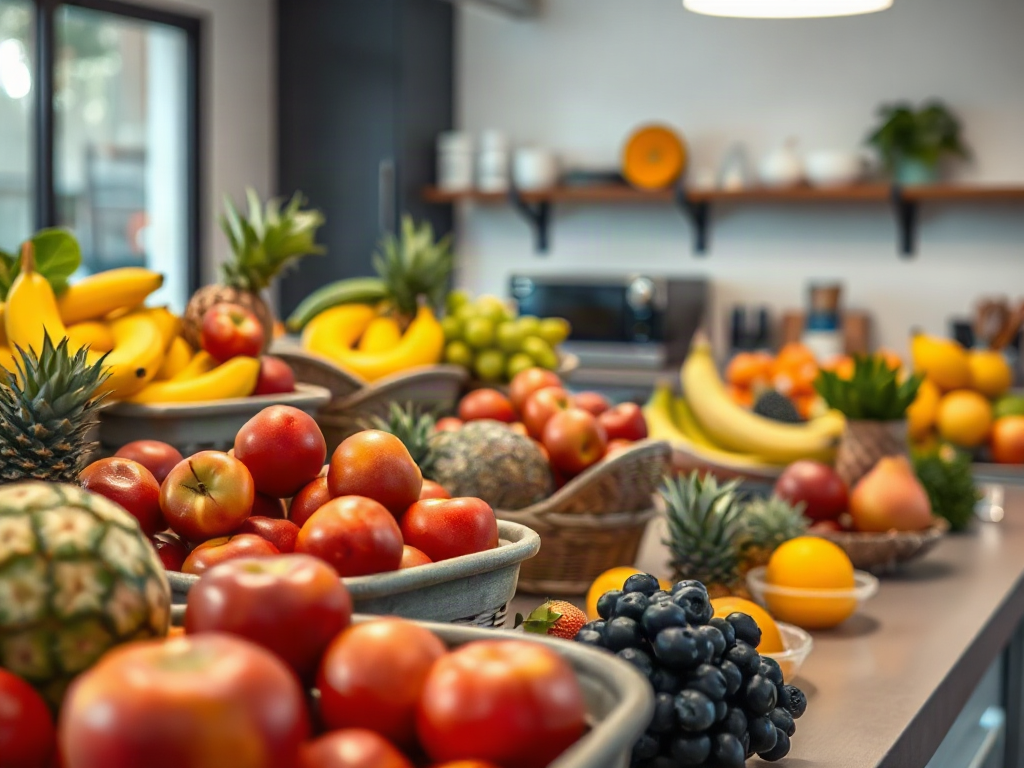
Designing a Practical Fruit Station
Organic fruit preparation for office kitchens becomes easier when the workspace is organized around the order of work: receiving, washing, cutting, chilling, and serving. A shared kitchen rarely has the counter space or staffing of a commercial food operation, so the best setup reduces unnecessary movement. Keep a clean cutting board, a sharp knife, a colander, food-safe containers, paper towels, labels, and serving tongs together rather than scattering them across cabinets and drawers.
The preparation surface should be cleared before fruit arrives. Coffee grounds, used mugs, dishcloths, and crumbs create avoidable contact points. Wash hands before handling the fruit and again after touching phones, door handles, rubbish bins, or unwashed packaging. A clean station does not need elaborate equipment, but it does need a predictable sequence. Preparing fruit beside a sink is convenient, while cutting directly beside a crowded coffee machine or communal toaster increases the chance of splashes and surface contact.
Fruit selection also affects the station. A small bowl of whole clementines or bananas requires little handling and can remain available without the same quality concerns as cut melon. A mixed fruit cup demands more labor because every item must be inspected, washed, trimmed, portioned, and chilled. That distinction matters when one employee is preparing snacks between meetings.
A useful starting arrangement includes:
- A clean area for unwashed fruit and packaging.
- A separate area for washed fruit and finished portions.
- Covered containers that fit the office refrigerator without crowding other foods.
- Labels showing the preparation date and, when useful, the intended serving time.
A common mistake is to treat organic certification as a substitute for sanitation. Organic production describes how an item was produced; it does not mean the fruit is sterile or ready to eat without washing. The practical priority is a clean workflow that works equally well for organic apples from a local supplier and organic berries delivered in a sealed retail pack.
Washing and Cutting Fruit Safely
Wash whole fruit under clean running water before cutting, even when the peel will be removed later. Surface dirt and microorganisms can transfer from the outside to the edible flesh through a knife. Firm items such as apples, pears, and melons can be gently rubbed with clean hands while rinsing; delicate berries need lighter handling because pressure damages their skin and releases juice.
Do not use soap, household disinfectant, or produce chemicals that are not specifically intended for food use. Those substances can leave residues and are unnecessary for ordinary preparation. After rinsing, drain fruit in a clean colander or dry it gently with clean paper towels. Excess water shortens the quality window for berries and makes mixed containers watery.
Cutting technique should match the fruit. Slice apples and pears shortly before serving or use them in a container where their exposed surfaces will not sit for long. Remove melon rind before cutting the flesh into cubes, and clean the knife and board after handling the rind. Keep berries whole when possible; they hold their shape better than chopped berries. Citrus segments can be prepared in advance, but their juice may soften neighboring items in a mixed container.
The most frequent failure is preparing fruit on a board that was recently used for raw meat, poultry, or other foods without thorough cleaning. A board that looks clean may still carry residue. In an office where equipment has multiple users, a dedicated fruit board is a low-cost way to make the intended use obvious. If a separate board is unavailable, clean the surface with hot, soapy water and allow it to dry before preparation.
Cut fruit should be refrigerated rather than left on a counter for extended periods. Office kitchens have fluctuating temperatures, open refrigerator doors, and uncertain serving schedules. Prepare portions close to the time they will be eaten, use smaller batches, and discard fruit that has developed an unusual odor, sliminess, leaking juice, or visible mold. Do not try to rescue moldy berries by removing only the visibly affected pieces when nearby fruit has been touching them.
Choosing Fruits for Freshness and Workload
The best fruit for an office kitchen is not simply the most nutritious option; it is the item that can be handled safely and eaten before quality declines. Whole apples, pears, oranges, mandarins, bananas, and plums are practical because employees can take one without shared utensils. They also reduce preparation time for a small office or a kitchen with no dedicated food service staff.
Ready-to-serve bowls require more judgment. Grapes and blueberries generally tolerate short-term chilled storage well when dry and intact. Strawberries can lose firmness quickly after washing, especially if stored wet, so they are often better prepared in a smaller same-day batch. Watermelon and cantaloupe are appealing in warm weather but release liquid and need careful refrigeration after cutting. Apples and pears brown after exposure to air; the color change is usually a quality issue rather than proof of spoilage, but heavily browned slices may be less appealing.
Mixing all fruits together can make service look convenient while reducing the useful life of the most delicate pieces. Juicy melon can soften berries, and citrus juice can change the texture of apples. A separated arrangement or two-container system often performs better: keep dry, firm pieces together and place high-moisture fruit in its own container. This approach may require an extra label or serving bowl, but it produces less waste than one large mixed batch.
Consider the audience and the setting. A bowl intended for quick desk snacks should favor whole, low-drip fruit. A meeting platter can include cut pieces, but the serving window should be known before preparation begins. For an office with limited refrigerator capacity, choose more whole fruit and fewer cut portions. For a larger team with a predictable lunch period, prepare modest amounts in successive batches rather than filling the refrigerator with several days of containers.
Weak planning often assumes that buying organic fruit automatically improves the office snack program. Quality also depends on ripeness, transport, storage, and how long the fruit remains exposed. A bruised organic peach may deteriorate faster than a firm apple, while a well-chilled container of carefully dried grapes may remain attractive for longer. Inspect each delivery, remove damaged pieces, and use the most perishable fruit first.
Storage, Serving, and Daily Reset
Storage decisions determine whether prepared fruit stays crisp, presentable, and suitable for sharing. Use shallow, covered containers rather than deep, overfilled tubs. A shallow layer cools more evenly and allows staff to notice leaking juice or damaged pieces before the entire batch is affected. Leave enough room for the lid to close without crushing soft fruit.
Keep cut fruit refrigerated and separate it from raw foods that could leak. Place containers where they will not be repeatedly pushed against the refrigerator door. A clear label with the preparation date helps coworkers judge which batch should be served first. Labels are particularly useful when several people contribute food to the same kitchen and no single person remembers when a container was made.
Serving tools should match the food. Tongs work well for apple wedges, melon, and larger pieces; a clean spoon is more suitable for berries or citrus segments. A communal hand reaching into a bowl creates more contact and makes the serving area harder to manage. Replace dropped utensils rather than returning them to the bowl, and use a fresh serving utensil when the container is replenished.
Serving size also has a practical effect. Large bowls look generous but leave more fruit exposed and encourage repeated handling. Smaller containers can be refreshed during the day, which protects texture and makes waste easier to measure. If a container is nearly empty but the remaining pieces look dry, bruised, or warm, do not combine them with a fresh batch. Wash the container first and prepare a clean replacement.
The daily reset should include washing knives, boards, colanders, tongs, and reusable containers with hot, soapy water, followed by thorough drying. Wipe the preparation surface and check the refrigerator for forgotten containers. A common misconception is that refrigeration fixes every storage problem. Cold slows quality loss, but it cannot restore crispness to waterlogged berries or make neglected fruit safe to serve after visible deterioration.
A Repeatable Office Preparation Routine
A short routine is more reliable than relying on memory. Begin by checking the refrigerator temperature according to the office’s normal food-handling procedures and making space for the new batch. Inspect fruit for bruises, mold, leaking packages, and overripe pieces. Set aside items that should be eaten whole and reserve the more delicate fruit for immediate preparation.
Next, wash the whole fruit, drain it, and prepare only the quantity likely to be eaten during the planned service period. Cut firm fruit with a clean board and knife, keeping rind and trimming waste away from the finished pieces. Use separate containers when moisture or browning will reduce quality. Label each container and place it in the refrigerator promptly.
Use this compact check before putting fruit out:
- Are the work surface and tools clean and dry?
- Was every whole item washed before cutting?
- Are cut portions covered, dated, and refrigerated?
- Are serving utensils clean and easy to use?
- Does the amount match the expected attendance and serving time?
Signs that the system is working include dry berries, firm cut pieces, low leftover volume, and a serving area that remains orderly. Signs of failure include containers that repeatedly sit untouched, juice pooling under mixed fruit, unclear dates, or employees avoiding the bowl because pieces look tired. Adjust the next batch rather than simply preparing more. Smaller portions, more whole fruit, or a different fruit mix may solve the problem.
Staff training can remain simple: show where clean equipment is stored, explain the wash-cut-chill sequence, and identify who checks the refrigerator at the end of the day. Do not assume that a printed recipe covers the operational details. In a shared kitchen, success depends as much on labeling, utensil replacement, and cleanup ownership as on knife technique.
For current handling guidance, consult food-safety information from the U.S. Food and Drug Administration, the U.S. Department of Agriculture, and state or local public-health agencies. These sources explain produce washing, refrigeration, cross-contamination prevention, and safe handling practices that can be adapted to an office kitchen.
Frequently Asked Questions
Should organic fruit be washed before it is cut?
Yes. Rinse whole fruit under clean running water before cutting, including fruit that will later be peeled, because a knife can transfer surface material to the edible portion.
Which fruits are easiest to prepare for a shared office kitchen?
Whole apples, mandarins, oranges, bananas, grapes, and blueberries are generally practical. Whole fruit requires less handling, while grapes and berries can work well in small chilled portions when kept dry.
How can an office keep apples and pears from browning?
Prepare them close to serving time, keep portions covered and chilled, and avoid storing them for several days. Browning mainly affects appearance and texture, not necessarily safety.
Is it better to mix all prepared fruit in one container?
Usually not. Juicy fruit can soften berries and apples, so separate containers or a divided platter often preserve quality better than one large mixed bowl.
What should happen to leftover cut fruit at the end of the day?
Inspect it for warmth, leaking juice, unusual odor, sliminess, or visible mold. When quality or handling time is uncertain, discard it rather than combining it with a fresh batch.
Conclusion
A dependable office fruit program rests on modest, repeatable controls: wash whole items before cutting, use clean dedicated equipment, match the fruit to the expected serving window, and refrigerate covered portions promptly. Whole apples, citrus, and bananas reduce handling demands, while berries, melon, and cut pears need smaller batches and closer quality checks. Separate wet fruit from firm pieces when mixed storage would cause softening, label containers clearly, and provide clean serving utensils. The next useful step is to observe one week of leftovers and quality problems, then adjust purchasing and preparation amounts to the office’s actual rhythm. Organic sourcing can fit the plan, but cleanliness, temperature control, freshness, and responsible serving practices determine whether the prepared fruit remains appealing and suitable for a shared kitchen.