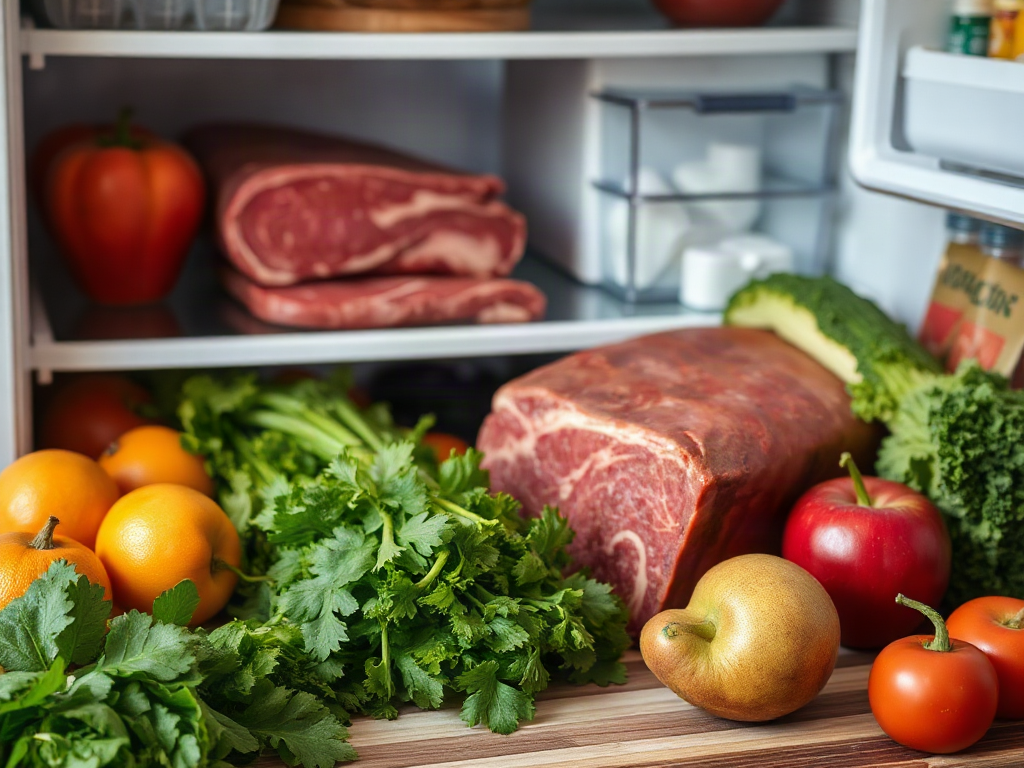
Separating organic produce from raw meat at home means keeping uncooked meat, its juices, knives, boards, plates, and refrigerator storage away from ready-to-eat fruits and vegetables. Place meat in a leak-proof container on the lowest refrigerator shelf, use separate cutting boards when possible, and prepare produce before handling meat. Raw poultry, beef, pork, and seafood can transfer microbes through drips, hands, utensils, and contaminated surfaces, while organic certification does not change those handling needs. Wash hands with soap, clean surfaces with hot soapy water, and sanitize food-contact areas when appropriate; do not wash raw meat, because splashing can spread contamination.
Why Raw Meat and Produce Need Physical Separation
Raw meat and fresh produce create different handling demands in the kitchen. Meat may carry harmful microorganisms before cooking, whereas many fruits and vegetables are eaten without a later heat step. Separation reduces the chance that meat juices reach food that will go directly into a salad, snack, smoothie, or lunch container.
Organic status does not remove this concern. Organic apples, lettuce, carrots, and herbs still need protection from raw poultry, beef, pork, or seafood during shopping, storage, preparation, and serving. The relevant distinction is not organic versus conventional; it is raw animal food versus ready-to-eat food. A sealed package of chicken belongs in a different handling category from a washed salad ingredient, regardless of the label on either product.
Cross-contamination often happens through small, ordinary transfers rather than a dramatic spill. A package leaks onto a refrigerator shelf, a cook places cooked vegetables on the plate that held raw steak, or a knife used for chicken is used immediately to trim a cucumber. Hands can spread contamination to refrigerator handles, spice jars, faucet levers, and produce bags. Keeping these routes in mind makes separating organic produce from raw meat at home a physical workflow rather than a vague cleanliness goal.
A useful priority order is simple: protect food that will not be cooked, contain raw meat, and clean contact points before switching tasks. Rinsing produce under running water may remove soil and some surface residue, but it is not a substitute for keeping raw meat away from it. Conversely, washing raw meat is not a safer alternative; water droplets can carry contamination to nearby counters and utensils.
Safe Refrigerator Placement and Shopping Habits
Refrigerator placement should prevent leaks from reaching produce, dairy, leftovers, and other ready-to-eat foods. Keep raw meat in a sealed container or leak-resistant bag on the lowest shelf. Gravity matters: if a package of ground beef or poultry drips, a low position limits the number of foods and surfaces exposed. Produce can remain in its own drawer or on a separate shelf, provided the drawer is not directly contaminated by a meat package.
Shopping provides the first opportunity to create separation. Put raw meat into a separate bag from loose produce, bread, and packaged foods that will be eaten without cooking. Choose packages without torn wrapping, place them upright in the cart when practical, and refrigerate perishable foods promptly after returning home. A reusable grocery bag that carried raw meat should be cleaned according to its material and allowed to dry before carrying ready-to-eat produce.
For a realistic example, imagine buying organic spinach, berries, chicken thighs, and ground beef. The spinach and berries should not share a bag with the meat. At home, place the chicken and beef into a tray or container on the bottom shelf, then store the produce separately. If the meat will not be used soon, freezing it in a secure package can reduce refrigerator clutter, but the package still needs containment because frozen food can leak as it thaws.
Produce drawers are useful but not magical barriers. An overfilled drawer can press against a leaking package, and a drawer with pooled liquid needs immediate cleaning. Do not rely on original foam trays or thin plastic wrap as complete containment. A lidded container offers better protection, though it also adds a washing task. The best choice is the one that remains stable, closes securely, and can be cleaned easily after use.
Separate Boards, Knives, Plates, and Hands
Use separate cutting boards for raw meat and produce when possible. A board reserved for produce can be used for lettuce, tomatoes, fruit, or herbs, while a second board handles chicken, meat, or seafood. Color coding can make the distinction visible, but the color itself has no protective effect unless everyone follows the system.
If only one board is available, prepare the produce first and move it to a clean serving bowl or storage container. Wash the board with hot, soapy water, rinse it, and allow it to dry before preparing meat. The same sequence applies to knives and other utensils. A board with deep grooves, cracks, or a damaged surface is harder to clean reliably and may deserve replacement. Wooden boards are not automatically unsafe, but their condition and cleaning instructions matter more than material alone.
Never return cooked meat or washed produce to a plate that held raw meat. Use a clean plate for grilled chicken, roasted vegetables, or sliced fruit. This mistake is especially easy during outdoor cooking, where one platter may be carried from the refrigerator to the grill and back to the table. Keep raw and cooked foods on clearly separate dishes, and use clean tongs after cooking.
Hands are another part of the separation system. Wash with soap and running water after touching raw meat, its packaging, or a contaminated surface, then dry with a clean towel or disposable towel. Hand sanitizer is not a full replacement when hands are visibly greasy or soiled. A practical test is to notice whether you can move from meat preparation to opening a refrigerator or seasoning a salad without touching shared handles first; if not, change the order or clean those touchpoints.
Some cooks prefer disposable gloves, but gloves can spread contamination just as hands do if they touch a phone, cabinet, or produce container. Gloves are an optional barrier, not permission to skip handwashing or surface cleaning.
A Practical Kitchen Workflow and Cleanup Sequence
The safest workflow usually moves from ready-to-eat produce to raw meat, not the reverse. Wash and prepare produce using clean equipment, place it in a covered container, and then handle the meat. This approach avoids trying to disinfect every surface in the middle of meal preparation and is particularly useful when a salad and a raw protein share a small counter.
Organize the work area before opening the meat package. Set out the raw-meat board, knife, waste container, seasoning, and a clean plate for the finished food. Keep the produce bowl on another part of the counter. Once meat preparation is complete, discard packaging promptly, wash the board and knife, clean the counter, and wash your hands before touching ready-to-eat items.
A compact sequence looks like this:
- Store raw meat below other foods and keep its package contained.
- Prepare produce and move it away from the raw-meat work area.
- Handle meat with dedicated equipment and avoid unnecessary splashing.
- Cook meat according to a reliable food thermometer check rather than judging only by color.
- Use clean utensils and a clean plate for cooked food.
- Wash hands and clean food-contact surfaces before the next task.
Cleaning and sanitizing are related but not identical. Cleaning removes food residue with detergent and water; sanitizing is a later treatment intended to reduce microorganisms on a clean food-contact surface. Follow the label directions for any food-safe sanitizer, including concentration and contact time. Never mix cleaning chemicals, and do not apply a product to food unless its label specifically permits that use.
One common failure is wiping a visibly greasy counter with a damp cloth and treating it as finished. The cloth may spread residue, and organic matter can interfere with a sanitizer. Another is sanitizing a dirty board without first washing it. For a small kitchen, the most dependable compromise is a clear order of operations and a cleanable work surface, not a large collection of specialized products. Readers comparing separating organic produce from raw meat at home methods should prioritize containment and sequence before buying equipment.
What to Do After a Leak or Cross-Contact
Act quickly when raw-meat juices contact produce or a surface used for ready-to-eat food. Move the affected meat package into a clean container, isolate any directly touched produce, and clean the spill area with hot soapy water. Wash hands after handling the package. If a ready-to-eat item has been visibly touched by raw meat or its juices, discarding it is generally the safer choice than trying to rinse or salvage it.
Produce that was merely stored near a sealed package is not automatically contaminated. Inspect the package and surrounding shelf for holes, liquid, or smeared residue. If there is no evidence of leakage or direct contact, clean the surrounding area as a precaution and keep the foods separated. If liquid reached an open bag of salad greens, cut fruit, berries, or herbs, rinsing may not reliably address contamination across all surfaces, folds, or damaged tissue.
Consider the food’s intended use. Cooking a firm vegetable thoroughly may reduce some microbial risk, but it does not make every contaminated item a sensible recovery project, especially when the food is bruised, porous, or ready to eat. Do not taste food to decide whether it is safe; harmful contamination may not change odor, flavor, or appearance.
Refrigerator spills deserve attention beyond the visible puddle. Remove nearby items, discard contaminated packaging when appropriate, wash shelves and containers with warm soapy water, and dry them before replacing food. A reusable cloth or sponge that handled raw juices should be laundered or replaced rather than returned immediately to general kitchen use. The warning sign that the cleanup was incomplete is continued odor, sticky residue, or uncertainty about which surfaces were touched. When the route of contact cannot be established, discard the directly exposed ready-to-eat food and reset the area.
For more kitchen-specific planning, the related separating organic produce from raw meat at home checklist can be applied before grocery unloading, meal preparation, and refrigerator cleanup.
Frequently Asked Questions
Should organic produce be stored above raw meat?
Yes. Keep raw meat on the lowest refrigerator shelf in a sealed container so a leak is less likely to reach produce or other ready-to-eat foods.
Can the same cutting board be used for produce and raw meat?
It can be used for both only after thorough washing between tasks. Using separate boards is simpler and reduces the chance of an overlooked residue.
Should raw chicken or beef be rinsed before cooking?
No. Rinsing can splash contaminated water around the sink and counter. Pat the meat dry with a disposable towel if needed, then wash your hands and clean the area.
What if raw meat juice touches a salad?
Discard the directly exposed salad rather than relying on rinsing. Clean the container, counter, utensils, and any handles touched during the spill.
Does organic certification change raw-meat handling rules?
No. Organic certification concerns production standards, not immunity from contamination. Organic produce and organic meat still require separation and careful handling at home.
Conclusion
Safe separation depends on controlling contact points, not on whether a food carries an organic label. Keep raw meat contained and low in the refrigerator, bag it separately from produce, prepare ready-to-eat foods before opening meat, and use separate boards or a thorough wash between tasks. Clean hands, counters, knives, plates, and refrigerator shelves whenever raw juices may have reached them. A nearby sealed package does not automatically make produce unsafe, but visible leakage or direct contact changes the decision. When exposure reaches salad greens, cut fruit, berries, or another food that will not be cooked, discarding the affected portion is usually more practical than trying to restore it. Make the workflow easy to repeat, because a clear sequence prevents more mistakes than relying on memory during a busy meal.