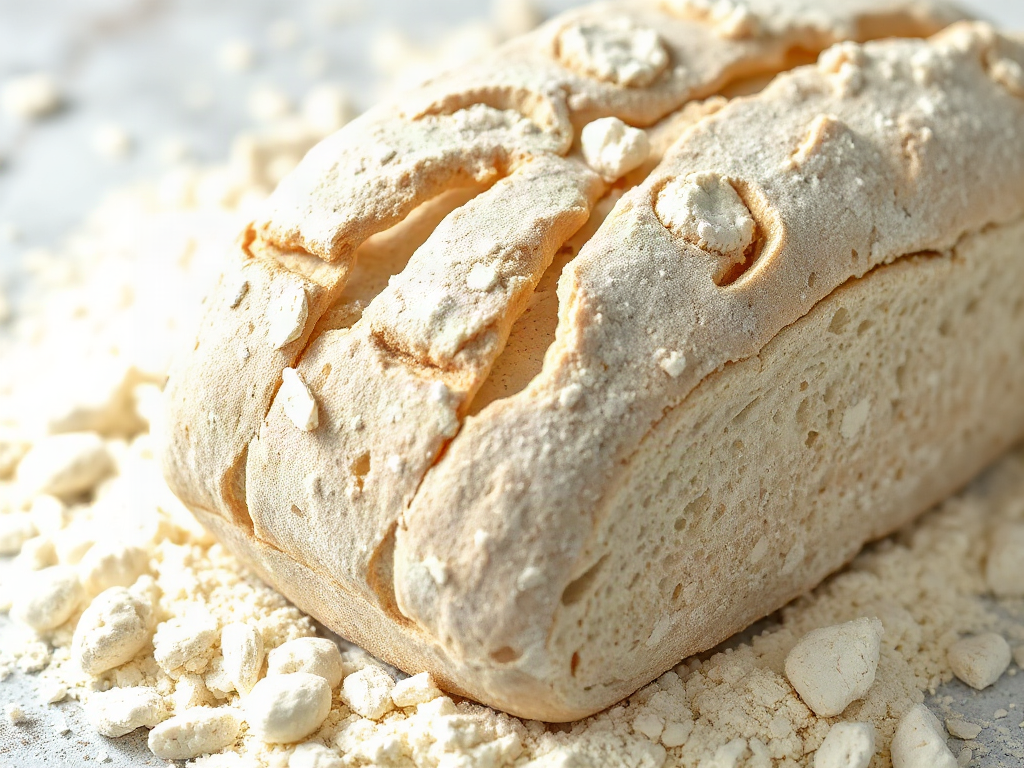
Bread flour protein content changes dough strength, water needs, crumb texture, and the amount of protein delivered per serving, but it does not automatically make bread more nutritious overall. Most bread flour contains more protein than all-purpose flour, allowing gluten networks to retain gas and support chewy yeast breads. Actual nutrition still depends on the grain’s refinement, enrichment, serving size, and the other ingredients in the loaf. Check the package label rather than assuming every bread flour has the same percentage, and choose whole-grain flour when fiber and grain-derived micronutrients matter more than maximum dough elasticity.
How Much Protein Is in Bread Flour?
Bread flour commonly falls near 12% to 14% protein by flour weight, while all-purpose flour often occupies a lower and broader range. Those are useful shopping ranges rather than universal standards. Wheat variety, growing conditions, milling choices, regional preferences, and the manufacturer’s blend all affect the final value. A bag labeled bread flour can therefore differ noticeably from another brand carrying the same name.
The Nutrition Facts panel expresses protein in grams per labeled serving, not as a baker’s percentage of the flour’s total weight. To estimate the percentage, divide protein grams by the serving weight in grams and multiply by 100. If a label shows 4 grams of protein in 30 grams of flour, the rounded calculation is about 13%. Label rounding makes this an approximation, so manufacturer specifications are preferable when a recipe requires tight control.
| Flour Type | Typical Protein Range | Common Baking Use | Main Limitation |
|---|---|---|---|
| Bread flour | About 12%–14% | Lean loaves, bagels, pizza dough | May make tender products tough |
| All-purpose flour | Often about 10%–12% | Sandwich bread, rolls, general baking | May provide less strength for very wet or long-fermented dough |
| Whole-wheat flour | Often about 12%–14% | Whole-grain loaves and blends | Bran can interrupt gluten structure despite high protein |
| Pastry or cake flour | Usually lower than all-purpose | Cakes, biscuits, tender pastry | Generally too weak for lofty, chewy bread |
Protein percentage is only a proxy for dough behavior. Most of the relevant proteins are gluten-forming gliadin and glutenin, but total protein also includes fractions that do not create the same elastic network. Two flours with similar label values can feel different because protein quality, wheat hardness, particle characteristics, and milling treatment also matter.
A common mistake is selecting the bag with the highest number regardless of the bread style. A moderate-strength flour may be easier to shape into soft rolls or a tender sandwich loaf. Stronger bread flour becomes more useful when dough must hold substantial water, tolerate long fermentation, or retain gas in a tall free-standing loaf. Treat the protein figure as a selection tool, then verify it through dough handling and the baked result.
How Does Protein Change Dough and Finished Bread?
Flour proteins form gluten after flour is hydrated and the dough is mixed, folded, or otherwise developed. Gliadin contributes extensibility, while glutenin contributes elasticity and strength. Together, they create a network that stretches around carbon dioxide produced during fermentation. A sufficiently developed network lets a loaf expand without releasing all of that gas before the structure sets in the oven.
Higher-protein flour generally absorbs more water and tolerates more mechanical development than lower-protein flour. In a crusty loaf or bagel, that capacity can produce a resilient dough, defined shape, and pleasantly chewy crumb. The same strength may be counterproductive in cinnamon rolls, soft dinner rolls, or enriched sandwich bread if it is paired with too little water or excessive mixing. The result can feel firm and rubbery rather than light.
Consider a pizza dough written for all-purpose flour. Replacing it gram for gram with a strong bread flour without changing the water may leave the dough stiff, resistant to stretching, and prone to snapping back. A small, measured increase in water and a rest after initial mixing may make the dough more extensible. Adding a large amount of water immediately is less controlled because absorption also varies by brand, humidity, whole-grain content, and recipe.
Signs that the flour and process are working include dough that becomes smoother with development, stretches without tearing immediately, holds its shape, and expands predictably during proofing. Warning signs require interpretation. A tight dough may need more water or resting time, while a slack dough may need folds, less water, or a stronger flour. Tearing can reflect incomplete hydration or development rather than insufficient protein. A dense loaf might come from underproofing, weak yeast activity, poor shaping, or an inaccurate oven temperature, so changing flour should not be the automatic response.
Whole-wheat flour illustrates why protein alone can mislead. It may list as much protein as bread flour, yet bran particles interfere with an uninterrupted gluten network and the germ adds components absent from refined white flour. Longer hydration, careful folding, or blending whole-wheat flour with white bread flour can improve handling. That does not make refined flour inherently better; it shows that dough structure and grain nutrition answer different questions.
Does Higher Protein Make Flour More Nutritious?
More protein per serving is a real nutritional difference, but the gap between bread flour and all-purpose flour is often modest in the context of an entire meal. Bread flour is not a concentrated protein food comparable with eggs, dairy foods, legumes, fish, or soy foods. Bread can contribute to daily protein intake, yet choosing flour solely for a slightly higher protein number overlooks fiber, micronutrients, sodium, added sugars, fats, and serving size.
Refined white bread flour has had the bran and germ removed. Enriched flour has selected nutrients added back after milling, but enrichment does not restore the intact grain or all components lost with the bran and germ. Whole-grain flour generally retains more fiber and a broader range of naturally present grain compounds. Its baking behavior may require extra water, more hydration time, and realistic expectations for loaf volume.
The finished recipe matters more than the flour label alone. A lean loaf made from flour, water, yeast or starter, and salt has a different nutritional profile from an enriched bread containing substantial butter, sweetener, cheese, or seeds. Seeds can add unsaturated fats, fiber, minerals, and some protein, but they also increase energy density. Salt deserves attention because several slices can contribute more sodium than a quick glance at one serving suggests.
Protein quality is another limitation. Wheat protein is relatively low in lysine, an essential amino acid, compared with some other protein sources. Eating bread as part of a varied diet that includes beans, lentils, dairy foods, eggs, meat, fish, or soy can provide a wider amino acid pattern. Individual foods do not need to be combined with precision at every meal for most people, but bread flour should not be treated as a complete nutritional substitute for varied protein foods.
Gluten formation also has no special nutritional advantage for someone who must avoid gluten. Bread flour made from wheat is unsuitable for people with celiac disease, and a higher protein percentage does not make it a better choice in that setting. Anyone managing a diagnosed condition or a medically required diet should follow guidance from a qualified clinician or dietitian rather than using baking performance as a health indicator.
How to Choose and Adjust Bread Flour
Choose flour by matching dough demands to the texture you want, then use the nutrition label to refine the decision. Bread flour is a logical starting point for bagels, chewy pizza crust, hearth loaves, and high-hydration doughs that need extra structure. All-purpose flour may be more appropriate for softer rolls, tender pan bread, or recipes developed around moderate gluten strength. Whole-grain flour deserves priority when intact-grain fiber and flavor matter, even if the loaf requires adaptation.
Use a controlled process when switching flours. Changing flour, water, fermentation time, and mixing method at once makes the outcome difficult to diagnose. Weighing ingredients is especially useful because cup measurements vary with how flour is filled and leveled. Keep the recipe otherwise stable, hold back a small portion of water, and add it only if the dough remains unusually firm after the flour has hydrated.
- Read both labels: compare protein grams at the same serving weight, and check whether the flour is refined, enriched, or whole grain.
- Match the bread style: prioritize strength for chewy or free-standing loaves and moderation for soft, tender products.
- Change hydration gradually: stronger or whole-grain flour may need more water, but the dough should guide the final adjustment.
- Allow a rest: a brief hydration period can reduce apparent stiffness before more water or mixing is added.
- Record the result: note flour brand, water amount, dough feel, proofing behavior, and crumb so the next batch has a useful baseline.
A practical home-baking scenario is a sandwich loaf that turns out dry after all-purpose flour is replaced with bread flour. The problem may not be the stronger flour itself; it may be unchanged hydration combined with too much bench flour during shaping. Try preserving more of the recipe’s water, using lightly oiled or damp hands instead of repeatedly dusting the surface, and stopping the bake when the loaf is properly done rather than extending it for darker color.
Conversely, a very wet dough that spreads flat may benefit from bread flour, but first check fermentation and shaping. Overproofed dough can lose strength even when the flour has ample protein. If the dough initially holds tension and then collapses late in proofing, shortening fermentation may be more effective than buying stronger flour. Good flour choice supports the process; it cannot compensate for every timing or handling error.
For nutrition, compare the bread as eaten rather than flour in isolation. Examine the serving size, fiber, sodium, added sugars, and ingredient list alongside protein. A mixed loaf using some whole-wheat flour and some bread flour often offers a workable compromise: the white bread flour supports volume, while the whole-grain portion contributes flavor and fiber. The best ratio is recipe-dependent, so increase the whole-grain share gradually if maintaining a light crumb is a priority.
Frequently Asked Questions
What percentage of protein does bread flour have?
Bread flour commonly contains about 12% to 14% protein by weight, although brands vary. Use the manufacturer’s specification when available, or estimate from protein grams and serving weight on the label.
Can bread flour replace all-purpose flour directly?
Often, but the dough may feel firmer and produce a chewier result. Hold the other variables steady, allow time for hydration, and add water gradually if the dough remains too stiff.
Is bread flour healthier than all-purpose flour?
Not automatically. It may provide slightly more protein, but whole-grain content, fiber, enrichment, sodium, added sugars, and the complete recipe are more informative measures of nutritional value.
Why does whole-wheat flour behave differently despite high protein?
Bran can interrupt gluten development, while whole-grain particles absorb water differently. Additional hydration time, gentle folds, or blending with white bread flour may improve dough strength and volume.
Can high-protein flour fix a dense loaf?
Only when inadequate flour strength is the cause. Dense bread can also result from underproofing, inactive yeast, low hydration, poor shaping, or baking before sufficient expansion has occurred.
Conclusion
Protein content is most useful as a predictor of dough strength, not as a complete score for flour quality or nutrition. Check the percentage or calculate an estimate from the serving label, then match that strength to the intended loaf. Chewy pizza, bagels, and wet artisan dough often benefit from bread flour, while tender rolls may perform better with a less forceful gluten network.
When changing flour, adjust one variable at a time and judge hydration, extensibility, proofing, shape retention, and crumb before revising the formula again. For nutritional decisions, look beyond protein to whole-grain content, fiber, sodium, added ingredients, and realistic portions. A blend of bread flour and whole-grain flour can balance structure with broader grain nutrition, but the useful proportion depends on the recipe and the texture you want.