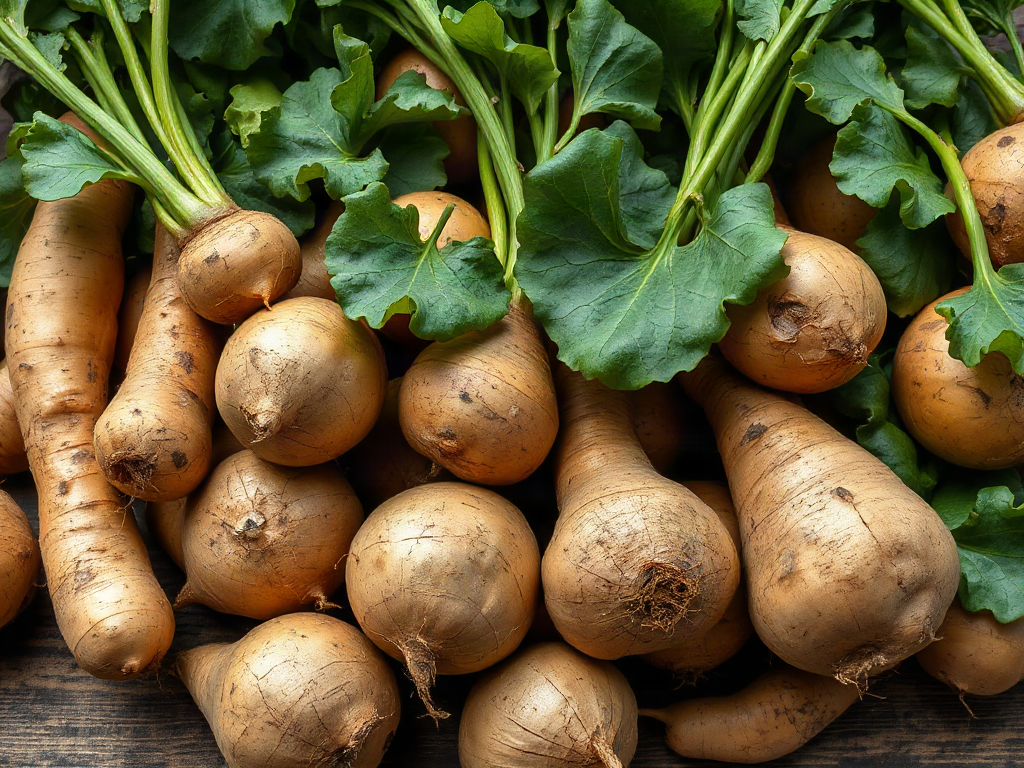
Organic root vegetables without soft spots should feel firm for their size, have tight unbroken skin, and show no yielding areas around the crown, tip, or sidewalls. Check each beet, carrot, parsnip, turnip, rutabaga, or sweet potato individually because bags can conceal bruising, moisture damage, and early decay. Minor soil, unusual shape, or superficial scarring may be harmless, while wet patches, deep cracks, mold, leakage, and sour odors justify rejection. After purchase, remove leafy tops, keep roots dry and appropriately cool, and separate damaged pieces so trapped moisture and spreading decay do not undermine otherwise sound produce.
What Does Firmness Reveal About a Root Vegetable?
Firmness is a useful freshness signal because intact plant cells hold water under pressure, giving a root its characteristic dense, crisp feel. As a harvested vegetable loses moisture, that pressure falls and the tissue becomes flexible, rubbery, or shriveled. A localized soft patch can indicate something different: bruised or decaying tissue where cell structure has already broken down.
Use gentle, even finger pressure rather than squeezing hard enough to leave a bruise. Carrots and parsnips should resist bending, while beets, turnips, and rutabagas should feel solid across their shoulders and sides. Sweet potatoes are naturally less rigid than raw carrots, but their flesh should not yield beneath light pressure. The vegetable should also feel reasonably heavy relative to its size. A large root that feels unexpectedly light may have lost substantial moisture even when its surface still looks acceptable.
Uniform texture matters more than extreme hardness. Cold produce can seem firmer than it will at room temperature, and thick-skinned rutabagas naturally feel different from thin young carrots. Compare roots of the same type and approximate size rather than applying one standard to every vegetable. Pay particular attention to the crown where leaves were removed, the tapered tip, creases, and any area hidden by clinging soil. Those locations can dry out or deteriorate before the broad sidewalls do.
A root that is slightly limp from moisture loss is not automatically rotten. A carrot with mild flexibility but no slime, mold, dark wet tissue, or objectionable odor may still be usable in soup or stock after trimming. That is different from a carrot with a sunken, watery patch that enlarges under pressure. The former is mainly a quality decline; the latter may represent active spoilage and should not be treated as a cosmetic defect.
The common mistake is judging freshness by appearance alone. Bright color can remain after texture has deteriorated, while an irregular, soil-marked root may be exceptionally firm. Handle the produce carefully, compare its weight, and inspect all sides. Firmness is most informative when combined with skin condition, dryness, and smell rather than used as a single pass-or-fail test.
How Should You Inspect Roots Before Buying?
A reliable inspection moves from the highest-risk areas to the less consequential surface details. Begin at the crown, where cut stems can trap moisture or expose tissue. Then run your eyes and fingertips along the full root, checking the tip last. Turn bagged produce over rather than accepting the visible top layer as representative of everything inside.
For carrots and parsnips, reject specimens with blackened crowns, slimy ends, or deep splits containing wet debris. Fine root hairs and light surface ridges are generally normal. Beets should have dense bulbs without collapsing areas around the stem attachment. Turnips and rutabagas need particular attention around their broad shoulders, where bruises may be concealed by purple or tan coloring. Sweet potatoes warrant a check at both tapered ends because impact injuries and decay often begin there.
Use this compact buying sequence:
- Lift: Choose a root that feels substantial rather than hollow or unusually light.
- Press: Test the crown, middle, and tip with gentle pressure.
- Turn: Look beneath soil and around every side for wet depressions or deep damage.
- Smell: Avoid sour, fermented, musty, or otherwise abnormal odors.
- Check the package: Look for condensation, liquid, mold, or one deteriorating root touching the others.
Loose produce offers the clearest inspection and lets shoppers buy only what they can use. Sealed bags may cost less per pound, but they create a visibility tradeoff. If buying a bag, inspect its bottom and seams, where moisture and broken pieces collect. One compromised root does not prove that every piece is spoiled, yet close contact and condensation raise the chance that neighboring vegetables will deteriorate sooner.
Organic status does not change the basic signs of sound tissue. Certification concerns how the crop was produced and handled under an organic standard; it does not promise that an individual carrot or beet is fresh, undamaged, or free from decay. Conversely, natural variation in shape, size, or skin finish is not evidence of poor eating quality. Prioritize structural condition over visual uniformity.
Shop with the intended use in mind without relaxing safety-related checks. A cosmetically scarred but firm parsnip can be peeled and roasted. A severely wilted carrot may be acceptable for immediate cooking if it remains dry and clean-smelling. A root with leakage, spreading mold, or deep wet breakdown should be left behind regardless of whether it will be cooked.
Which Flaws Are Harmless, and Which Signal Spoilage?
Dry, shallow imperfections usually affect appearance or preparation yield, whereas wet, expanding, or foul-smelling defects raise greater concern. Soil residue, forked growth, uneven coloring, and healed superficial scratches are common field or handling features. They may require extra scrubbing or peeling, but they do not by themselves indicate a soft interior.
Growth cracks require closer judgment. A dry crack with firm tissue on both sides may simply reflect uneven growing conditions. It can often be trimmed during preparation. A crack that is damp, dark deep inside, slimy, or surrounded by yielding flesh creates an entry point and sheltered area for deterioration. The practical distinction is not merely whether the skin is broken, but whether the exposed tissue remains dry, firm, and normal-smelling.
| Observed condition | Likely significance | Practical decision |
|---|---|---|
| Dry soil and irregular shape | Mostly cosmetic | Scrub well and prepare normally if firm |
| Shallow, dry scar | Minor handling or growth damage | Trim or peel if desired |
| Slight overall limpness | Moisture loss and declining quality | Use promptly if no other spoilage signs appear |
| Localized wet depression | Possible bruise or tissue breakdown | Reject when deep, spreading, or odorous |
| Slime, leakage, or visible mold | Active spoilage | Discard the affected root |
Sprouting is another condition that needs context. Small shoots often indicate age or exposure to conditions that stimulate growth rather than a soft spot by themselves. A sprouting beet or carrot that remains firm may have reduced texture quality but can still be evaluated for ordinary kitchen use. Extensive sprouting accompanied by shriveling, softness, mold, or an abnormal smell is a stronger reason to discard it.
Do not rely on cutting away a small visible patch when surrounding tissue is watery, discolored, or soft. The visible boundary may not reflect the full extent of deterioration, especially in dense roots where damage can follow a crack inward. Trimming is more appropriate for a dry scar or clean mechanical nick with firm tissue around it. When uncertainty involves slime, mold, leakage, or an offensive odor, disposal is the more prudent choice.
Another weak assumption is that cooking restores spoiled produce. Heat can soften sound vegetables and kill many microbes, but it does not reverse decomposed tissue or make every deterioration product irrelevant. Cooking is useful for roots that are sound but slightly dry or cosmetically imperfect; it is not a rescue method for visibly decaying vegetables.
How Can You Prevent Soft Spots at Home?
Storage should slow moisture loss without surrounding the roots with trapped surface water. Those goals can conflict: very dry air encourages shriveling, while condensation and poor airflow create damp areas where decay can begin. The suitable balance depends on the vegetable, so treating every root as a single storage category leads to avoidable losses.
Remove leafy tops from carrots, beets, turnips, and similar roots before refrigeration, leaving a short stem rather than cutting into the crown. Attached greens continue losing water and can draw moisture from the root. Store the greens separately if they are fresh enough to eat. Do not wash roots until close to use unless they must be cleaned immediately; residual water lodged around crowns, hairs, or bag seams can shorten storage life.
Carrots, parsnips, beets, turnips, and rutabagas generally retain texture better under cool, humid refrigerated conditions. A perforated or loosely closed produce bag can reduce dehydration while allowing some moisture exchange. If condensation forms, dry the roots and container before returning them to storage. Sweet potatoes need different treatment: refrigeration can impair their quality, so a cool, dark, dry, ventilated location is usually more appropriate than the refrigerator.
Separate any root with a cut, bruise, or questionable patch and use it first if it remains otherwise sound. A farmers’ market bunch of beets illustrates the value of this step. Removing the tops, setting aside one nicked beet for the next meal, and refrigerating the dry intact bulbs prevents the damaged piece from pressing wet tissue against its neighbors. Crowding a damp bunch directly into a sealed bag does the opposite.
Check stored roots periodically rather than waiting until meal preparation. Early failure signs include a growing soft area, moisture pooling in the package, fresh mold, leakage, or an odor that was absent at purchase. Signs that storage is working include dry surfaces, stable firmness, and no condensation. Rotate older roots to the front and plan them into near-term meals such as roasted vegetables, grated salads, soups, or mashed roots.
Washing, peeling, or cutting changes the storage equation because protective skin has been removed. Refrigerate prepared pieces promptly in a clean covered container and use them sooner than intact roots. If cut surfaces become slimy, develop an abnormal odor, or show spreading discoloration, discard them. The common mistake is trying to extend storage by sealing produce while it is still wet; drying the surface first is more valuable than creating the tightest possible package.
Frequently Asked Questions
Can a slightly bendable carrot still be eaten?
A mildly flexible carrot may simply have lost moisture. It can be used promptly if it has no slime, mold, wet breakdown, or abnormal odor, though its raw texture may be less crisp.
Are cracks in organic beets or sweet potatoes unsafe?
Dry, healed cracks can often be trimmed. Reject a root when the crack contains wet, dark, slimy, moldy, or foul-smelling tissue or when the surrounding flesh yields under light pressure.
Should root vegetables be washed before storage?
Usually, brushing off loose soil and washing shortly before use limits added surface moisture. If washing is necessary, dry each root thoroughly before putting it away.
Does organic certification guarantee fresher root vegetables?
No. Organic certification addresses production and handling standards, not the freshness of an individual item. Firmness, skin condition, dryness, weight, and odor still need to be checked.
Can the soft part be cut off and the rest used?
A clean, dry bruise may be removable when nearby flesh is firm. Discard roots with spreading softness, watery tissue, slime, mold, leakage, or offensive odor rather than relying on trimming.
Conclusion
Prioritize condition over perfect appearance when selecting roots. A firm, heavy, dry vegetable with intact surrounding tissue is generally a better purchase than a visually uniform one hiding a yielding crown or damp crack. Inspect every side, especially when produce is bagged, and distinguish harmless soil, unusual shapes, and dry scars from wet depressions, slime, mold, and leakage.
Protect the vegetables after purchase by removing leafy tops, keeping refrigerated roots dry but shielded from excessive moisture loss, and storing sweet potatoes in a ventilated place rather than treating them like carrots. Set damaged yet usable pieces aside for the next meal and check stored produce before defects spread. These habits reduce waste without asking shoppers to accept roots showing clear deterioration.