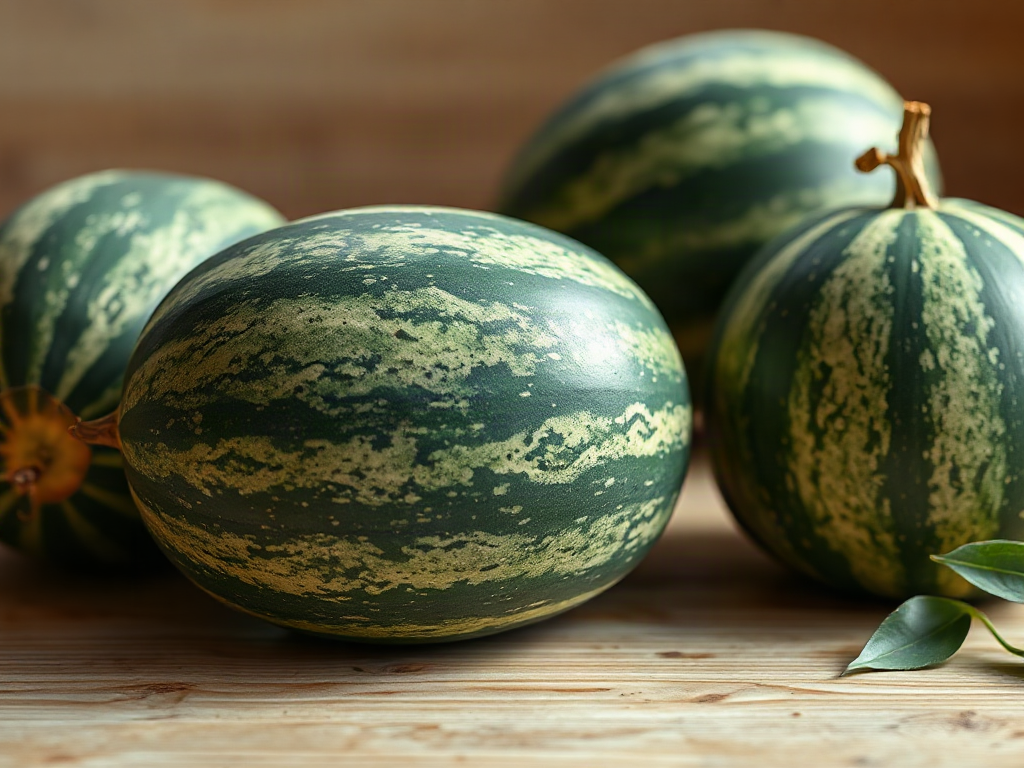
Organic melons with reliable ripeness signs are best judged by variety-specific changes in aroma, rind color, stem attachment, weight, and blossom-end feel rather than by softness alone. Cantaloupes usually develop a sweet fragrance, a tan background beneath raised netting, and a stem scar that separates cleanly at maturity. Honeydews should show a creamy yellow cast and slight blossom-end give, while watermelons require a dull rind, heavy feel, and creamy field spot. Organic certification describes how a melon was grown, not whether it was harvested ripe, so inspect several signals together and reject fruit with cracks, leaking areas, fermentation odors, or broad soft spots.
Why Does Melon Type Change the Ripeness Test?
Melons do not share one universal maturity signal. Netted muskmelons, smooth-skinned honeydews, and watermelons undergo different visible and structural changes as they mature, so a test that works for one type may mislead you with another. A fragrant cantaloupe may be ready to eat, for example, while a strong smell is a much less dependable requirement for a watermelon.
The distinction begins with how the fruit separates from the vine. Many cantaloupe cultivars form an abscission layer at maturity, allowing the stem to release and leave a smooth, shallow scar. Honeydew melons generally do not “slip” from the vine in the same way. Their color, surface texture, and blossom-end resilience therefore carry more weight. Watermelons also remain attached when ripe, making the stem scar an unreliable shopping test.
Organic certification does not alter these biological patterns. It addresses production and handling standards rather than flavor, harvest maturity, or the number of days the fruit has spent in transit. An organically grown melon can be aromatic and ready to serve, firm and underripe, or damaged from handling. Treat the organic label as information about production, then conduct the same careful sensory inspection you would use for any melon.
A useful inspection moves from general condition to variety-specific evidence. First, reject fruit with active leakage, open cracks, mold, or a sour or alcoholic odor. Next, compare similarly sized melons by weight; greater weight can indicate a well-developed, juicy interior, though it does not prove sweetness. To wrap up, apply the signs appropriate to that particular melon.
| Melon type | Highest-value signs | Weak or misleading test |
|---|---|---|
| Cantaloupe or muskmelon | Sweet aroma, tan undertone, raised netting, clean stem scar | Pressing hard across the rind |
| Honeydew | Creamy color, waxy surface, weight, slight blossom-end give | Expecting a detached stem scar |
| Watermelon | Heavy feel, creamy field spot, dull rind, intact shape | Relying only on tapping |
The common failure is choosing by one dramatic feature. A yellow field spot cannot compensate for a cracked watermelon, and a fragrant cantaloupe with widespread softness may already be deteriorating. Several compatible signs provide a more dependable judgment than any single trick.
Reliable Signs for Cantaloupe and Muskmelon
A mature cantaloupe typically shows a tan or golden background under pronounced corky netting, a clean stem depression, and a sweet aroma concentrated near the blossom end. The rind should feel firm over most of the fruit. Slight resilience at the blossom end can be appropriate for a melon intended for immediate eating, but a deeply yielding or wet area suggests bruising or decay rather than desirable ripeness.
The stem scar deserves close attention because fully mature netted muskmelons often separate naturally from the vine. Look for a smooth, slightly indented circular scar without a torn stem remnant. A jagged piece of stem may indicate that the melon was cut before full slip, although cultivar and commercial harvesting practices can create exceptions. Use the scar with color and fragrance instead of treating it as proof by itself.
Aroma helps estimate eating readiness rather than merely harvest maturity. A pronounced, clean melon fragrance often means the flesh has reached a flavorful stage. No scent can signal that the fruit needs more time, but refrigeration suppresses volatile aromas; a chilled store display may make a good melon seem odorless. A fermented, wine-like, or sharply sour smell points in the opposite direction and is grounds for rejection.
Consider the planned serving date. For tonight, choose a cantaloupe with a clear sweet scent and a blossom end that gives only slightly under gentle thumb pressure. For use two or three days later, favor firm fruit with developed netting, warm tan color, and a milder aroma. The fruit may soften and become more fragrant at room temperature, but it will not gain substantial sweetness after harvest. Waiting can improve texture and aroma perception; it cannot correct severely premature harvesting.
A compact cantaloupe check is:
- Confirm that the rind has no cracks, mold, leakage, or broad sunken patches.
- Look for raised, well-defined netting over a tan rather than distinctly green background.
- Inspect the stem end for a clean, shallow scar rather than fresh torn tissue.
- Smell the blossom end for a pleasant melon aroma without sour notes.
- Use very light pressure once; repeated squeezing damages fruit and reduces its shelf life.
Prominent netting alone is the usual misconception. Netting is partly a varietal trait, and an impressive pattern does not guarantee that the flesh is sweet or ready. Color beneath the netting, sound condition, aroma, and the intended eating date remain the stronger combined decision.
How Do You Check Honeydew and Other Smooth Melons?
Honeydew is better evaluated through skin color, surface character, weight, and restrained pressure than through stem separation. A mature common honeydew generally shifts from greenish white toward creamy white or pale yellow. Its surface may feel faintly waxy or tacky rather than slick and glassy. Because cultivars differ, compare fruit within the same display rather than expecting every honeydew to match one exact shade.
Pick up two melons of comparable size. The heavier one is often the better candidate because developed flesh contains substantial water, but weight does not reveal sweetness or internal defects. Follow the comparison by checking for a symmetrical shape and an intact rind. Scars that are dry and superficial may be cosmetic; punctures, damp lesions, expanding soft areas, or cracks create a more serious quality and spoilage concern.
The blossom end, opposite the stem, may yield slightly when the melon is ready to eat. “Slightly” is the operative limit: the rind should rebound rather than retain a deep thumb mark. A rock-hard, green-cast honeydew may have been harvested early, while an extensively soft melon may have crossed from ripe into breakdown. Pressing several locations is not a better test and can create the very bruising shoppers are trying to detect.
Some smooth melons do not follow standard honeydew color cues. Orange-fleshed honeydews, canary melons, and specialty hybrids can mature to different exterior colors and may retain firmer rinds. Read the produce label for the variety, then judge change within that type. A canary melon, for instance, is expected to become bright yellow; applying that expectation to a pale honeydew would lead to unnecessary rejection or over-ripening.
For a meal later in the week, select a sound, heavy honeydew with mature creamy color but little blossom-end movement. Leave it whole at room temperature briefly and check it daily for aroma and slight softening. If it develops a sour smell, leaking spot, or rapidly spreading softness, discard it rather than cutting around extensive decay. Once cut, refrigeration becomes the priority because the exposed flesh no longer has the rind’s physical protection.
The misleading assumption is that an unripe honeydew will become much sweeter on the counter. Postharvest holding can make the texture less firm and the aroma more noticeable, but sugar accumulation largely occurred while the fruit was attached to the plant. Careful selection at purchase matters more than a long countertop wait.
How Do You Choose a Ripe Watermelon?
A good watermelon combines substantial weight for its size, a creamy yellow field spot, a relatively dull rind, and freedom from structural damage. The field spot is the area that rested on the ground. A developed cream or butter-yellow color suggests that the melon remained in place long enough for maturation, while a nearly white spot may accompany an earlier harvest. Field-spot color varies, so it should support—not replace—the full inspection.
Weight is particularly useful when comparing watermelons with similar dimensions and the same general type. Lift each safely and choose one that feels dense rather than hollowly light. Large and small watermelons can both be ripe; size mostly affects portion needs and storage practicality. A compact household may waste less by buying a mini watermelon, even if a larger fruit seems like better value per pound.
Rind appearance offers additional context. Mature watermelons often look more matte than glossy, but retail lighting and natural wax can distort this cue. The rind should be firm and the shape reasonably regular for the cultivar. Avoid melons with deep cuts, fresh punctures, leaking cracks, or soft depressions. Rough web-like surface marks are not reliable sweetness indicators, and dry superficial scratches are generally less concerning than damage that penetrates the rind.
Tapping receives disproportionate attention because the sound feels decisive. A ripe watermelon may produce a resonant, hollow tone, but the result changes with melon size, rind thickness, tapping force, and the listener’s experience. Someone comparing several fruits side by side may find it useful as a secondary clue. For an occasional buyer, field spot, density, rind condition, and shape are easier to apply consistently.
Stem color is similarly limited at the store. A dry stem can reflect time since harvest rather than ideal maturity, while a green stem does not independently establish that the interior is underripe. Commercial fruit may also arrive without enough stem to assess. Do not trade a sound watermelon with a strong field spot for a damaged one merely because the latter has a drier stem.
A practical shopping scenario illustrates the priority: if one watermelon has a deep yellow field spot but a soft, seeping crack, and another has a lighter creamy spot with dense weight and an intact rind, the intact fruit is the safer quality choice. Ripeness signs rank below evidence of physical breakdown.
Buying, Storing, and Serving Ripe Melons
Purchase timing should match how quickly the melon changes after harvest and how much refrigerator space is available. A fragrant, slightly resilient cantaloupe is suited to near-term use, whereas a firmer fruit offers a wider handling window. Whole watermelons do not announce day-to-day readiness through aroma, so choose them for soundness and mature field signs, then plan around the considerable space required after cutting.
At home, keep uncut melons away from direct sun and excessive heat. Brief room-temperature holding may improve the eating texture and aroma of cantaloupe or honeydew, but prolonged warmth accelerates deterioration. Refrigerate a whole melon once it reaches the desired eating condition or if you need to slow further softening. Watermelon may be served cool or at room temperature according to preference, but cut pieces belong under refrigeration.
Wash the intact rind under clean running water before cutting, even though the rind is not eaten. Soil and handling residues on the exterior can be transferred to the flesh by the knife. Scrub firm netted surfaces with a clean produce brush, dry the melon, and use clean hands, utensils, and a cutting board. Soap, bleach, and household detergent are not intended for washing produce.
After cutting, place pieces in a clean covered container and refrigerate promptly. Do not use smell alone to judge cut melon that has been left warm for an uncertain period; undesirable microbial growth is not always visible or aromatic. When serving outdoors or at a buffet, put out smaller portions and replenish them from refrigerated supplies rather than exposing the entire cut melon at once.
Flavor is easiest to assess when the flesh is cool but not extremely cold, since deep chilling can mute aroma. If preferred, move a serving portion from the refrigerator shortly before eating while keeping the remainder cold. Pairing melon with plain yogurt, oats, mint, lime, or a savory salad can add contrast without requiring heavily processed syrups. Melons contribute water, carbohydrate, and varying amounts of nutrients such as vitamin C and carotenoids, but their nutrient profiles differ by type and they should not be treated as a medical therapy.
The final mistake is postponing cutting because the exterior still looks attractive. Once a ripe cantaloupe becomes intensely fragrant and increasingly soft, waiting rarely improves it. Open it while the rind remains sound, inspect the flesh for normal color and odor, and refrigerate what will not be eaten immediately.
Frequently Asked Questions
Does the organic label mean a melon was picked ripe?
No. Organic certification concerns production and handling practices, not harvest maturity, sweetness, or eating readiness. Use variety-specific physical signs in addition to the label.
Will a melon become sweeter after it is picked?
Melons may soften and develop a stronger aroma after harvest, but they generally do not gain substantial sugar. An obviously immature melon is unlikely to become richly sweet on the counter.
Should a ripe melon feel soft?
Most of the rind should remain firm. Slight blossom-end give can indicate eating readiness in cantaloupe or honeydew, while broad softness, leaking, or a sunken patch suggests damage or deterioration.
Is tapping the best way to test a watermelon?
No. Sound is subjective and varies with rind thickness and size. Give more weight to density, a creamy yellow field spot, a dull rind, regular shape, and the absence of cracks.
Can cut melon be left on the counter?
Cut melon should be refrigerated promptly in a clean, covered container. For extended serving, offer small portions at a time and keep the remaining fruit chilled.
Conclusion
Reliable melon selection comes from matching the test to the variety and requiring several signs to agree. Give cantaloupe aroma, background color, netting, and the stem scar close attention. Judge honeydew through mature color, dense weight, surface character, and gentle blossom-end resilience. For watermelon, prioritize an intact rind, substantial weight, a creamy field spot, and a mature matte appearance before considering tap sound or stem color.
Condition outranks ripeness when the fruit is cracked, leaking, sour-smelling, or broadly soft. Choose according to the serving date, handle the rind gently, wash it before cutting, and refrigerate exposed flesh promptly. Those steps cannot guarantee sweetness, which varies by cultivar and growing conditions, but they greatly reduce the guesswork created by single-test shopping myths.
Further Reading
Authoritative Sources
- Harvesting and storing melons, squash and pumpkins
extension.umn.eduThey can be harvested at "full slip," meaning they are ripe when they easily pull away from the vine. It's easy for melons to become over-ripe in gardens.
- How to Pick Perfectly Ripe Watermelons!
google.comIf the attachment point on the melon is dry and brown, this supposedly means the fruit is ripe. Don't go by this. Perfectly ripe. The curly tendril or pigtail ...