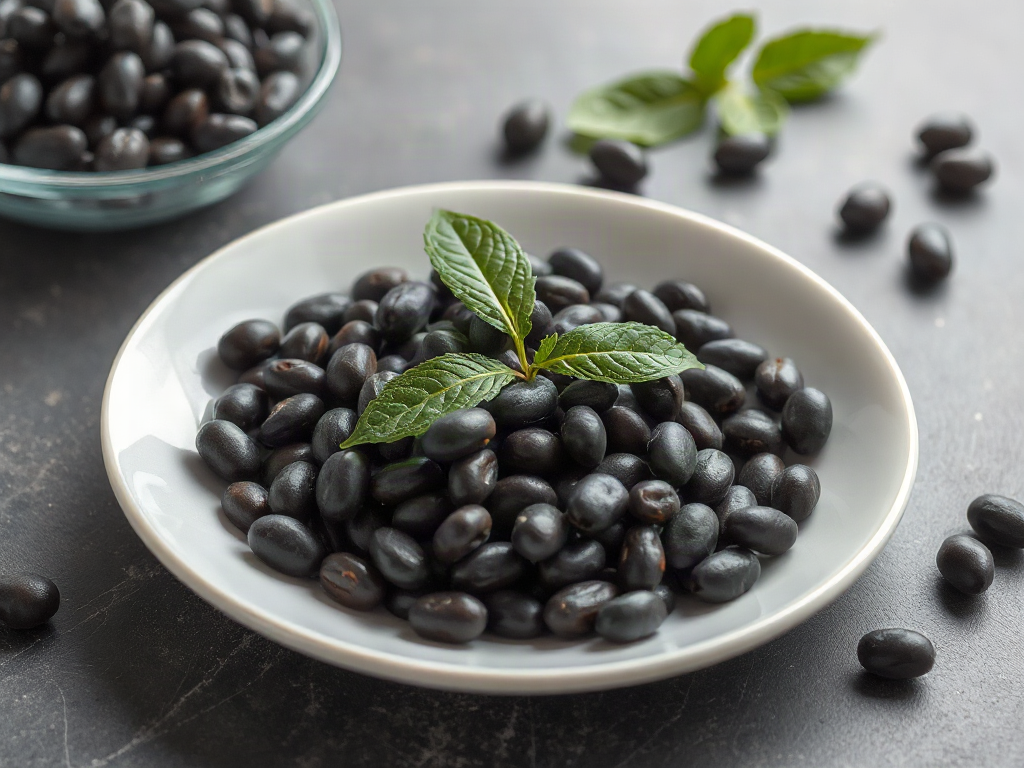
A practical black bean portion for a balanced meal is usually 1/2 to 1 cup cooked, adjusted for appetite, energy needs, and the other protein or carbohydrate foods on the plate. Black bean nutrition contributes plant protein, fiber, folate, iron, magnesium, and potassium, while the serving size determines how prominently beans function in the meal. Use about 1/2 cup when pairing them with eggs, fish, poultry, tofu, or another substantial protein; move toward 1 cup when beans are the main protein. Add vegetables and a suitable grain or starchy food, and check canned varieties for sodium before seasoning.
What Do Black Beans Contribute to a Meal?
Black beans combine plant protein and dietary fiber with folate, iron, magnesium, potassium, and carbohydrate. That combination makes them more substantial than a non-starchy vegetable but different from meat, fish, eggs, or tofu. They occupy a useful middle ground: beans can serve as the main protein in a plant-forward meal, yet they also supply enough carbohydrate that the rest of the plate may need adjusting.
The fiber and starch in black beans are packaged within the bean’s cellular structure. Digestion is therefore generally slower than it would be for a refined grain or sugary food eaten in isolation. Protein and fiber also add staying power, especially when beans are paired with vegetables and a moderate amount of fat. Individual responses vary, however, and black beans should not be treated as a guaranteed way to control appetite or blood glucose.
Iron in beans is non-heme iron, which the body absorbs less readily than the heme iron found in animal foods. Pairing black beans with a vitamin C source—such as tomatoes, bell peppers, cabbage slaw, citrus salsa, or broccoli—can make the meal more nutritionally complementary. This does not turn one serving into a treatment for iron deficiency. Anyone with diagnosed low iron or a condition affecting absorption needs individualized medical guidance rather than relying on meal combinations alone.
A common mistake is counting black beans only as protein and then adding large portions of rice, tortillas, corn, and another starch without considering the meal as a whole. A burrito bowl containing beans, a deep layer of rice, corn, chips, and a large flour tortilla may be far more carbohydrate-heavy than intended. None of those foods is automatically inappropriate; the issue is cumulative portioning. Reducing one or two starch components leaves room for vegetables and keeps the beans nutritionally central.
Practical interpretation matters more than assigning beans to a single food category. If black beans are the primary protein, use a more generous portion and pair them with vegetables plus a grain or other complementary food. If chicken, fish, eggs, cheese, or tofu already anchors the meal, a smaller spoonful of beans may function better as a fiber-rich side. The useful question is not whether beans are a protein or a carbohydrate, but what else is already on the plate.
How Much Black Bean Should You Put on the Plate?
A typical starting portion is 1/2 cup of cooked black beans, while 3/4 to 1 cup may fit when beans provide most of the meal’s protein and substance. These are planning ranges rather than universal prescriptions. Body size, activity, appetite, medical needs, and the number of other foods in the meal all affect an appropriate amount.
| Meal situation | Practical cooked portion | How to complete the meal |
|---|---|---|
| Beans as a side | About 1/3 to 1/2 cup | Pair with another protein and plenty of vegetables |
| Beans sharing the main role | About 1/2 to 3/4 cup | Add vegetables and a modest grain or starchy food |
| Beans as the main protein | About 3/4 to 1 cup | Include varied vegetables, flavorings, and an energy source as needed |
| New to high-fiber foods | Start near 1/4 to 1/2 cup | Increase gradually and drink fluids normally |
Consider a taco dinner as a concrete example. If each taco contains black beans plus grilled fish, a thin layer of beans may be sufficient because the fish contributes substantial protein. For vegetarian tacos in which beans are the main filling, a larger total portion spread across the tortillas makes more sense. Adding cabbage, tomato salsa, avocado, and lime creates contrast and variety without requiring another large scoop of starch.
Appetite after the meal is one useful feedback signal. Persistent hunger soon after eating may indicate that the plate was too small overall, that the bean portion was minimal, or that vegetables and fat were absent. Repeated uncomfortable fullness, bloating, or a meal that feels disproportionately dense may signal that the serving increased too quickly or was combined with several other fiber-rich foods. Change one element at a time rather than assuming black beans themselves must be eliminated.
People managing diabetes, kidney disease, digestive disorders, or prescribed dietary restrictions may need different portion logic. Beans contain carbohydrate and potassium, and individual tolerances or clinical targets can differ. A registered dietitian or treating clinician can place the food within a personal plan. Portion tables offer a starting point for ordinary meal construction, not a substitute for medical nutrition therapy.
The most frequent portioning error is using a standard measure without looking at the full menu. One cup may be reasonable in a bean-and-vegetable bowl but excessive for someone’s appetite when served beside a large entrée, rice, and bread. Begin with the beans’ intended role, then select the amount instead of adding a habitual scoop automatically.
How Do You Build a Balanced Plate Around Black Beans?
A balanced black bean plate needs contrast in both nutrition and texture: vegetables for volume and variety, enough protein for the meal’s purpose, an intentional amount of starch, and optional fat for flavor and satisfaction. Black beans can cover part of both the protein and carbohydrate roles, so balance comes from coordinating components rather than filling every conventional category at maximum size.
One workable bowl starts with 1/2 to 3/4 cup black beans, roasted peppers and zucchini, shredded lettuce, fresh tomato, and a smaller scoop of brown rice. Pumpkin seeds, avocado, or a yogurt-based sauce can provide richness. For a higher-protein version, add tofu, eggs, fish, or poultry and reduce either the beans or rice according to appetite. For a fully plant-based meal, a larger bean portion may be useful, while varied foods across the day help broaden amino acid and micronutrient intake.
Use this compact order when assembling a meal:
- Choose the beans’ role: side dish, shared component, or primary protein.
- Add vegetables: use at least one colorful or leafy option rather than relying only on corn or potatoes.
- Set the starch: account for rice, bread, tortillas, pasta, or other starchy foods already present.
- Add flavor deliberately: use herbs, citrus, chiles, spices, salsa, or a modest amount of fat before reaching automatically for salt.
- Check the result: the meal should be satisfying without leaving vegetables crowded off the plate.
Soup illustrates a different constraint. A black bean soup may look bean-rich but contain a variable amount of beans per bowl depending on how much broth, tomato, and vegetables are present. If the soup is thin, pair it with a salad and a protein-containing side or add more beans. If it is a thick purée topped with cheese and served with bread, it may already be a substantial meal. Visual volume alone does not reveal the bean portion.
Another weak assumption is that a balanced meal must be perfectly proportioned at every sitting. Daily eating patterns matter too. A black bean and vegetable lunch with a tortilla may be lighter in protein than an evening meal containing beans and tofu, yet the overall day can still offer variety. The practical priority is a repeatable pattern: beans in a role that is clear, vegetables that are not token garnishes, and starches selected rather than accumulated.
Signs that the plate formula is working include comfortable fullness, enjoyable texture, and enough flexibility to repeat the meal with different vegetables or seasonings. Signs it needs revision include routine hunger shortly afterward, digestive discomfort after abrupt portion increases, or meals dominated by multiple starches while produce remains minimal. Adjust the serving or pairing before abandoning a nutrient-dense food that may fit well in another format.
Canned Versus Dried Black Beans: What Changes?
Canned and home-cooked dried black beans can both support balanced meals; the largest practical differences are convenience, sodium control, cost per cooked portion, and texture. Canned beans are ready in minutes and reduce the planning barrier that often prevents legumes from reaching the table. Dried beans require soaking in some methods and a longer cooking period, but they allow direct control over seasoning and firmness.
Sodium varies considerably among canned products. Check the Nutrition Facts label rather than assuming every can is alike. Compare sodium per serving, the stated serving size, and the number of servings in the container. Draining and rinsing removes some of the salty packing liquid, but it does not make all brands nutritionally identical. No-salt-added or lower-sodium versions may be useful when available, particularly if the meal also contains salty cheese, salsa, cured meat, broth, or chips.
Dried beans are economical when batch cooking fits the household schedule. Cooked beans can be divided into meal-sized portions for refrigeration or freezing, reducing the effort required later. Texture is another advantage: firmer beans work well in salads and bowls, while softer beans suit soups, dips, and mashed fillings. The tradeoff is time. A theoretically cheaper ingredient offers little value if preparation demands repeatedly lead to wasted food or last-minute takeout.
For either form, portions should be measured after cooking and draining when using the ranges . A dry measure is not interchangeable with a cooked measure because beans absorb water and expand. This confusion can lead to preparing much more food than expected. Package directions provide the appropriate yield and cooking guidance for a specific product.
Digestive tolerance may improve when portions rise gradually. Beans contain fermentable carbohydrates and fiber that intestinal bacteria process, which can produce gas. Rinsing canned beans or using fresh cooking water may help some people, but no preparation method guarantees a symptom-free result. Starting with a smaller serving and increasing it over multiple meals is more informative than eating a large bowl once and drawing a permanent conclusion.
Food safety and quality also matter. Refrigerate cooked beans promptly in a covered container, follow official storage guidance, and discard food showing spoilage. Home canning is a separate preservation process that requires tested pressure-canning instructions; ordinary cooking followed by sealing hot beans in jars is not a safe substitute. For everyday convenience, commercially canned beans or properly refrigerated and frozen home-cooked portions are the straightforward choices.
Conclusion
Black beans work best when their role determines their portion. Use a smaller serving beside another substantial protein and a larger serving when beans anchor the plate. Then account for their carbohydrate contribution before adding rice, tortillas, bread, corn, or other starches. Vegetables, vitamin C-rich produce, and thoughtfully chosen seasonings make the meal more varied without obscuring the beans.
Choose canned beans when speed and consistency matter, or cook dried beans when batch preparation, texture control, and cost justify the time. Check sodium labels, increase fiber gradually if needed, and judge the result by comfort, satisfaction, and the full plate—not by a rigid serving rule. People with clinical nutrition restrictions should adapt these ranges with professional guidance.
Frequently Asked Questions
Is one cup of black beans too much for one meal?
One cup can fit when black beans are the primary protein and the rest of the plate is adjusted accordingly. A smaller amount may be more comfortable when the meal already includes another protein, several starches, or a large volume of food.
Do black beans count as protein or carbohydrate?
They contribute both. Treat them as a mixed food when planning the plate: they provide plant protein and fiber, but they also contain enough carbohydrate to influence how much rice, bread, or tortilla you may want.
Should canned black beans always be rinsed?
Rinsing is useful when you want to remove packing liquid and reduce some sodium. It may be unnecessary for recipes that rely on the liquid for body, especially when using a no-salt-added product and accounting for the full label.
Can black beans be eaten every day?
They can be part of a daily pattern if they suit your digestion and dietary needs, but food variety remains valuable. Rotate them with other beans, lentils, peas, tofu, eggs, fish, poultry, or other appropriate protein foods.
How can I reduce gas when adding black beans?
Begin with roughly 1/4 to 1/2 cup, increase gradually, and maintain normal fluid intake. Rinsing canned beans may help some people. Persistent pain or major bowel changes deserve discussion with a qualified healthcare professional.