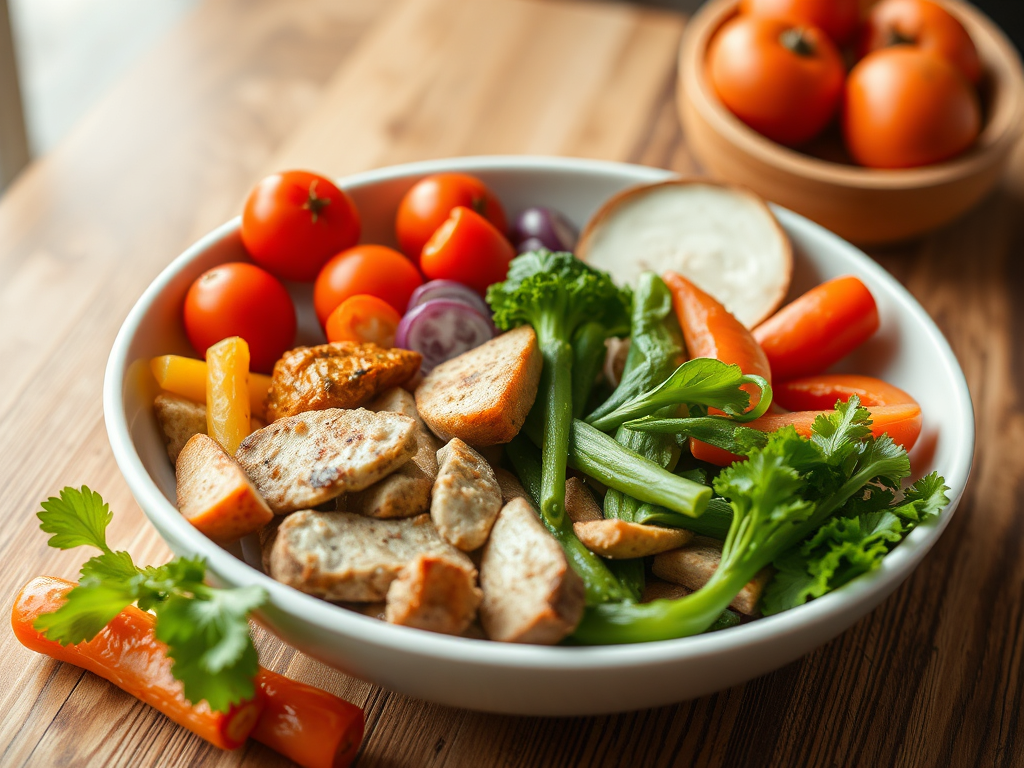
Building balanced meals around organic vegetables without excess supplements means pairing varied produce with a reliable protein, a satisfying source of carbohydrate, and a small amount of unsaturated fat. Beans, lentils, eggs, fish, tofu, whole grains, potatoes, nuts, seeds, and fortified foods can fill nutritional roles that vegetables alone cannot. Rotate colors and plant families rather than relying on one “superfood,” and use supplements only when a documented deficiency, restricted diet, life stage, medication interaction, or clinician’s recommendation makes them appropriate. A common mistake is treating organic certification as proof that a meal is nutritionally complete; certification concerns production methods, not whether the plate contains enough protein, energy, vitamin B12, iodine, calcium, or iron.
Build the Plate Around Nutritional Roles
A plate centered on organic vegetables becomes balanced when each component has a job. Vegetables supply fiber, water, potassium, folate, vitamin C, and a wide range of plant compounds, but they do not reliably provide enough protein, calories, vitamin B12, iodine, or essential fats by themselves. Treating produce as the foundation rather than the entire meal makes the approach both more nutritious and easier to maintain.
A useful meal structure is two or more types of vegetables, one substantial protein, one carbohydrate source, and a modest fat component. Roasted broccoli and peppers, for instance, can sit beside lentils, brown rice, and tahini dressing. A similar pattern using salmon, potatoes, green beans, and olive oil offers a different nutrient profile and flavor without requiring a supplement routine.
Portions should reflect appetite, activity, age, and health needs rather than a rigid visual formula. Someone with a high energy demand may need extra grains, potatoes, or beans, while a person with a small appetite may benefit from calorie-dense additions such as avocado, olive oil, yogurt, nuts, or seeds. A common failure mode is making the vegetable portion so large that protein and energy are crowded out, leaving the diner hungry and more likely to snack later.
Use how to build balanced meals around organic vegetables without excess supplements as a food-planning question, not a promise that every meal must be perfect. Balance is more realistic across a day or week. If lunch is light on protein, dinner can include tofu, poultry, fish, eggs, or legumes; the goal is a dependable pattern rather than mathematical precision.
Choose Organic Vegetables for Variety, Not Supplement Substitution
Organic vegetables can fit a food-first eating pattern, but the organic label does not determine whether a vegetable supplies a particular nutrient or whether a meal is complete. Carrots and winter squash contribute carotenoid pigments, leafy greens provide folate and vitamin K, tomatoes provide vitamin C and lycopene, and potatoes contribute carbohydrate and potassium. Their nutritional roles differ because plant varieties contain different combinations of fiber, vitamins, minerals, and bioactive compounds.
Color is a practical shopping tool, although it is not a complete nutrient analysis. Combine dark leafy greens with red, orange, purple, and white produce, and include both raw and cooked forms. Cooking can soften texture and increase usability, while raw vegetables may offer crunch and convenience. Pairing vegetables with fat, such as olive oil on roasted carrots or peanut sauce with cabbage, can make meals more satisfying, though it should not be described as a guaranteed absorption effect for every compound.
Budget and availability matter. Frozen organic spinach, peas, and mixed vegetables may be more useful than expensive fresh items that spoil before they are eaten. Conventional produce can also be a reasonable alternative when organic options are unaffordable or unavailable; replacing vegetables with supplements because a particular label is out of reach is usually a poor tradeoff. Food variety, adequate intake, and consistent use matter more than creating a premium shopping list.
Try selecting three vegetable categories each week: one leafy green, two colorful vegetables, and one sturdy option such as cabbage, carrots, onions, or squash. This reduces waste and creates building blocks for soups, grain bowls, stir-fries, omelets, and sheet-pan meals. The mistake to avoid is buying many unfamiliar items without a cooking plan, then judging the entire approach after produce deteriorates in the refrigerator.
Cover Protein, Energy, and Key Micronutrients With Food
Protein is often the missing part of a vegetable-heavy plate. Beans, lentils, chickpeas, tofu, tempeh, eggs, dairy foods, fish, poultry, and lean meats can make a meal more filling and supply nutrients that vegetables provide in smaller amounts. A lentil-and-vegetable stew, for example, offers a more complete meal than the same vegetables served with a small garnish of lentils. The amount needed varies, so appetite, body size, activity, and dietary pattern should guide portions.
Carbohydrates deserve equal attention. Whole grains, potatoes, corn, fruit, and legumes provide energy that helps a meal function as more than a low-calorie salad. Someone who feels tired, hungry soon after eating, or preoccupied with snacks may not need another capsule; the meal may simply lack enough carbohydrate, protein, or fat. Adding barley to mushroom soup, potatoes to a vegetable frittata, or beans to a tomato-and-pepper bowl can address that gap more directly.
Some nutrients require deliberate planning, particularly in restricted diets. Vitamin B12 is naturally concentrated in animal foods and is commonly supplied through fortified foods or supplements in vegan patterns. Iodine may depend on iodized salt or other dietary sources, while calcium can come from dairy, calcium-set tofu, fortified plant beverages, or selected greens. Iron is available from legumes, tofu, seeds, meat, and fortified foods; pairing plant sources with vitamin-C-rich produce is a sensible meal combination, but it does not guarantee that an individual’s iron status is adequate.
Consider a weeknight bowl with organic kale, roasted sweet potato, tofu, pumpkin seeds, and a citrus-based dressing. It has vegetables, carbohydrate, protein, fat, and several micronutrient sources. Compared with adding a broad multivitamin to a vegetable-only bowl, the food-based version supplies texture, energy, and fiber while making the missing components visible. A food diary or nutrient analysis can be useful for identifying a persistent gap, especially when dietary restrictions narrow food choices.
Decide When a Supplement Is Actually Justified
Supplements are most defensible when a specific need is established or reasonably predictable. Examples include a clinician-confirmed deficiency, a medically prescribed diet, pregnancy-related guidance, a vegan diet requiring dependable B12, or a situation in which food intake cannot meet a known requirement. Medication use, digestive conditions, surgery, and impaired absorption can also change the calculation. These circumstances call for individualized advice rather than a universal supplement stack.
More is not automatically better. High doses can create side effects, interact with medicines, or produce imbalances, and a supplement can distract from a meal pattern that is short on calories or protein. The NIH Office of Dietary Supplements provides evidence-based fact sheets that can help readers distinguish established roles from claims based mainly on marketing. A product label should be read alongside the person’s diet, other supplements, fortified foods, and medical history.
Use a simple decision sequence before buying a product:
- Identify the suspected nutrient or dietary gap.
- Check whether ordinary foods or fortified foods can cover it consistently.
- Consider testing or professional advice when symptoms, risk factors, or medications are involved.
- Choose the lowest appropriate dose and reassess rather than accumulating products.
Fatigue, brittle nails, cramps, or digestive changes are not specific diagnoses. Assuming they prove a deficiency can lead to unnecessary or unsuitable supplementation. The safer approach is to examine meal adequacy first and seek medical guidance for persistent symptoms. Food-first does not mean refusing every supplement; it means using supplements for a defined purpose instead of treating them as insurance against an unbalanced plate.
Apply the Method to Real Meals and Weekly Shopping
Meal planning works best when it begins with repeatable combinations rather than elaborate recipes. Choose two proteins, two carbohydrate staples, and several vegetables that can be reused in different formats. A batch of organic roasted cauliflower, onions, and peppers might become a grain bowl with chickpeas, a filling for tacos, or a side dish with eggs. This approach reduces preparation demands while preserving variety.
Build a shopping list around meals such as bean chili with greens, salmon with potatoes and cabbage, tofu stir-fry with brown rice, or a vegetable omelet with whole-grain toast. Include a source of fat—olive oil, avocado, nuts, seeds, or a suitable sauce—because fat contributes energy and improves the eating experience. Keep frozen vegetables, canned beans, plain yogurt, eggs, or fortified plant beverages available for nights when fresh cooking is unrealistic.
Signs the method is working include meals that remain satisfying for several hours, steady energy appropriate to the person, fewer emergency snack decisions, and enough variety to avoid relying on one ingredient. Signs it needs adjustment include persistent hunger, unintentional weight change, monotonous meals, or a restricted menu that makes a nutrient gap likely. Increase meal size or change the protein and carbohydrate mix before reaching for multiple supplements.
Organic purchasing also benefits from prioritization. Spend more on the vegetables your household eats consistently and accept frozen or non-organic alternatives when cost, season, or access makes that sensible. Food safety still matters: wash produce as appropriate, prevent cross-contamination, and store perishable foods promptly. A balanced meal plan is successful when it survives busy weeks, limited budgets, and ordinary cooking skills—not when it depends on perfect produce or an extensive cabinet of pills.
Frequently Asked Questions
Can organic vegetables provide all the nutrients needed in a meal?
No. They provide valuable fiber and micronutrients, but a balanced meal usually also needs protein, energy-giving carbohydrates, and some fat.
Are supplements unnecessary if someone eats organic produce?
Not automatically. Organic certification does not address every nutrient need, and supplements may be appropriate for documented deficiencies, vegan B12 needs, pregnancy guidance, or absorption problems.
What protein works well with vegetable-based meals?
Beans, lentils, tofu, tempeh, eggs, dairy, fish, poultry, and lean meats can all work. Choose based on dietary preferences, budget, preparation time, and the rest of the day’s intake.
How can a person tell whether a vegetable-heavy meal is too light?
Hunger soon after eating, low energy, frequent snacking, or unwanted weight change may signal that the meal needs more protein, carbohydrate, fat, or total food.
Is frozen organic produce a good option?
Yes. Frozen vegetables can be practical, nutritious, and less wasteful when fresh produce is expensive, seasonal, or difficult to use before it spoils.
Conclusion
A food-first plate does not require vegetables to carry every nutritional responsibility. Keep organic produce varied, then deliberately add a protein source, a carbohydrate that matches energy needs, and a modest amount of fat. Pay particular attention to nutrients that are difficult to obtain in restricted diets, including vitamin B12, iodine, calcium, and iron, while avoiding the assumption that symptoms identify a deficiency. Plan around foods your household can buy, cook, and repeat; frozen and non-organic options may be sensible when they improve consistency and affordability. Review the pattern across a full day or week, not one isolated meal. If a deficiency, medical condition, medication, pregnancy, or restrictive diet changes the situation, use qualified clinical advice to determine whether a targeted supplement is warranted.