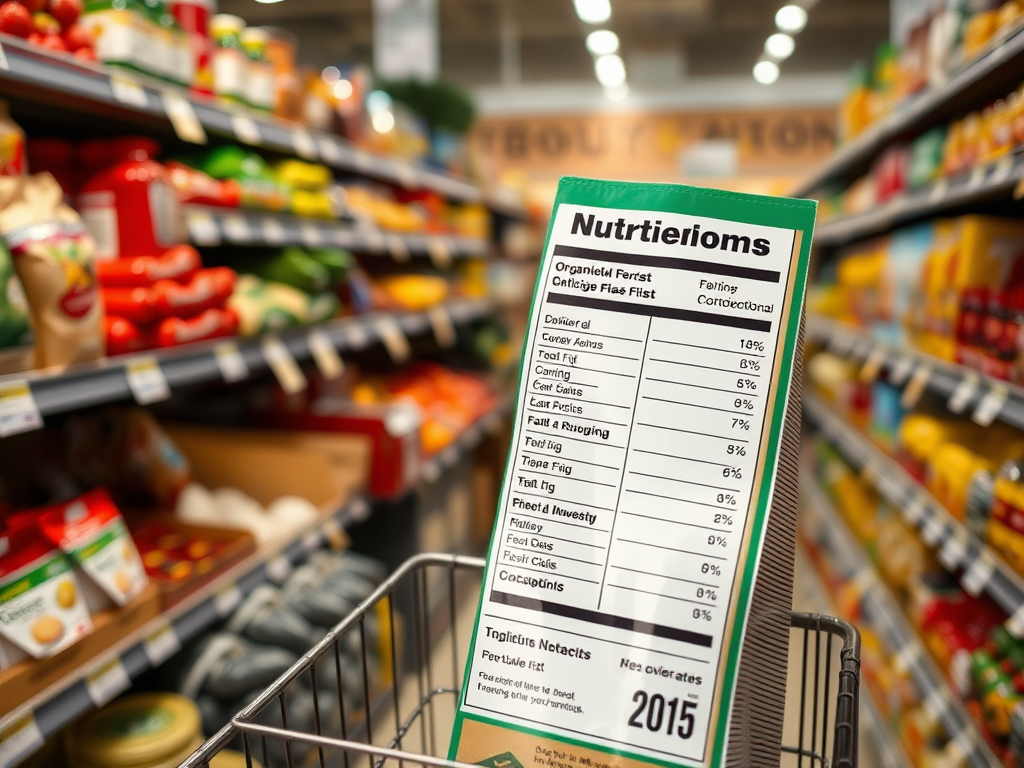
Read organic food labels effectively by checking the certification statement first, then the ingredient list, product category, percentage claims, and nutrition facts rather than relying on front-panel language. A certified organic seal generally signals that the product meets the applicable production and handling standards, but “made with organic” does not mean every ingredient is organic. Compare the organic claim with the ingredient order, serving size, added sugars, sodium, and processing level, and treat words such as natural, pure, or farm-fresh as separate marketing descriptions. The most common mistake is assuming an organic label automatically makes a highly processed food nutritionally preferable.
Find the Certified Organic Claim First
The certification statement is the most useful starting point because the word “organic” can describe different levels of compliance. On products governed by United States organic standards, the front label may display a USDA organic seal, while the ingredients panel or package information identifies the certifying organization. A product labeled “100 percent organic” has a different claim from one labeled simply “organic,” and both differ from a product described as “made with organic” ingredients.
Look near the front panel, ingredient list, or certification information for wording that explains the product’s status. A seal is a helpful shortcut, but it is not a substitute for reading the rest of the package. A certified organic granola may still contain substantial added sugar, while an organic canned soup may be high in sodium. Certification addresses how qualifying agricultural ingredients are produced, handled, and processed; it does not automatically rate the product’s overall nutrient profile.
Consider two breakfast choices: a plain organic rolled-oat package with one listed ingredient and an organic chocolate cereal with several sweeteners. The first label gives you a simple connection between the certification claim and the food itself. The second may meet organic requirements while still being a heavily formulated product. Choosing only by the seal can therefore miss the distinction between production standards and dietary quality.
A useful priority order is:
- Identify the exact organic claim and certification mark.
- Check whether the ingredient list supports the front-panel wording.
- Review serving size, added sugars, sodium, fiber, and protein.
- Compare the product with a less processed alternative when price or nutrition is a concern.
Readers who want more context on shopping decisions can use how to read organic food labels effectively as a broader reference, but the label’s certification language should remain the first checkpoint. If the wording is unclear, look for the certifier’s name or consult official organic-labeling information rather than assuming the package is fully certified.
Decode Ingredients, Percentages, and Product Wording
The ingredient list reveals what the product contains and often corrects an overly attractive front label. Ingredients appear by weight, so the first few entries usually have the greatest influence on the recipe. For a jar of pasta sauce, tomatoes listed first may be expected; for a snack bar, several forms of sugar near the beginning suggest a sweeter product even if the package emphasizes organic grains or fruit.
Organic status does not mean every ingredient in a packaged product has the same status. Terms such as “organic,” “made with organic ingredients,” and a general organic seal communicate different things. A product may contain a mixture of organic and non-organic ingredients under the rules that apply to its labeling category. The practical question is not merely whether the word appears, but which ingredients carry the claim and how much of the recipe depends on them.
Marketing language creates another common trap. “Natural,” “non-GMO,” “earth-friendly,” “farm-style,” and “clean” are not interchangeable with a certified organic claim. Some may be meaningful in a particular context, but they do not by themselves establish organic certification. Likewise, a short ingredient list is useful for recognizing simplicity, yet it does not prove that a product is more nutritious or better suited to a specific diet.
Imagine comparing two peanut butters. One lists organic peanuts and salt; the other highlights organic peanuts but also includes added sugar and stabilizing ingredients. The second may have a smoother texture and longer storage life, which can be convenient, but the first may better match a shopper seeking a minimal recipe. Neither choice is universally correct. Texture, price, storage, allergies, and intended use all matter.
When a label makes a strong claim, ask three questions: What exactly is certified? Which ingredients explain the product’s taste and texture? Does the wording describe the whole food or only selected components? This habit prevents the mistake of treating one prominent adjective as a complete description. For additional label context, see how to read organic food labels effectively alongside the product’s actual ingredient panel.
Compare Nutrition Facts With Organic Status
The Nutrition Facts panel answers a different question from the organic certification claim: it shows how the product contributes to energy, nutrients, and ingredients such as added sugars or sodium within a stated serving size. Reading both panels prevents the assumption that a certified product automatically supports every nutrition goal.
Start by checking the serving size and servings per container. A package that looks like one snack may list two servings, making the displayed calories, sugar, or sodium lower than the amount someone is likely to eat. Next, examine added sugars, fiber, protein, saturated fat, and sodium according to the food’s role in your meals. For example, an organic tomato soup may be a convenient source of vegetables but still require attention to sodium; pairing it with unsalted beans or whole-grain bread can change the meal’s overall balance.
Whole-food and packaged-food comparisons deserve separate treatment. An organic apple has no ingredient list and naturally provides fiber, while an organic apple-flavored snack may include concentrated sweeteners and refined starches. The snack could be useful for portability, but it should not be treated as nutritionally equivalent simply because both packages mention organic ingredients.
Nutrition comparisons also have tradeoffs. A lower-sugar product may use a different sweetener or have a less familiar texture. A product with more fiber may cost more or require additional water and storage planning. A certified organic option may be the shopper’s priority for production reasons, while a conventional alternative may fit a limited budget and still provide a similar nutrient profile. Comparing the panels rather than making an all-or-nothing judgment produces more realistic decisions.
Use the package to identify what the food contributes, not to make medical conclusions. Organic labeling does not diagnose, treat, or prevent a condition, and nutrition needs vary with age, health status, allergies, and dietary patterns. If a therapeutic diet is involved, the ingredient list and advice from a qualified clinician may matter more than the seal alone.
Use a Practical Label-Reading Routine
A consistent routine makes crowded packages easier to evaluate in a short shopping trip. Begin with the product’s intended use: a cooking staple, ready-to-eat meal, snack, beverage, or ingredient. The standard for comparison changes with that role. A jarred sauce does not need the same nutrient profile as a snack, but its sodium and added sugar may still influence how often it fits into meals.
Use this sequence when comparing two similar products:
- Locate the claim: determine whether the package describes the entire product or selected organic ingredients.
- Read the first five ingredients: identify the main grains, oils, sweeteners, proteins, or flavoring components.
- Check serving realism: decide whether the listed portion resembles the amount you will actually eat.
- Review priority nutrients: focus on added sugars, sodium, fiber, protein, and saturated fat when relevant.
- Compare cost per usable amount: account for package size, waste, preparation time, and storage life.
For instance, someone choosing organic yogurt might compare plain and flavored versions. Plain yogurt generally gives the shopper control over sweetness, while flavored yogurt may be more convenient and acceptable to children. The label can show whether the difference comes mainly from fruit, added sugar, or both. If the plain option is difficult to eat, adding berries or oats at home may offer a workable compromise rather than abandoning the preference entirely.
Watch for signs that your method is failing. You may be relying too heavily on a large seal, ignoring serving size, treating a “free-from” phrase as a nutrition claim, or rejecting a suitable food because it lacks a particular front-panel slogan. A better approach ranks priorities: first address allergies and safety, then match the food to the meal, then compare certification, nutrition, price, and convenience. The order may change for a household with strict production preferences, but making that choice consciously is more useful than letting packaging decide.
Keep a short personal checklist on your phone if label reading feels slow. After several shopping trips, the process becomes faster because you recognize the ingredients and nutrient categories that matter for your usual foods. The goal is not to inspect every claim equally; it is to connect the package wording with the actual contents and your practical needs. That is the central skill behind how to read organic food labels effectively.
Frequently Asked Questions
Does an organic seal mean a food is healthy?
No. The seal relates to organic production and handling standards, while the ingredient list and Nutrition Facts panel describe sweetness, sodium, fiber, fat, and serving size.
Is “made with organic ingredients” the same as 100 percent organic?
No. Those phrases identify different labeling categories. Check the full certification wording to see whether the claim applies to all ingredients or only part of the product.
Should I read the front or back of the package first?
Use the front to identify the main claim, then verify it with the certification statement, ingredient list, and Nutrition Facts panel on the back or side.
Are natural and organic interchangeable terms?
No. “Natural” and similar marketing phrases do not automatically establish certified organic status. Treat each claim separately and look for the applicable certification information.
What should I prioritize when organic products cost more?
Prioritize foods you buy often, foods with short ingredient lists, and products where certification matters most to your household. Compare nutrition, usable quantity, and conventional alternatives rather than assuming the costlier item is automatically better.
Conclusion
Effective label reading connects three pieces of information: the product’s organic certification claim, the ingredients that make up the recipe, and the Nutrition Facts panel that shows serving-based nutrient details. Check those elements in that order, then consider price, preparation, storage, allergies, and how the food fits into an actual meal. A certified organic cookie, cereal, or sauce may still be highly processed, while a conventional whole food may offer a comparable nutrient profile at a lower cost. The practical next step is to choose one familiar product category and compare two packages using the same checklist. With repetition, you can separate certification from marketing, spot misleading comparisons, and make organic purchases that reflect both your production priorities and your nutrition needs.