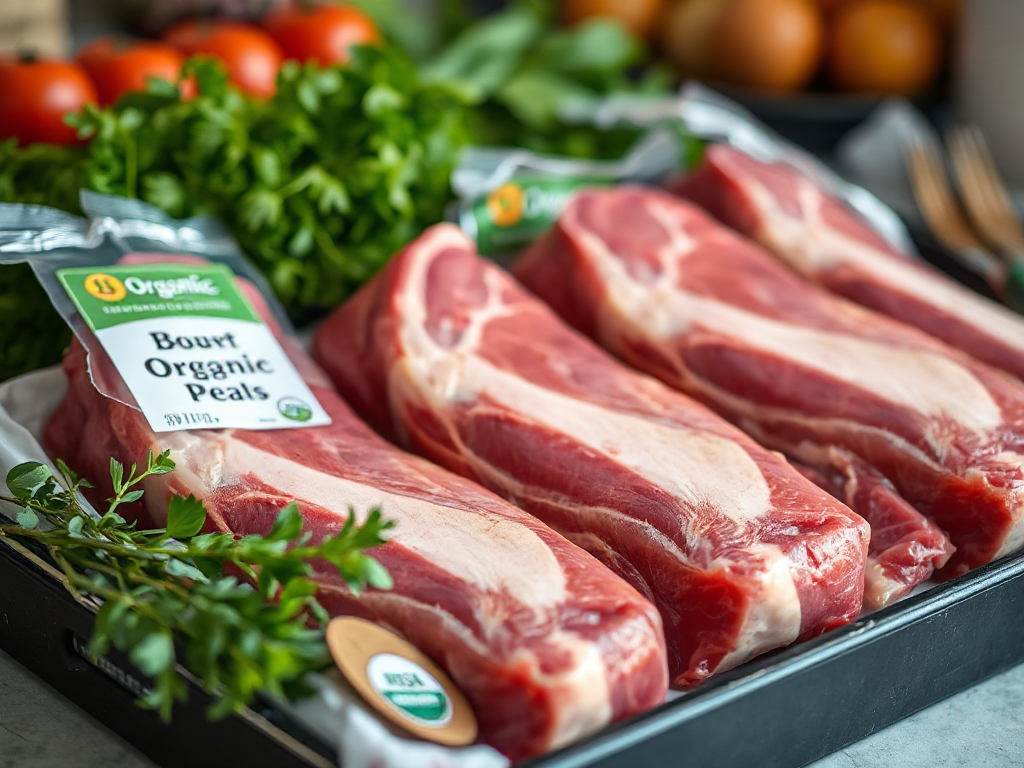
Recognizing quality differences in organic meats means checking organic certification, production details, freshness, cut condition, and cold-chain handling rather than assuming every organic package is equally good. Look for a credible certification statement, a clear use-by or sell-by date, intact packaging, firm texture, and color appropriate to the species and cut. Compare grass-fed, pasture-raised, and grain-finished claims separately because organic status does not automatically describe the animal’s entire diet or living conditions. Avoid packages with leaking liquid, damaged seals, strong off-odors, or unclear labeling, and remember that marbling and tenderness can vary within organic production. Price alone is a weak quality test; traceability, freshness, and cooking suitability are more useful signals.
Separate Organic Certification From Overall Meat Quality
Organic certification answers a specific production question: whether the meat came through a regulated organic system that met applicable standards. It does not, by itself, guarantee tenderness, ideal marbling, peak freshness, or a particular flavor profile. A certified organic steak can be less tender than a conventionally raised steak if the cut, animal age, aging process, or cooking method differs. Treating the organic seal as a complete quality score is one of the most common shopping mistakes.
Start by finding the certification statement or recognized organic seal on the package, then examine the rest of the label separately. A trustworthy package should identify the product clearly and provide ordinary handling information, such as the cut name, weight, price, and date marking. Organic status is about how the animal and feed were managed; meat quality also depends on processing, storage, trimming, and the time that passes between packaging and cooking.
For example, two organic ground-beef packages may carry the same certification but differ in fat percentage, grind texture, packaging date, and temperature history. The package with a clear date, tight seal, and suitable lean-to-fat ratio may perform better for burgers, while a leaner option may work better in chili but become dry if cooked aggressively. The certification is useful, but it should be the first filter rather than the final judgment.
Readers comparing options through how to recognize quality differences in organic meats should keep three questions distinct: Is the product genuinely certified organic? Is it fresh and properly handled? Does its cut and composition suit the planned meal? That separation prevents a label claim from overshadowing visible evidence.
Read Labels for Diet, Raising Claims, and Traceability
Label language reveals different attributes, and those attributes should not be treated as interchangeable. “Organic” refers to the certified production system. “Grass-fed,” “pasture-raised,” and similar phrases may describe diet or access to outdoor conditions, but their meaning and verification can vary by product and jurisdiction. A package can be organic without making a grass-fed claim, and a grass-fed claim does not automatically establish organic certification.
Look for useful specifics rather than attractive but incomplete wording. The species, cut, grade where supplied, fat percentage, country or region information, and processor details can all improve comparison. A traceable product gives shoppers a clearer route to verify claims or ask questions. Vague phrases such as “natural” are particularly weak quality indicators because they do not provide the same information as a recognized certification or a clearly defined production claim.
Production claims can also influence flavor and texture without predicting them perfectly. Beef from animals with different diets may show differences in fat character, while lamb and pork can vary according to breed, age, feed, and handling. These differences are not automatically signs of better or worse meat. They indicate that the shopper should choose according to use: a strongly flavored cut may suit a slow braise, whereas a mild, well-marbled cut may be easier to grill.
A common failure mode is paying a premium for several overlapping claims without deciding which one matters for the meal. If the goal is certified organic meat, verify that first. If the goal is a particular flavor, investigate diet and breed information. If the goal is tenderness, prioritize the cut, marbling, aging information, and cooking plan. The link how to recognize quality differences in organic meats becomes more practical when each label term is connected to a specific buying decision.
Judge Freshness by Packaging, Color, Texture, and Odor
Freshness is best assessed through several signals together, not color alone. Packaging should be intact, without punctures, excessive leakage, or a seal that has lifted from the tray. Liquid in a package is not automatically evidence of spoilage, but a large amount combined with damaged packaging or an unusually soft product deserves caution. Refrigerated meat should feel cold when purchased, and a shopper should minimize the time it spends unrefrigerated on the way home.
Color varies naturally by species, cut, oxygen exposure, and packaging style. Beef may appear purplish in vacuum packaging and become redder after exposure to air. Poultry can range from pale pink to a deeper pink, while pork may be pink to reddish pink depending on the cut. A darker surface is not automatically dangerous, but greenish discoloration, sticky or unusually slimy texture, and a persistent sour or putrid odor are reasons not to use the product. Do not taste meat to test it.
Packaging technology can mislead shoppers in both directions. Vacuum-sealed meat may have a temporary odor when opened because trapped gases are released; that smell should dissipate rather than remain harsh and unpleasant. Modified-atmosphere packaging may keep meat visually bright, so attractive color alone cannot prove freshness. The date marking is useful for planning, but it does not replace inspection of storage condition and package integrity.
Consider a refrigerated organic chicken package with a clear date and intact seal but substantial pooled liquid. It may still be usable if it has remained properly chilled and shows no spoilage signs, yet it will require careful handling because raw poultry juices can spread contamination. Place it in a leakproof bag, keep it separate from ready-to-eat food, and cook it according to established food-safety guidance. A shopper who rejects every package with liquid may waste usable food; a shopper who ignores odor and damaged seals takes an unnecessary risk.
Match Cut Quality With Cooking Method and Budget
The best organic meat is not necessarily the most expensive cut; it is the one whose structure suits the cooking method. Tender cuts with fine texture and visible marbling generally need less cooking time, while tougher muscles contain more connective tissue and often improve with moist, extended cooking. Organic certification does not change this basic relationship. Choosing a premium steak for a stew can waste money, while grilling a lean braising cut can produce disappointing toughness.
Marbling contributes fat within the muscle and may support juiciness, but more marbling is not the only quality signal. Thickness, trimming, aging, and cooking temperature also affect the result. A lean organic sirloin may be a sensible choice for a quick meal if it is not overcooked. An organic chuck roast may offer better value for a slow cooker because time and moisture help soften connective tissue. Ground meat requires its own assessment: fat percentage influences moisture and texture, while a fresh grind may cook differently from tightly compressed formed patties.
Buy according to the meal rather than the prestige of the label. For a fast weeknight dinner, compare evenly sized chops or steaks, consistent thickness, and a reasonable amount of surface moisture. For soup, braising, or shredded meat, prioritize connective-tissue-rich cuts and a package size that fits the recipe. If the budget is limited, a certified organic stew cut, organ meat, or ground product may provide a more practical choice than a small premium steak.
The misconception to avoid is that a higher price proves superior eating quality. Price may reflect certification costs, supply, labor, processing, or retail location, but it does not guarantee tenderness or freshness. Record which cuts perform well in your own kitchen, including cooking method and doneness. That personal comparison is more useful than relying on package prestige alone and can make how to recognize quality differences in organic meats a repeatable household skill.
Use a Practical Store-Selection Checklist
A short inspection sequence reduces impulse buying and makes comparisons fair. Examine the organic claim first, then check the date and package condition. Next, compare cut, fat level, size, and intended cooking method. Only after those checks should you weigh price or choose between competing production claims. This order keeps a premium label from distracting you from freshness and suitability.
Use the following checklist at the case:
- Certification: Confirm that the package makes a specific, credible organic certification claim.
- Identity: Check species, cut, fat percentage, weight, and any grade or aging information provided.
- Freshness: Review date markings and reject packages with persistent off-odors, abnormal slime, leaking seals, or damaged trays.
- Fit: Match the cut’s tenderness and fat level to grilling, roasting, braising, or grinding.
- Handling: Keep raw meat cold, bag it separately, and refrigerate or freeze it promptly after purchase.
When two packages pass the basic checks, choose the one with clearer traceability or the cut that better fits the planned dish. If information is missing, ask the butcher about packaging date, trim, origin, or recommended preparation rather than assuming the most expensive item is better. A reliable retailer should be able to explain storage and product distinctions without turning uncertain claims into guarantees.
Watch for signs that your selection process needs adjustment. Dry, tough results may indicate an unsuitable cut or excessive heat rather than poor organic quality. Blandness may reflect seasoning or cooking, not the production system. Repeatedly finding damaged packages or inconsistent temperatures may justify changing stores. Sensible comparison combines label verification, physical inspection, cooking fit, and safe handling; no single visual cue can replace that judgment.
Frequently Asked Questions
Does organic meat always taste better?
No. Flavor depends on species, breed, diet, fat, aging, freshness, seasoning, and cooking method. Organic certification alone cannot predict taste.
Is darker beef automatically spoiled?
No. Vacuum-packed beef can look purplish and may redden after exposure to air. Persistent unpleasant odor, slime, or unusual discoloration is more concerning than darkness alone.
What is more important, organic status or freshness?
They answer different questions. Verify organic status if it is your priority, but do not overlook package integrity, cold storage, date markings, and spoilage signs.
Are grass-fed and organic the same claim?
No. Organic describes a certified production system, while grass-fed describes diet. Read each claim independently and check whether it is clearly defined or verified.
Which organic meat offers the best value?
Value depends on the meal. Ground meat and braising cuts can be practical choices when their fat level and texture suit the recipe, while premium steaks may be worthwhile for quick cooking.
Conclusion
Quality comparison begins by separating certification from freshness, flavor, tenderness, and cooking performance. Verify the organic claim, then inspect the date, seal, texture, odor, and storage condition. Read diet and raising claims as additional information rather than proof of superior meat, and choose cuts according to the meal you intend to cook. A chuck roast, lean chop, and ground-beef package can all be excellent choices in different situations, but each requires a different expectation and preparation method. Keep raw meat cold and isolated during transport and storage, and reject products with persistent spoilage signs or damaged packaging. Over time, notes about cuts, fat levels, and cooking results will give you a more reliable quality standard than price or label prestige alone.