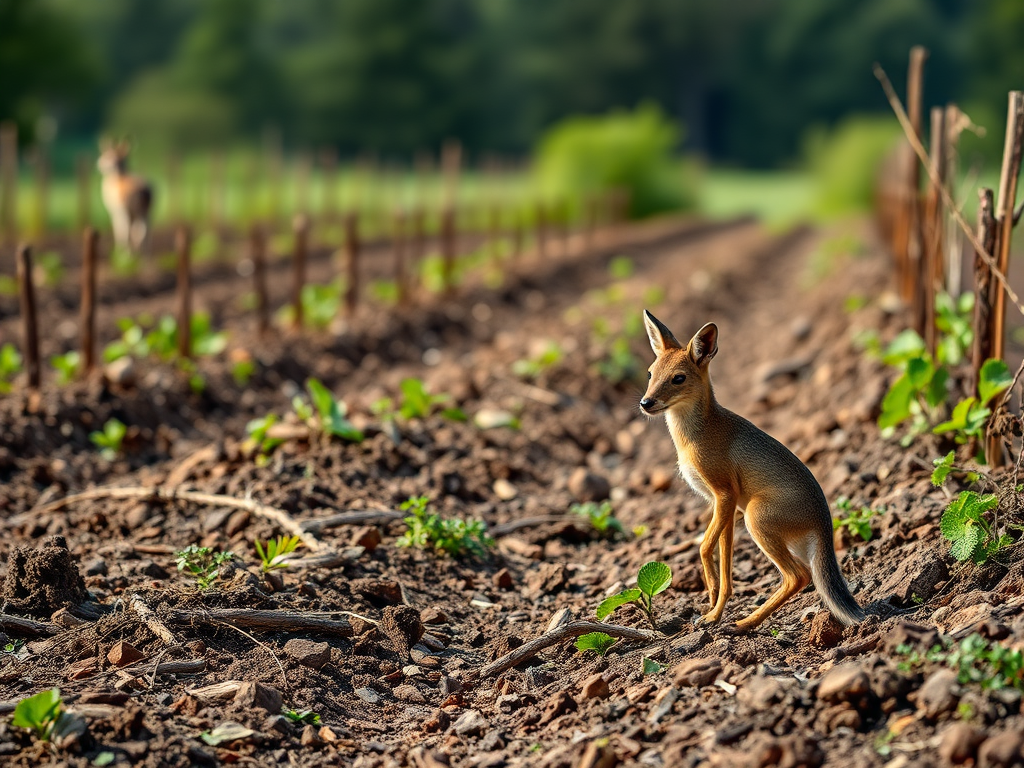
The connection between organic farming and local wildlife is shaped by pesticide choices, habitat quality, soil management, and the availability of food and shelter across a farm. Organic systems may give insects, birds, amphibians, and small mammals more usable habitat when they retain hedgerows, flowering margins, wetlands, cover crops, and diverse rotations. Wildlife gains can be reduced when fields are simplified, drainage removes wet areas, or approved pesticides are applied without protecting nearby habitats. Farmers and gardeners should evaluate the whole landscape rather than assume an organic label guarantees biodiversity, then prioritize native vegetation, soil cover, water protection, and targeted pest monitoring.
How Organic Farms Shape Wildlife Habitat
Organic farming can influence local wildlife most strongly through the physical structure of the farm, not simply through the absence of synthetic pesticides. A field bordered by native grasses, shrubs, trees, or a drainage pond offers nesting sites, escape cover, nectar, seeds, and hunting areas that a bare field edge does not. Crop rotation and mixed plantings can extend the period when food is available, while permanent vegetation gives wildlife somewhere to remain when a crop is harvested.
Hedgerows illustrate the connection clearly. A flowering hedge may feed native bees and other pollinators in spring, dense branches can shelter songbirds, and leaf litter supports beetles and other decomposers. The same feature may also harbor rodents or competing insects, so placement matters. A hedge beside a sensitive crop may need a managed buffer, whereas a hedge along a field boundary can provide habitat without interfering with machinery.
Organic certification does not automatically mean that every farm contains high-quality wildlife habitat. A large monoculture managed organically can still offer limited shelter during parts of the year. Conversely, a smaller operation using integrated habitat practices may support more species even when its production system is not certified organic. The useful comparison is not label versus non-label; it is simplified land versus a landscape with varied vegetation, soil cover, and safe movement routes.
Readers evaluating the connection between organic farming and local wildlife should look beyond crop inputs. Notice whether the property retains field margins, protects streams, leaves some standing vegetation over winter, and avoids mowing every area at the same time. These features often determine whether wildlife can complete feeding, nesting, and breeding cycles.
Soil, Water, and the Food Web
Healthy soil connects farm management to wildlife above ground. Organic matter, living roots, fungi, earthworms, and soil-dwelling arthropods create a food base for birds, amphibians, and small mammals. Cover crops such as clover, rye, or vetch protect the surface between cash crops and can provide temporary forage, although their value depends on when they are planted, terminated, and replaced by the next crop.
Reduced erosion is another important pathway. Soil washed from a field can cloud streams, bury aquatic habitat, and carry nutrients or crop residues into water. Vegetated waterways and riparian strips slow runoff before it reaches a creek. They also provide travel corridors for frogs, turtles, insects, and birds. A buffer that is too narrow, frequently disturbed, or planted with a single aggressive species may provide less protection than a layered strip containing grasses, flowering plants, and woody vegetation.
Water management requires practical judgment. An organic grower may avoid certain persistent chemicals yet still create wildlife stress through excessive tillage, nutrient runoff, or removal of wetland vegetation. A pond can attract beneficial insects and birds, but exposed livestock access may damage its banks and contaminate the water. Irrigation withdrawals can also reduce stream flow during dry periods, making water conservation relevant to wildlife even when no pesticide is involved.
A useful farm-scale check follows the path from soil to stream: identify bare soil, compacted areas, drainage outlets, eroding banks, and places where water leaves the property quickly. Correcting one high-risk runoff route may matter more than adding a decorative pollinator patch in a low-impact location. This landscape approach complements the connection between organic farming and local wildlife by focusing on how farm decisions affect connected habitats rather than isolated plots.
Pesticides, Pest Control, and Tradeoffs
Organic pest management may reduce some wildlife pressures, but “natural” does not mean harmless to every organism. Organic producers can use approved substances, including certain botanical, mineral, or microbial products, and these may affect beneficial insects or aquatic life if applied carelessly. Risk depends on the product, dose, timing, weather, application method, and species exposed.
Integrated pest management offers a more precise alternative to routine spraying. A grower first identifies the pest, checks whether damage is economically meaningful, and considers cultural or mechanical controls. Crop rotation can interrupt pest life cycles; row covers can exclude insects; sanitation can remove breeding sites; and a flowering margin can support predatory insects. Treatment becomes one tool rather than the default response to seeing a single insect.
Timing can determine whether a control affects wildlife. Spraying a flowering crop during active bee foraging creates a different exposure pattern from treating a nonflowering crop at dusk, though local instructions and product labels still control what is permitted. Wind can carry droplets into hedgerows or ponds, and runoff can move residues away from the treated area. Keeping untreated buffers near water and avoiding applications when pollinators are active are practical safeguards, subject to the product label and local requirements.
A common mistake is to frame the issue as organic methods versus all pest control. Farmers still need to protect yields, and severe crop damage can lead to land expansion elsewhere if production becomes impractical. The better objective is selective intervention: monitor populations, preserve natural enemies, choose the least disruptive effective option, and reassess after treatment. Guidance from the EPA and local extension services can help users interpret product risks without assuming that certification alone resolves them.
Practical Steps for Farms and Gardens
Wildlife-friendly organic management works best when habitat is designed around farm operations. A productive plan protects areas that machinery does not need, connects separate habitat patches, and schedules disturbance so that nesting and flowering periods are not repeatedly interrupted. Small farms, community gardens, and backyard plots can apply the same logic at a smaller scale.
Priorities should usually follow risk and opportunity rather than appearance:
- Protect streams, ponds, wetlands, and their vegetated edges from soil movement and chemical drift.
- Maintain native flowering plants and grasses through more than one season instead of relying on a brief bloom.
- Use cover crops, mulch, or retained residues to support soil organisms and reduce exposed ground.
- Leave some safe overwintering cover while keeping invasive plants and fire hazards under control.
- Monitor pests and beneficial insects before choosing a treatment.
Plant selection should match local conditions. Native plants adapted to the region usually require less supplemental care once established and can serve local insects more reliably than ornamental species chosen only for color. A garden manager should also avoid introducing plants known to spread aggressively, because a habitat project that displaces native vegetation can create a new ecological problem.
Operational constraints cannot be ignored. A wide field margin may reduce the area available for crops, complicate mowing, or provide habitat for weeds if unmanaged. Drip irrigation may reduce wetting of foliage but can require investment and maintenance. Hand removal suits a small garden but rarely scales to a large farm. The right approach is the one that protects a vulnerable habitat feature while remaining feasible enough to maintain for several seasons.
For practical planning, map the property, mark water and existing vegetation, record recurring pest areas, and identify where wildlife movement is interrupted. Add one or two changes with clear maintenance responsibilities rather than installing features that no one can manage. Information from USDA NRCS soil resources and university extension programs can help match conservation measures to soil and climate conditions.
Measuring Whether Wildlife Conditions Are Improving
Wildlife outcomes should be judged through repeated observations, not a single sighting of a bee or bird. A simple monitoring record can track flowering dates, bird activity, amphibian presence, earthworm abundance, visible erosion, and pest-to-beneficial-insect ratios. The purpose is not to produce a formal biodiversity survey; it is to test whether management changes are producing the expected conditions.
Choose a few fixed observation points and visit them at similar times during the growing season. Photograph a stream bank after heavy rain, inspect whether a buffer remains covered, and note whether flowers are available before and after the main crop blooms. If a newly planted margin is dominated by weeds, pollinators are absent during flowering, or runoff still reaches the waterway, the design may need revision.
Short-term results can be misleading. A freshly planted hedge may offer little shelter for several years, while an untreated pest outbreak may temporarily reduce crop quality even if predator populations are increasing. Weather also changes wildlife activity from year to year. Comparing several seasons is more informative than treating one unusually wet or dry season as proof of success or failure.
Readers can use a compact review question set: Is habitat connected? Is soil covered? Is water leaving the field cleanly? Are pest treatments targeted? Are native plants surviving? Answers that improve over time indicate a stronger ecological direction. If production losses are rising, habitat maintenance is failing, or treatments are affecting non-target organisms, adjust the plan with technical help rather than abandoning all conservation measures.
Frequently Asked Questions
Does organic farming always help local wildlife?
No. Organic production may reduce some chemical pressures, but wildlife also depends on habitat structure, water protection, crop diversity, and careful land management.
Which wildlife benefits most from organic farm habitat?
Pollinators, predatory insects, soil organisms, birds, amphibians, and small mammals may benefit when farms provide food, shelter, nesting space, and connected vegetation.
Can organic-approved pesticides harm wildlife?
Yes. Any pesticide can affect non-target organisms under some conditions, so product labels, weather, timing, buffers, and targeted application matter.
What is the best first habitat improvement?
Protect the most vulnerable existing feature first, especially a stream, wetland, eroding slope, or habitat corridor, before adding smaller decorative plantings.
How can a small garden support local wildlife?
Use regionally appropriate native plants, keep flowers available across seasons, reduce bare soil, provide shallow water safely, and avoid routine broad-spectrum spraying.
Conclusion
Organic farming and local wildlife are connected through the entire farm landscape: field edges, soil, water, crop timing, and pest decisions all matter. Avoid treating certification as a complete biodiversity plan. Protect waterways, retain or restore connected native vegetation, keep soil covered, and use pest controls only after monitoring identifies a genuine need. Small operations can begin with the highest-risk runoff route or the habitat feature that is easiest to protect consistently. Track conditions over several seasons, since wildlife response is shaped by weather, maintenance, and surrounding land use. A farm that combines organic production with deliberate habitat planning is more likely to provide durable shelter and food while keeping crop protection practical.
Further Reading
Authoritative Sources
- Habitat complexity in organic agriculture enhances natural ...
organic-center.orgHabitat complexity in organic agriculture enhances natural pest control ... Results emphasize the importance of preserving native habitats and ...
- In-Field Habitat Management to Optimize Pest Control ... - PMC
pmc.ncbi.nlm.nih.govIn this review, we argue that by reducing disturbance, mitigating the effects of necessary field activities, and controlling pests within an Integrated Pest ...
- Why organic is better for wildlife
soilassociation.orgOrganic farms protect wildlife by working with nature - using fewer pesticides, creating richer habitats and supporting healthy soils where ...
- Beneficial Wildlife: The Unsung Heroes of a Balanced ...
inthesetimes.comOne of the biggest benefits wildlife provide to organic farmers is natural pest control. Organic farmers cannot use common poisons for ...