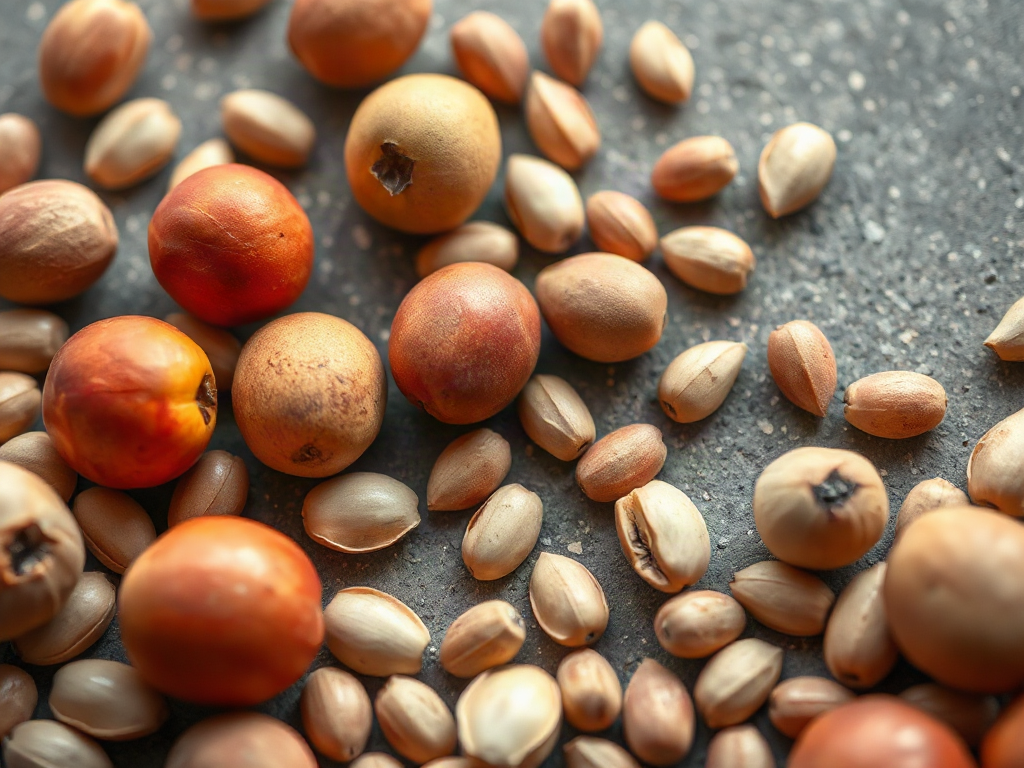
Organic fruit seeds and pits differ in safety according to their chemistry, hardness, size, and preparation—not whether the fruit was grown organically. Apple seeds and the kernels inside cherry, peach, plum, and apricot pits contain cyanogenic compounds that can release cyanide when crushed or chewed, while intact pits mainly present choking and dental hazards. Edible seeds from strawberries, kiwifruit, grapes, citrus, pomegranates, and passion fruit are generally consumed with the fruit, although texture or digestive tolerance may vary. Avoid deliberately eating stone-fruit kernels, discard damaged pits, supervise young children, and contact poison control or a clinician after a concerning ingestion.
Does Organic Status Change Seed or Pit Safety?
Organic certification concerns how a fruit is produced and handled; it does not remove compounds that occur naturally inside its seeds or kernels. A certified organic apple still has seeds containing cyanogenic glycosides, just as a conventionally grown apple does. Likewise, an organic peach pit remains hard enough to damage teeth, obstruct an airway, or expose its inner kernel if cracked.
The useful distinction is therefore not organic versus conventional. It is edible seed versus inedible structure, intact versus damaged, and occasional accidental exposure versus deliberate consumption. Natural plant compounds often serve defensive functions in the seed. Some become more relevant when chewing, grinding, blending, or crushing breaks plant tissue and allows chemical reactions to occur. Swallowing one intact apple seed by accident is a different situation from grinding many seeds into a drink.
Washing fruit can reduce soil and surface debris, but it cannot alter the chemistry inside a seed or pit. Peeling has the same limitation: it removes skin, not the seed-bearing core. Choosing organic fruit may align with a shopper’s farming or environmental preferences, yet it should not be treated as permission to eat every part of the fruit.
Terminology can cause additional confusion. A peach or cherry has a hard outer stone, commonly called a pit, surrounding a seed or kernel. The hard shell itself is not equivalent to the kernel inside it. With apples and pears, the smaller seeds are directly accessible in the core. Strawberries carry their seed-like structures on the exterior, while kiwifruit and passion fruit have small seeds designed to be eaten with the pulp.
The common mistake is assuming that “natural,” “raw,” or “organic” means every component is suitable as food. A better first check is whether the seed is customarily eaten as part of the whole ripe fruit. If recipes require cracking a hard pit, grinding a bitter kernel, or using an unusual extraction process, ordinary fruit handling has shifted into a higher-risk practice that deserves reliable, product-specific guidance.
Which Fruit Seeds and Kernels Require Caution?
Apple seeds and stone-fruit kernels deserve the clearest chemical caution because they contain cyanogenic glycosides. When seed tissue is damaged, these compounds may release hydrogen cyanide through enzymatic reactions. The amount varies with the fruit species, variety, growing conditions, processing, and quantity consumed, so a universal safe count should not be inferred.
Stone fruits include cherries, peaches, nectarines, plums, and apricots. Their hard pits usually pass through the digestive tract intact if accidentally swallowed, but that does not make them food. Cracking the shell exposes the kernel, where the relevant compounds are concentrated. Apricot kernels are particularly likely to be marketed separately or mistaken for nuts; an organic label does not neutralize their inherent chemistry.
| Fruit part | Primary concern | Practical response |
|---|---|---|
| Apple or pear seeds | Cyanogenic compounds become more relevant when seeds are chewed or crushed | Core fruit before intensive blending and avoid intentional seed consumption |
| Cherry, peach, plum, nectarine, or apricot pit | Choking, obstruction, tooth damage, and access to the kernel if cracked | Remove and discard the pit; do not crack it for eating |
| Stone-fruit kernel | Potential cyanide release after chewing, grinding, or processing | Do not treat raw kernels as a snack or supplement |
| Avocado pit | Hard texture, uncertain food use, equipment damage, and choking risk from pieces | Discard rather than grate or blend into food |
Avocado pits present a different decision. Online recipes sometimes recommend drying and grinding them, but the pit is not a conventional edible portion, and home preparation does not establish a reliable serving amount or safety profile. It may also damage a blender or knife. The flesh supplies the culinary value people normally seek from avocado without introducing those uncertainties.
Accidental ingestion requires context rather than panic. The person’s age and size, the fruit involved, whether the material was chewed, how much was consumed, and whether symptoms are present all matter. Do not induce vomiting unless a medical professional specifically directs it. For a substantial or uncertain exposure, contact a poison control service or qualified clinician promptly; breathing difficulty, collapse, severe confusion, or persistent vomiting warrants urgent emergency assistance.
Which Fruit Seeds Are Commonly Eaten?
Many small fruit seeds are normal edible components rather than waste that must be removed. Strawberry, raspberry, blackberry, kiwifruit, dragon fruit, fig, pomegranate, grape, citrus, watermelon, and passion-fruit seeds may all be encountered during ordinary eating. Their practical differences involve texture, choking risk, digestive tolerance, and culinary preference more often than acute chemical toxicity.
Size and hardness still affect how a seed should be served. Kiwifruit and berry seeds are tiny and distributed throughout soft flesh, making separation impractical. Pomegranate seeds are enclosed in juicy arils and provide a firm crunch, although people with chewing or swallowing difficulties may need a softer alternative. Grape and citrus seeds can taste bitter and may be removed for comfort, but accidentally chewing one is not comparable to deliberately consuming crushed stone-fruit kernels.
Watermelon illustrates the difference between conventional food use and hazard assumptions. Soft white seeds in less mature fruit and hard dark seeds in mature fruit are generally edible. Roasted watermelon seeds are also used as food in some cuisines. The relevant checks are whether the seeds were prepared for eating, whether a young child can manage the texture, and whether added salt or seasonings fit the eater’s needs—not whether the watermelon carried an organic seal.
Digestive reactions are possible even when a seed is ordinarily edible. A large serving of seedy berries or passion fruit can add fiber and rough texture that some people tolerate poorly. Whole seeds may appear in stool because their outer coverings resist digestion; that observation alone does not mean they were harmful or provided no nutritional value. People under instructions to follow a low-fiber or texture-modified diet should follow their clinician’s advice rather than general whole-fruit guidance.
A frequent mistake is placing all fruit seeds in one category. Avoiding every seed unnecessarily excludes ordinary foods such as berries and figs, while treating every seed as edible ignores the distinct chemistry of apple seeds and stone-fruit kernels. Customary use offers a practical clue: seeds routinely eaten within soft fruit are handled differently from kernels that require cracking a woody shell before consumption.
How Should Seeds and Pits Be Handled Safely?
Safe handling starts by matching preparation to the fruit rather than applying one rule to every seed. Eat customary edible seeds with the flesh, remove hard pits before serving or processing, and keep bitter kernels out of snacks, powders, and homemade extracts. This approach addresses chemical exposure as well as choking, dental, and equipment hazards.
Whole-fruit blending needs special attention because a powerful blender can break seed material that would otherwise remain intact. Core apples and pears before blending large batches. Pit cherries, peaches, nectarines, plums, and apricots individually, then inspect the fruit before it enters the machine. A missed cherry pit can splinter, damage blades, or leave hard fragments in a smoothie even apart from concerns about its kernel.
Use this compact check before serving or processing fruit:
- Identify the structure: Decide whether it is a routinely eaten seed, a removable seed, or a hard pit containing a kernel.
- Inspect for damage: Discard split pits and exposed kernels instead of trimming around them.
- Match the eater: Remove round, hard, or slippery pieces for young children and anyone with chewing or swallowing limitations.
- Match the method: Remove cores and pits before blending, juicing, milling, dehydrating, or food processing.
- Respond to exposure: Record the fruit, estimated quantity, time, chewing or crushing, age, and symptoms before calling for professional advice.
Storage also matters. Pits left on a cutting board or in a bowl can attract children or pets who see them as food or toys. Move them directly into compost or household waste where local disposal practices allow. If pits are saved for planting or crafts, label and store them away from food preparation areas; “saved seed” should not be mistaken for an edible ingredient.
Signs that the approach is working are simple: pits are consistently removed before serving, processed fruit contains no hard fragments, and edible small seeds remain part of the fruit without unnecessary concern. The system is failing when unidentified kernels accumulate in the pantry, a recipe calls for grinding bitter pits without authoritative safety instructions, or caregivers assume that an intact pit is harmless for a child because an adult could swallow it.
When an ingestion is unclear, preserve the packaging or a sample of the fruit if doing so is safe. A poison control professional can give more useful guidance when the species, product, preparation, amount, and timing are known. Internet serving estimates should not replace individualized advice because seed composition and exposure circumstances are too variable for a dependable universal threshold.
For case-specific safety information, consult the poison control service for your country and official food-safety materials from national health or agriculture agencies. University extension resources can also help identify unfamiliar fruit structures and explain which portions are customarily edible. Product labels and official recall notices should take priority when packaged kernels or seed powders are involved.
Frequently Asked Questions
Does organic certification make fruit seeds safer to eat?
No. Organic production standards do not remove naturally occurring compounds from apple seeds or stone-fruit kernels, and they do not eliminate choking or tooth-damage risks from hard pits.
Is accidentally swallowing one apple seed dangerous?
An isolated intact seed is generally less concerning than numerous chewed or crushed seeds. Contact poison control if the amount is substantial, uncertain, deliberately ground, or associated with symptoms.
Can cherry or peach pits be blended into smoothies?
No. Remove hard pits before blending because the machine may crack them, expose the kernel, scatter hard fragments, or sustain blade damage.
Are grape, citrus, and watermelon seeds edible?
They are commonly regarded as edible, although bitterness, hardness, and digestive tolerance vary. Young children and people with swallowing difficulties may need seeds removed or a different fruit texture.
What should I do after someone eats a fruit kernel?
Identify the fruit, amount, time, and whether the kernel was chewed or ground, then contact poison control or a clinician. Seek emergency help for severe or rapidly developing symptoms.
Conclusion
Fruit-part safety is determined more by plant chemistry, physical form, preparation, and the eater than by the farming label. Keep the familiar edible seeds in berries, kiwifruit, figs, pomegranates, and similar fruits unless texture or medical guidance calls for adjustment. Remove apple cores before heavy processing, discard stone-fruit pits without cracking them, and avoid using raw kernels or avocado pits as experimental powders.
Households can reduce mistakes by pitting fruit before it reaches a blender, checking servings intended for children, and storing saved planting pits away from food. If an ingestion involves chewed kernels, an unknown quantity, or concerning symptoms, gather the product details and seek case-specific advice from poison control or a qualified medical professional rather than relying on a universal seed count.