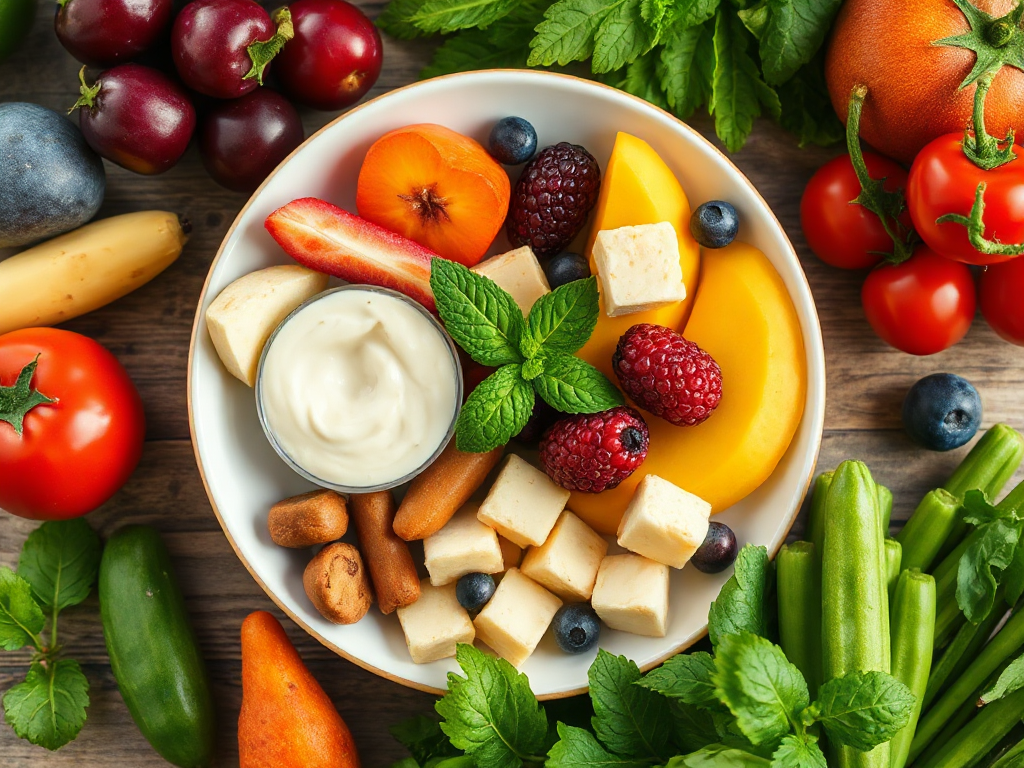
Organic produce choices for healthy snack plates work best when colorful fruits and vegetables are paired with protein- or fat-rich foods, such as hummus, yogurt, nuts, or cheese. Choose crisp, easy-to-eat produce for texture, include water-rich options for freshness, and add a more filling partner so the plate does not become a short-lived carbohydrate snack. Organic labeling may reduce exposure to some pesticide residues, but it does not make produce nutritionally complete by itself. Wash all items under running water, control portions of dried fruit and dips, and choose seasonal or frozen options when budget, freshness, or availability makes a fully organic plate impractical.
Build a Snack Plate Around Variety and Satiety
A healthy snack plate is more satisfying when it combines produce with a food that supplies protein, fat, or both. Fruits and vegetables contribute water, fiber, potassium, vitamin C, carotenoids, and other plant compounds, but a plate made only from grapes, berries, or sliced vegetables may leave some people hungry soon afterward. Adding hummus, plain Greek yogurt, cottage cheese, a boiled egg, nuts, seeds, or a modest portion of cheese changes the plate from a pile of produce into a more balanced eating occasion.
Color is a useful selection tool, although it is not a guarantee of nutritional superiority. Red peppers and tomatoes provide carotenoid compounds, berries contribute anthocyanins, leafy greens offer folate and vitamin K, and orange produce commonly supplies carotenoids. Different colors often reflect different plant pigments, so rotating colors across the week is more useful than searching for one perfect fruit or vegetable. Organic produce choices for healthy snack plates can fit this approach without requiring every item to be expensive or unusual.
Texture and convenience matter just as much as nutrient content. A snack that requires a knife, extensive peeling, or careful ripening may be ignored when the household is busy. Arrange washed berries, snap peas, cucumber rounds, and apple slices in a covered container so the plate can be assembled in minutes. If a dip is included, place it in a small portion rather than allowing it to dominate the plate; dips can add valuable protein or fat, but they may also bring substantial sodium, added sugar, or saturated fat depending on the product.
A practical starting pattern is one or two produce colors, one filling partner, and an optional whole-grain accent such as a few whole-grain crackers. The common mistake is treating “organic” as the complete definition of healthy. Organic certification describes production standards, not the balance of a snack, its portion size, its freshness, or the nutrient profile of the accompanying dip. Those factors still determine whether the plate works for a child, an active adult, or someone seeking a lighter snack.
Fruit Choices That Add Freshness Without Taking Over
Fruit works especially well on snack plates when it is selected for durability, portion control, and contrast with savory foods. Berries, apple wedges, pears, oranges, kiwi, melon, and grapes each bring a different combination of sweetness, acidity, juiciness, and texture. Berries can make a plate visually appealing while contributing fiber and vitamin C; apples and pears hold their texture; citrus segments add brightness; and melon supplies substantial water. A varied plate is generally more useful than choosing a fruit solely because it carries an organic label.
Whole fruit is usually easier to portion than juice or sweetened fruit products because the intact structure remains part of the eating experience. Dried fruit is a different case: removing water makes a small handful much more concentrated in natural sugar and calories, and it is easy to eat quickly. It can still be useful alongside nuts or seeds, but a few pieces should be treated as an accent rather than the entire fruit portion. Fruit cups packed in syrup and fruit snacks also should not be assumed to provide the same experience as fresh or frozen whole fruit.
Acidity and oxidation create practical preparation issues. Apple and pear slices may brown after cutting, while soft berries can break down if washed and stored wet. Dry produce thoroughly, cut only what will be eaten soon, and use a sealed container with a paper towel for delicate berries. Frozen organic berries can be a sensible alternative when fresh fruit is costly or out of season; thawed berries are softer, but they remain useful with yogurt or oatmeal-style snack combinations. This is one reason seasonal organic produce choices may be more realistic than buying the same items year-round.
Pairing changes how fruit functions on the plate. Apple with peanut or almond butter offers a creamy contrast, berries with unsweetened yogurt provide acidity and protein, and orange segments with pistachios balance juiciness with crunch. Check labels on nut butters and yogurt for added sugars when that matters to your eating pattern. A frequent failure mode is selecting several sweet fruits and calling the result balanced; adding a savory vegetable and a filling partner usually creates better contrast and may make the snack last longer.
Vegetables for Crunch, Color, and Practical Eating
Vegetables give snack plates volume, crunch, and savory character without depending on sweetness. Carrot sticks, bell pepper strips, cherry tomatoes, radishes, snap peas, cucumber, broccoli florets, and celery are convenient raw options. Leafy greens can contribute color but are less practical as a stand-alone finger food, so use them as a base for a small plate or pair them with a dip. Cooked vegetables such as roasted sweet potato cubes or chilled green beans can also work when leftovers are handled and stored safely.
Different vegetables create different eating experiences. Bell peppers and tomatoes are juicy, while carrots and snap peas provide a firmer bite. Broccoli and cauliflower are more filling in texture but may be less appealing without a dip. That distinction matters when preparing food for children or anyone who tends to skip snacks that feel dry or repetitive. A plate with cucumber, red pepper, and sugar snap peas may be more inviting than one built entirely around raw carrots, even if both provide fiber and micronutrients.
Dip selection should match the purpose of the snack. Hummus contributes chickpea-based protein and fat, yogurt-based dips can provide protein, and guacamole adds fat and a creamy texture. These foods may make vegetables easier to eat, but they are not nutritionally interchangeable. A heavily salted dip may be less suitable for someone monitoring sodium, while a sweetened yogurt dip can turn a savory plate into a dessert-like snack. Use a small bowl and taste the produce before adding more seasoning; fresh vegetables often need less than expected.
Raw is not automatically better. Some vegetables are easier to chew and enjoy after brief steaming or roasting, and preparation can change texture without turning the food into a processed snack. Cool roasted squash, potato, or beets can add substance, although they require more planning than cucumber slices. Wash produce under running water and scrub firm surfaces where appropriate; organic items still need cleaning because soil, handling, and microbes remain practical concerns. The mistake to avoid is buying ambitious vegetables that spoil unused. Select a few reliable choices first, then add one unfamiliar item for variety.
Pairing, Preparation, and Organic Shopping Decisions
The strongest snack plate is usually the one that can be assembled consistently. Begin by choosing the eating context: a light afternoon snack may need fruit, vegetables, and a small yogurt, while a longer gap before dinner may call for hummus, cheese, nuts, or an egg. Next, select produce that is ready to eat or requires minimal preparation. In closing, add a texture contrast and check whether the plate includes a filling component. This sequence prevents the common problem of buying attractive produce without a practical way to use it.
Organic purchasing is a personal and budget-sensitive choice. Some shoppers prioritize organic methods broadly, while others spend selectively on items their household eats frequently and choose conventional versions of other produce. Nutrition does not disappear when conventional produce is used, and organic produce is not exempt from washing or spoilage. A mixed approach can preserve variety when an all-organic basket would limit the number of fruits and vegetables available. Frozen produce may also reduce waste because it can be portioned as needed, though it may not provide the crisp texture desired on a raw plate.
Use this compact decision check before shopping:
- Eatability: Can the produce be served with little cutting, peeling, or cooking?
- Balance: Is there a protein- or fat-containing partner rather than produce alone?
- Contrast: Does the plate include at least two textures or a sweet and savory combination?
- Storage: Will the items remain appealing for the days when they are most likely to be eaten?
- Budget: Would seasonal, frozen, or selectively organic choices provide more usable variety?
Storage determines whether the plan succeeds. Keep cut produce chilled, separate foods that bruise easily, and prepare only a realistic amount. Whole apples, citrus, and carrots generally tolerate storage better than cut melon or delicate berries. If a plate repeatedly returns untouched, change the texture, dip, or serving temperature before concluding that the ingredient is unsuitable. Planning a produce snack plate around actual household preferences is more effective than following a rigid list of “best” foods.
Food safety deserves equal attention to appearance. Wash hands, knives, boards, and containers, keep perishable dips cold, and avoid leaving cut produce at room temperature for extended periods. People with allergies should prevent contact between nuts, dairy, and other foods by using separate utensils and clearly identified containers. Organic sourcing may influence the purchase decision, but clean handling and appropriate storage remain necessary parts of a safe plate.
Frequently Asked Questions
What produce belongs on a healthy snack plate?
Use a mix of fruit and vegetables, such as berries, apple, bell pepper, cucumber, snap peas, or carrots, then add a filling food like hummus, yogurt, nuts, cheese, or an egg.
Does organic produce make a snack plate healthier?
Organic labeling reflects production practices, but it does not automatically determine nutrient balance. Variety, whole-food choices, portion size, freshness, and the accompanying foods still matter.
Should fruit be limited on a snack plate?
Whole fruit can fit comfortably into a snack plate. If the plate contains several sweet fruits, balance it with vegetables and a protein- or fat-rich food; use dried fruit more sparingly because it is concentrated.
What is the easiest organic vegetable for snacking?
Carrots, mini peppers, cucumbers, snap peas, and cherry tomatoes are practical because they need little preparation and offer contrasting textures. Choose the item your household will actually eat before it spoils.
How should organic produce be cleaned?
Wash hands and rinse produce under running water before cutting or eating. Scrub firm surfaces when appropriate, dry delicate items, and keep cut produce and perishable dips refrigerated.
Conclusion
A useful snack plate begins with produce people will eat, not with a label alone. Combine two or more colors and textures, include whole fruit or vegetables in forms that fit the available time, and add a filling partner such as hummus, yogurt, nuts, cheese, or an egg. Organic choices can reflect personal priorities, but seasonal, frozen, or selectively purchased items may offer better variety and less waste when money or availability is limited. Wash produce, refrigerate cut foods, and adjust the plate when it repeatedly goes unfinished. For the next snack, choose one crisp vegetable, one fruit, and one satisfying accompaniment; that simple structure creates a balanced starting point without requiring an elaborate recipe.