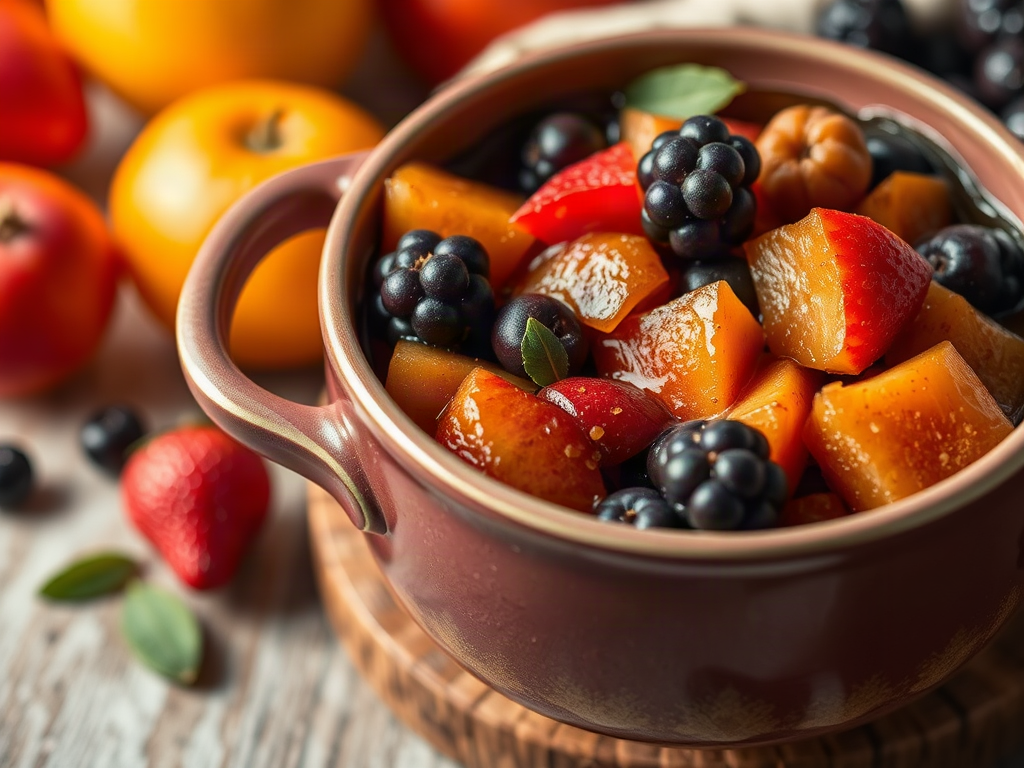
Stewing fruit changes nutrient concentration mainly by softening cell walls, moving water-soluble compounds into the cooking liquid, and evaporating some water. Vitamin C and certain B vitamins are more vulnerable to prolonged heat, while minerals, fiber, and many pigments remain in the fruit or liquid. A covered, short simmer with little added water usually limits losses better than long cooking, and serving the syrup or poaching liquid preserves nutrients that have migrated from the fruit. Concentration from evaporation does not mean every nutrient increases: sugar and calories per spoonful may rise as water leaves, while heat-sensitive vitamins can decline.
What Stewing Does to Fruit Nutrients
Stewing fruit is a moist-heat method in which cut or whole pieces simmer gently in a small amount of water, juice, or another liquid. The heat breaks down pectin and weakens plant cell walls, producing a softer texture while allowing some compounds to move between the fruit and its surrounding liquid. The final nutrient profile therefore depends on more than the starting fruit: water loss, cooking time, temperature, peeling, cutting size, and whether the liquid is eaten all matter.
A bowl of stewed apples illustrates the distinction between nutrient loss and nutrient redistribution. The apple becomes softer and easier to eat, but some vitamin C may be reduced by heat and exposure to air. Potassium and other water-soluble minerals can enter the cooking liquid, while fiber generally remains in the softened flesh. If the liquid is discarded, the meal loses part of what moved out of the fruit; if it is served as a sauce, much of that material remains available in the dish.
Evaporation adds another layer. When a covered pan becomes an uncovered pan, water leaves more rapidly and the remaining mixture becomes thicker. That raises the amount of sugar and calories per tablespoon, even though the total sugar in the pan has not necessarily increased. A concentrated spoonful of pear compote is not nutritionally equivalent to the same volume of fresh pear, because fresh fruit contains more water and usually requires a larger serving to provide the same volume.
The comparison with raw fruit should be practical rather than absolute. Raw fruit generally preserves heat-sensitive compounds, but stewing can make a firm quince, apple, or dried fruit easier to chew and combine with a meal. The best method depends on the priority: retaining delicate vitamins favors brief cooking, whereas soft texture may justify moderate heat. Readers comparing methods can also use stewing fruit and nutrient concentration changes as a reference point for evaluating baking, poaching, and simmering.
Which Nutrients Decline, Move, or Become More Available
Heat-sensitive nutrients are the first area to watch. Vitamin C is vulnerable to heat, oxygen, and water, so prolonged stewing can reduce it more than brief cooking with minimal liquid. Some B vitamins may also be affected, although the extent varies by fruit and preparation. These changes do not make stewed fruit nutritionally empty; they simply mean that a cooked serving should not be treated as an identical replacement for raw fruit when vitamin C retention is the main goal.
Minerals such as potassium are not destroyed by ordinary cooking temperatures, but they can leach into water. The practical question is whether that water stays in the recipe. A plum mixture cooked with enough liquid to become a sauce retains more of its migrated minerals than fruit drained before serving. This is one reason a thick compote or pan sauce can be preferable to boiling fruit in a large volume and throwing the liquid away.
Fiber usually survives the process, particularly when the peel and pulp remain in the dish. Stewing changes its physical form: insoluble structures soften, and the fruit becomes easier to mash or swallow. That can be useful for someone who struggles with firm textures. It does not mean cooked fruit automatically has fewer carbohydrates or a lower sugar load. Removing the peel, straining the pulp, or adding syrup changes the food more substantially than softening it alone.
Plant pigments and antioxidant compounds respond differently to heat. Some pigments are relatively stable, while others can degrade; a few compounds may become easier to release from softened tissue. The visible color of a finished dish is not a reliable nutrient test. Bright red berries may lose color during extended heating, while dark fruit can remain vivid despite chemical changes that cannot be seen. A common mistake is to judge nutritional quality by appearance or assume that more concentrated flavor means more protective compounds.
For a balanced approach, keep the peel when it is clean and suitable for the recipe, avoid straining unless a smooth texture is necessary, and include the cooking liquid. If the meal needs fresh vitamin C, pair the cooked fruit with a raw source such as citrus segments or berries rather than extending the cooking time in an attempt to preserve everything at once.
How Liquid, Heat, and Time Change Concentration
Cooking time usually matters more than the label “stewed.” A short, gentle simmer can soften diced peaches or apples without extensive water loss, while a long uncovered reduction produces a dense spread with a different nutrient concentration per spoonful. Heat does not simply remove nutrients in a uniform way. It can break down some compounds, move others into liquid, and leave relatively stable components behind.
Liquid volume controls leaching. A small amount of water creates steam and moisture around the fruit while limiting the path for minerals and water-soluble vitamins to leave the flesh. A large pot of water behaves more like boiling: the fruit may cook quickly, but more soluble material can enter the discarded water. Acidic ingredients such as lemon juice can help maintain flavor and reduce browning, but they do not cancel the effects of heat or guarantee vitamin preservation.
Covering the pan preserves moisture and usually shortens the time needed to reach a tender texture. An uncovered pan is useful when the goal is a thick topping, yet it increases evaporation and can encourage scorching as the natural sugars become more concentrated. Stirring helps distribute heat, but aggressive stirring can break fruit into a strained-style puree and make it harder to retain pieces and peel.
Consider two versions of pear stew. In the first, peeled pears simmer briefly with a few tablespoons of water and are served with the liquid. In the second, the same pears cook uncovered for a long period with added sugar until the mixture becomes jam-like. The second preparation may deliver a stronger flavor in a smaller spoonful, but it also contains more added sugar per serving and may expose heat-sensitive nutrients to longer cooking. Neither is inherently wrong; they serve different purposes.
A useful check is to assess the pan rather than rely on a timer alone. The fruit is ready when a fork meets only slight resistance, the liquid has not disappeared, and no darkened film is forming on the base. If the fruit is tender but the sauce is too thin, remove a portion of the fruit before reducing the liquid. That preserves the texture and avoids subjecting the entire batch to extra heat.
A Practical Stewing Method for Better Nutrient Retention
A nutrient-conscious method begins with sound, ripe fruit and a clear serving plan. Fruit that is already soft may need only a brief warm-through, while firm quince or unripe pear requires more time. Cutting pieces to a similar size prevents small pieces from disintegrating while larger pieces remain hard. Keeping some peel, when appropriate for the fruit and the eater, adds texture and retains fiber located near the outer layers.
Use a heavy saucepan, a modest amount of liquid, and low to medium heat. Bring the mixture just to a gentle simmer rather than maintaining a vigorous boil. Cover the pan so steam contributes to softening, and inspect the fruit periodically. The liquid should surround the pieces without drowning them. Water, unsweetened fruit juice, or a small amount of another recipe liquid can work; a sugary syrup changes the nutritional profile and should be chosen deliberately.
- Prepare evenly: Wash the fruit, remove damaged areas, and cut pieces to a similar thickness.
- Limit excess liquid: Add enough to prevent sticking and create the desired sauce, not enough to require draining.
- Use gentle heat: Keep the pan at a quiet simmer and cover it during the main cooking period.
- Test early: Check with a fork before the fruit collapses; residual heat continues softening it after the pan leaves the burner.
- Serve the liquid: Fold it into the fruit, spoon it over a meal, or reduce only a small portion separately.
This method is particularly useful for apples with oats, softened stone fruit with plain yogurt, or stewed berries folded into a whole-grain dish. The surrounding foods matter: yogurt or nuts add protein and fat, while oats add structure, but neither turns a sweetened compote into a low-sugar food. Portioning the fruit before adding sweetener makes the final concentration easier to judge.
The most common failure is chasing softness with prolonged cooking. If fruit repeatedly burns before becoming tender, the pieces may be too large, the heat too high, or the pan too shallow. Adding a little liquid and lowering the heat is usually more effective than continuing to reduce the batch. For additional preparation context, this nutrient-concentration comparison can help distinguish a short stew from a long reduction.
Common Mistakes and Sensible Serving Choices
Discarding the cooking liquid is the clearest avoidable loss when the liquid is edible and part of the recipe. Water-soluble compounds may have moved into it, and throwing it away also removes flavor. The exception is a liquid that is unsuitable for serving, excessively sweet, or used only to prevent sticking. In that situation, reducing the amount used from the beginning may be better than relying on draining at the end.
Another mistake is assuming that “concentrated” means “more nutritious.” Evaporation concentrates whatever remains, including natural sugars and any added sweetener. A spoonful of reduced fruit spread can contain more sugar than a spoonful of a looser compote simply because less water is present. Compare portions by the amount of fruit used, not only by the thickness or intensity of taste.
Straining is also a meaningful choice. A smooth sauce may suit someone who cannot manage skins or larger pieces, but removing pulp reduces fiber and changes satiety. Blending the whole cooked fruit keeps more of the original material than pressing it through a fine sieve. Texture needs are legitimate, so the goal is not to reject straining but to recognize its nutritional tradeoff.
Food safety still applies to cooked fruit. Cool leftovers promptly in a shallow container, refrigerate them, and reheat only the amount needed. Moldy or badly spoiled fruit should not be rescued by stewing, because heat is not a universal remedy for spoilage. People managing blood glucose, following a medically prescribed diet, or needing texture-modified meals may need individualized advice about sweeteners, portions, and consistency.
Choose stewing when soft texture, warm serving temperature, or use of firm fruit is the priority. Choose raw fruit when preserving heat-sensitive nutrients and fresh texture matters most. A mixed pattern often works well: use lightly stewed fruit for comfort or texture, then include uncooked fruit elsewhere in the day. That approach respects the real strengths and limitations of both preparations rather than treating nutrient retention as an all-or-nothing result.
For additional detail, consult food-composition tables and consumer nutrition guidance from government agencies, university extension programs, and recognized food-science organizations. These sources can help compare raw and cooked values for a specific fruit, especially when portion size, peel, drained liquid, or added sugar changes the result.
Frequently Asked Questions
Does stewing fruit destroy all of its nutrients?
No. Heat-sensitive vitamin C may decline, but fiber and many minerals remain, especially when the cooking liquid is served.
Is stewed fruit more sugary than fresh fruit?
The total natural sugar does not automatically increase, but evaporation or added sweetener can raise sugar concentration per spoonful or serving.
Should the liquid from stewed fruit be eaten?
Usually, yes, if it is part of the intended recipe. Water-soluble compounds and minerals may have moved into the liquid during cooking.
Does cooking fruit make its fiber disappear?
Gentle stewing generally softens fiber rather than eliminating it. Straining or discarding pulp removes more fiber than simmering alone.
What is the best way to retain nutrients while stewing?
Use little liquid, cover the pan, simmer gently, stop when tender, and serve the cooking liquid instead of discarding it.
Conclusion
Stewing changes fruit nutrition through three linked processes: heat can reduce fragile vitamins, liquid can carry soluble compounds away from the flesh, and evaporation can concentrate sugars and calories in the remaining mixture. The most practical priorities are short cooking, gentle simmering, limited liquid, and serving the sauce rather than draining it. Keep peel and pulp when the texture is appropriate, and do not use color or thickness as a shortcut for judging nutritional value. Stewed fruit is a useful option when softer texture and warm preparation matter; raw fruit remains valuable when fresh texture and heat-sensitive nutrients are the priority. A combination of both forms, with added sugar treated as an intentional ingredient, provides a more realistic approach than labeling one method universally superior.
Further Reading
Authoritative Sources
- How Cooking Affects the Nutrient Content of Foods
healthline.comSteaming is one of the best cooking methods for preserving nutrients, including water-soluble vitamins, which are sensitive to heat and water.
- Maximise your food's nutrients | Blog
fitnessfirst.co.ukThe first is when nutrients leach into water when boiled. The second is when they are broken down through heat.
- Cooking at home to retain nutritional quality and minimise ...
onlinelibrary.wiley.comIn general, cooking by moist heat methods (e.g. boiling) reduces micronutrient concentrations in potatoes as water-soluble vitamins (e.g. ...
- Effect of different cooking methods on the content of vitamins ...
pmc.ncbi.nlm.nih.govSteaming and microwaving retained higher concentrations of vitamin C than boiling because of the reduced contact with water at relatively low temperatures.