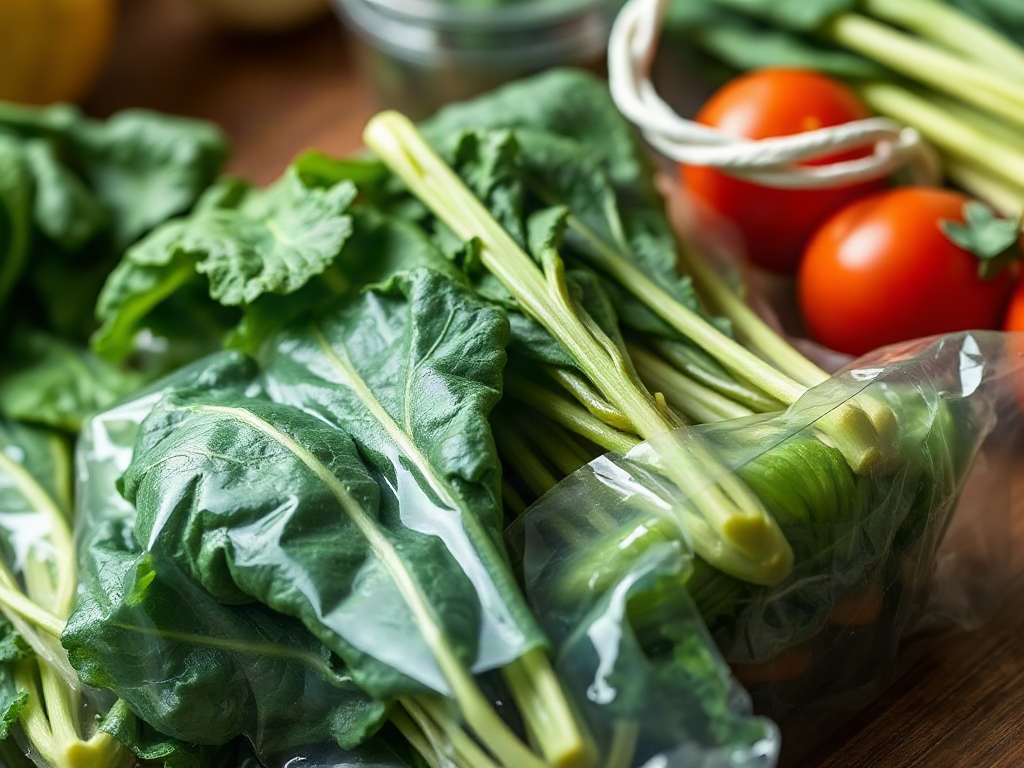
Assess slimy packaged organic greens by checking the leaves, liquid, smell, package condition, and cold-storage history before deciding whether to keep or discard them. A thin, clear film on a few freshly washed leaves may come from moisture and plant juices, but sticky or spreading slime with sour odor, yellowing, mushy tissue, leaking liquid, or a swollen package indicates active spoilage. Do not taste suspicious greens to test them. Separate mild surface moisture from decay, follow the package use-by guidance, and discard the entire bag when spoilage is extensive or the greens are ready-to-eat and visibly deteriorating.
What Sliminess Means in Packaged Greens
Slimy leaves usually reflect excess moisture, tissue breakdown, or microbial growth rather than a special feature of organic certification. Packaged spinach, spring mix, arugula, kale, chard, and lettuce are living plant tissues that continue to respire after harvest. Once leaves are cut, bruised, or held in a wet bag, their surfaces can develop a slippery coating as cell contents escape and spoilage organisms multiply.
The first distinction is between free moisture and sticky decay. Condensation may leave droplets on otherwise crisp leaves. A freshly rinsed leaf can also feel slick because water has not drained from its folds. That condition is different from leaves that feel tacky, collapse when lifted, or leave a coating on the fingers. Clear droplets alone do not prove that a bag is spoiled, while persistent slime deserves closer inspection.
Package design can create misleading clues. A sealed bag may trap humidity, especially when warm greens are packed or when a refrigerator cycles through temperature changes. Dense handfuls of spinach and delicate baby greens retain water around stems and folds. The same moisture that prevents wilting for a short time can accelerate decay if airflow is poor. Organic labeling does not remove this physical tradeoff, and it does not make a deteriorating product safe.
Color and structure add context. A few bruised leaves may show translucent patches after pressure during transport, whereas widespread yellowing, brown mushy areas, collapsed stems, or fuzzy growth point to progressive deterioration. A sour, fermented, or unusually musty odor strengthens the case for discarding the bag. Do not rely on a single cue; texture, smell, appearance, package condition, and storage time should be considered together.
For shoppers comparing a slightly damp bag with a visibly decaying one, crispness matters more than the word “organic” on the label. Mild condensation can sometimes be managed promptly, but a slippery film that returns after draining suggests the leaves themselves are breaking down. That difference is central to how to assess slimy packaged organic greens without mistaking harmless wetness for freshness.
A Practical Inspection Before Eating
Inspect the package before opening it fully, then examine the leaves in good light. A bag that is leaking, puffed, torn, or unusually wet on the outside has already lost some of its protective value. A small amount of internal condensation is common, but liquid pooling at the bottom can indicate prolonged moisture contact. Check the printed date as supporting information, not as a guarantee: greens may spoil before that date if they were mishandled, or remain visually sound near it when consistently chilled.
After opening, avoid putting your nose directly into a crowded bag. Pour the greens onto a clean plate or shallow bowl so hidden leaves become visible. Look at the bottom layer first, since it often receives the most pressure and sits in pooled liquid. Lift several leaves rather than judging only the top. Notice whether the slickness is limited to wet surfaces or whether leaves feel adhesive, limp, and coated even after excess water has drained.
A useful sequence is:
- Check the package: look for swelling, leaks, torn seals, or substantial pooled liquid.
- Check the smell: sour, sulfur-like, fermented, or rotten odors are discard signals.
- Check the texture: distinguish droplets from a sticky film, mushy tissue, or collapsing stems.
- Check the spread: one damaged leaf is different from slime affecting much of the bag.
- Check the history: consider whether the package sat warm in a car, on a counter, or in an overloaded refrigerator.
The inspection should not become a tasting experiment. Tasting cannot reliably identify harmful contamination, and a normal smell does not certify safety. If the package is labeled ready-to-eat, do not assume that rinsing will correct visible decay or poor handling. Rinsing may remove soil or loose residue, but it does not reverse tissue breakdown and may spread contamination around a kitchen sink if the leaves are already decomposing.
Consider a bag of baby spinach with clear droplets, firm green leaves, and no unusual odor. Spreading it on a clean towel and using it promptly is a reasonable quality decision if it has remained properly chilled. Compare that with a spring-mix bag in which several leaves are translucent, sticky, and sour-smelling. Trimming the worst pieces does not restore the remaining mix because the leaves have been in contact with the same wet environment. The second situation calls for disposal, not salvage.
When Washing or Trimming Is Not Enough
Washing is appropriate for ordinary preparation but not for rescuing greens with clear signs of spoilage. A rinse can remove surface dirt and some loose plant material; it cannot reliably remove organisms embedded in damaged tissue or make slimy leaves crisp again. Soap, bleach, vinegar, or household disinfectants should not be used on food as an improvised fix. These substances can create their own hazards and do not turn decayed greens into a dependable meal ingredient.
Trimming may be reasonable when a bag contains one isolated, mechanically damaged leaf and the rest remains dry, crisp, and odor-free. That is a quality judgment, not a guarantee of microbiological safety. If slime covers multiple leaves, if liquid has spread throughout the package, or if the odor changes when the bag is opened, discard the whole package. Soft leafy vegetables are difficult to trim with the same confidence sometimes used for a firm, intact vegetable because their surfaces are layered and easily bruised.
Mold requires a separate standard. Fuzzy growth, colored spots associated with mold, or rapidly expanding wet patches are reasons to throw away the affected package rather than scrape or rinse it. The fragile structure of leafy greens makes it impractical to remove contamination confidently from neighboring surfaces. A small, dry blemish on a firm leaf is not equivalent to wet, fuzzy growth in a sealed bag.
People often make three weak assumptions. First, they assume organic greens spoil more slowly because they were produced under an organic system; the label does not control post-harvest temperature or moisture. Second, they assume a best-by date overrides physical evidence; dates help with rotation but cannot account for every transport and refrigerator condition. Third, they believe cooking makes any questionable bag acceptable. Heat may reduce some hazards, but it does not erase every concern associated with extensive decay, toxins, off-odors, or kitchen cross-contamination.
When in doubt, use a risk-based decision. A healthy adult may choose to remove one clearly bruised leaf from an otherwise sound bag, while a household serving young children, older adults, pregnant people, or anyone with reduced immune defenses may reasonably use a more conservative discard threshold. That choice does not diagnose the product; it reflects the consequence of being wrong. Read more about packaged greens inspection when you need a repeatable decision rather than a guess based on one attractive leaf.
Storage Choices That Slow Deterioration
Cold, controlled storage slows quality loss, but it cannot reverse slime that has already formed. Refrigerate packaged greens promptly after purchase and avoid leaving them in a warm vehicle or on a kitchen counter. A refrigerator that is packed tightly may have uneven airflow, while a bag pressed against a cold surface can develop condensation from repeated temperature shifts. The goal is steady chilling without trapping unnecessary water against the leaves.
Do not automatically wash every bag as soon as you get home. Washing can be useful when you plan to dry the greens thoroughly and use them soon, but storing damp leaves in a closed container recreates the condition that encourages decay. If the package is already wet, open it in a clean area, remove only leaves that are clearly damaged, and assess whether the rest is crisp and sound. A clean, dry towel or a container that allows excess moisture to escape may improve quality, but it is not a remedy for sour-smelling or broadly slimy greens.
Packaging creates a tradeoff between protection and humidity. A sealed bag reduces handling and can limit wilting, yet it also retains liquid. Transferring sound greens to a clean container lined with a dry paper towel may help manage droplets, provided the container is not packed so tightly that leaves are crushed. Replace the towel when it becomes wet. Avoid storing greens beneath heavy produce, since bruising opens pathways for moisture and tissue breakdown.
Use a simple rotation plan: place newly purchased bags behind older ones, keep the refrigerator consistently cold according to its manufacturer guidance, and inspect a package before combining it with other greens. Never mix questionable leaves into a fresh container. For meal planning, buy delicate spring mix for near-term salads and reserve sturdier whole-leaf kale or intact romaine for later use. That comparison is practical, not absolute; cut surfaces, washing, and handling can make any variety deteriorate sooner.
Signs that storage is working include leaves staying firm, little free liquid collecting at the bottom, and no change in smell after the package is opened. Signs that it is failing include recurring condensation, wet towels, collapsed stems, or slime returning after the greens have been drained. Those observations can reveal a refrigerator or handling problem, but they should not persuade you to keep a package that has already developed broad decay. For related household decisions, use this greens assessment process before preparation rather than after questionable leaves enter a salad bowl.
For handling and storage guidance, consult food-safety information from the USDA Food Safety and Inspection Service, the U.S. Food and Drug Administration, and local university extension programs. These sources can clarify refrigeration, washing, cross-contamination, and ready-to-eat produce practices without treating a package date as a substitute for physical inspection.
Frequently Asked Questions
Are slimy organic greens always unsafe?
Not every wet leaf is spoiled, but persistent sticky slime, off-odors, mushiness, widespread discoloration, or mold should be treated as discard signs. Condensation on firm, odor-free leaves is a different quality issue.
Can I wash slimy packaged greens and eat them?
Washing does not reliably correct broad spoilage or restore damaged tissue. If the slime is extensive, the smell is abnormal, or the package contains mushy leaves, discard it rather than trying to rinse it clean.
Should I throw away a whole bag because one leaf is slimy?
Inspect the surrounding leaves and the bottom of the bag. One isolated damaged leaf in an otherwise crisp, dry, odor-free package may be removed, but spread, pooled liquid, or an off-odor supports discarding the entire bag.
Does the use-by date prove that greens are safe?
No. The date is useful for rotation, but temperature abuse, bruising, and trapped moisture can shorten quality and safety before the printed date. Physical condition and storage history still matter.
How can I keep packaged greens from becoming slimy?
Keep them consistently refrigerated, avoid crushing the bag, manage condensation with clean dry materials, and wash only when you can dry the leaves thoroughly. Use delicate mixes sooner than sturdier intact leaves.
Conclusion
A sound assessment looks beyond the label and the printed date. Separate harmless surface water from a sticky film that accompanies limp tissue, sour odor, discoloration, pooled liquid, or mold. Inspect the lower layers of the package, consider whether the greens stayed cold, and never taste a questionable leaf as a test. Rinsing and trimming have limited value when decay has spread through a wet bag, while prompt refrigeration and careful moisture control can preserve greens that are still crisp. If the evidence points in different directions, prioritize the strongest warning sign and discard broadly affected packages. That approach limits unnecessary waste without asking you to treat visibly deteriorating leafy greens as salvageable food.