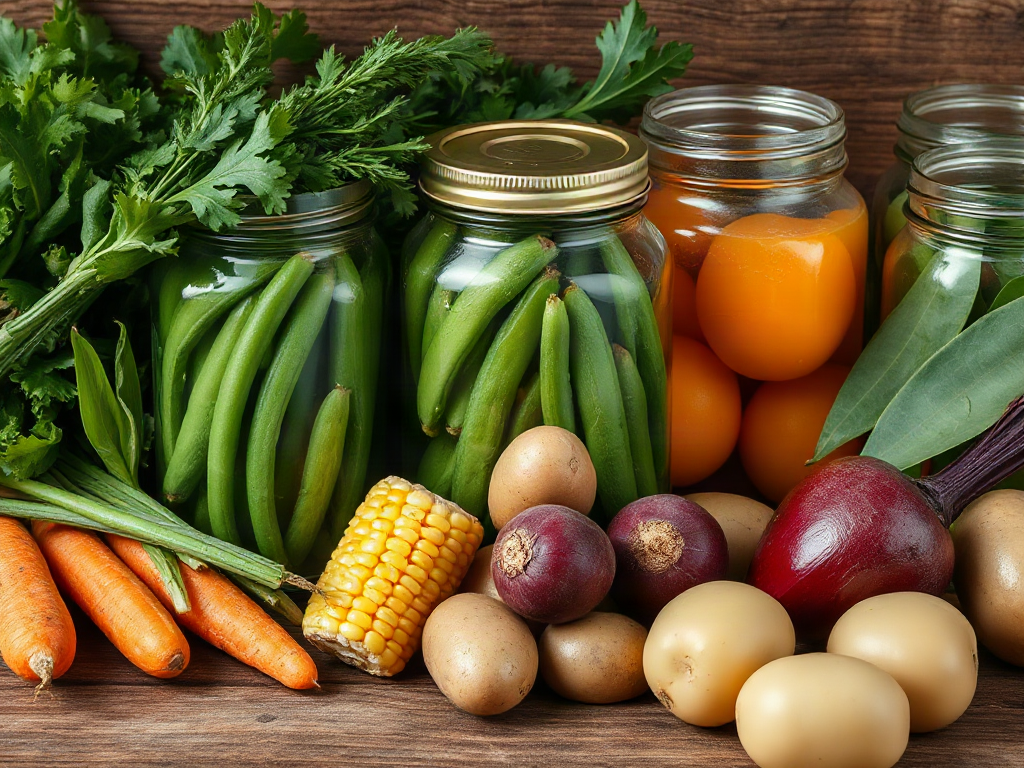
Organic vegetables suitable for pressure canning include low-acid foods such as green beans, carrots, corn, peas, potatoes, beets, and winter squash, provided each is prepared and processed with a tested canning method. Pressure canning is necessary because these vegetables do not contain enough natural acid for a boiling-water bath, and sealed jars can support botulism-causing bacteria if processing is inadequate. Use sound, freshly harvested vegetables, clean jars, correct headspace, and the tested time and pressure for the specific food and jar size. Organic certification does not change acidity, density, or processing requirements, so it affects sourcing rather than the safety method.
Which Organic Vegetables Fit Pressure Canning
Organic vegetables are suitable for pressure canning when they are low-acid foods covered by a tested canning process. Common examples include green beans, carrots, corn, peas, potatoes, beets, pumpkin, and other winter squash. Some mixed vegetable combinations can also be canned, but only when the exact mixture, preparation, jar size, processing time, and pressure have been evaluated by a reliable testing authority.
The word organic describes how the crop was grown and handled before purchase; it does not make a vegetable more acidic or less dense. An organic green bean and a conventionally grown green bean still require the same safety treatment. That distinction matters when planning organic vegetables suitable for pressure canning, because substituting organic ingredients into an untested recipe does not automatically make the recipe safe.
Freshness and condition are more useful selection criteria than appearance alone. Choose firm vegetables with no mold, deep bruising, insect damage, or signs of spoilage. Slightly underripe beans may retain better texture, while fully mature vegetables can become starchy, fibrous, or dense. Dense packing slows heat movement through the jar, so trimming, cutting, and packing instructions are part of the safety process rather than optional presentation choices.
A practical starting list includes:
- Green beans and wax beans, prepared as whole, cut, or French-style beans when covered by the chosen tested process.
- Carrots, beets, peas, corn, and potatoes, prepared in the specified pieces or kernels.
- Pumpkin and winter squash, generally canned in cubes rather than as a smooth puree because thickness affects heat penetration.
- Approved mixed vegetables or soups only when a tested formulation gives precise limits for ingredients and density.
A common mistake is treating every vegetable recipe found online as interchangeable. A pressure canner is equipment, not a universal correction for an untested formula. When a recipe combines vegetables with oil, dairy, flour, pasta, rice, or an unusually thick sauce, choose a tested alternative instead of guessing at extra processing time.
Why Low-Acid Vegetables Require Pressure
Most vegetables have too little natural acidity to receive the same treatment as pickles, fruit, or properly acidified tomatoes. In a sealed jar, low-acid food can provide an environment where Clostridium botulinum spores may produce toxin if temperature, time, and acidity are not controlled. Pressure canning reaches temperatures above the boiling point of water, allowing tested processes to address that specific hazard.
Boiling-water canning is not an adequate substitute for ordinary green beans, carrots, potatoes, or corn. The issue is not whether the jar feels hot or whether the lid seals. A sealed lid only indicates that a vacuum formed during cooling; it does not prove that the coldest part of the food received the required treatment. This is why relying on seal appearance, repeated family practice, or an arbitrary extra ten minutes can create false confidence.
Food density changes the time needed for heat to reach the center of a jar. Whole potatoes, tightly packed corn, and thick squash pieces behave differently from loosely packed green beans. Altitude also affects the pressure setting or process instructions used by the selected authority. Follow one complete recipe rather than combining the pressure from one source with the time from another.
Acidification can change the category of some foods, but it should not be improvised. Adding vinegar or lemon juice to a vegetable jar may affect flavor and acidity without providing a validated process for the new formulation. For a shelf-stable pantry, use the tested method designed for the food. If the goal is a tangy vegetable, a tested pickling recipe is usually a better choice than altering a plain pressure-canning recipe.
Weak assumptions often arise from comparing pressure canning with ordinary cooking. Cooking makes food ready to eat immediately; canning must account for storage in a sealed, oxygen-limited container over time. The safety margin therefore depends on the complete process, including jar preparation, packing style, venting, pressure maintenance, cooling, and storage.
Preparing Vegetables and Choosing a Tested Process
Preparation should match the process rather than simply reflect personal preference. Wash vegetables under running water, remove soil, trim damaged portions, and cut pieces to the dimensions specified by the recipe. Uniform pieces heat more predictably than a jar containing a mixture of tiny fragments and large chunks. Blanching may be required for some vegetables to remove air, soften the food, and improve packing, while hot-packing or raw-packing instructions must be followed as written.
For example, raw-packed green beans may settle as air leaves the tissue, while a jar of dense potato cubes needs careful attention to piece size and liquid coverage. Corn can be packed on the cob only under a process that specifically permits that format; kernels and cream-style preparations are not interchangeable. Winter squash is another important example: cubes and smooth puree have different heat-flow characteristics, so a tested process for one should not be applied to the other.
Before starting, confirm the following details in the same authoritative recipe:
- Vegetable type, maturity, preparation style, and packing method.
- Jar size, required headspace, liquid, and whether salt is optional for flavor.
- Processing time, pressure, altitude adjustment, and any maximum batch limitations.
- Required venting procedure, cooling instructions, and how to handle a jar that fails to seal.
Use a pressure canner that is large enough for the jar arrangement and inspect the gasket, vent, rack, and pressure indicator before filling it. The canner must be vented according to its instructions so air is removed before pressure processing begins. Air trapped in the canner can change the relationship between the gauge reading and the actual heat environment, which is why simply reaching a displayed pressure is not the entire procedure.
Do not pack jars as tightly as possible to maximize yield. Liquid must circulate around the food, and headspace allows expansion during heating. Leaving too little headspace can force food into the sealing area, while excessive headspace may prevent a reliable vacuum. The practical tradeoff is a few fewer jars in exchange for a process that remains close to the tested conditions. For more planning help, compare the specific crop, jar size, and packing style against your reference for organic vegetables suitable for pressure canning before preserving a large harvest.
Common Mistakes, Storage, and Quality Checks
The most serious errors occur when people change several variables at once. Increasing the batch, using larger jars, thickening the liquid, packing food more tightly, and reducing processing time can all alter heat penetration. A pressure canner does not compensate automatically for those changes. Preserve a small trial batch first when working with an unfamiliar vegetable, and record the source, variety, preparation style, pressure, time, and altitude adjustment.
Quality problems can also reveal process problems. Liquid loss may result from rapid pressure changes, overfilling, inadequate headspace, or packing too tightly. Soft vegetables can reflect overripe produce or excessive processing, while floating pieces may contain trapped air or have been packed loosely. These signs do not automatically prove a dangerous jar, but they justify reviewing the method rather than assuming the batch is fine because the lids sealed.
After processing, let the canner depressurize naturally and follow the equipment instructions before opening it. Moving hot jars, tightening lids, or tipping them to check for leaks can interfere with sealing. Cool jars undisturbed, then inspect each lid, wipe the jar, label it with the vegetable and date, and store it in a cool, dark, dry place. A sealed jar with an intact vacuum is not a substitute for a correct process, so retain the recipe and notes alongside the food.
Discard a jar if it is leaking, spurting, bulging, fermenting, badly cracked, or visibly spoiled. Do not taste questionable contents to judge safety. If a jar fails to seal shortly after processing, refrigerate it and use it promptly according to food-safety guidance, or reprocess it only when the tested instructions specifically allow that option and the timing requirements are met.
For a household balancing organic sourcing with cost, prioritize vegetables that are harvested in good condition and recipes that use ingredients efficiently. Green beans, carrots, and potatoes are often practical first projects because their preparation is straightforward. More specialized formats, such as thick vegetable soups or purees, deserve greater caution and are usually better replaced with a tested plain-vegetable process. That decision protects both pantry safety and the quality of the harvest.
Use current instructions from the USDA Complete Guide to Home Canning, the National Center for Home Food Preservation, and your state university extension service. These sources provide tested processes, altitude adjustments, equipment guidance, and recipe-specific limits that general internet recipes may omit.
Frequently Asked Questions
Can all organic vegetables be pressure canned?
No. Organic status does not make every vegetable suitable for home canning. Use only vegetables and combinations covered by a tested process, and freeze foods that lack reliable canning instructions.
Does organic certification change pressure, time, or headspace?
No. The required pressure, time, jar size, and headspace depend on food characteristics and altitude, not on whether the crop is certified organic.
Can a boiling-water bath be used for green beans or carrots?
Plain green beans and carrots are low-acid foods and should not be processed in a boiling-water bath. Use a tested pressure-canning process or choose another preservation method.
Is salt required when pressure canning vegetables?
Salt is commonly included for flavor and may be omitted in many tested vegetable processes, but follow the specific recipe. Do not remove other ingredients or change liquid amounts casually.
Why should pumpkin and winter squash usually be canned in cubes?
Purees are thicker and heat moves through them differently from cubes. Use a tested cubed-squash process and freeze smooth puree unless an authoritative source provides a validated method.
Conclusion
Choose organic vegetables for pressure canning based on a tested process, sound condition, and preparation that matches the recipe. Green beans, carrots, corn, peas, potatoes, beets, and cubed winter squash are useful pantry candidates, but their low acidity makes pressure processing necessary. Organic sourcing changes the farming standard, not the microbiological risk or the required heat treatment. Check altitude, jar size, headspace, packing style, venting, and cooling instructions before beginning, and avoid adapting thick soups, purees, or mixed recipes by guesswork. A small, carefully documented batch is a better first step than maximizing yield. When a vegetable lacks a dependable tested process, freezing or another validated preservation method is the safer practical choice.