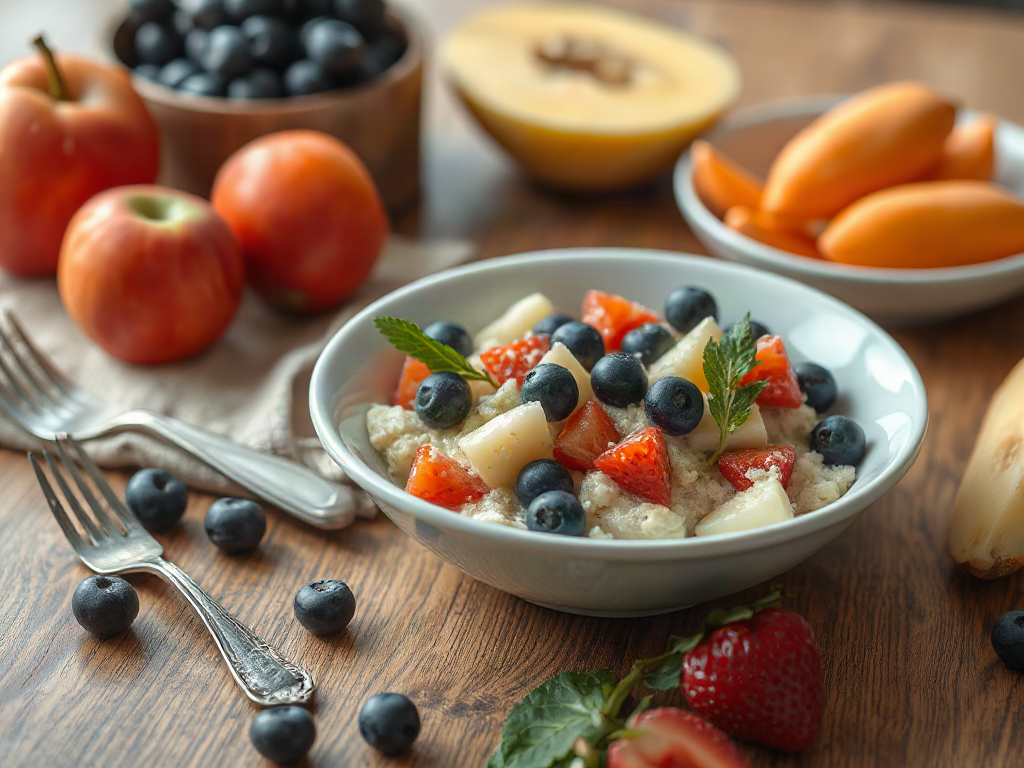
Organic fruit leftovers in composite dishes safely means judging the finished dish by its most perishable ingredient, handling history, moisture, and storage temperature rather than assuming the fruit remains safe because it was organic. Refrigerate prepared dishes promptly in shallow containers, keep cut fruit cold, and use clean utensils to limit contamination. Soft fruits mixed with dairy, cooked grains, cream, eggs, or meat generally create a shorter-use food than whole fruit because moisture and handling spread microbes through the dish. Discard the mixture if it sat warm too long, developed an unusual odor or texture, or includes fruit that was already spoiled. Reheat only components that are meant to be reheated, and do not use heat to rescue questionable leftovers.
Why Composite Fruit Dishes Need Separate Safety Judgments
Composite dishes combine several ingredients in one serving, so their safety is determined by the ingredient and handling step that creates the greatest risk. A bowl containing sliced organic apples, yogurt, cooked oats, and chopped nuts is not managed like an intact apple. Cutting increases exposed surface area, yogurt adds a perishable moist component, and stirring distributes juices across the mixture. The organic label describes farming and production practices; it does not make cut fruit or prepared leftovers resistant to bacterial growth.
Moisture is a major practical issue. Juicy berries, melon, peaches, pears, and citrus can release liquid into grains, cream, custard, or salads. That liquid may soften the dish and spread microorganisms from one portion to another. Firm fruit such as apples or underripe pears usually holds its texture longer, but it still becomes more vulnerable once cut and mixed with other foods. A dry topping kept separate may remain usable when the assembled dish no longer does.
Consider two leftovers: plain roasted sweet potatoes with a small amount of apple added after cooling, and a fruit-and-cream dessert left on a serving table. The first may be easier to portion and chill because its components are relatively distinct. The second has high moisture, dairy, handling, and often a warmer serving period. Treating both according to the whole fruit’s apparent freshness is a weak assumption.
Use the strictest reasonable standard when a dish includes several perishable elements. Ask what was cut, cooked, cooled, touched, and held at room temperature. The answer often matters more than whether the fruit looked attractive when it was mixed. Readers comparing storage choices can also use organic fruit leftovers in composite dishes safely as a reminder that ingredient quality and finished-dish handling are separate decisions.
Preparing Organic Fruit Before It Enters a Mixed Dish
Safe preparation begins with sound fruit, clean hands, clean tools, and a dish that will be chilled or served promptly. Rinse whole fruit under running water before cutting, even when the peel will be removed, because a knife can transfer surface contamination inward. Do not use soap or household cleaners on fruit. Drying delicate berries gently can reduce excess water, which is useful for texture and may limit watery separation in yogurt, cereal, or pastry fillings.
Remove bruised, leaking, moldy, or visibly spoiled portions before mixing. Cutting around mold is not a reliable rescue for soft fruit because contamination may extend beyond what can be seen. A firm apple with a small superficial bruise can be trimmed with a clean knife, but a soft berry with fuzzy growth should be discarded rather than stirred into a large batch. Once spoiled fruit has contacted a composite dish, removing the visible piece does not guarantee that the rest is unaffected.
Timing also changes the result. Add high-water fruit close to serving when the dish is meant to retain texture, especially with whipped cream, cooked grains, chia mixtures, and leafy salads. If advance preparation is necessary, keep fruit in a separate sealed container and combine it shortly before eating. This approach protects both quality and decision-making: you can inspect the fruit separately instead of trying to evaluate a cloudy, sweet, or creamy mixture.
Choose ingredients according to the final use. For a chilled breakfast bowl, firm diced apple, grapes, or berries may work better than very ripe peaches. For a cooked compote, fruit that is too soft for raw service may still be appropriate if it has no mold or off-odor and is cooked as part of the recipe. Cooking can reduce some microorganisms, but it does not make rotten ingredients acceptable or reverse toxins and quality damage that may already be present.
A common preparation mistake is tasting a questionable mixture repeatedly to decide whether it is safe. Taste, smell, and appearance can reveal spoilage but cannot reliably detect every harmful microorganism. Use those observations as discard signals, not as proof that a dish is safe.
Cooling, Storing, and Reusing the Finished Dish
Prepared fruit dishes should be moved into refrigeration promptly after preparation or service, using shallow containers when the mixture is warm. A deep pot of fruit-studded rice, baked oats, or stuffing cools more slowly in the center than a thin layer in a smaller container. Divide large quantities into several containers, leave room for the lid, and avoid placing a steaming, tightly sealed mass in the refrigerator if it would delay cooling of the surrounding food.
Storage conditions should match the most perishable component. Fruit mixed with custard, whipped dairy, yogurt, eggs, cooked grains, poultry, or seafood deserves more caution than fruit stored alone. Keep the container covered to reduce drips and cross-contact, and use a clean spoon for each serving. Returning a partly eaten bowl to the main container can introduce saliva, crumbs, or other food residues throughout the batch.
Labels are more useful than memory. Mark the preparation date and identify whether the dish contains dairy, eggs, cooked grains, or meat. A container of “fruit salad” may conceal several different risk factors, while “berries, melon, yogurt; prepared Tuesday evening” gives a clearer basis for a decision. When the storage history is uncertain, conservative disposal is more sensible than trying to reconstruct it from smell.
Texture changes can signal quality decline without proving a safety problem. Berries may collapse, bananas may brown, and apples may soften from acids or enzymes. Those changes may make a dish unpleasant but are not automatically evidence of dangerous contamination. Conversely, an attractive appearance does not erase poor temperature control. A fruit parfait kept warm during a gathering may be unsafe even if the cream still looks smooth.
Keep components separate when they have different intended lifespans. Store granola, nuts, toasted seeds, and crisp toppings outside a moist fruit mixture. Hold dressing apart from fruit and greens when possible. The tradeoff is minor extra assembly, but it can preserve texture and make it easier to discard only the compromised component rather than the entire meal. For related handling decisions, this leftover-fruit safety reference can sit alongside the preparation date on a household planning note.
When to Keep, Separate, Reheat, or Discard Leftovers
Decide what to do by reconstructing the dish’s history before focusing on its appearance. Identify when it was prepared, how long it was warm, whether it was repeatedly served, and which ingredients were included. A refrigerated fruit salsa made with freshly washed produce is a different case from a fruit-and-chicken salad that sat outdoors. Both may look colorful, but the second combines raw cut ingredients with a more perishable cooked protein and more opportunities for handling.
Keep a leftover only when its ingredients were sound, preparation was hygienic, cooling was prompt, and refrigeration was continuous. Use a clean portioning utensil and take out only what will be eaten. If one component can be removed without disturbing the rest, separation may preserve a dry topping or intact portion; it should not be used to disguise liquid, mold, unusual fermentation, or other signs that the whole mixture has deteriorated.
Reheating applies only to dishes designed to be eaten hot. A baked oat dish containing apples can be reheated until thoroughly hot, while a yogurt-fruit bowl should remain chilled and should not be warmed as a safety experiment. Heat may reduce some living microorganisms in a suitable food, but it cannot reliably correct every hazard created by prolonged warm storage. Never treat reheating as permission to keep food indefinitely.
Discard the dish when its storage time is unknown, when it has been left warm for an extended period, or when it shows mold, bubbling not expected from the recipe, a fermented or rotten smell, sliminess, leaking packaging, or an unexpected change in color. Do not taste it to confirm the decision. Extra caution is appropriate for meals served to young children, older adults, pregnant people, or anyone with a weakened immune system because the consequences of foodborne illness may be more serious.
A practical household check is short: confirm the ingredients, confirm the timeline, inspect for spoilage, and decide whether the dish is intended to stay cold or be reheated. If one answer is unknown and the food is highly moist or includes dairy, eggs, meat, or cooked grains, discarding it is usually the lower-risk choice. That approach limits waste through better portioning and separate storage rather than through risky salvage.
Frequently Asked Questions
Does organic fruit last longer in a mixed dish?
No. Organic certification does not extend the safe storage life of cut fruit or a prepared dish. Moisture, temperature, acidity, handling, and companion ingredients matter more.
Can moldy fruit be removed from a composite dish?
Soft moldy fruit should not be picked out of a moist mixture and eaten around. Spoilage may extend beyond the visible area, so discarding the affected dish is safer.
Should fruit be mixed into yogurt before refrigeration?
It can be, provided the fruit and yogurt are sound and the mixture is promptly refrigerated. Keeping juicy fruit separate may preserve texture and make later inspection easier.
Can reheating make questionable fruit leftovers safe?
Not reliably. Reheat dishes intended to be served hot, but do not use heat to rescue food with an unknown timeline, prolonged warm storage, or spoilage signs.
What is the safest way to store a large fruit-based dish?
Divide it into shallow, covered containers, refrigerate promptly, label the date and ingredients, and use clean utensils. Keep crunchy toppings and dressings separate when practical.
Conclusion
Safe handling of organic fruit leftovers in composite dishes depends on the finished mixture, not the organic label alone. Wash and inspect fruit before cutting, remove soft or moldy pieces rather than hiding them, and add juicy ingredients close to serving when texture and storage flexibility matter. Refrigerate prepared dishes promptly in shallow covered containers, label their ingredients and date, and avoid returning partially eaten portions to the main batch. Judge dairy, eggs, cooked grains, meat, and seafood more cautiously than intact fruit because they shorten the dish’s practical storage margin. Keep components separate when that protects quality, and never taste-test food with an uncertain history or visible spoilage. When the timeline cannot be established, discarding the mixture is the clearer safety decision.