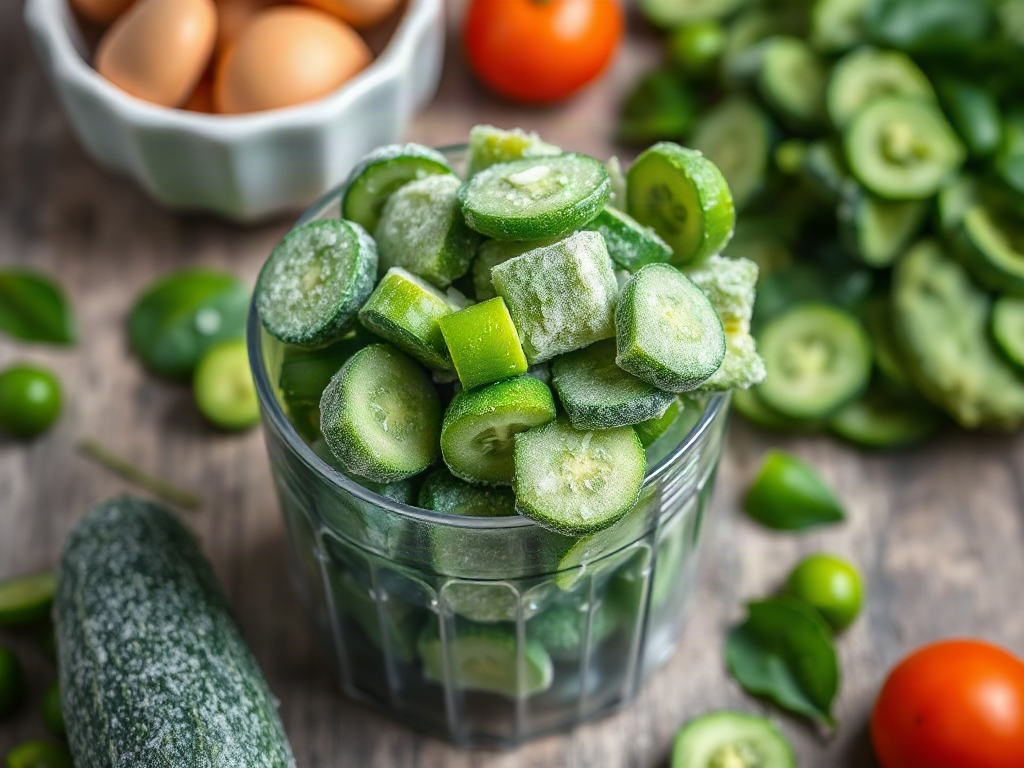
Nutrition changes when blending frozen vegetables mainly involve texture, eating speed, and food structure rather than a dramatic loss of nutrients. Blending breaks cell walls and turns intact pieces into a faster-to-eat mixture, while fiber generally remains present; vitamin losses are more strongly influenced by blanching, storage, heat, light, and added liquid. Use frozen vegetables with little or no added sauce, blend briefly, and serve soon to limit quality changes. A blended vegetable drink may be easier to consume, but whole or lightly chopped vegetables usually provide more chewing and may feel more filling. Avoid assuming that blending makes every nutrient more available or that a smoothie automatically replaces a balanced meal.
What Blending Changes in Frozen Vegetables
Blending frozen vegetables changes their physical structure more than it changes their basic nutrient profile. A high-speed blade cuts plant tissue into small particles, breaks some cell walls, and disperses the pieces through water, milk, broth, or another liquid. The result is easier to swallow and often quicker to consume than a bowl of intact peas, spinach, cauliflower, or mixed vegetables.
That change in texture can affect the eating experience. A person may chew very little, take larger mouthfuls, and finish a blended serving faster. Those details matter because fullness is influenced by eating speed, volume, chewing, and the rest of the meal—not only by the number of calories or grams of fiber. Blending does not automatically remove fiber, but it can change how the meal feels in the stomach and how quickly it is consumed.
For example, frozen broccoli blended with broth can become a thick soup while retaining the vegetable itself. Frozen spinach blended into yogurt and fruit becomes a drinkable mixture that may be convenient, but it is not nutritionally identical in eating experience to a plate of sautéed spinach. The ingredients may be similar; the portion cues and pace are different.
A common mistake is treating “blended” as a synonym for “more nutritious.” Blending can make vegetables easier to use, particularly for soups, sauces, and mixed meals, but it does not create nutrients that were absent. Nor does it compensate for a small serving, excessive sweeteners, or a recipe dominated by juice. For a closer look at the nutrition changes when blending frozen vegetables, compare the original vegetable quantity with the finished portion and note every ingredient added to the blender.
Vitamins, Minerals, Fiber, and Plant Compounds
Most minerals and much of the fiber in frozen vegetables remain in the food after blending because the blender does not remove them. Potassium, magnesium, calcium, and iron are not destroyed simply because the vegetables are pulverized. Insoluble and soluble fiber also remain in the mixture, although the smaller particle size may change viscosity and the way the food is eaten.
Vitamin changes depend more on processing before and after blending. Commercially frozen vegetables are commonly blanched before freezing, a heat step used to control enzymes and preserve quality. Water-soluble vitamins such as vitamin C and some B vitamins can be sensitive to heat and water exposure. Once the vegetables are frozen, storage time and temperature also influence quality. Blending itself is usually a shorter and less intense exposure than cooking, though heat from a powerful motor and prolonged room-temperature holding can affect freshness.
Plant compounds deserve a nuanced comparison. Breaking plant cells may release some compounds into the mixture, but greater release does not guarantee greater absorption or a meaningful health outcome. Absorption can depend on the compound, the rest of the meal, digestive conditions, and preparation method. Adding a small amount of fat, such as olive oil, nuts, seeds, or yogurt, may be useful for recipes containing fat-soluble carotenoids, but it should be treated as a meal-composition choice rather than a universal rule.
Blending can also expose more surface area to air. A bright green smoothie may gradually lose color or develop a less fresh flavor after standing. That visible change is not a precise measure of nutrient loss, but it is a practical signal to refrigerate the mixture promptly and avoid storing it unnecessarily. Do not pour away the liquid from a blended soup as though it were waste; dissolved nutrients and the vegetable solids are now part of the same serving.
The weak assumption to avoid is that finely processed food is always either better or worse. Whole vegetables provide chewing and recognizable portions, while blended vegetables can make a dense serving easier to combine with beans, lentils, eggs, or whole grains. The better choice depends on whether the priority is convenience, texture tolerance, meal balance, or maintaining a slower eating pace.
How Freezing, Thawing, and Blending Work Together
Freezing preserves vegetables by slowing chemical and microbial activity, but it does not stop all quality change indefinitely. Ice crystals can damage some plant cell walls, particularly during long storage or repeated temperature fluctuations. After thawing, vegetables may release water and feel softer. Blending makes that texture difference largely irrelevant in a puree, but the released liquid can change thickness and flavor.
Frozen vegetables do not always need to be fully thawed before blending. A powerful blender can process some vegetables while still frozen, producing a cold, thick mixture. Hard pieces such as frozen carrots or large broccoli florets may strain a weaker appliance and require a little liquid or brief thawing. Adding liquid gradually is preferable to flooding the container, since excess water can dilute flavor and make it harder to eat an adequate vegetable portion.
Thawing and reheating create different tradeoffs. Frozen peas blended directly into a chilled dip preserve a fresh, sweet character, while frozen cauliflower softened by steaming can produce a smoother soup. Repeated thawing, warming, cooling, and reheating may worsen texture and flavor. It also creates more opportunities for the food to remain at an unsafe temperature, so preparation and storage should follow ordinary food-safety practices.
Consider two meals. In the first, frozen spinach is blended with yogurt, berries, and oats and consumed soon after preparation. In the second, frozen mixed vegetables are thawed, blended with broth, heated until steaming, and served with beans and whole-grain bread. Both can be sensible, but the second offers a savory meal structure and the first may be consumed much faster. Neither result follows from “frozen” alone; the recipe, portion, temperature, and storage determine the practical outcome.
Check the package for added sauce, salt, or seasoning before blending. Plain frozen vegetables give you control over sodium and flavor. A seasoned frozen side dish may still fit a meal, but its nutrition label should be counted as part of the recipe rather than assumed to be equivalent to plain vegetables.
A Practical Method for Better Blended Vegetable Meals
A reliable method is to preserve the vegetable portion, limit unnecessary liquid, blend only as long as needed, and serve the result promptly. These steps protect flavor and make the finished dish easier to evaluate. The goal is not to avoid blending; it is to prevent the blender from turning a vegetable serving into a diluted drink with unclear ingredients.
Start by choosing plain frozen vegetables and measuring the amount that would have been served whole. Add a flavorful liquid such as low-sodium broth, unsweetened milk, or water in small increments. For a more complete meal, combine the vegetables with a protein source or another substantial ingredient: white beans in a cauliflower soup, tofu in a spinach sauce, lentils with carrots, or yogurt in a savory dip. Herbs, garlic, citrus, and spices can improve flavor without relying on a large amount of salt.
A short processing time usually works better than blending indefinitely. Stop when the texture matches the recipe, scrape down the sides, and taste before adding more liquid. A soup that is too thin may feel less satisfying and can encourage the addition of cream, cheese, or extra sweeteners simply to restore flavor. A thick puree can often be adjusted with a tablespoon or two of liquid at the end.
Use this compact check before serving:
- Ingredient check: confirm that the package contains plain vegetables or account for added sauce and sodium.
- Portion check: compare the amount blended with the amount you intended to eat whole.
- Meal check: add protein, a grain, legumes, or a modest source of fat when the puree is replacing a meal.
- Quality check: serve soon, refrigerate leftovers promptly, and discard food with an abnormal odor, appearance, or storage history.
A common failure mode is using a large amount of fruit juice to make leafy vegetables easier to drink. That may improve taste, but it shifts the recipe toward a sweet beverage and can obscure the vegetable portion. Whole fruit, unsweetened dairy or fortified alternatives, and water often provide more control. The best formula is the one whose ingredients remain identifiable and whose texture makes it practical to eat consistently.
When Blended Vegetables Make Sense
Blended frozen vegetables are especially useful when texture, speed, or recipe versatility is the limiting factor. Pureed vegetable soups can combine several ingredients in one warm dish. Smooth sauces can add spinach, peas, squash, or cauliflower to pasta, grains, eggs, or beans. A blended mixture may also be easier for someone who has difficulty chewing, although people with swallowing concerns should follow advice from a qualified clinician rather than relying on a general recipe.
Whole or lightly cooked vegetables may be the better option when chewing helps regulate eating pace, when recognizable portions support appetite awareness, or when a drinkable meal tends to be consumed without noticing its size. A person who finishes a large smoothie quickly may feel less satisfied than someone who eats the same ingredients as a bowl with a spoon. That is a behavioral and sensory difference, not proof that blending has removed all nutritional value.
Blending also has practical limits. A cold puree may not be appealing, and prolonged storage can reduce flavor quality. Strongly colored vegetables can stain equipment, while fibrous stems may leave a rough texture. Straining the mixture can make it smoother, but it may remove some solids and reduce the fiber retained in the final serving. Strain only when the recipe or swallowing needs justify that tradeoff.
For a balanced application, pair a blended vegetable component with foods that add staying power. A broccoli soup can include beans and be served with whole-grain toast. A spinach blend can accompany eggs and potatoes rather than functioning as the entire meal. A carrot or pumpkin puree can be mixed into lentils or a grain bowl. These combinations preserve the convenience of blending without assuming that vegetables alone supply every nutrient a meal requires.
Signs that the approach is working include a recipe that tastes good without excessive sugar or salt, contains a recognizable vegetable portion, and fits comfortably into the person’s normal eating pattern. Signs that it needs adjustment include repeated hunger soon afterward, excessive dilution, reliance on juice, or leftovers that sit for long periods. Adjust the recipe before judging the method itself; the problem is often composition or portion design rather than blending.
Frequently Asked Questions
Does blending frozen vegetables destroy their fiber?
Blending generally leaves the fiber in the mixture. Straining the puree or discarding the pulp can remove some of the solids, so an unstrained preparation retains more of the original vegetable.
Are frozen vegetables less nutritious after blending?
Blending alone does not make frozen vegetables broadly nutrient-free. Nutrient changes depend more on blanching, storage, heat, exposure to air, and whether liquid or solids are discarded.
Should frozen vegetables be thawed before blending?
Not always. Small pieces can often be blended frozen, while large or hard pieces may need brief thawing or extra liquid. Follow the appliance instructions and avoid forcing a weak blender.
Does a blended vegetable smoothie count as a serving of vegetables?
The vegetables in the recipe still contribute their nutrients, but the serving should be judged by the actual quantity used. Juice, sweeteners, and other ingredients may change the nutritional balance.
Is it better to eat vegetables whole than blended?
Neither format is universally better. Whole vegetables provide more chewing and slower portion awareness, while blended vegetables can improve convenience, texture, and recipe flexibility.
Conclusion
Blending frozen vegetables mainly changes their texture, pace of consumption, and role in a meal; it does not automatically erase their fiber or minerals. Pay closer attention to blanching, storage, added liquid, heating, and whether the finished recipe includes a meaningful vegetable portion. Plain frozen vegetables give the most control, while brief blending and prompt serving generally protect flavor and practicality. Choose whole vegetables when chewing and slower eating are useful, and choose blended preparations when soups, sauces, or texture-friendly meals solve a real problem. Build the rest of the meal deliberately with protein, grains, legumes, or another suitable component rather than treating a vegetable puree as complete by default. Those decisions matter more than the blade itself.