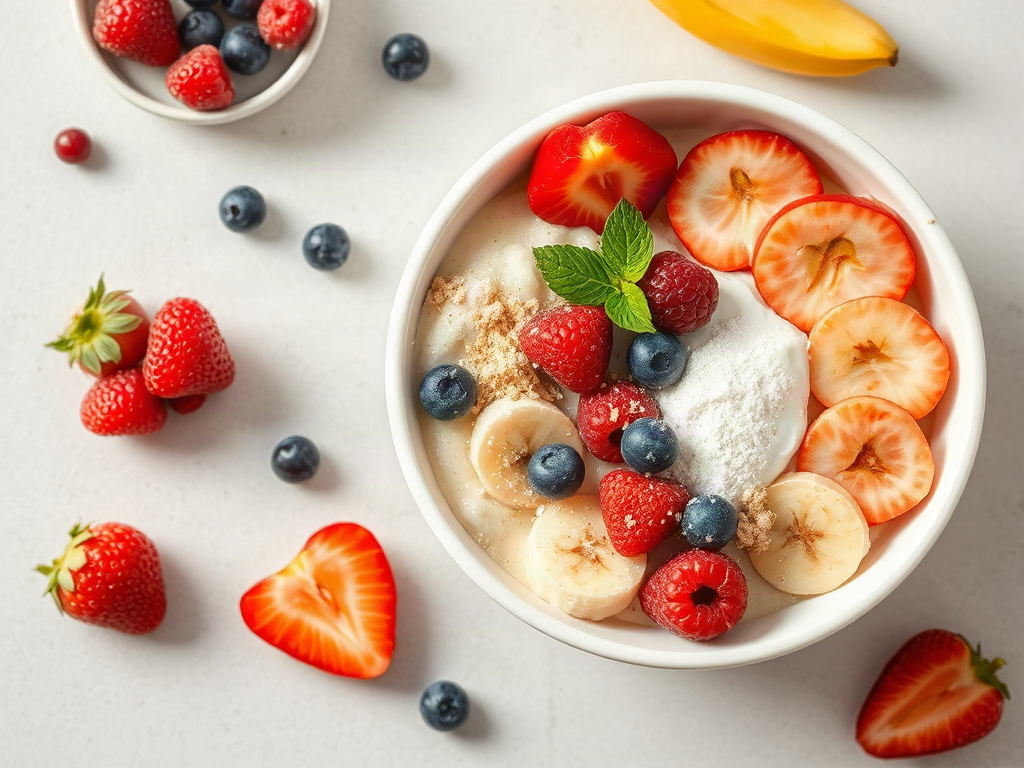
Organic fruit serving sizes that limit added sugar in breakfast bowls usually mean choosing one measured fruit portion—such as ½ cup berries, one small apple, or ½ cup sliced banana—and pairing it with unsweetened yogurt, oats, or another filling base. Fresh or frozen whole fruit supplies sweetness along with fiber and water, while dried fruit, sweetened granola, flavored yogurt, honey, and syrup can raise the bowl’s added sugar quickly. Measure the fruit before adding toppings, taste the bowl before sweetening it, and adjust portions according to the bowl’s other carbohydrate sources. Organic labeling does not change the fruit’s natural sugar or make added sweeteners necessary.
What a Balanced Fruit Portion Looks Like
A useful breakfast-bowl fruit portion is large enough to provide flavor and texture but measured enough to leave room for protein, fiber, and unsweetened ingredients. For many bowls, a practical starting point is about ½ to 1 cup of fresh or frozen fruit. That range is not a universal prescription: the best amount depends on the bowl’s base, the rest of the meal, appetite, and the person’s overall dietary needs.
Whole fruit contains naturally occurring sugars, not added sugar. The distinction matters because added sugar usually enters a bowl through ingredients such as sweetened yogurt, granola, jam, agave, honey, or flavored nut butter. A cup of berries may make a plain bowl taste sweet while adding considerable volume and fiber; a smaller serving of dried fruit can be much more concentrated because water has been removed.
Fruit size should therefore be judged alongside the bowl’s other ingredients. A bowl made with plain Greek yogurt, chia seeds, and ½ cup raspberries has a different carbohydrate profile from one made with sweetened yogurt, banana, raisins, and granola. Calling both “fruit bowls” hides the more important question: how much sweetness is coming from whole fruit, and how much is coming from processed additions?
Organic certification addresses production methods, not sugar content. Organic strawberries, peaches, and bananas still contain their natural sugars, and organic syrup is still an added sweetener. Choosing organic may reflect environmental, farming, or purchasing priorities, but it does not remove the need to portion fruit and read labels.
A common mistake is treating fruit as unlimited because it is nutritious. Another is reducing fruit so aggressively that the bowl becomes unappealing, then compensating with honey or a large serving of sweetened granola. A measured whole-fruit portion paired with a satisfying base is often more workable than either extreme. Readers comparing ideas can use this organic fruit serving sizes that limit added sugar in breakfast bowls reference when adapting portions to different recipes.
Portion Examples for Common Breakfast Bowls
Different fruits change a bowl’s sweetness, bulk, and texture, so a portion that works for berries may not translate directly to dried fruit or mashed banana. Fresh or frozen fruit is generally easier to portion by volume, while small pieces can make a bowl look fuller than it is. Measuring once or twice with a cup measure can help establish a reliable visual estimate.
For a plain yogurt bowl, try ½ cup berries, a small sliced peach, or one small apple cut into pieces. These portions add color and texture without requiring a sweetened base. If the bowl contains oats and banana, ½ small banana may be enough because oats already contribute carbohydrate and banana becomes especially prominent when mashed into the mixture. A full banana can still fit some eating patterns, but the rest of the bowl should be considered rather than adding it automatically.
For overnight oats, ½ cup blueberries or chopped strawberries works well when the oats are prepared with unsweetened milk and plain yogurt. Cinnamon, vanilla, toasted nuts, or seeds can add complexity without functioning as added sugar. A bowl containing dates, raisins, or dried cranberries needs more caution: 1 to 2 tablespoons may provide the flavor accent intended, while a loose handful can turn a lightly sweet breakfast into a concentrated sugar-heavy combination.
For a smoothie bowl, the blending process changes eating speed and texture even though it does not turn fruit into added sugar. A practical combination might use ½ cup frozen berries plus ¼ to ½ banana, then add plain yogurt or tofu and top with seeds. Large amounts of frozen mango, banana, juice, and sweetened toppings can produce a very sweet bowl that is easy to eat quickly. Blending fruit with juice rather than whole fruit also removes some of the meal’s structure and may make portion awareness harder.
These examples are starting points rather than rigid limits. A person with greater energy needs may reasonably choose more fruit, while someone trying to reduce total carbohydrate at breakfast may prefer a smaller fruit portion and more protein-rich ingredients. The useful comparison is not “fruit versus no fruit,” but a measured fruit serving versus a bowl whose sweetness is spread across several unmeasured ingredients.
Added Sugar Traps That Change the Bowl
Added sugar often comes from the bowl’s supporting ingredients rather than the organic fruit itself. Plain yogurt can taste sharp beside ripe berries, which may tempt a person to add honey; granola may then be added for crunch, and a flavored nut butter may supply another sweetener. Each addition may seem minor, but the combined effect can make sweetness the dominant feature of breakfast.
Read the ingredient list and nutrition panel on packaged toppings. Names such as cane sugar, brown rice syrup, molasses, fruit juice concentrate, malt syrup, and honey indicate sweetening ingredients, even when the package emphasizes organic or natural positioning. “No refined sugar” also does not necessarily mean no added sugar; dates, syrups, and concentrated fruit ingredients can still sweeten a product.
Granola deserves particular attention because serving sizes are often smaller than the amount poured into a bowl. A measured tablespoon or two may provide crunch, while a large scoop can add substantial sweetness and energy before fruit is counted. Compare unsweetened oats, toasted nuts, pumpkin seeds, or unsweetened coconut with sweetened granola rather than assuming the label “whole grain” means the product is low in added sugar.
Sweetened dairy and plant-based yogurts create a similar problem. If a flavored yogurt is the preferred choice, reducing the fruit portion may prevent the bowl from becoming overly sweet, but that tradeoff also reduces fruit variety. A more flexible approach is to use half plain and half flavored yogurt, then add a modest amount of fruit while adjusting gradually to less sweetness.
Fruit juice, preserves, and dried fruit are not automatically unsuitable, but they are less forgiving for portion control than intact berries or chopped fruit. The mistake is treating every fruit ingredient as nutritionally interchangeable. When a bowl tastes sweet before honey or syrup is added, leave the sweetener out and use acidity, spice, nuts, or seeds to improve balance. A second portion comparison for breakfast bowls can help identify which ingredient is actually driving sweetness.
A Practical Method for Building and Adjusting Portions
Build the bowl in an order that makes sweetness visible: choose the base, add a measured fruit portion, include a protein or fat source, and finish with a small amount of texture. Starting with fruit and pouring toppings over it makes it easy to lose track of quantities. Starting with an unsweetened base gives the fruit a defined role instead of letting it become one part of an unmeasured pile.
Use this compact sequence when testing a new combination:
- Choose the base: plain yogurt, unsweetened oats, cottage cheese, or another suitable foundation.
- Measure the fruit: begin with ½ cup berries or chopped fruit, or a small whole fruit.
- Add staying power: use nuts, seeds, plain yogurt, or another protein-containing ingredient that fits the meal.
- Add texture sparingly: measure granola, dried fruit, coconut, or nut butter instead of pouring freely.
- Taste before sweetening: use cinnamon, ginger, citrus zest, or a spoonful of unsweetened cocoa if the bowl needs more character.
Adjust one variable at a time. If the bowl is too sweet, first remove the added sweetener rather than cutting all fruit. If it is not satisfying, adding protein, seeds, or nuts may work better than increasing granola. If the texture is thin, chia seeds or oats may provide structure without requiring a syrup-based topping.
Consider the rest of breakfast as well. A fruit bowl eaten beside sweetened coffee, a pastry, or juice has a different overall sugar context than the same bowl eaten with water or an unsweetened drink. Portion decisions should support the full meal, not just the ingredient photographed on top.
Signs the approach is working include a bowl that tastes sweet enough without syrup, a measured topping that lasts through the meal, and a combination that remains satisfying rather than prompting immediate grazing. Signs it needs revision include relying on several sweetened products, confusing a tablespoon with a serving, or shrinking fruit so much that another sugary ingredient becomes necessary.
When Organic Fruit Choices Need Extra Attention
Organic fruit may be fresh, frozen, canned, or dried, and the format affects portioning more than the organic label does. Frozen berries without added sugar can be a convenient option when fresh fruit is expensive or out of season. Canned fruit packed in water or its own juice may also work, but syrup-packed fruit adds sweetness that should be counted separately from the fruit portion.
Fresh fruit can vary in size and ripeness. A very large banana or apple may represent considerably more fruit than a small one, even if both are described casually as “one piece.” Cutting the fruit and measuring it is useful when consistency matters. Ripe fruit may also taste sweeter, allowing a person to use less honey or flavored topping.
Budget and availability are legitimate constraints. Berries can cost more than apples, pears, or bananas, while frozen fruit may reduce waste. A lower-cost bowl can use a small sliced apple with cinnamon, or frozen berries mixed with plain yogurt, rather than depending on premium fresh produce. Organic purchasing does not require every fruit to be bought in the same form; a shopper can compare price, storage life, and added ingredients.
People managing diabetes, food allergies, kidney disease, gastrointestinal conditions, or other nutrition-related concerns may need individualized advice about fruit type, total carbohydrate, fiber, potassium, or portion size. This article is general food guidance, not treatment or a substitute for a registered dietitian or clinician. A lower added-sugar bowl can still require personal adjustment.
Another weak assumption is that an organic smoothie bowl automatically counts as a balanced breakfast. A bowl made from several cups of blended fruit with juice and sweet toppings may be organic yet low in protein and easy to consume quickly. Pairing a moderate fruit portion with a substantial unsweetened base usually offers better control than relying on the label or the appearance of a large bowl.
Frequently Asked Questions
Does organic fruit contain less sugar than conventional fruit?
Organic certification does not determine the fruit’s natural sugar content. Variety, ripeness, size, and preparation usually matter more for the portion in a breakfast bowl.
What is a reasonable fruit serving for a breakfast bowl?
About ½ to 1 cup of fresh or frozen fruit is a practical starting range, with a small whole fruit also fitting many bowls. Adjust it for the base and other carbohydrate-containing ingredients.
Are bananas too sweet for a low-added-sugar bowl?
No. A small banana or half of a larger banana can provide sweetness without added sugar. Pair it with a plain base and measure granola or syrup separately.
Is dried fruit a good substitute for fresh fruit?
Dried fruit can fit, but use a small measured amount because it is more concentrated and easy to overpour. Choose products without added sugar when available.
How can a breakfast bowl taste sweet without honey?
Use ripe berries, banana, or chopped apple with cinnamon, vanilla, citrus zest, or unsweetened coconut. Plain yogurt and toasted nuts can balance tartness and add texture.
Conclusion
Measured whole fruit is the simplest foundation for a breakfast bowl with less added sugar. Begin with roughly ½ to 1 cup of fresh or frozen fruit, then examine the base and toppings rather than judging the fruit in isolation. Plain yogurt, unsweetened oats, nuts, and seeds can make a modest portion satisfying, while sweetened yogurt, granola, dried fruit, juice, honey, and syrup can quietly multiply sweetness. Organic labeling may guide purchasing, but it does not change these portion principles. Test one bowl at a time, measure the ingredients that are easiest to overpour, and adjust the base or texture before adding more sweetener. Personal health needs may call for individualized portions from a qualified nutrition professional.