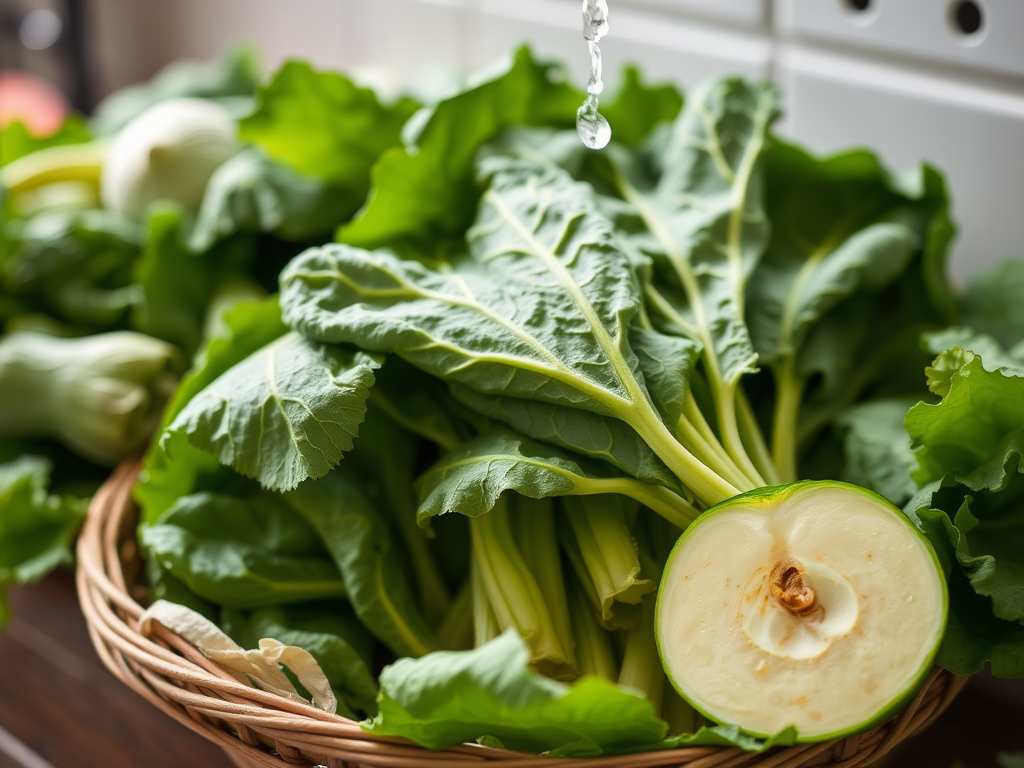
Organic vegetables wilt quickly after washing before storage because water on the leaves and cut surfaces speeds tissue breakdown while rinsing can remove the dry protective layer that slows moisture loss. Leafy greens are especially vulnerable when they are stored damp in a sealed container, where trapped water encourages decay and airflow remains poor. Drying the produce thoroughly, separating fragile leaves from firm vegetables, and using a towel-lined container usually preserves texture better than refrigerating freshly washed vegetables while wet. Washing immediately before eating is often the safest quality choice when thorough drying is difficult, but clean storage containers and prompt refrigeration still matter.
Why Washing Makes Fresh Vegetables Wilt Faster
Washing does not make vegetables inherently weaker, but it changes the moisture balance around their tissues. A freshly harvested leaf or stem naturally loses water through tiny openings in its surface. Once rinsed, droplets can remain in folds, between leaves, or around a cut end. If the vegetable is then placed in a closed bag or container, the surrounding air becomes humid while the surface stays wet. That combination can soften tissues, encourage microbial growth, and accelerate the transition from crisp to limp.
Temperature also affects the result. Refrigeration slows respiration and water loss, but it does not reverse damage caused by standing water. A wet spinach leaf pressed against several other leaves may develop translucent patches before the rest of the bunch looks wilted. A firm carrot, by contrast, usually tolerates surface moisture better because its dense structure loses water more slowly. The difference is structural, not a special weakness associated with organic farming.
Rinsing can remove soil and some surface residues, which is valuable for safe handling, but it may also remove a thin waxy or dry surface condition that limits evaporation. Rough handling adds another problem: bruised cells release fluid and become soft spots. A vigorous spin, squeezing, or piling wet produce under heavy items can therefore do more harm than the rinse itself.
A useful distinction is between surface wetness and internal water loss. Damp leaves often rot even though they appear full of water, while unwashed greens stored too long may wilt because they gradually lose moisture to dry refrigerator air. The practical goal is not to keep vegetables either completely wet or completely dry at all times. It is to remove excess water while retaining enough humidity to limit dehydration.
Readers comparing storage methods should avoid assuming that immediate washing is always better or always worse. Washing before storage can be convenient and may reduce preparation time, but it creates a drying requirement. Washing just before use reduces the time wet produce spends in storage, although it requires more daily preparation. The best choice depends on whether the vegetables can be dried completely and stored with modest airflow.
Which Vegetables Are Most Vulnerable
Leafy vegetables usually show the quickest decline because their broad, thin surfaces release moisture rapidly and trap droplets in crowded layers. Lettuce, arugula, baby spinach, kale leaves, chard, and fresh herbs can all become limp or slimy when washed and packed wet. Delicate greens also bruise easily, so aggressive rubbing or spinning may create damage that is not visible until the next day.
Cut vegetables have a separate vulnerability. Sliced cucumbers, chopped peppers, halved zucchini, and trimmed green beans expose inner tissue to air and moisture. Water can collect at the cut face, while the damaged cells soften more quickly than an intact vegetable. A whole cucumber may remain crisp in a breathable produce drawer, whereas sliced cucumber stored in a puddle becomes soft even when the refrigerator is cold.
Firm roots and thick-skinned vegetables generally tolerate washing better, but they still need attention. Radishes, carrots, beets, and turnips may keep well when surface moisture is removed, while leafy tops attached to those roots can draw water and deteriorate first. Removing carrot or beet greens before storage often improves the condition of the root because the leaves continue to lose water.
Consider a weekly produce box containing wet lettuce, bunches of herbs, and unwashed carrots. Washing everything at once appears efficient, yet the greens demand careful drying while the carrots need a different storage environment. Treating the box as one category causes predictable failures. Separate produce by texture and water sensitivity rather than by the fact that every item was purchased together.
A common misconception is that organic vegetables wilt faster simply because they lack conventional coatings or post-harvest treatments. Organic status alone does not determine shelf life. Harvest age, variety, temperature changes during transport, bruising, humidity, and storage preparation often matter more. Some organic vegetables may have less cosmetic processing, but the visible decline after washing is usually a moisture-management issue.
For a specific item, inspect the surface before washing. Leaves that are already limp, torn, or yellowing need to be used soon rather than stored for a full week. Removing damaged pieces before packing prevents one deteriorating leaf from spreading excess moisture and decay to its neighbors.
A Better Washing and Drying Sequence
The most reliable sequence is wash, drain, dry, inspect, and then store. Begin with clean hands, a clean sink or bowl, and enough cold running water to remove visible soil. Do not leave delicate greens submerged longer than needed. Soaking may loosen grit, but extended contact gives leaves more opportunity to absorb water and suffer mechanical damage.
After rinsing, let excess water drain before using a salad spinner or clean towel. Spin delicate greens in short, gentle cycles rather than forcing the basket at high speed. Empty the collected water between cycles. For herbs and tender leaves, spread the produce on clean towels and pat or air-dry until no obvious droplets remain. The target is not brittle dryness; it is the absence of free water that can pool in the container.
Drying often fails because people inspect only the outer leaves. Lift layers, check the stem ends, and separate clumps that hold water. A towel-lined container can absorb residual moisture, but a saturated towel stops helping. Replace it when it feels wet. Paper towels are convenient for small quantities, while reusable clean cloths work when they are washed and fully dried between uses.
Use the following decision sequence when preparing produce for storage:
- Wash now when soil removal is necessary and the vegetables can be dried thoroughly.
- Delay washing when the item is very delicate, already damp, or unlikely to be used soon.
- Separate parts when leafy tops, cut surfaces, or damaged pieces require different handling.
- Check the container before sealing; visible droplets or pooled water mean more drying is needed.
Do not use heat to force drying. Warm air can accelerate wilting and may damage tender leaves. A refrigerator can cool produce after washing, but cold storage is not a substitute for removing excess water. Similarly, adding a dry towel to a container of dripping greens may postpone the problem rather than solve it.
Washing practices should reflect the intended use. Greens for tomorrow’s lunch can be washed and dried carefully, while a large quantity intended for later in the week may keep better unwashed until needed. Readers who routinely discard limp greens may gain more from changing the wash timing than from buying a different container.
Storage Methods That Protect Texture
Storage works best when it balances humidity with ventilation. Leafy greens need protection from dry refrigerator air, yet they also need a way for excess moisture to escape. A container lined with a dry towel, left slightly vented when appropriate, can be more effective than a tightly sealed bag filled with condensation. The exact setup depends on the refrigerator and the quantity of produce.
Keep fragile greens away from the coldest surfaces if the refrigerator regularly freezes items. Freezing injury can leave leaves limp and waterlogged after thawing, which may be mistaken for a washing problem. Store them in a produce drawer or another stable area, and avoid placing heavy jars or dense vegetables on top. Compression damages leaves and reduces airflow through the package.
Whole and cut vegetables should not automatically share one container. Cut produce releases more moisture and has exposed tissue, while whole vegetables may remain firm. A container of chopped bell peppers can make nearby herbs damp; separate storage reduces that exchange. Strong-smelling items also deserve their own container when odor transfer affects how the vegetables will be used.
Container choice involves a tradeoff. Fully sealed containers reduce dehydration but trap condensation. Open bowls allow ventilation but can leave greens exposed to dry air. Produce bags with modest perforation or containers designed with adjustable vents offer a middle position, but no package compensates for vegetables that enter storage dripping wet.
Check the package the next day rather than waiting until the end of the week. If the towel is damp but the leaves remain firm, replace the towel and improve spacing. If condensation covers the lid and leaves are soft, reduce crowding and dry the produce again if it is still sound. If the surface is dry and the leaves are limp, humidity may be too low; a better-lined container or shorter storage period may help.
These adjustments also explain why a method that works for one refrigerator may fail in another. Frequent door opening, a very dry interior, crowded drawers, and fluctuating temperatures all change the storage environment. The goal is a stable, cool container with controlled moisture, not a universal package or one rigid storage rule.
Signs of Moisture Damage and What to Do
Wilted leaves are often recoverable if they are merely dehydrated rather than decaying. Crisping can sometimes improve after sound greens are separated and briefly placed in clean cold water, followed by thorough drying. That approach is a rescue step for immediate use, not a reason to return wet leaves to long-term storage. Repeated soaking and drying can worsen texture.
Discard vegetables with spreading slime, a sour or rotten odor, extensive mold, or tissue that has become unusually soft and discolored. Do not rely on rinsing to make visibly spoiled produce suitable for eating. A few limp edges are a quality problem; spreading decay is a safety and waste concern that calls for removal of the affected item.
Track what happened instead of blaming the entire purchase. If lettuce wilted but carrots remained firm, the likely issue was leaf structure, drying, or packing density. If every item became wet, inspect the wash station, drying time, container, and refrigerator temperature. If only pre-cut vegetables failed, reduce storage time and keep cut surfaces away from pooled moisture.
A practical trial can reveal the weak point. Divide a bunch of greens into two portions: wash and dry one carefully, and leave the other unwashed until use. Store both in comparable conditions and inspect them after a day or two. The comparison will not create a laboratory result, but it can show whether your main limitation is drying capacity, container humidity, handling, or the age of the produce.
Use a short priority list when time is limited: remove damaged leaves, dry the produce, separate wet and delicate items, line the container, and check it the following day. Those steps generally matter more than purchasing elaborate storage accessories. The link why organic vegetables wilt quickly after washing before storage is ultimately a question of matching preparation to the vegetable’s structure and your actual storage routine.
Food safety guidance from organizations such as the USDA and university extension services can supplement household storage advice, especially when produce is ready-to-eat or has been cut. Quality preservation and food safety overlap, but they are not identical: crispness may decline before spoilage is obvious, and a clean-looking vegetable is not proof that every handling step was adequate.
Frequently Asked Questions
Should organic vegetables be washed before refrigeration?
They may be washed first if they can be dried thoroughly. Delicate greens often keep better when washing is delayed until shortly before use.
Why do washed leafy greens become slimy?
Trapped water, bruised tissue, limited airflow, and warm temperature changes can promote softening and decay, especially in crowded containers.
Does a paper towel prevent vegetables from wilting?
A dry towel can absorb condensation and slow moisture damage, but it cannot correct produce that was stored dripping wet or packed too tightly.
Can limp vegetables be made crisp again?
Sound, dehydrated leaves may firm briefly after a clean cold-water soak, followed by careful drying. Slimy, moldy, or foul-smelling produce should be discarded.
Do organic vegetables wilt faster than conventional vegetables?
Organic certification does not by itself determine wilting speed. Harvest age, variety, bruising, temperature, humidity, and washing technique are more useful factors to examine.
Conclusion
Washed vegetables usually wilt quickly because excess surface water, trapped humidity, bruising, and refrigerator conditions work together. Leafy greens and cut produce need the most careful handling, while firm roots and intact thick-skinned vegetables are more forgiving. Wash delicate items only when you have time to drain and dry them, inspect the stem ends and inner layers, then store them in a cool container with modest airflow and a dry lining. Check the package within a day and adjust spacing or towel replacement before condensation spreads. When thorough drying is impractical, postponing the wash until cooking or serving may preserve quality more reliably. Treating each vegetable according to its structure will reduce both premature wilting and unnecessary food waste.