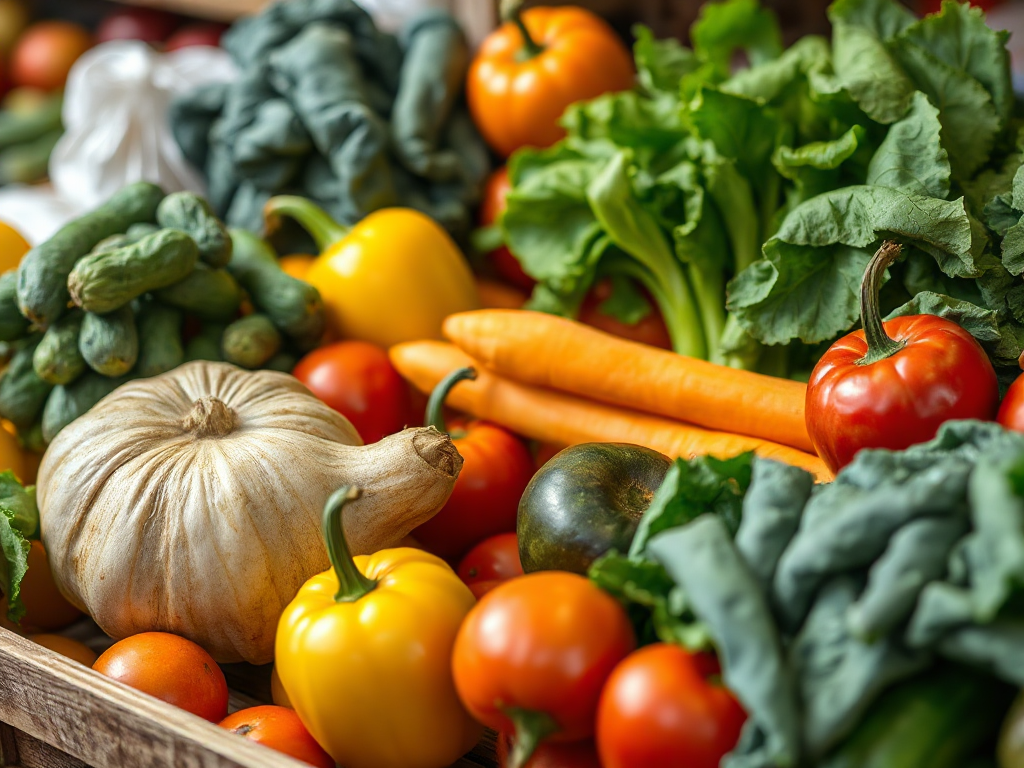
Organic produce nutrition after repeated temperature changes usually declines gradually through moisture loss, bruising, oxidation, and temperature-sensitive nutrient degradation, while repeated warming and cooling can also increase food-safety concerns. Leafy greens, berries, cut produce, and other delicate foods are more vulnerable than firm roots, apples, or winter squash. Keep perishable items consistently cold, avoid leaving them in a warm vehicle or kitchen, separate damaged pieces, and use older produce first. Texture and vitamin C may deteriorate before calories, fiber, or minerals change substantially. If produce is slimy, moldy, leaking, fermenting, or has an unusual odor, discard it rather than relying on rinsing or cooking to correct every risk.
What Temperature Changes Do to Produce Nutrition
Repeated temperature changes affect produce through several connected processes rather than one uniform form of “nutrient loss.” Cooling generally slows respiration, water movement, and microbial growth, but warming speeds those processes. When produce repeatedly moves from a cold refrigerator to a warm counter, then back again, condensation can collect on its surface, tissues can soften, and the food may age faster than produce kept under stable conditions.
Water-soluble compounds are often the first nutritional concern. Vitamin C and some B vitamins can decline as plant tissue experiences oxygen exposure, physical damage, and prolonged storage. Cutting, bruising, and high humidity can accelerate those changes because damaged cells release enzymes and expose more interior tissue to air. The decline is not necessarily dramatic after one brief temperature shift, and the food does not become nutritionally empty. Fiber, minerals, and many calories remain largely present even when texture and certain vitamins change.
A useful comparison is a firm carrot versus a container of washed spinach. A carrot may tolerate a short warming period with little visible change, although repeated exposure can eventually cause limpness and moisture loss. Spinach has thin leaves, a large exposed surface, and easily damaged cells, so wilting and quality decline may appear quickly. Organic certification does not make either item more or less resistant to temperature stress; the relevant factors are plant structure, handling, time, packaging, and storage conditions.
Temperature fluctuation can also alter eating quality, which indirectly affects nutrition. Berries that become soft or leaky may be discarded, while wilted greens may be left unused. A less-than-perfect item can still contribute nutrients when it is sound, but forcing yourself to eat produce that shows spoilage is not a good tradeoff. For practical purposes, inspect texture, moisture, odor, and visible growth alongside the food’s storage history. The related discussion of organic produce nutrition after repeated temperature changes is most useful when it leads to a specific decision about what to eat now, refrigerate, cook, or discard.
Which Fruits and Vegetables Are Most Vulnerable
Delicate, high-moisture produce usually shows the greatest impact from repeated warming and cooling. Leafy greens, fresh herbs, cut melon, cut vegetables, raspberries, strawberries, peaches, and ripe tomatoes have soft tissues or exposed surfaces that lose quality quickly. Condensation can wet leaves and berries, encouraging soft spots and mold. Cut produce has an additional disadvantage: slicing breaks protective skin and increases the area available for oxidation and contamination.
Firm, intact produce generally has more physical protection. Whole apples, oranges, cabbage, carrots, beets, onions, and winter squash may retain acceptable nutritional value after ordinary temperature variation, provided they remain dry and free of spoilage. That does not mean every firm item should be stored anywhere. Potatoes and onions, for example, may deteriorate under excessive moisture, while some fruits can release ethylene that speeds ripening in nearby foods. The correct response depends on the item, not simply on whether it carries an organic label.
Consider a grocery trip in which a bag of organic spinach, a punnet of berries, and several sweet potatoes sit in a warm car before returning to the refrigerator. The spinach may be limp, the berries may show juice or collapsed surfaces, and the sweet potatoes may appear unchanged. Eating the sweet potatoes later may be reasonable after checking for soft rot, while the greens and berries deserve immediate inspection and a shorter use window. Washing every item immediately is not always the best solution because residual water can shorten the life of fragile produce.
Nutrient comparisons should remain realistic. A softened peach may still provide carbohydrate, fiber, and carotenoid compounds, but its vitamin C content and palatability may differ from a freshly purchased peach. A wilted green can often be used in soup, an omelet, or a cooked grain bowl if it is not slimy or spoiled. Cooking may reduce some heat-sensitive nutrients, yet it can rescue sound produce that would otherwise be wasted. Do not treat “raw” as automatically superior when the alternative is throwing away a safe, imperfect vegetable.
Safety Checks After Warming and Rechilling
Nutrition and safety are related but distinct questions. Temperature changes may reduce freshness without making a food dangerous, while a short period of warmth can matter more for cut or ready-to-eat produce than for a whole, intact vegetable. Rechilling slows further growth but does not reverse time spent warm, remove toxins that some microorganisms may produce, or restore damaged tissue. Refrigerator storage should be viewed as slowing deterioration, not resetting the clock.
Begin with the condition of the food. Sliminess, spreading mold, leaking liquid, an alcoholic or sour odor, significant fermentation, and tissue that has collapsed into a wet mass are strong reasons to discard the affected item. Mold on a soft fruit or a container of berries is not equivalent to a small surface blemish on a firm vegetable; soft foods can have contamination below the visible area. Do not taste questionable produce to decide whether it is safe.
Packaging can hide problems. A sealed bag of greens may contain trapped moisture, and a clamshell of berries may have one damaged fruit contaminating nearby surfaces. Open the package, remove sound items only if they have not contacted obvious spoilage, and clean the storage area if leakage occurred. Produce that was cut, peeled, or prepared for immediate eating deserves more caution than an intact cucumber or uncut apple.
A common mistake is assuming that organic produce can be handled casually because it was grown under organic standards. Organic status concerns production and certification requirements; it does not eliminate natural microorganisms, temperature abuse, or household cross-contamination. Wash hands, knives, cutting boards, and containers, and follow package instructions for refrigerated ready-to-eat items. When the storage history is uncertain and the food is visibly deteriorating, the financial loss of discarding it is usually a smaller risk than eating it.
Storage Decisions That Preserve More Value
Stable storage is the most useful intervention because it reduces repeated stress before quality has already declined. Put perishable produce into a consistently cold refrigerator soon after shopping, protect it from crushing, and avoid packing wet leaves tightly into a container. A clean towel or purpose-designed produce container may manage excess moisture, but sealing damp produce without ventilation can create a humid pocket that accelerates decay.
Preparation timing matters. Keep berries and tender greens intact until they are needed when possible, and dry them thoroughly after washing. Cut produce should be covered and refrigerated promptly rather than moving repeatedly between the refrigerator and the counter. If a meal will use only part of a melon, pepper, or bunch of herbs, prepare the portion you need and return the remainder to cold storage. A stable routine often preserves more nutritional value than searching for a special storage product.
Storage location should match the food. Crisper drawers can help reduce moisture loss for some vegetables, but excessive humidity may harm items prone to mold. Ethylene-sensitive greens may age faster beside ripening fruit, while apples, bananas, and avocados may speed ripening of nearby produce. Keep potatoes, onions, and garlic in a cool, dry, ventilated place rather than assuming the refrigerator is ideal for every plant food. A refrigerator thermometer can reveal whether the appliance is actually maintaining a reliably cold environment.
Prioritize quality rather than chasing perfect preservation:
- Use berries, cut produce, herbs, and leafy greens first.
- Cook sound but wilted vegetables before their texture declines further.
- Keep firm, intact produce for later meals after checking for soft spots.
- Discard food with spreading mold, slime, leakage, or an abnormal smell.
The weak assumption is that rinsing restores freshness. Rinsing can remove surface soil when done properly, but it cannot reverse vitamin degradation, bruising, or internal spoilage. Refrigerating food that has repeatedly warmed may still be sensible if it looks sound, yet it should not be treated as equally fresh as produce that stayed cold throughout storage.
A Practical Plan for Eating Produce After Temperature Stress
Use a three-part assessment: condition, type, and timing. Condition determines whether the food remains acceptable; type indicates how quickly quality may fall; timing tells you whether immediate use is wiser than continued storage. This approach is more reliable than judging nutrition by appearance alone. Bright color can remain after flavor has declined, and a slight wilt does not automatically mean that all nutritional value is gone.
For sound but stressed produce, choose a preparation that fits its changed texture. Wilted spinach can go into a cooked dish, soft tomatoes can become a sauce, and slightly bruised stone fruit can be trimmed and used promptly if the remaining flesh is sound. Berries that are intact but beginning to soften can be eaten soon or frozen for later use, while berries with spreading mold should not be salvaged by freezing. Freezing preserves the condition present at the time of freezing; it does not repair spoilage.
Meal planning can reduce both nutrient loss and waste. Pair a delicate item with a meal scheduled for the same day, reserve firm vegetables for later, and avoid washing an entire supply if only a small amount is needed. If a household cannot shop frequently, frozen vegetables and fruits may provide a dependable alternative because they are processed soon after harvest and do not rely on uncertain home storage. Fresh organic produce is not automatically more nutritious than a well-preserved frozen counterpart in every situation.
Signs that your approach is working include dry, crisp leaves; berries without leaking juice; firm stems; and a refrigerator that keeps produce consistently cold. Signs that the plan is failing include recurring condensation, compressed packages, forgotten leftovers, and produce that repeatedly moves from cold storage to room temperature. Keep a small “eat first” area in the refrigerator and label cut containers with the preparation date. The goal is not to preserve every item indefinitely; it is to eat sound produce while its texture and nutrient profile remain useful.
For people managing a medical condition, food allergy, or medically prescribed diet, food-safety decisions should follow individualized professional advice. This topic concerns ordinary storage and nutrition quality, not treatment or disease prevention. Nutrient values also vary by cultivar, maturity, harvest timing, processing, and storage duration, so no visual inspection can provide an exact laboratory assessment.
Frequently Asked Questions
Does repeated temperature change remove all the nutrients from organic produce?
No. Vitamin C and some other sensitive compounds may decline, but fiber, minerals, and much of the food’s energy remain. Quality and safety should be assessed separately.
Is produce safe after being warmed and refrigerated again?
It may be, especially when it is intact and shows no spoilage. Cut produce and ready-to-eat items require more caution, and slimy, moldy, leaking, or foul-smelling food should be discarded.
Which organic produce should be eaten first after temperature fluctuation?
Prioritize berries, leafy greens, fresh herbs, cut melon, and other soft or high-moisture items. Firm roots, cabbage, citrus, and winter squash usually tolerate storage longer when kept dry and sound.
Should produce be washed immediately after shopping?
Not always. Washing can add moisture that speeds decay, particularly for greens and berries. Wash produce when practical, dry it well, and refrigerate cut or prepared items promptly.
Can cooking make temperature-stressed produce worthwhile?
Cooking can make sound wilted vegetables useful in soups, sauces, or egg dishes, although some heat-sensitive nutrients may decline. Cooking cannot reliably make moldy, slimy, or spoiled produce safe.
Conclusion
Repeated warming and cooling does not create a single predictable nutrition penalty for every organic fruit or vegetable. Delicate greens, berries, herbs, and cut produce usually deserve the fastest attention because moisture, bruising, oxidation, and microbial growth affect them quickly. Firm intact foods often remain useful longer, but they still need inspection. Keep perishable items consistently cold, control excess moisture, avoid unnecessary washing and handling, and use an “eat first” area to prevent additional temperature cycles. Cook sound produce when texture has declined, and discard anything moldy, slimy, leaking, fermenting, or unusually odorous. A steady storage routine, rather than the organic label alone, has the greatest practical influence on how much nutritional and culinary value reaches the plate.