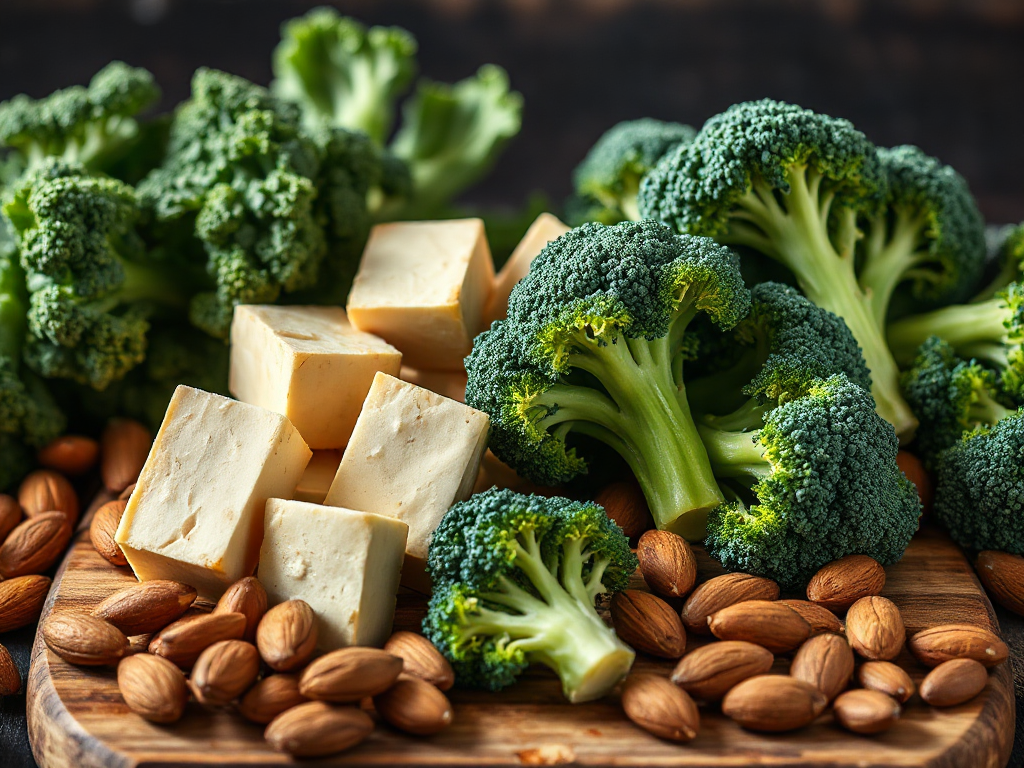
Organic produce sources of calcium without dairy include calcium-set tofu, kale, collard greens, bok choy, broccoli, almonds, beans, and calcium-fortified plant beverages, with absorption varying by food. Leafy greens such as kale and bok choy generally offer a useful combination of calcium and relatively low oxalate, while spinach contains calcium that is poorly absorbed because of oxalates. Pairing plant foods across meals, choosing calcium-set tofu or fortified products when practical, and using cooked greens can make intake more reliable. Organic certification affects production practices, not the calcium content, so compare nutrition labels and serving sizes rather than assuming every organic food supplies the same amount.
Plant Foods That Supply Usable Calcium
Several plant foods can contribute meaningful calcium without milk, yogurt, or cheese, but their value depends on both the amount eaten and how efficiently the mineral is absorbed. Collard greens, kale, bok choy, turnip greens, and broccoli are practical choices because they can be served in ordinary portions and used in soups, stir-fries, grain bowls, or bean dishes. Calcium-set tofu is another concentrated option, although it is technically a processed soy food rather than produce. Canned fish with edible bones would also provide calcium, but it does not fit a plant-based or produce-only interpretation of this topic.
Among fresh organic produce, dark leafy greens deserve priority over simply choosing the darkest color available. Collards and kale generally provide calcium in a form the body can use more readily than spinach, whose oxalates bind much of its calcium. Bok choy offers a milder flavor and cooks quickly, making it useful for people who do not enjoy large servings of sturdy greens. Broccoli contributes a smaller amount per serving but is easy to combine with beans, tofu, or a calcium-fortified sauce.
Beans, lentils, chickpeas, almonds, sesame products such as tahini, and calcium-fortified plant beverages can fill gaps. Their role differs: beans add protein and fiber, almonds add energy and fat, while fortified beverages can deliver a predictable labeled amount. A person trying to limit calories may find a fortified unsweetened beverage more efficient than relying on large quantities of nuts. Someone prioritizing minimally processed meals may prefer greens, beans, tofu, and tahini, accepting that portions need to be planned across the day.
A useful shopping shortlist includes:
- Organic collards, kale, bok choy, turnip greens, and broccoli.
- Calcium-set tofu, identified through the ingredient panel or nutrition information.
- Organic beans and chickpeas, whether dried or canned with sensible sodium choices.
- Unsweetened calcium-fortified soy or other plant beverages when a consistent source is needed.
- Tahini or almonds used as supporting ingredients rather than the sole calcium strategy.
The common mistake is treating one food as a complete replacement for dairy. A large salad may look nutrient-dense yet provide little calcium if it contains mostly lettuce, cucumber, and a small amount of greens. A more dependable approach combines a calcium-rich vegetable with tofu, beans, or a labeled fortified beverage. For related meal planning, organic produce sources of calcium without dairy can be considered as a pattern of foods rather than a single substitute ingredient.
Why Calcium Absorption Varies Among Produce
Calcium content on a food database is not the same as calcium absorbed by the body. Oxalates and phytates can bind minerals in food and reduce the proportion available for absorption, while food preparation, portion size, and the rest of the meal also influence the practical result. Spinach is the clearest comparison: it contains calcium, but its high oxalate content makes it a weak primary calcium choice. Swiss chard has a similar limitation. That does not make either vegetable unhealthy; it means they should not carry the entire calcium burden of a dairy-free diet.
Kale, collards, and bok choy are often more useful when calcium absorption is the deciding factor because they contain less oxalate than spinach. Cooking these vegetables reduces volume, allowing a person to eat a more substantial portion. Steaming, sautéing, or adding chopped greens to a bean soup may therefore be more practical than expecting raw leaves to supply the same contribution. Cooking does not magically remove every mineral constraint, and excessive boiling can move water-soluble nutrients into the cooking liquid, so using the broth or choosing shorter cooking methods can improve the overall meal.
Meal composition matters for more than absorption. Vitamin D status, protein intake, overall energy intake, and digestive health all affect how a diet functions, but no single meal can compensate for a consistently inadequate pattern. Calcium-rich foods spread through breakfast, lunch, and dinner may be easier to sustain than one very large serving. For example, fortified soy beverage at breakfast, tofu and bok choy at lunch, and collards with beans at dinner create several opportunities without requiring a large supplement or oversized portion.
Weak assumptions often lead readers toward the wrong comparison. “Organic” does not mean “higher in calcium,” and raw does not automatically mean “more nutritious.” Organic certification primarily describes production standards; the calcium level still depends on the crop, variety, maturity, growing conditions, and serving size. A conventional bunch of collards may offer a similar calcium contribution to an organic bunch, while the organic choice may reflect the shopper’s preferences about farming practices or pesticide use.
Check three details when comparing foods: the labeled serving size, the calcium amount per serving, and whether the food has a known absorption limitation. If spinach is the preferred vegetable, keep eating it for its other nutrients, but pair it with more reliable calcium sources. The goal is not to rank vegetables as good or bad; it is to assign each food a realistic job within the meal.
Building Dairy-Free Meals Around Calcium
A dependable calcium pattern begins by assigning one substantial source to at least two meals and adding smaller contributors elsewhere. Breakfast might include calcium-fortified soy beverage with oats and fruit. Lunch could use calcium-set tofu, bok choy, and brown rice. Dinner might combine collard greens with white beans, tomatoes, and tahini dressing. These meals provide different textures and nutrients, reducing dependence on a single ingredient and making the plan easier to follow when seasonal produce changes.
Seasonality creates a practical constraint for organic shoppers. Fresh greens may be plentiful at one time of year and expensive or unavailable at another. Frozen collards, kale, or broccoli can be useful if the package provides nutrition information and the product contains no unnecessary sauce. Canned beans and shelf-stable fortified beverages also make the pattern more resilient. Fresh organic produce is not automatically a better calcium choice if it spoils before it is eaten; a frozen vegetable that becomes part of regular meals may contribute more over time.
Portion strategy should reflect the food’s role. Greens provide calcium alongside fiber, folate, vitamin K, and other compounds, but they are bulky before cooking. Tofu supplies protein as well as calcium when calcium salts were used during production. Tahini and almonds can make meals appealing and add minerals, yet their calorie density makes them less efficient as the only source. Fortified beverages are convenient and measurable, but labels differ, and some products contain little calcium unless fortification has been added. Reading the package is more reliable than judging by the product’s color, brand image, or organic status.
A simple planning sequence works better than adding random “healthy” foods:
- Choose a dependable anchor, such as calcium-set tofu, cooked collards, or a fortified beverage.
- Add a second source from a different category, such as beans, bok choy, tahini, or broccoli.
- Use the nutrition label to verify the product rather than assuming all tofu or plant beverages are equivalent.
- Repeat the pattern across the week and adjust for price, storage, taste, and cooking time.
Consider a person who eats a large spinach salad daily but rarely consumes beans, tofu, fortified beverages, or low-oxalate greens. The salad may support vegetable intake while still leaving calcium intake uncertain. Replacing some spinach with kale or adding tofu and beans addresses the gap more directly than simply increasing salad size. The best plan is the one that survives a busy week: frozen greens, canned beans, and a clearly labeled beverage may be more useful than an ideal menu that depends on delicate farmers-market produce.
Readers who are comparing broader plant-based options may also use organic produce sources of calcium without dairy to organize shopping around repeatable meals. People with diagnosed bone disease, malabsorption, kidney conditions, or prescribed dietary restrictions should discuss individual calcium needs with a qualified clinician or registered dietitian rather than copying a general food plan.
Organic Labels, Fortified Foods, And Common Mistakes
Organic status and calcium density answer different questions. An organic label may matter to a shopper’s farming and sourcing preferences, but it does not certify that a vegetable contains more calcium. Nutrition comparisons should therefore begin with the food itself and its serving information. For packaged tofu, plant beverages, beans, and greens, inspect the Nutrition Facts panel, ingredient list, added sugar, sodium, and storage requirements. A product labeled organic can still be a poor calcium choice if it is not fortified or if the serving size is rarely consumed.
Fortified foods can be valuable, especially when produce availability, appetite, or cooking time limits the diet. Calcium-fortified soy beverage is often nutritionally useful because it can provide a consistent amount while also contributing protein, but fortification levels vary among brands and may separate in the carton. Shaking the container as directed and checking the label helps avoid guessing. Some other plant beverages may contain less protein or differ substantially in fortification, so the word “milk” on the package is not enough to establish nutritional equivalence.
Supplements should not be the automatic response to uncertainty. A supplement may be appropriate for some people after professional review, but it does not supply the fiber, protein, potassium, or other nutrients found in beans and greens. High-dose self-prescribing can also be inappropriate for people with certain medical conditions or medication schedules. Food-first planning is reasonable for many adults, while individual requirements depend on age, health status, life stage, and the rest of the diet.
Common failures include relying on spinach because it appears nutrient-rich, assuming all organic vegetables are nutritionally interchangeable, overlooking calcium-set tofu, and ignoring fortified-food labels. Another mistake is changing the diet so dramatically that it becomes difficult to maintain. A practical correction is to keep familiar meals and modify one component: add collards to a bean stew, use bok choy in a stir-fry, replace part of a breakfast drink with a fortified option, or blend tahini into a dressing.
Signs that the approach is working include regular use of more than one dependable calcium source, meals that remain affordable and enjoyable, and shopping decisions based on labels rather than marketing impressions. Signs it needs revision include repeated reliance on low-calcium salad vegetables, frequent food waste, or uncertainty about whether packaged foods are fortified. A short weekly check of meals and labels can reveal those problems without turning eating into a numbers exercise. For a broader comparison of plant-based meal choices, organic produce sources of calcium without dairy is most useful when paired with actual serving habits and personal dietary needs.
Frequently Asked Questions
Which organic vegetables are strongest calcium choices without dairy?
Collards, kale, bok choy, turnip greens, and broccoli are practical choices. Spinach contains calcium but is less dependable as a primary source because oxalates limit absorption.
Does organic produce contain more calcium?
Organic certification does not guarantee higher calcium. Crop type, variety, maturity, serving size, and growing conditions matter more when comparing calcium content.
Is tofu a calcium source if it is organic?
It can be, but the key detail is whether calcium salts were used to set the tofu. Check the nutrition label and ingredient list because tofu products differ.
Are calcium-fortified plant beverages useful?
They can provide a consistent labeled amount, particularly when fresh produce intake is limited. Compare calcium, protein, added sugar, and serving size across products.
Can greens alone meet a person’s calcium needs?
That depends on the person’s requirements and portions, but relying on greens alone may be impractical. Combining greens with tofu, beans, tahini, or fortified foods creates a more reliable pattern.
Conclusion
A dairy-free calcium plan does not require abandoning organic produce or depending automatically on supplements. Build meals around reliable choices such as collards, kale, bok choy, calcium-set tofu, beans, and clearly labeled fortified beverages, while treating spinach and similar high-oxalate greens as valuable vegetables rather than primary calcium anchors. Use cooking to make greens easier to eat, spread sources across meals, and keep frozen or shelf-stable options available when fresh organic produce is costly or seasonal. Check labels for actual calcium content, especially with tofu and plant beverages, and remember that organic status does not predict mineral density. If medical conditions or prescribed dietary limits affect calcium needs, obtain individualized advice before making major changes.