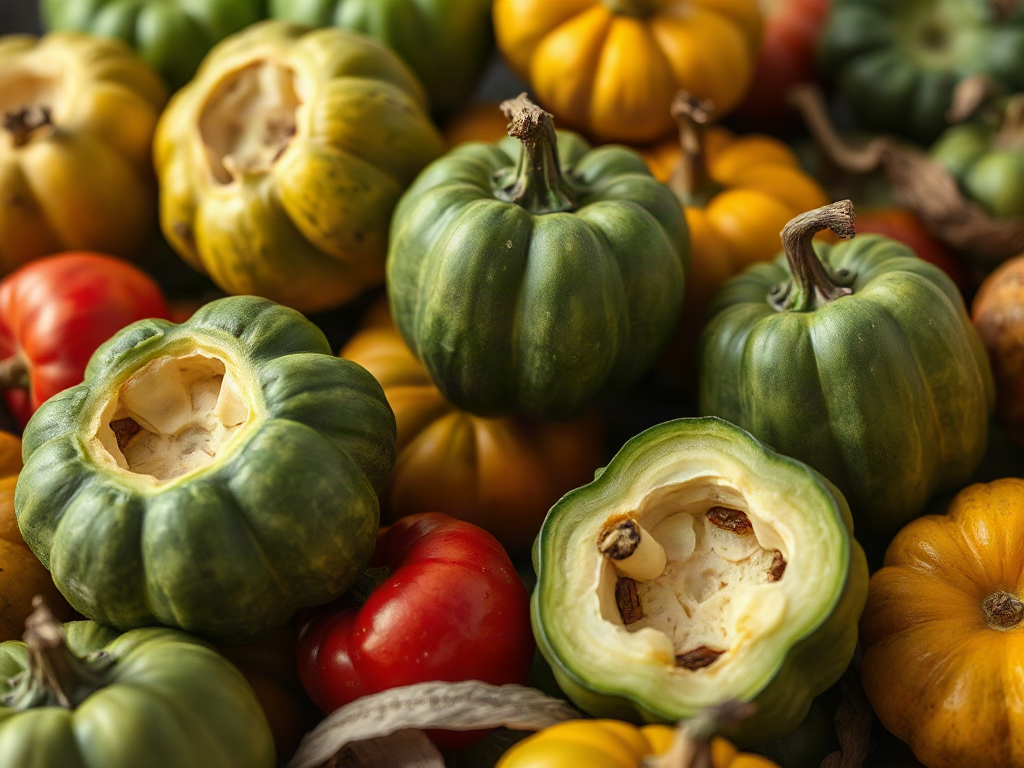
Organic vegetables with hollow centers but safe texture are often edible when the cavity results from normal growth, uneven water availability, heat, or delayed harvesting rather than decay. Bell peppers, cucumbers, zucchini, carrots, and radishes may develop internal gaps while remaining firm, clean-smelling, and free from slime or spreading discoloration. Cut the vegetable open, inspect the cavity and surrounding flesh, and remove any dry, damaged, or questionable tissue before cooking. A hollow center alone does not prove spoilage, but soft walls, mold, sour odor, leaking liquid, or extensive browning should change the decision to discard. Organic certification does not prevent these natural internal texture changes.
Why Safe Vegetables Develop Hollow Centers
A hollow center usually reflects a development or hydration issue rather than contamination. Plant tissues do not always fill evenly as a vegetable enlarges. The outer wall may continue building firm cells while the inner tissue expands more slowly, dries, or separates, leaving a chamber or open space. The result can look surprising when the vegetable is sliced, but appearance alone does not establish that it is unsafe.
Weather and growing conditions influence this structure. Fluctuating moisture can cause rapid expansion followed by slower tissue development, while heat may accelerate fruit growth before the interior has formed densely. Some vegetables also become more hollow as they mature. A large zucchini, for instance, may have a spacious seed cavity and softer seeds even when its outer flesh is not spoiled. A pepper can have a broad empty interior around its seeds because the internal partitions did not fill the cavity completely.
Organic production does not remove these biological variables. Organic vegetables may be grown without certain synthetic pesticides or fertilizers, but they still respond to cultivar genetics, irrigation patterns, temperature, harvest timing, and soil conditions. The organic vegetables with hollow centers but safe texture that shoppers encounter are therefore not necessarily defective; many simply have a different internal structure than expected.
The useful distinction is between an empty space and tissue breakdown. A dry, clean cavity surrounded by firm flesh is a quality concern at most. A wet cavity with slime, fuzzy growth, an acidic or rotten smell, or softening that extends into the wall signals deterioration. Treat the cavity as one observation within a broader inspection rather than as an automatic reason to discard the whole item.
Examples Of Vegetables That May Have Internal Gaps
Bell peppers commonly contain a large central chamber, and the amount of empty space can vary by variety and growing conditions. A pepper may still be suitable for eating when its skin is taut, the walls are crisp, and the cavity is dry. Remove the stem, seeds, and loose membranes, then check for dark wet spots or mold beneath the shoulder. A slightly thin wall may affect roasting or stuffing, but it does not by itself indicate spoilage.
Cucumbers and zucchini can develop hollow or partially hollow centers when growth is uneven or the fruit remains on the plant longer than intended. Their seed area may become enlarged, watery, or spongy before the outside looks seriously changed. For a firm cucumber with a clean smell, scrape out the soft seed channel if the texture is unpleasant and use the remaining flesh in a salad, yogurt sauce, or cooked dish. A mature zucchini with a large cavity is often better for soup, fritters, or bread than for raw slices because cooking disguises texture differences.
Root vegetables can also show internal spaces. Carrots sometimes become woody, split, or develop a central gap as they mature. Radishes may have a pithy center after prolonged growth or storage. These changes reduce crispness and flavor, but a firm, clean interior can still be usable after trimming. Compare that with a root that feels flexible, leaks liquid, smells fermented, or has decay extending from a crack; trimming may not restore its quality or safety.
Celery stalks may appear stringy or unusually open inside, and some cabbage stems contain more air space than expected. The practical question is not whether every cell is dense. It is whether the remaining tissue is intact, clean, and appropriate for the intended dish. For stuffing, select thick-walled peppers. For blending or simmering, a hollow center is usually less consequential than firmness and freshness.
Readers comparing these examples with information about organic vegetables with hollow centers but safe texture should avoid treating all vegetables alike. A dry cavity in a pepper is different from a waterlogged cavity in a cucumber, and a pithy carrot is different from one with active rot. Variety, age, intended use, and the condition of the surrounding flesh all change the decision.
How To Inspect And Prepare A Hollow Vegetable
Inspection should begin with the whole vegetable before it is cut. Look for firmness, intact skin, normal color for that variety, and the absence of leaking liquid. Smell the cut surface after opening it. A neutral vegetal scent or mild sweetness supports a quality explanation; a sour, alcoholic, sulfurous, or rotten odor points toward deterioration. Do not taste a questionable item to decide whether it is safe.
Use a clean knife and cutting surface, especially when opening vegetables that will be eaten raw. Cut lengthwise when you need to examine the cavity, then remove seeds, pith, fibrous tissue, or dry sections. Keep firm flesh that remains clean and normal-looking. If a small localized blemish is clearly separate from the usable tissue, trimming may be practical, but mold is not judged only by what is visible on the surface. Soft foods with spreading mold or deep penetration should be discarded rather than aggressively carved.
A simple decision sequence keeps quality and safety separate:
- Structure: Is the center merely empty, or is the surrounding flesh collapsing?
- Moisture: Is the cavity dry or normally juicy, or is it coated with slime and leaking fluid?
- Odor: Does it smell fresh, or does it have a sour, rotten, or fermented odor?
- Spread: Is discoloration confined to a small area, or does it move through the wall?
- Use: Will the texture work better raw, roasted, stuffed, grated, or cooked?
Cooking can improve a hollow vegetable’s eating quality, but it is not a repair method for spoilage. Roasting may soften a fibrous carrot, and removing a watery zucchini core can improve fritters, yet heat should not be used to justify keeping moldy, slimy, or foul-smelling tissue. Wash intact vegetables under running water before cutting, dry them, and refrigerate cut portions promptly according to ordinary food-handling practices.
When Texture Changes Indicate Spoilage
Safe internal hollowness generally leaves the vegetable’s outer walls firm and its smell ordinary. Spoilage changes the condition of the tissue itself. Warning signs include fuzzy mold, wet decay, pronounced softness, sticky surfaces, darkening that spreads beyond a small bruise, and an unpleasant odor. A hollow center accompanied by these signs should not be treated as a harmless growing variation.
Color requires context. A pale cavity in a pepper may be normal, while gray-brown tissue in a cut cucumber could reflect age, injury, or decay. Small dry areas can sometimes be trimmed from a firm vegetable, but a cavity filled with watery brown material is more concerning than an empty chamber. The boundary matters: clean, solid flesh next to a minor dry defect offers a different risk picture from a wall that is wet and breaking down.
Temperature history also affects judgment. Vegetables stored warm and damp may deteriorate faster than those kept cool with airflow. Condensation inside a sealed bag can make the surface wet and accelerate softening. A vegetable that was firm at purchase but now has a sour smell and slippery interior is not made acceptable by its organic label or by cutting away the most obvious spot.
Do not confuse nutritional quality with safety. A pithy carrot may be less pleasant and may lose some freshness, but that is a quality limitation. Mold, active decay, and abnormal odor are safety-relevant warning signs. When uncertainty remains after cutting, discarding a single vegetable is a more sensible choice than trying to salvage tissue that is soft, wet, or contaminated-looking. The organic vegetables with hollow centers but safe texture worth using are the ones whose surrounding structure still passes these basic checks.
Growing, Buying, And Storing For Better Texture
Preventing hollow centers completely is not realistic because cultivar and field conditions play large roles. Gardeners can reduce erratic growth by maintaining steadier soil moisture, avoiding abrupt swings between drought and heavy watering, and harvesting vegetables at the intended maturity. Excess nitrogen, heat stress, or delayed harvest may alter texture in some crops, but the precise response depends on the plant and growing environment. A hollow interior is not enough evidence to diagnose one specific growing mistake.
Shoppers can improve their odds by selecting vegetables that feel appropriately heavy, have firm walls, and show no sunken wet spots or cracks that are actively leaking. For peppers intended for stuffing, choose broad, thick-sided specimens. For zucchini, medium-sized fruit often offers a denser texture than oversized examples. For carrots and radishes, avoid limp roots when crispness matters. These choices are about eating quality, not a guarantee that every interior will be solid.
Storage should preserve the condition the vegetable already has. Keep vegetables cool as appropriate for the crop, avoid trapping visible moisture against the surface, and separate damaged items from sound ones. Check stored produce before preparing it rather than assuming the outside tells the whole story. A quick cut can reveal a mature seed cavity, internal browning, or a normal empty chamber before the vegetable is added to a meal.
Match preparation to the limitation. Hollow peppers may roast well but hold less filling. A seeded zucchini can be grated after excess moisture is pressed out. Pithy carrots work better in a braise than as raw sticks, while a crisp carrot with a narrow center is better for snacking. This approach reduces waste without lowering standards: preserve firm, clean tissue, change the recipe when texture demands it, and discard vegetables showing genuine deterioration.
For food-safety handling and produce inspection principles, consult guidance from the USDA Food Safety and Inspection Service, the U.S. Food and Drug Administration, and university extension programs. These sources are useful for separating ordinary quality changes from conditions that warrant disposal.
Frequently Asked Questions
Are hollow-centered organic vegetables safe to eat?
Often, yes, if the cavity is clean and dry and the surrounding flesh remains firm, fresh-smelling, and free from mold or slime. Remove poor-textured sections before use.
Why do zucchini and cucumbers become hollow inside?
Uneven growth, moisture fluctuations, heat, variety, and delayed harvest can enlarge the seed cavity or leave open space inside while the outer wall remains usable.
Should a hollow pepper be thrown away?
Not solely because it is hollow. Check for firm walls, a normal smell, and no wet decay or spreading discoloration; remove the stem, seeds, and questionable tissue.
Can cooking make a hollow vegetable safe?
Cooking can improve texture but does not reliably correct mold, slime, active decay, or a rotten odor. Discard vegetables with those spoilage signs.
Does organic certification prevent internal vegetable defects?
No. Organic standards concern production methods, while hollow centers can result from genetics, maturity, irrigation, temperature, and harvest conditions.
Conclusion
A hollow center is a structural clue, not a verdict. Firm peppers, zucchini, cucumbers, carrots, and radishes may remain usable when their interior gap is clean, dry, and free from unusual odor or spreading damage. Open the vegetable, inspect the cavity and nearby flesh, trim only clearly localized quality defects, and choose a preparation that suits the remaining texture. Treat slime, fuzzy growth, leaking liquid, foul odor, or extensive softening as reasons to discard rather than salvage. Organic labeling does not change those inspection rules. With a quick cut and a realistic distinction between reduced quality and active spoilage, you can avoid unnecessary waste while keeping questionable vegetables out of the meal.