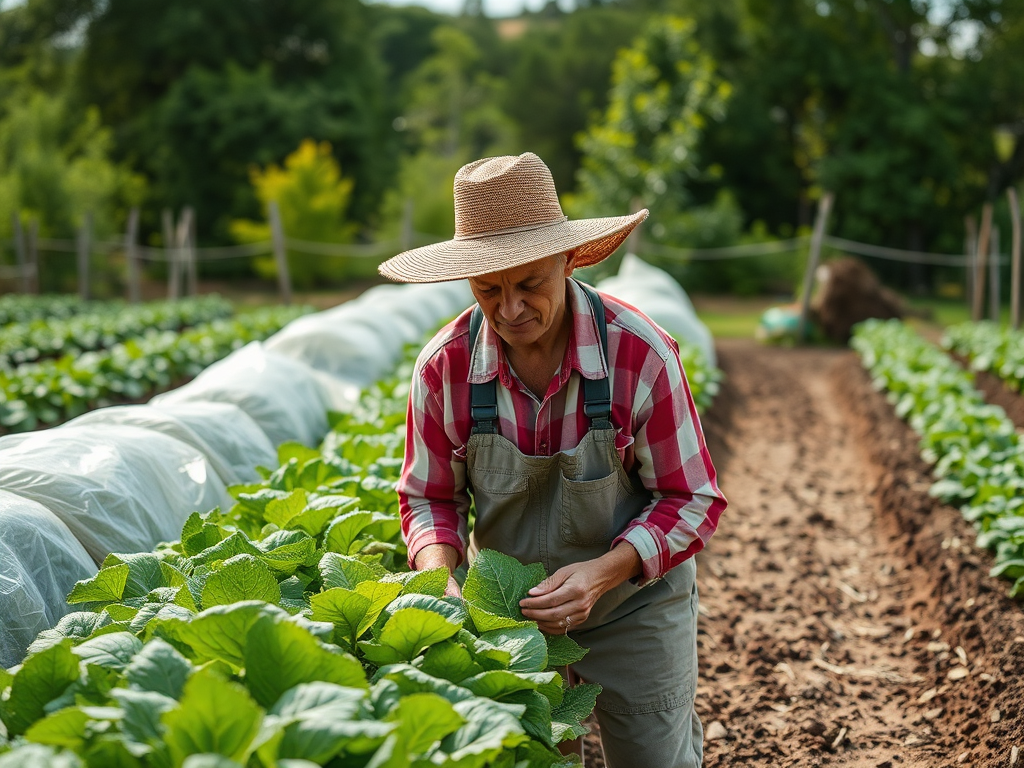
The impact of organic farming on community health can include cleaner water, healthier soil, reduced occupational pesticide exposure, stronger local food systems, and rural economic benefits, but outcomes depend on farming methods and access to affordable produce. Organic practices such as compost use, crop rotation, cover cropping, and biological pest control may reduce runoff and improve soil function. Communities still need to address yield variability, certification costs, transportation, and the fact that organic labels do not guarantee a balanced diet or eliminate every food-safety risk. The strongest public-health approach combines responsible production with fair distribution, worker protections, nutrition education, and routine monitoring of soil and water conditions.
How Organic Farming Can Shape Community Health
Organic farming affects community health through several connected pathways rather than through a single nutritional claim. Production rules generally restrict synthetic pesticides and fertilizers and emphasize practices such as crop rotation, composting, cover crops, and ecological pest management. Those choices can influence farmworker exposure, soil quality, water runoff, biodiversity, local employment, and the availability of fresh produce.
The health effect depends on how the farm operates and who can benefit from it. A nearby farm supplying vegetables to schools, markets, and food-assistance programs may strengthen access to nutrient-dense foods. A small certified operation that sells only through a distant premium market may have a much smaller effect on neighborhood diets. Distance, price, transportation, cultural preferences, and storage capacity often matter as much as the production label.
Organic production should also be separated from the broader idea of sustainable agriculture. An organic farm may use approved pesticides, consume substantial water, or transport produce long distances. Conversely, a noncertified farm may use careful soil management and integrated pest control. Certification provides a defined production standard, but it is not a complete health scorecard.
For readers researching the impact of organic farming on community health, the useful question is not simply whether organic is better. Ask which pathway is changing: exposure, water quality, food availability, income, or dietary behavior. That framing prevents the common mistake of treating a farm label as proof of a guaranteed community outcome.
Soil, Water, and Environmental Exposure
Soil and water are central public-health pathways because farming decisions can affect what workers, residents, and ecosystems encounter over time. Organic systems commonly rely on compost, manure management, crop rotations, mulches, and cover crops to maintain fertility and suppress weeds. These practices can increase soil organic matter and reduce erosion when implemented well, helping soil retain water and limiting sediment movement into nearby waterways.
Reduced reliance on synthetic agricultural chemicals may also lower some exposure concerns for farmworkers and neighbors, although “organic” does not mean chemical-free. Approved substances can still irritate skin, affect aquatic organisms, or become hazardous when misused. Natural does not automatically mean harmless. Safe storage, protective equipment, application timing, buffer zones, and compliance with product instructions remain necessary.
Consider two fields beside a small stream. A field with bare soil, heavy rain, and poorly managed nutrient applications may send sediment and nutrients downstream. A field using permanent ground cover, grassed waterways, and carefully timed compost applications may reduce that movement. The difference comes from management, not from the label alone. Organic methods can support the second pattern, but results vary by soil type, climate, crop, and operator skill.
Manure creates a separate risk-management issue. Uncomposted or improperly handled manure can introduce pathogens to crops or water. Farmers need suitable composting, application intervals, worker hygiene, clean irrigation water, and postharvest handling. Communities evaluating environmental gains should therefore examine both reduced chemical exposure and biological safety controls.
Practical signs of a well-managed operation include vegetated field margins, erosion control, clear chemical and manure storage, protected wells, and records of soil amendments. Residents should avoid assuming that a farm is safe or unsafe from marketing language alone. Local health departments, conservation offices, university extension services, and water-monitoring programs can provide more useful evidence than a general comparison between organic and conventional agriculture.
Food Access, Nutrition, and Local Economies
Organic farming can contribute to community health when it expands reliable access to varied, minimally processed foods. Fresh leafy greens, beans, root vegetables, fruit, whole grains, and herbs can support dietary quality, but the benefit depends on whether households can afford and use them. A farm that sells exclusively through high-price channels may produce organic food without improving nutrition for nearby residents.
Local distribution changes the practical picture. A cooperative arrangement among farms, schools, clinics, food pantries, and neighborhood retailers can move produce into places where residents already shop or receive services. Community-supported agriculture, sliding-scale shares, mobile markets, and produce-prescription programs may reduce access barriers, though each requires funding, refrigeration, transportation, and dependable supply.
Income is another pathway. Small and mid-sized farms can create seasonal jobs, contracting opportunities, food-processing work, and markets for local services. Those gains may support housing, household stability, and access to care. They are not automatic: low wages, unstable seasonal employment, land concentration, or rising certification costs can limit the health value of farm-related economic activity.
Nutrition claims require restraint. Research comparing organic and conventional foods has found that differences can vary by crop, growing conditions, storage, and preparation. Choosing organic produce does not compensate for a diet dominated by sugary drinks, refined snacks, or excessive sodium. When budgets are tight, buying a wider range of affordable fruits, vegetables, legumes, and whole grains may offer more nutritional value than converting every purchase to organic.
A useful household and community priority list is:
- Improve access to fresh produce and staple foods before focusing on premium labels.
- Target foods and locations where exposure, contamination, or access concerns are documented.
- Support fair pricing that benefits growers without excluding lower-income households.
- Pair farm programs with cooking skills, storage advice, and culturally appropriate nutrition education.
The strongest results occur when production and distribution are planned together. A harvest agreement with a school, for example, is valuable only if menus, delivery timing, storage, and student acceptance are addressed.
Tradeoffs, Evidence, and Community Priorities
Organic agriculture involves tradeoffs that should be judged against local goals. Weed control may require more mechanical cultivation, which can affect fuel use and soil disturbance. Lower yields in some settings may require more land to produce the same volume, while diversified rotations can improve resilience and soil function. Water availability, labor supply, pest pressure, and regional climate can change the balance.
Evidence should be read at the level of the specific outcome. Findings about pesticide residues are not the same as findings about community disease rates. Soil measurements do not prove improved human health by themselves, and greater farm biodiversity does not automatically mean cheaper food. A careful assessment connects a measurable environmental or economic change to a plausible exposure or access pathway.
Communities should also distinguish worker health from consumer marketing. Farmworkers may face risks from repetitive labor, heat, dust, machinery, and approved or conventional pesticides. Organic certification may reduce some chemical exposures but does not remove the need for training, protective equipment, shade, clean water, and fair working conditions. A public-health program that celebrates organic acreage while overlooking labor conditions is incomplete.
When resources are limited, prioritize interventions with several benefits at once. Cover crops and erosion control may protect waterways and preserve farm productivity. Direct purchasing from local farms may improve revenue and food access. Shared cold storage may reduce waste and make nutritious food available for longer. These choices are often more consequential than encouraging consumers to make isolated premium purchases.
Common failures include assuming certification guarantees sustainability, measuring success only by sales, and ignoring residents who cannot reach farmers’ markets. A better comparison asks whether the program improves water or soil indicators, worker protections, household access, diet quality, and economic stability. Use local baseline information where possible, and describe uncertainty rather than presenting a complex outcome as a simple organic-versus-conventional contest.
Practical Steps for Measuring Local Impact
Measuring the impact of organic farming on community health requires a defined starting point and a manageable set of indicators. Begin by identifying the community’s main concern: pesticide exposure, drinking-water protection, produce access, farm income, or diet-related health. The chosen goal determines what should be monitored and prevents broad claims that cannot be tested.
A local assessment can combine environmental, food-system, and social information. Soil tests may track organic matter, erosion indicators, or nutrient management. Water programs can examine wells and surface water according to local risks. Food-access measures might include price, distance, market hours, supply consistency, and participation by low-income households. Worker interviews, conducted ethically and confidentially, can reveal training or safety gaps that production records miss.
Use a before-and-after comparison when a new farm program begins, while recognizing that weather, prices, and broader economic changes can influence results. For example, a school purchasing agreement might be assessed through delivery reliability, student acceptance, food waste, produce affordability, and farm revenue rather than through enrollment alone.
Residents, growers, health professionals, and local organizations should agree on what success means before collecting data. A compact review can ask:
- Which exposure or access problem is being addressed?
- What farming or distribution practice is expected to change it?
- Which indicator can show progress within one season or several years?
- Who might be left out because of price, transport, language, or work schedules?
- What evidence would show that the approach needs adjustment?
Signs of progress may include more consistent produce availability, safer water-management practices, improved worker training, reduced erosion, or stronger participation from underserved households. Signs of failure include higher prices without improved access, unreliable supply, unsafe manure handling, or benefits concentrated among already advantaged residents. Linking decisions to observable outcomes makes local organic agriculture more accountable and more useful than relying on broad health promises.
Frequently Asked Questions
Can organic farming improve community health?
It may contribute through soil conservation, water protection, reduced reliance on some synthetic pesticides, local employment, and improved access to fresh foods. Results depend on management and distribution.
Does organic farming eliminate pesticide exposure?
No. Organic farms may use approved pesticides, and workers still need training, protective equipment, safe storage, and careful application practices.
Is organic food always more nutritious?
Not necessarily. Nutrient differences vary by crop and growing conditions. Overall dietary variety and access to minimally processed foods often matter more than converting every purchase to organic.
How can organic farms help low-income households?
Programs such as school purchasing, food-bank partnerships, sliding-scale shares, mobile markets, and produce benefits can connect local harvests with households facing price or transportation barriers.
What should communities measure first?
Choose indicators tied to the local goal, such as water quality, soil erosion, worker safety training, produce prices, supply reliability, or participation by underserved households.
Conclusion
Organic farming can support community health when its environmental practices are matched with fair access, safe working conditions, and dependable local distribution. Soil cover, compost management, crop diversity, and careful pest control may protect shared resources, while farm-to-school and community-market partnerships can make fresh food more reachable. The label alone is not enough: approved inputs, manure handling, labor conditions, transportation, price, and household food preferences all affect the outcome. Communities should choose a specific health or access goal, establish local baseline measures, and track whether benefits reach residents who need them most. For households, prioritize a varied diet and practical affordability rather than assuming every organic purchase produces the same public-health value.