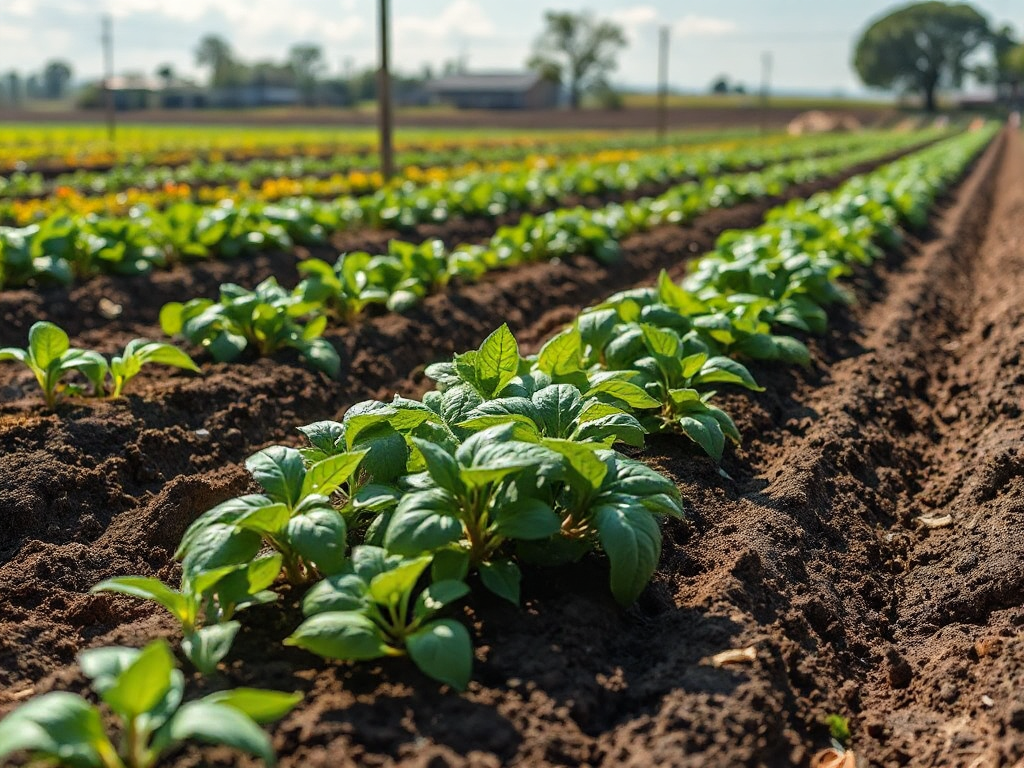
Organic farming may not be sustainable for all because it can require more land, labor, water, and purchased inputs while producing less food per acre in some conditions. Crop rotation, compost, biological pest control, and the avoidance of synthetic fertilizers can improve soil and reduce certain chemical risks, but they do not remove drought, disease, weed pressure, or affordability problems. A small diversified farm with strong local markets may manage these demands, whereas a large operation in a water-stressed region may face difficult tradeoffs. Sustainability should therefore be judged by yield, soil health, emissions, water use, worker conditions, farm finances, and local food access together—not by the organic label alone.
Where Organic Sustainability Runs Into Limits
Organic farming is not automatically unsustainable, but its environmental and economic performance depends heavily on location, crop, scale, and management. The system avoids most synthetic fertilizers and pesticides and generally emphasizes crop rotation, compost, cover crops, biological controls, and soil-building practices. Those methods can strengthen soil structure and reduce dependence on some manufactured inputs, yet they also demand planning, labor, land, and reliable ecological conditions.
The central mistake is treating “organic” as a complete sustainability verdict. A diversified vegetable farm near a dense market may sell high-value crops, return compost to the soil, and use careful irrigation successfully. A grain producer dealing with persistent weeds, short rotations, or limited manure supplies may encounter a very different balance. Transport distance, refrigeration, packaging, worker safety, and water withdrawals can also matter alongside production methods.
Organic certification sets production rules; it does not guarantee that every farm has low emissions, affordable food, strong labor conditions, or ideal water management. Readers comparing systems should ask what happens on the specific farm: Are nutrients replaced efficiently? Is soil covered between crops? Does the farm rely on imported amendments? Are yields stable during drought? Those questions reveal more than a label used in isolation.
Land, Yield, and Nutrient Tradeoffs
Lower yields in some organic systems can create a land-use tradeoff. Without readily soluble synthetic nitrogen, farmers may depend on legumes, compost, animal manure, or approved fertilizers to supply nutrients. Rotations that include cover crops can improve soil and interrupt pest cycles, but those crops occupy land and time that might otherwise produce food for sale. If the yield gap is large and demand remains constant, producing the same quantity may require additional acreage.
That outcome is not universal. Well-managed organic farms can perform strongly in particular crops, climates, and soils, especially when rotations, timing, irrigation, and weed control are well matched to local conditions. A vegetable grower may use intensive cultivation and compost to maintain productivity, while a low-input grain farm may struggle to control perennial weeds. Comparing one successful farm with one poorly managed farm produces the wrong lesson in either direction.
Nutrient cycling presents another constraint. Compost can improve water-holding capacity and add organic matter, but its nutrient ratios may not match crop needs. Repeated applications can bring excess phosphorus or salts, particularly where manure is imported from elsewhere. Conversely, a farm without enough organic material may buy approved inputs, shifting environmental burdens to mining, processing, packaging, and transport.
A useful assessment checks whether the farm has a realistic nutrient budget rather than assuming compost is harmless. Soil tests, crop removal estimates, legume performance, and amendment records can show whether nutrients are accumulating or being depleted. The common failure is to praise soil-building practices without asking whether the system can supply nitrogen at the required scale. A farm that preserves soil but continually mines nutrients from another region has transferred part of its sustainability problem.
Water, Pest Control, and Climate Pressure
Organic methods can reduce reliance on synthetic chemical controls, but pest management remains technically demanding. Farmers may use resistant varieties, crop rotation, insect netting, cultivation, traps, beneficial insects, or approved pesticides. Each option has limits. Mechanical cultivation can disturb soil and consume fuel; row covers require plastic and labor; approved substances can still affect non-target organisms; and biological control depends on timing and weather.
Weed pressure illustrates the tradeoff clearly. A farmer who cannot use a conventional herbicide may cultivate between rows, flame weeds, mulch heavily, or adjust planting dates. These approaches may work on a small vegetable field but become expensive or impractical across broad-acre crops. Repeated tillage can also weaken soil structure and increase erosion, undermining the environmental goals that motivated the system.
Water availability can be even more decisive. Organic matter and cover crops may improve infiltration and reduce evaporation, but they cannot create water during a prolonged drought. Irrigated organic produce grown in a water-stressed basin may have a more complicated environmental profile than rain-fed conventional crops in a wetter region. The relevant questions include irrigation efficiency, groundwater dependence, crop selection, and whether soil moisture is monitored rather than guessed.
Climate variability magnifies every weakness. Heavy rain can wash away nutrients, heat can disrupt pollination, and warmer winters can alter pest cycles. A diversified farm may spread risk across crops, while a specialized operation may achieve efficiency but face sharper losses when one pest or weather event strikes. Signs of a resilient system include stable soil cover, multiple income crops, functioning drainage, and contingency plans. Signs of strain include emergency tillage, repeated crop failure, declining soil tests, or rising irrigation demand.
Farm Economics and Food Access
Organic farming may be financially unsustainable for producers who cannot absorb certification costs, additional labor, lower early yields, or volatile prices. Weed control and recordkeeping can require more staff time, while specialty equipment and approved inputs may cost more or be difficult to source. A farm may produce excellent food and still operate on margins too thin to maintain equipment, pay workers fairly, or survive a bad season.
Market access changes the calculation. Direct sales, community-supported agriculture, restaurants, and local retailers may reward quality and provide better margins. Farms selling into distant commodity markets often have less control over price and may find organic production harder to justify. Small farms can sometimes manage intensive practices efficiently, but they may lack storage, labor, credit, or bargaining power. Large farms can spread equipment and compliance costs, yet their scale can make diversified rotations and manual weed control more difficult.
Consumer affordability is part of sustainability. If organic prices place nutrient-dense produce beyond the reach of many households, a system may perform well environmentally in one area while weakening food access in another. Price differences reflect more than farmer profit; they can include labor, certification, handling, shrink, transportation, and retail positioning. A household deciding whether to buy organic should not assume that every organic item has a better environmental outcome than a nearby, responsibly managed alternative.
Practical support should target the constraint rather than promote a universal label. Better extension services, regional compost systems, shared equipment, fair purchasing contracts, and public investment in soil and water conservation may help farms transition without shifting all costs to growers or shoppers. A common mistake is expecting farmers to solve ecological problems through production rules alone while ignoring land prices, labor availability, infrastructure, and market power.
A Practical Way to Judge Sustainability
A credible comparison examines outcomes across several categories instead of asking whether organic farming is inherently sustainable. Use the same questions for organic and conventional farms, then consider local conditions. This approach also complements broader why organic farming may not be sustainable for all research without reducing the issue to a slogan.
- Soil: Check erosion, soil organic matter, compaction, nutrient balance, and whether cover crops survive the local season.
- Land: Compare yield, rotation length, habitat protection, and the acreage required to supply the same food.
- Water: Examine irrigation source, application efficiency, drought exposure, drainage, and crop suitability.
- Inputs: Ask where compost, manure, approved pesticides, fuel, plastics, and equipment come from.
- People and finances: Consider worker protections, labor intensity, farm profitability, price, and access for nearby households.
Priorities should follow the farm’s largest pressure. If erosion is severe, ground cover and reduced disturbance may matter more than the label. If water is scarce, crop choice and irrigation management deserve attention before certification status. If weeds are overwhelming the operation, a rotation that includes competitive cover crops may be more durable than simply adding labor or approved sprays.
Readers evaluating a product can look for transparent farm information, seasonal sourcing, and claims that describe actual practices rather than relying on broad environmental language. For a household budget, buying fewer heavily marketed products and choosing fresh, minimally processed foods may matter more than making every purchase organic. For farmers, trialing changes on a limited acreage, tracking yields and input costs, and reviewing soil and water indicators over several seasons provides better evidence than a single successful harvest.
Organic and conventional systems can each contain strong and weak examples. Integrated approaches may combine rotations, cover crops, precision application, resistant varieties, habitat, and carefully targeted controls, depending on applicable rules and farm goals. The strongest decision is the one that improves measurable outcomes without creating an unmanageable burden elsewhere. More context on why organic farming may not be sustainable for all should therefore focus on tradeoffs, not simple rankings.
Frequently Asked Questions
Is organic farming always better for the environment?
No. It may reduce some synthetic inputs, but land demand, tillage, water use, transport, approved pesticides, and nutrient sourcing can change the result.
Why can organic farms need more land?
Some crops produce less per acre under organic management, and rotations or cover crops may require land and time that do not directly produce a saleable harvest.
Can organic farming work during drought?
It can, especially with suitable crops, soil cover, and efficient irrigation, but organic methods cannot eliminate water scarcity or guarantee stable yields.
Does organic certification prove that a farm is sustainable?
Certification verifies specified production practices, not every outcome involving emissions, labor, affordability, biodiversity, or regional water use.
What should shoppers prioritize when organic food is too expensive?
Prioritize an overall nutritious diet, minimally processed foods, seasonal options, and purchases that fit the household budget rather than treating organic status as an all-or-nothing rule.
Conclusion
Organic farming may be a strong fit for some farms and a poor fit for others because sustainability is shaped by yield, land, water, labor, nutrients, markets, and climate. The useful question is not whether organic production is universally good or bad; it is whether the specific system maintains soil, uses water responsibly, supports viable farm finances, and supplies food without shifting excessive costs elsewhere. Farmers can begin by tracking yields, input sources, soil tests, irrigation, labor hours, and crop failures across several seasons. Shoppers can favor nutritious foods, seasonal and local options where practical, and transparent producers while respecting budget limits. A balanced assessment leaves room for organic, conventional, and mixed methods when evidence from the farm’s actual conditions supports them.
Further Reading
Authoritative Sources
- 5 Reasons Why Organic Farming Is Not Sustainable
edengreen.comOrganic produce is subject to seasonal variations and local climate conditions. This can result in inconsistent availability and quality throughout the year.
- Role of organic farming for achieving sustainability in ...
sciencedirect.comOne major disadvantage of organic farming is the high costs and time consumption in the process. It might not be sustainable/profitable. Many studies conducted ...
- Organic vs Conventional Food Production Methods
kb.wisc.eduMore land is therefore needed to produce fewer crops—and that means organic farming may not always be the least-cost choice. Clearing ...
- The Problems with a Large-Scale Shift to Organic Farming
thebreakthrough.orgOrganic farming prohibits the use of synthetic fertilizers, the primary source of nitrogen for crops worldwide.1 With less of this essential ...