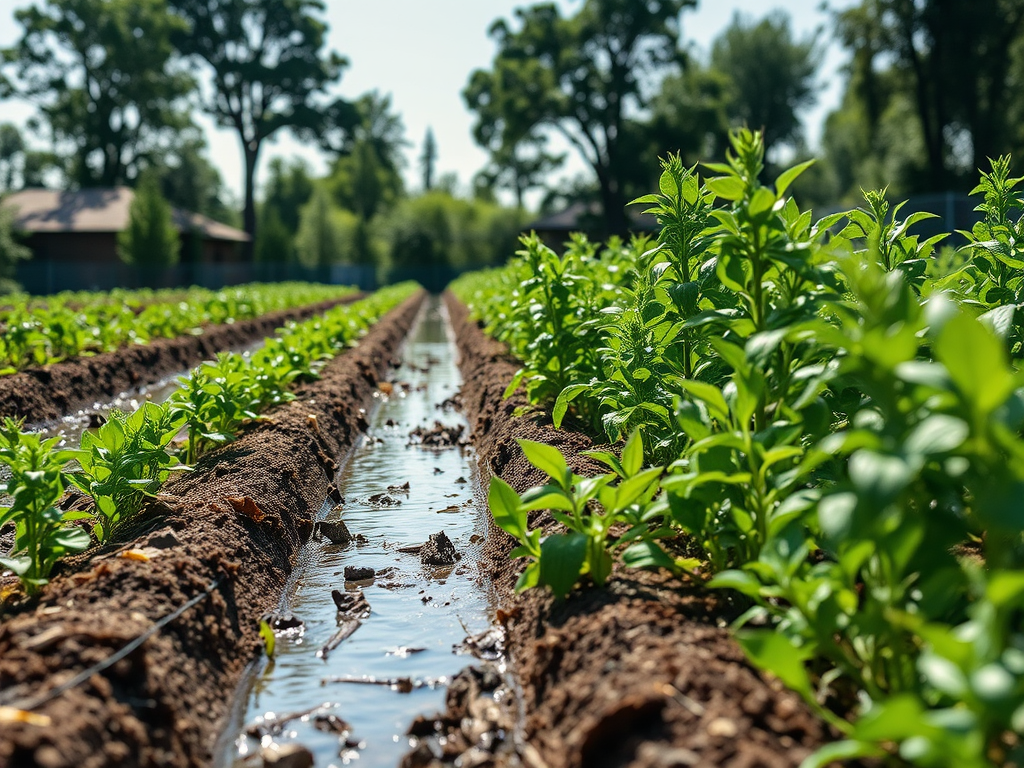
The impact of organic farming on water quality is generally positive, as it reduces chemical runoff, enhances soil health, and promotes biodiversity. Organic practices typically limit the use of synthetic fertilizers and pesticides, which can contaminate water sources. However, challenges such as nutrient leaching and the need for effective water management still exist. Understanding these dynamics is crucial for maximizing the benefits of organic agriculture while mitigating potential risks.
Understanding Organic Farming Practices
Organic farming is an agricultural method that emphasizes sustainability, ecological balance, and the avoidance of synthetic inputs. This approach typically involves practices such as crop rotation, composting, and the use of natural pest control methods. One of the principal goals is to maintain soil health, which in turn supports water quality. Healthy soils can absorb and filter rainwater more effectively, reducing the risk of runoff that may carry pollutants into nearby water bodies.
Importantly, organic farming adheres to strict regulations that limit the use of chemical fertilizers and pesticides. This is crucial because these substances can leach into groundwater or runoff into streams and rivers, causing contamination. By minimizing these inputs, organic farming practices can contribute to cleaner water sources.
Understanding Organic Farming Practices matters because it turns the impact of organic farming on water quality from a broad idea into a decision the reader can actually apply. The practical difference usually shows up in the details: how much is needed, when the choice is made, what tradeoff is acceptable, and what sign shows the approach is working. For gardening topics, the strongest advice connects soil conditions, plant needs, timing, and observable growth signals.
A useful way to handle this section is to compare the normal baseline with the situation that creates extra demand. If organic is the baseline concern, then farming becomes the adjustment point and water becomes the outcome to watch. That keeps the advice specific without forcing the reader into a rigid formula that may not fit their routine, budget, tolerance, schedule, or current level of experience.
The most common mistake is changing too many variables at once. A better approach is to choose one measurable adjustment, use it consistently long enough to see a pattern, and then refine the next step based on energy, comfort, performance, safety, or reliability. This makes the guidance easier to trust because the reader can connect the recommendation to what they observe rather than guessing from a generic checklist.
The practical takeaway is to make the section actionable: identify the main constraint, choose the smallest useful change, and compare the result against the goal. When the outcome improves, the reader can keep the approach. When it does not, the next change should target the most likely bottleneck rather than repeating the same step with more effort.
Effects on Water Quality
The impact of organic farming on water quality is multifaceted and generally favorable. Studies indicate that organic farms tend to have lower levels of nitrate and pesticide contamination in their water sources compared to conventional farms. This is largely due to the reduced application of synthetic fertilizers, which are often a primary source of nitrate pollution in water systems.
Moreover, organic farming practices promote the use of cover crops and crop rotations, which enhance soil structure and increase its ability to retain water. This not only supports the hydration of crops but also reduces surface runoff, which can carry soil and pollutants into waterways. By improving soil health and water retention, organic farming can lead to improved water quality in the surrounding ecosystems.
However, it is essential to note that organic farming is not without its challenges. For instance, while organic practices reduce some forms of pollution, they may also lead to nutrient leaching, particularly in areas with heavy rainfall. This occurs when organic fertilizers, such as manure, are applied in excess, resulting in runoff that can still degrade water quality.
Effects on Water Quality matters because it turns the impact of organic farming on water quality from a broad idea into a decision the reader can actually apply. The practical difference usually shows up in the details: how much is needed, when the choice is made, what tradeoff is acceptable, and what sign shows the approach is working. For nutrition topics, the strongest advice connects portion size, food quality, timing, and recovery instead of treating every meal as a fixed serving.
A useful way to handle this section is to compare the normal baseline with the situation that creates extra demand. If water is the baseline concern, then organic becomes the adjustment point and farming becomes the outcome to watch. That keeps the advice specific without forcing the reader into a rigid formula that may not fit their routine, budget, tolerance, schedule, or current level of experience.
The most common mistake is changing too many variables at once. A better approach is to choose one measurable adjustment, use it consistently long enough to see a pattern, and then refine the next step based on energy, comfort, performance, safety, or reliability. This makes the guidance easier to trust because the reader can connect the recommendation to what they observe rather than guessing from a generic checklist.
Case Studies of Organic Farming and Water Conservation
Real-world examples of organic farming showcasing its positive impact on water quality are increasingly prevalent. For instance, a study conducted in the Midwest United States found that organic farms had significantly lower nitrate levels in their runoff compared to conventional farms. This was attributed to the use of organic fertilizers and cover crops that enhanced soil health.
Another notable case is found in California’s Central Valley, where organic farming practices have been linked to improved water quality in local rivers. Farmers implementing organic methods reported enhanced soil moisture levels and reduced reliance on irrigation, which in turn diminished the risk of runoff and soil erosion.
These examples illustrate that organic farming not only contributes to better water quality but also promotes sustainable agricultural practices that can be replicated in other regions. The success of these farms can inspire further adoption of organic methods, ultimately benefiting the broader ecosystem.
Case Studies of Organic Farming and Water Conservation matters because it turns the impact of organic farming on water quality from a broad idea into a decision the reader can actually apply. The practical difference usually shows up in the details: how much is needed, when the choice is made, what tradeoff is acceptable, and what sign shows the approach is working. For gardening topics, the strongest advice connects soil conditions, plant needs, timing, and observable growth signals.
A useful way to handle this section is to compare the normal baseline with the situation that creates extra demand. If organic is the baseline concern, then farming becomes the adjustment point and water becomes the outcome to watch. That keeps the advice specific without forcing the reader into a rigid formula that may not fit their routine, budget, tolerance, schedule, or current level of experience.
Challenges and Management Strategies
While the advantages of organic farming for water quality are clear, challenges remain. One of the primary concerns is nutrient management. Organic farmers must carefully manage the application of organic fertilizers to prevent nutrient leaching and ensure that soil health is maintained without compromising water quality.
Effective water management strategies are essential in mitigating potential risks associated with organic farming. Farmers can implement practices such as precision agriculture, which utilizes technology to optimize fertilizer application, reducing the likelihood of excess nutrients entering water systems. Additionally, creating buffer zones with native vegetation along water bodies can help filter runoff and protect water quality.
Education and training for organic farmers about best practices in water management are also vital. By understanding the specific needs of their crops and the local ecosystem, farmers can make informed decisions that enhance both agricultural productivity and water quality.
To gain deeper insights into the impact of organic farming on water quality, readers can explore various authoritative sources that provide comprehensive research and guidelines on sustainable agricultural practices.
Challenges and Management Strategies matters because it turns the impact of organic farming on water quality from a broad idea into a decision the reader can actually apply. The practical difference usually shows up in the details: how much is needed, when the choice is made, what tradeoff is acceptable, and what sign shows the approach is working. For nutrition topics, the strongest advice connects portion size, food quality, timing, and recovery instead of treating every meal as a fixed serving.
A useful way to handle this section is to compare the normal baseline with the situation that creates extra demand. If water is the baseline concern, then organic becomes the adjustment point and quality becomes the outcome to watch. That keeps the advice specific without forcing the reader into a rigid formula that may not fit their routine, budget, tolerance, schedule, or current level of experience.