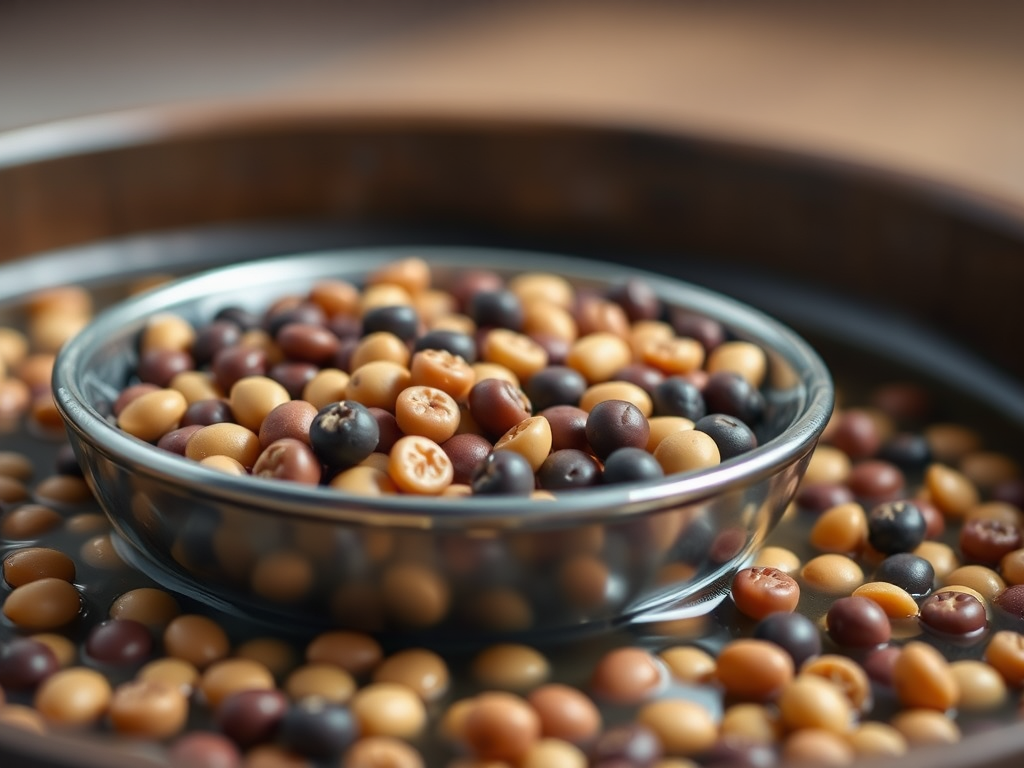
Soaking changes the nutrition of organic legumes mainly by reducing some water-soluble compounds, including part of their phytate and oligosaccharide content, while also causing small losses of nutrients that move into the discarded water. The effect depends on the legume, soaking time, temperature, and whether the water is retained or thrown away. Soaking can shorten cooking time, soften beans, and make them easier for some people to digest, but it does not automatically make every nutrient more available or make legumes safer without thorough cooking. For dried kidney beans and similar varieties, discard the soaking water, rinse well, and cook in fresh water until completely tender.
What Soaking Changes in Legume Nutrition
Soaking dried organic legumes changes their physical structure before cooking. Water moves into the seed, swelling the starch and softening the outer coat. That hydration usually reduces the time and energy needed to cook chickpeas, kidney beans, black beans, navy beans, and other dried legumes. It also changes what remains in the soaking water, which is why the method can affect nutrition as well as texture.
The largest nutritional changes are not usually a dramatic increase or decrease in total protein. Legumes remain useful sources of plant protein, complex carbohydrate, fiber, folate, potassium, magnesium, iron, and other nutrients after ordinary soaking and cooking. Instead, soaking can remove some water-soluble compounds and minerals into the water. If that liquid is discarded, those compounds leave with it; if it is used in a stew, some remain in the finished meal.
Soaking may also reduce part of the compounds that contribute to digestive discomfort. Raffinose-family oligosaccharides, for instance, can move into the water and later be broken down during cooking. The result may be a more comfortable serving for some people, although individual responses vary. A person who tolerates canned lentils well may not need a long soak, while someone who experiences bloating after large servings of dried beans may prefer soaking and thorough cooking.
“Organic” describes how the legumes were produced and handled under applicable certification rules; it does not create a separate soaking chemistry. Organic and conventional beans of the same type can both lose water-soluble compounds during soaking. The more useful comparison is dried versus canned, soaked versus unsoaked, and drained versus undrained.
Food composition databases such as USDA FoodData Central can help compare cooked legumes, but values vary with variety, maturity, water absorption, cooking method, and whether the product is drained. Avoid treating a package label for dry beans as a precise prediction of the nutrition in a cooked portion.
Phytates, Oligosaccharides, and Digestive Effects
Soaking can lower some phytate content, but the size of the change is inconsistent. Phytate, also called phytic acid in some food discussions, is a natural storage compound in seeds. It can bind minerals under some digestive conditions, which has led to claims that soaking makes all legume minerals fully available. That conclusion is too strong. Mineral absorption depends on the whole meal, the person’s nutritional status, the mineral itself, and preparation conditions.
Soaking may also reduce tannins and other compounds concentrated in the seed coat, particularly when the water is discarded. These substances are not simply “toxins” to be eliminated. They are normal plant compounds, and some have biological activity that researchers study. Removing more of them is not automatically better, especially if it also removes useful soluble nutrients. The sensible goal is a well-cooked, digestible food rather than maximum removal of every naturally occurring compound.
Digestive comfort is often the most noticeable reason to soak. Gas-producing carbohydrates can pass through the small intestine and be fermented by gut bacteria in the colon. A soak followed by draining and rinsing may reduce the amount reaching that stage, though it cannot guarantee freedom from gas. Portion size matters: a small serving of lentils may be tolerated better than a large bowl of chickpeas, regardless of preparation.
Consider two meal examples. A chickpea salad made from soaked, boiled chickpeas may be easier to chew and digest than one made from undercooked beans, but the dressing, onion, garlic, and serving size may also affect symptoms. A bean soup made with the soaking water may retain some leached compounds, while a drained-and-rinsed batch may be gentler for someone testing whether oligosaccharides contribute to discomfort.
A common mistake is assuming that soaking fixes every digestive problem. Persistent pain, diarrhea, vomiting, unexplained weight loss, or severe reactions warrant medical attention rather than repeated changes to bean preparation. Soaking is a food-preparation option, not a treatment for a digestive disorder. Readers comparing legumes with other plant proteins may also find Does soaking change the nutrition of organic legumes useful when planning meals around tolerance and nutrient density.
A Practical Soaking and Cooking Method
The most reliable approach is to inspect, rinse, soak, drain, rinse again, and cook in fresh water. Remove shriveled or damaged beans and any foreign material, then rinse the legumes under running water. Place them in a large container with plenty of water because they expand substantially. A refrigerator soak is useful when the kitchen is warm or when the beans will sit for many hours.
For a conventional long soak, cover the beans with water and leave them for several hours or overnight. A quick-soak method brings the beans to a brief boil, removes them from the heat, and lets them stand before draining. Both methods hydrate the beans; neither removes the need for complete cooking. Lentils and split peas generally cook faster and often do not require a long soak, whereas older chickpeas or large beans benefit more from prehydration.
Use this compact checklist:
- Rinse and sort the dried legumes before soaking.
- Use enough water to keep the swollen legumes covered.
- Drain and rinse if you want to remove more soluble compounds and gas-forming carbohydrates.
- Cook with fresh water until the center is soft, not merely until the skin splits.
- Refrigerate cooked legumes promptly and use clean utensils for storage.
Cooking time is affected by bean age, water chemistry, variety, and altitude. Salt does not need to be treated as forbidden; many cooks add it during cooking for better flavor and texture. Acidic ingredients such as tomatoes, vinegar, or lemon can keep legumes firm, so adding them early may prolong cooking. Add those ingredients after the beans have softened if tenderness is the priority.
Safety deserves priority over small nutrient differences. Some raw or undercooked legumes contain lectins at levels that can cause illness, with red kidney beans presenting a particularly important example. Soaking water is not a substitute for boiling and complete cooking. A slow cooker may not reach the same rapid-cooking conditions quickly enough for raw kidney beans, so follow reliable food-safety directions and never taste beans that remain hard or only partly cooked.
Canned organic legumes offer a different tradeoff. They are already cooked and convenient, but may contain added sodium and can have a softer texture. Draining and rinsing canned beans can reduce surface liquid and some sodium, although the exact reduction varies. If time is limited, a rinsed canned bean may be a better practical choice than skipping legumes altogether. The related organic legume nutrition comparison should include convenience, sodium, cost, and the likelihood that the food will actually be eaten.
When Soaking Helps—and When It Costs Nutrients
Soaking is most useful when it improves cooking reliability, texture, or personal tolerance. It can make a batch of dried beans cook more evenly and may reduce the time the pot spends on the stove. That matters for households managing fuel, meal preparation, or large batches. It is also a reasonable first experiment for someone who enjoys legumes but notices bloating after unsoaked dried beans.
The tradeoff is that draining removes more than gas-forming compounds. Some water-soluble B vitamins and minerals may move into the liquid, and further losses occur with cooking, especially when large volumes of water are discarded. The exact amount depends on the legume and process, so claims that soaking either “destroys the nutrition” or “unlocks all the nutrients” are both misleading. Protein and fiber remain substantial, while certain soluble components may decline.
Retaining the cooking liquid can preserve some leached nutrients and add body to soups, but it may also retain more of the compounds a sensitive eater is trying to reduce. Choose based on the meal and the person. For a bean soup eaten by someone who tolerates legumes well, using some cooking liquid may be sensible. For a first trial after digestive discomfort, draining, rinsing, and using fresh water provides a clearer test.
Preparation also interacts with the rest of the meal. Vitamin C-rich foods such as peppers, citrus, tomatoes, or broccoli can contribute to iron absorption, while tea and coffee consumed with a mineral-focused meal may affect non-heme iron absorption. These are meal-pattern considerations, not reasons to avoid legumes. A bowl of well-cooked lentils with vegetables and grains is nutritionally different from a spoonful of isolated bean liquid, and whole-meal context matters more than a small soaking decision.
Prioritize three questions: Will soaking make the legumes tender and safe to eat? Does draining improve your tolerance? Will the chosen method preserve a meal you can prepare consistently? If the answer to the first is no, cook longer or choose a fresher product. If symptoms continue, reduce the portion and seek qualified clinical advice. If the method produces soft, enjoyable legumes without unnecessary waste, it is doing its practical job.
For a broader meal-planning perspective, Does soaking change the nutrition of organic legumes can be considered alongside variety, portion size, cooking quality, and the nutrients supplied by the foods served with them.
Frequently Asked Questions
Does soaking remove protein from organic legumes?
Soaking may cause small losses of soluble compounds, but it does not remove the bulk of the legume’s protein. Cooking method and serving size remain more important for total protein intake.
Should the soaking water be discarded?
Drain and rinse it when reducing some gas-forming carbohydrates, soluble compounds, or surface residue is your priority. Retaining liquid may preserve some leached nutrients but can be less comfortable for some eaters.
Do lentils need to be soaked overnight?
Usually not. Lentils and split peas are smaller and often cook adequately after rinsing, although a brief soak can be useful if they are old or if faster cooking is needed.
Does soaking make kidney beans safe to eat?
No. Kidney beans still require thorough cooking. Soaking, discarding the water, and cooking in fresh water are preparation steps, not replacements for complete heat treatment.
Are canned organic beans less nutritious than soaked dried beans?
Not necessarily. Canned beans are convenient and already cooked, while dried beans offer control over salt, texture, and cost. Compare the label, drain and rinse when appropriate, and choose the form you can use regularly.
Conclusion
Soaking changes organic legumes most noticeably through hydration, cooking time, texture, and the movement of water-soluble compounds into the discarded liquid. It may reduce some phytates and oligosaccharides, yet it can also remove small amounts of soluble nutrients. The best method depends on the legume, your digestive response, the recipe, and the time available.
For dried beans, rinse and sort them, soak when useful, discard the soak water if comfort or compound reduction is the priority, and cook in fresh water until completely tender. Treat kidney-bean safety as a separate concern from nutrition. If convenience matters more than soaking control, rinsed canned organic beans remain a practical whole-food option. Judge the process by safe cooking, enjoyable texture, tolerability, and a meal pattern that supplies varied plant foods—not by promises that soaking transforms every nutrient.