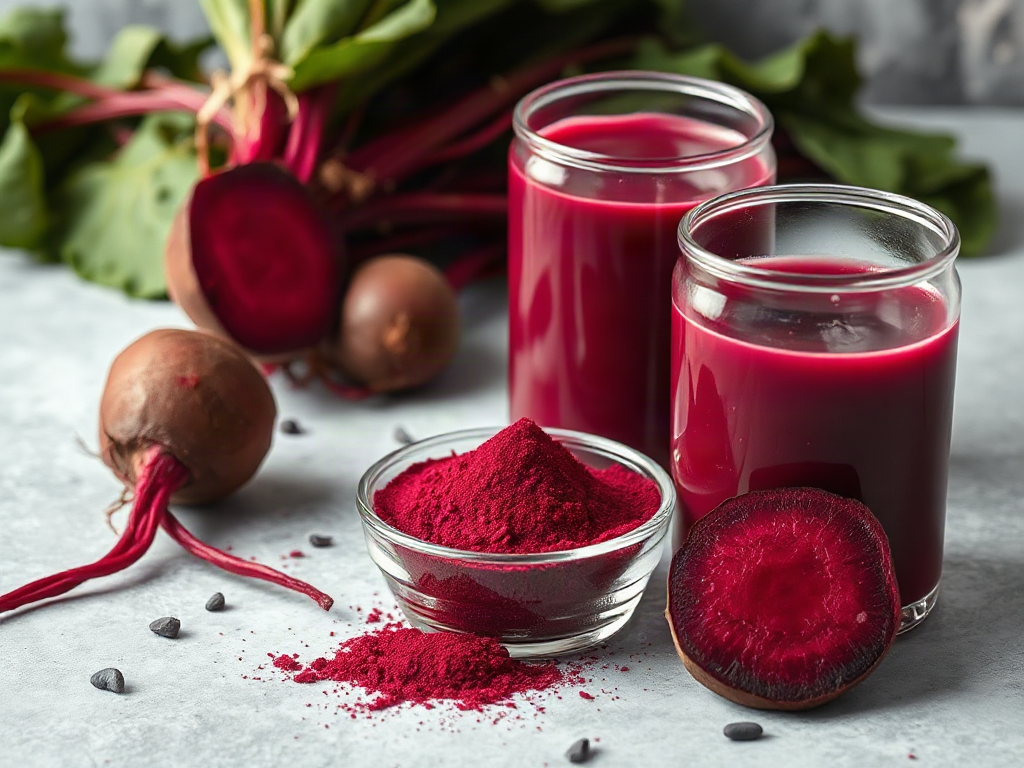
Organic beetroot powder versus beet juice nutrition differs mainly in concentration, fiber, sugar, and serving control: powder retains some beet solids, while juice is a strained liquid with little or no fiber. Both may provide dietary nitrates, which the body can convert into nitric oxide, but the amount varies substantially by beet variety, processing, label, and serving size. Powder is easier to store and blend into yogurt, oats, or smoothies, whereas juice is ready to drink and may be easier to consume in a measured portion. Neither should be treated as a cure or guaranteed performance aid, and people managing kidney stones, blood pressure, diabetes, or medication use should seek individualized clinical advice.
How Powder and Juice Differ Nutritionally
Organic beetroot powder and beet juice begin with the same vegetable, but processing changes the way their nutrients arrive in a serving. Powder is made by drying beetroot and grinding it into a concentrated ingredient. Juice is produced by pressing or extracting liquid from the beet, usually removing most of the fibrous pulp. That distinction affects texture, satiety, portability, storage, and the accuracy of any nutrition comparison.
A powder label may show calories, carbohydrate, fiber, potassium, and other nutrients per teaspoon or scoop, while a juice label may list values per bottle or fluid serving. Those portions are not automatically equivalent. A large glass of juice can represent more beetroot than a small spoonful of powder, and a lightly filled scoop may provide less than the serving used in a product’s testing. The first useful step is to compare the actual serving weight in grams, not merely the package format.
Drying removes water but does not make every nutrient proportionally stronger. Heat, oxygen, storage time, and the production method can affect sensitive compounds. Juice may be pasteurized, refrigerated, or sold as a shelf-stable product; powder may be dried at different temperatures and stored for months. “Organic” describes the farming and handling standard, not a guaranteed nitrate level, calorie count, or superior nutrient profile.
For example, someone adding a teaspoon of powder to plain yogurt is consuming a small, concentrated ingredient alongside protein and fat. Someone drinking a bottle of juice is taking in a liquid serving that may contain naturally occurring sugars with little chewing or fiber. Neither example is automatically healthier. The better comparison depends on what the person wants from the food and what the label actually reports.
A useful related reference point is Organic beetroot powder versus beet juice nutrition, especially when comparing product claims with serving information rather than judging by color or package size.
Nitrates, Fiber, Sugar, and Serving Size
The most discussed compound in beet products is dietary nitrate. Oral bacteria can help convert nitrate into nitrite, and the body can then produce nitric oxide through several pathways. Nitric oxide participates in blood-vessel signaling, but the amount reaching those pathways depends on the nitrate content of the product, the serving consumed, individual biology, and the condition of the mouth and digestive system. A red color or strong earthy flavor cannot confirm nitrate concentration.
Powder and juice may both supply nitrate, yet products can vary widely because beet varieties, growing conditions, harvest timing, extraction, and processing differ. Some products publish nitrate testing; others provide only a general beetroot ingredient statement. A claim such as “high in nitrates” is more useful when the label gives a measurable amount per serving and explains the serving size. Without that information, comparing one scoop with another brand’s bottle is guesswork.
Fiber is another major dividing line. Beet juice generally contains little fiber unless the pulp is deliberately retained. Powder may retain some beet solids, but the amount can range from modest to meaningful depending on how it is made. It should not automatically be treated as equivalent to eating a whole cooked beet. Whole beets bring chewing, water, and a larger food structure that can influence fullness and meal balance.
Naturally occurring beet sugars also deserve attention. Juice can deliver carbohydrate quickly because it is easy to drink and lacks the physical bulk of a whole vegetable. Powder used in a small amount may contribute less total sugar, but a sweetened blend can reverse that advantage. Check the ingredient list for cane sugar, syrups, fruit concentrates, or flavored additions. A plain powder mixed into unsweetened kefir differs substantially from a beet beverage designed as a sweet sports drink.
To compare two products, use this compact checklist:
- Record the serving weight and the number of servings consumed.
- Check whether fiber and total sugar are listed per serving.
- Look for a quantified nitrate amount rather than relying on color or marketing language.
- Review added sweeteners, sodium, caffeine, and other blended ingredients.
- Compare the product with whole beetroot, not only with another supplement format.
These details matter more than the words “powder” and “juice” alone. A tested powder may offer more predictable nitrate exposure than an untested juice, while a plain juice may have a shorter ingredient list than a flavored powder. The label is the practical tie-breaker.
Choosing the Better Format for Daily Use
Powder is usually the more flexible option for people who want a small ingredient added to food. It can be stirred into oatmeal, blended with berries and unsweetened yogurt, or mixed into a savory dressing. That use pattern can improve the overall meal because the beet ingredient is paired with protein, fat, or other produce rather than consumed alone. Powder also travels well and does not require refrigeration before opening, although moisture and heat can reduce quality after opening.
Juice suits people who prefer a ready-to-drink format or need a portion that is easy to measure in a bottle. It may be convenient before a planned exercise session, but convenience can encourage larger portions than intended. A drink consumed quickly also provides less chewing and may be less filling than a meal containing whole beets, legumes, grains, or other high-fiber foods. Juice therefore works better as a deliberately measured component than as an automatic replacement for vegetables.
Timing claims need restraint. Research on beetroot products has examined exercise-related outcomes, but results depend on nitrate dose, timing, training status, and the product used. A person should not assume that a random scoop of powder has the same effect as a studied juice preparation. If a product is being tested around exercise, change one variable at a time, follow the label, and monitor digestive comfort, hydration, and overall carbohydrate intake.
Consider three realistic scenarios. A commuter who wants a shelf-stable ingredient may favor plain powder mixed into breakfast. A person who dislikes textures may find a small serving of juice easier, but should check its sugar and portion size. Someone seeking more fullness and broader nutrition may be better served by roasted or steamed beetroot in a meal, using powder or juice only as a supplemental convenience.
The common mistake is treating convenience as nutritional superiority. Powder is not automatically more nutrient-dense in every meaningful way, and juice is not automatically inferior because it lacks fiber. Choose powder when storage, portability, and recipe flexibility matter; choose juice when a measured liquid serving is genuinely easier; choose whole beetroot when chewing, volume, and food variety are the priority.
Common Mistakes and Safety Considerations
The most frequent comparison error is ignoring the rest of the formulation. A beet powder may contain maltodextrin, sweeteners, flavoring, or stimulant ingredients, while a juice may include apple or grape concentrate. These additions alter the carbohydrate profile and may matter more to a person’s routine than the beet itself. Plain products make the nutrition question easier to answer, particularly when the goal is to monitor sugar, calories, or nitrate exposure.
Another mistake is assuming that organic certification confirms purity, potency, or clinical effectiveness. Certification can be relevant to farming and production standards, but it does not establish that a product will lower blood pressure, improve athletic performance, treat anemia, or prevent disease. Beet products can be part of a varied diet, but they are not substitutes for medical treatment or individualized nutrition care.
Beetroot can temporarily turn urine or stool pink or red. That effect can be harmless, but unexplained bleeding should not be dismissed solely because beetroot was eaten. Beet products can also cause digestive discomfort in some people, especially when a concentrated serving is introduced quickly. Starting with the labeled serving, taking it with food, and noting bloating or loose stools provides a more sensible test than immediately using multiple scoops or bottles.
People with kidney disease, a history of calcium oxalate kidney stones, diabetes, low blood pressure, or prescribed blood-pressure medication may need personalized advice before using concentrated beet products regularly. Potassium, carbohydrate, oxalate exposure, and blood-pressure effects can have different implications depending on the person’s medical context. Anyone preparing for a procedure or taking medication that affects blood pressure should raise the product with a clinician rather than relying on general supplement marketing.
Use the following decision order:
- Define the purpose: flavor, vegetable variety, convenience, or a specific exercise-related experiment.
- Compare serving weight, fiber, sugar, additives, and any available nitrate testing.
- Prefer a format that fits the person’s digestion, storage, budget, and meal pattern.
- Introduce one product at a time and stop if persistent symptoms occur.
- Reassess whether whole beetroot or another vegetable would provide a better everyday food role.
Signs that an approach is working include a serving that fits comfortably into the diet, a label that matches the intended intake, and no displacement of protein, water, or other vegetables. Signs it is failing include escalating portions, relying on vague potency claims, digestive symptoms, or using juice and powder as a replacement for a varied diet. A second useful internal reference is Organic beetroot powder versus beet juice nutrition for revisiting those tradeoffs before changing products.
For reliable background, compare product labels with USDA FoodData Central entries for beetroot and consult NIH consumer information on dietary supplements. University extension publications and peer-reviewed nutrition research can also help distinguish whole-food nutrition from claims made for concentrated beet products. Look for sources that identify the product, serving amount, processing method, and measured compound rather than relying on broad statements about “detox,” circulation, or energy.
Frequently Asked Questions
Is beetroot powder more nutritious than beet juice?
Not automatically. Powder may retain some fiber and is often easier to portion, while juice may be more consistent as a liquid but usually contains little fiber. The label and serving size determine the meaningful comparison.
Does beet juice contain more nitrates than powder?
Either format may contain more, depending on the beet variety and processing. A quantified nitrate amount per serving is more reliable than assuming juice or powder has the higher level.
Does beetroot powder count as a serving of vegetables?
A small amount of powder can contribute beet compounds, but it should not automatically replace a serving of whole vegetables. Whole beetroot provides water, volume, chewing, and food structure that concentrated powder may lack.
Which option has less sugar?
Plain powder used in a modest serving may contain less total sugar than a bottle of juice, but sweetened powders can contain more. Check total sugars and added sugars rather than judging by format.
Can beet products lower blood pressure?
Dietary nitrate from beetroot may influence nitric-oxide pathways and blood-vessel signaling, but effects are not guaranteed and vary by person and product. People taking blood-pressure medication should seek individualized advice.
Conclusion
The useful distinction between beetroot powder and beet juice is not simply dry versus liquid. Compare the measured serving, nitrate disclosure, fiber, sugar, additives, storage needs, and role in the rest of the diet. Powder is often the more adaptable choice for mixing into balanced foods, while juice may be convenient when a measured liquid portion is easier to use. Whole beetroot remains the stronger everyday food comparison when fullness, chewing, and vegetable variety matter. Choose plain products when possible, introduce concentrated servings gradually, and avoid treating organic certification or nitrate claims as proof of a medical or performance outcome. A careful label comparison and a realistic food context will produce a better decision than choosing by packaging or marketing language.