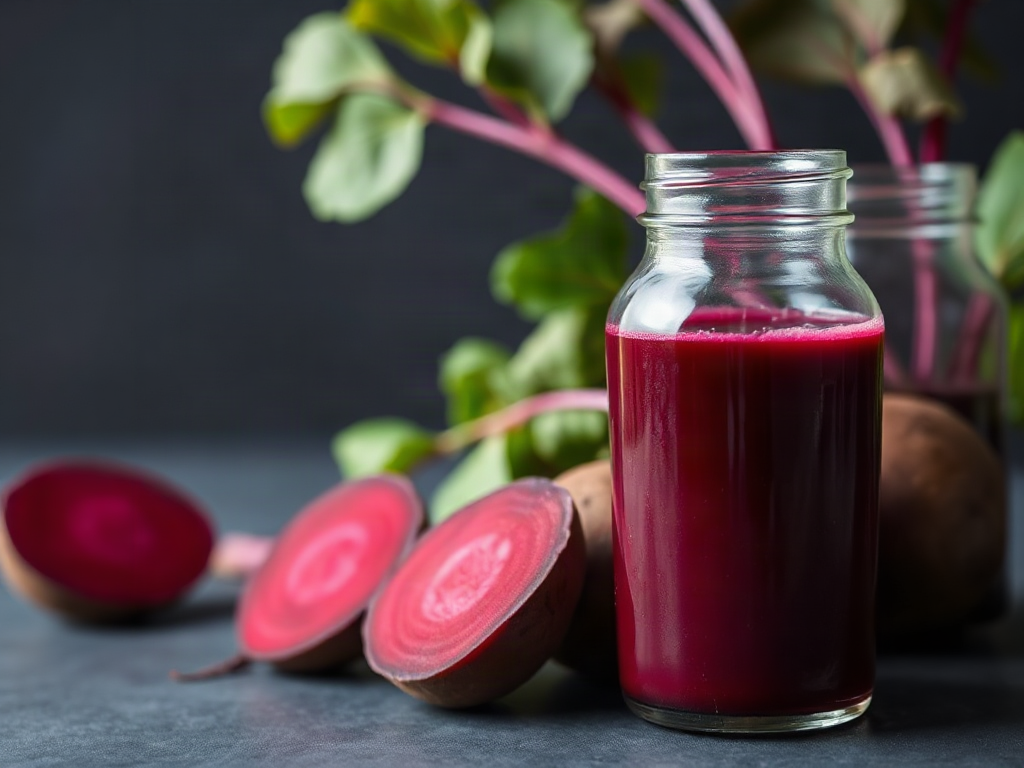
Organic beet juice nutrition and portion guidance centers on treating beet juice as a concentrated drink rather than a free-pour beverage: a modest serving supplies beet compounds, natural sugars, and fluid, but usually less fiber than whole beets. Start with a small portion, check the label for added sugar and sodium, and use it alongside a meal or balanced snack rather than as a replacement for vegetables. Nitrate content can vary by beet source and processing, while larger servings may cause digestive discomfort or temporary red urine or stool. People with kidney concerns, blood-pressure treatment, or medication questions should ask a qualified clinician before using beet juice regularly.
What Beet Juice Provides Nutritionally
Beet juice is a concentrated liquid made from beetroot, so its nutrition differs from that of a cooked beet on the plate. It can provide fluid, natural carbohydrate, folate, potassium, and plant compounds associated with beet color. The exact amount depends on the recipe, dilution, filtration, and whether the bottle contains only beets or a blend with fruit, sweeteners, salt, or other vegetables. “Organic” describes the production standard for the ingredients; it does not automatically mean lower in sugar, higher in nitrate, or nutritionally superior to every conventional product.
The largest nutritional tradeoff is fiber. Whole beets retain their structural fiber, while strained juice removes much of it. Fiber slows eating and digestion and contributes to fullness, so a glass can be easier to consume quickly than an equivalent amount of whole beet. That distinction matters when someone uses juice as a daily health habit: juice may fit the diet, but it should not quietly replace the variety and chewing provided by vegetables.
Color is also a useful clue about composition, not a precise measure of potency. Deep red juice contains betalain pigments, while nitrate levels can vary with growing conditions, harvest, storage, and processing. A label may list calories and carbohydrate but not nitrate content. The absence of a nitrate number does not prove that the drink lacks nitrates; it simply limits how precisely a shopper can compare products.
Consider two examples. A plain organic beet juice may be a concentrated, earthy drink with a short ingredient list. A beet-apple blend may taste easier to drink but deliver more total sugar because fruit juice has been added. Neither choice is automatically wrong. The better option depends on the intended portion, the rest of the meal, and whether the buyer values a simpler ingredient list or a more palatable flavor. Related planning considerations appear in Organic beet juice nutrition and portion guidance when comparing liquid servings with whole-food portions.
A practical nutrition check asks four questions: Is the product unsweetened? How much is one serving? Does it contain meaningful fiber, or is it strained? What else is being consumed with it? Those questions are more useful than assuming that an organic label alone determines the drink’s dietary role.
How Much to Pour and How to Read the Label
A sensible starting portion is often a small glass, such as roughly 2 to 4 fluid ounces, especially for someone who is new to beet juice or unsure how the product affects digestion. This is a portion suggestion, not a universal prescription. Bottles may define a serving differently, and a large container can make a modest serving look deceptively small. Measuring the first pour with a kitchen cup helps establish what the label actually means.
Portion size matters because liquid calories and carbohydrates are easy to consume without the fullness that comes from chewing. A small serving of plain juice may work beside breakfast, while a larger serving of a beet-fruit blend can become a substantial source of free sugars within the meal. If the drink is being used before activity, the reader may choose a different amount than someone simply adding it to lunch, but increasing the volume is not automatically better.
Use this compact label checklist before deciding how often to buy or drink it:
- Ingredient order: Look for beet juice near the beginning and identify added cane sugar, syrups, concentrates, or sweetened fruit juice.
- Serving definition: Check whether the listed nutrition applies to the entire bottle or only part of it.
- Carbohydrate and sugars: Compare plain beet juice with blends rather than assuming similar taste means similar composition.
- Sodium: Savory vegetable blends can contain more sodium than a plain beet product.
- Fiber: A low or absent fiber value signals that the beverage should not be treated as a replacement for whole beets.
Storage and handling also influence practical quality. Refrigerated juice with a short ingredient list may have a different shelf life and flavor profile from a shelf-stable product that has been heat processed. Processing does not make a product unsafe by itself, but it can affect taste and some nutrient levels. Follow the package storage directions and do not rely on color or smell alone to judge whether an opened product remains suitable.
A useful comparison is a measured pour versus drinking directly from the bottle. The first supports portion awareness; the second makes a serving error more likely, particularly when the bottle contains two or more listed servings. If the flavor is intense, dilute a measured amount with water or use it in a meal rather than automatically selecting a larger sweetened blend. The aim is a repeatable portion that fits the person’s diet, not the biggest amount the product can hold.
Nitrates, Timing, and Everyday Use
Beets naturally contain nitrate, which the body can convert through oral and digestive processes into compounds involved in blood-vessel signaling. That mechanism is one reason beet products receive attention in exercise and blood-pressure discussions, but it does not make every bottle identical or guarantee a particular result. Nitrate content can vary, and product labels often do not provide a standardized amount. A reader should treat performance or blood-pressure claims as context-dependent rather than as a promise attached to the word “beet.”
Timing is usually less important than tolerance, total dietary pattern, and the product’s composition. Someone considering beet juice around exercise may test a small serving during a normal training day rather than trying a large amount before an important event. That approach reveals whether the earthy flavor, acidity, or concentrated carbohydrate causes stomach discomfort. It also avoids confusing a reaction to a sweetened blend with a reaction to beet juice itself.
For everyday use, pair the beverage with foods that supply what juice lacks. A breakfast might include a measured pour alongside eggs and whole-grain toast; lunch could combine it with beans, greens, and a source of protein. A person who wants beet flavor but more fiber could choose roasted beets, grated beets in a grain bowl, or a smoothie that keeps more of the plant material. These alternatives change texture and preparation time, but they make the vegetable’s fiber and chewing contribution more visible.
Beet pigments can turn urine or stool pink or red. That effect may be harmless after beet consumption, yet a new, persistent, painful, or unexplained color change should not automatically be attributed to food. Digestive responses also differ: some people tolerate a small serving comfortably, while others notice bloating or loose stools after a larger amount or a product containing several juices. Reducing the portion, checking added ingredients, and pausing the product can clarify the pattern, but ongoing symptoms deserve medical attention.
Readers using medication for blood pressure or managing kidney disease should obtain individualized advice before making concentrated beet juice a regular supplement-like habit. Potassium and nitrate exposure may matter differently depending on health status, medications, and the rest of the diet. The safer decision is not to assume that a food-based product is risk-free simply because it is organic. For a broader comparison of beverage choices, see Organic beet juice nutrition and portion guidance alongside the person’s usual meals and clinical advice.
Common Mistakes, Safety Questions, and Better Pairings
The most common mistake is treating concentrated juice as equivalent to whole beets. Both come from the same plant, but they differ in fiber, eating speed, portion visibility, and often total sugar per typical use. Another mistake is assuming that a costly organic bottle must have a measured nitrate advantage. Unless the product provides reliable nutrient information, price and certification cannot establish potency.
A second failure point is using juice to compensate for an otherwise narrow diet. Beet juice can add variety, but it cannot stand in for legumes, leafy greens, fruit, whole grains, or protein foods. A practical plate might use a small glass with lentil salad and greens, where the meal provides fiber and protein that the beverage lacks. If the drink is taken alone and leaves the person hungry soon afterward, that is useful feedback: the portion or pairing may not suit the occasion.
Sweetness deserves close attention. A beet-carrot-apple blend may be more appealing to a new drinker, but multiple juice ingredients can raise the carbohydrate load and make it easier to drink a large amount. Someone seeking a less sweet option can compare plain beet juice, dilute it, or use a smaller amount as a flavor accent in a meal. Someone exercising may intentionally include carbohydrate, but should still count the drink as part of the overall intake rather than as nutritionally “free” fluid.
Keep these priorities in order:
- Check the ingredient list and serving size before judging the product.
- Begin with a measured, modest portion and observe tolerance.
- Pair the drink with fiber- and protein-containing foods when it replaces part of a meal.
- Use whole beets when fiber, fullness, and vegetable volume are the main goals.
- Ask a clinician about regular use if kidney function, blood pressure, or medication interactions are relevant.
What works for one use case may be poor for another. A small plain serving can be a convenient addition to breakfast; a large sweetened bottle may be less suitable as an everyday drink. The right test is whether the product fits the label facts, the person’s symptoms, the meal pattern, and the reason for using it. An organic certification can inform sourcing, but portion judgment still depends on nutrition and context.
Frequently Asked Questions
Is organic beet juice healthier than conventional beet juice?
Organic certification addresses production practices, not guaranteed sugar, fiber, calorie, or nitrate levels. Compare the ingredient list and Nutrition Facts panel for the actual product.
What is a reasonable first serving of beet juice?
A measured 2- to 4-fluid-ounce serving is a cautious starting point for many adults, followed by attention to digestion and the product’s label serving size.
Does beet juice contain the same fiber as whole beets?
No. Straining removes much of the fiber found in whole beets, so juice should complement rather than routinely replace whole vegetables.
Can beet juice change urine or stool color?
Beet pigments can produce a red or pink appearance. Pain, persistence, or color changes unrelated to beet intake should be discussed with a healthcare professional.
Should people taking blood-pressure medicine drink beet juice?
They should ask their clinician before regular use because individual blood-pressure goals, medications, kidney function, and total diet can change the appropriate choice.
Conclusion
Organic beet juice can fit a balanced diet when its concentrated nature is respected. Read the serving information, identify added sugars and sodium, and begin with a modest measured pour rather than drinking from the bottle. Remember that juice supplies less fiber and fullness than whole beets, so pair it with foods such as beans, eggs, whole grains, greens, or another protein source when it accompanies a meal. Nitrate content and personal response vary, making dramatic claims unreliable without product-specific evidence. Use whole beets when fiber and vegetable volume matter most, and seek individualized advice if kidney health, blood pressure treatment, or medication interactions are relevant. The best portion is the one that fits the label, the occasion, and the drinker’s tolerance.