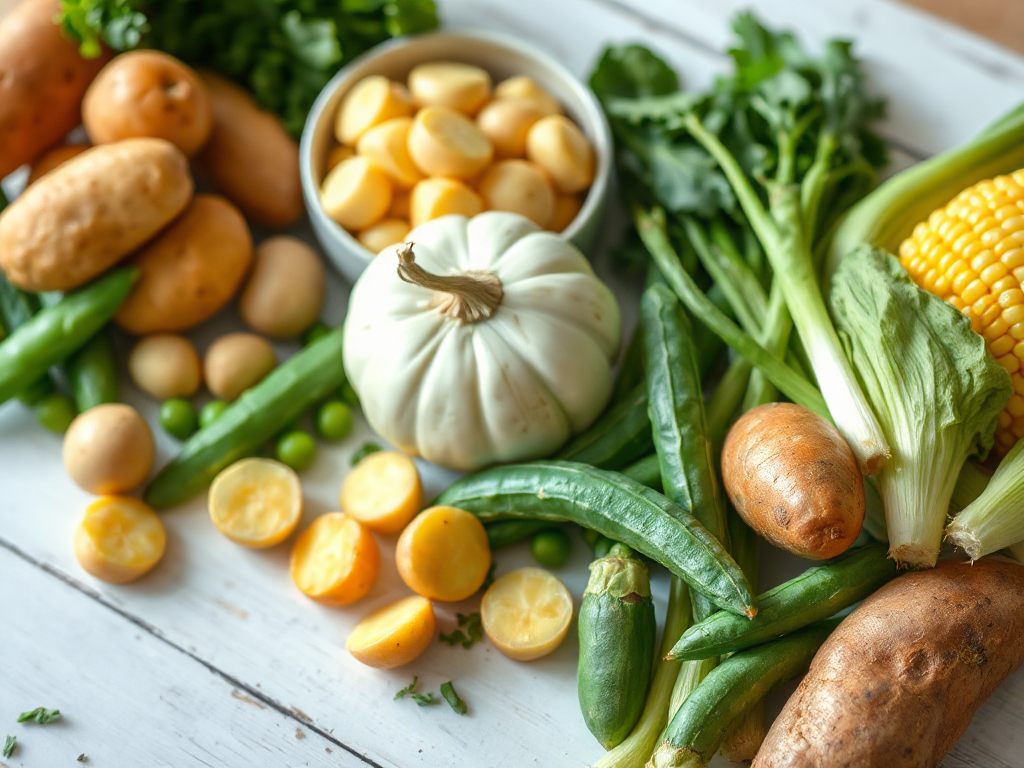
Organic vegetables for balanced carbohydrate portions work best when starchy choices are measured alongside nonstarchy produce, protein, and unsaturated fat. Potatoes, sweet potatoes, corn, peas, winter squash, and parsnips contribute more carbohydrate per serving than leafy greens, zucchini, mushrooms, or cauliflower, so portion size and preparation affect the meal’s total load. A practical plate can include half nonstarchy vegetables, one quarter protein, and a modest serving of a starchy vegetable, with beans or whole grains adjusted rather than automatically added. Organic certification may address production practices, but it does not make a carbohydrate-dense vegetable unlimited or change its basic carbohydrate content.
Separate Starchy and Nonstarchy Vegetables
Balanced carbohydrate portions begin with recognizing that vegetables do not all contribute the same amount of carbohydrate. Leafy greens, cucumbers, zucchini, mushrooms, asparagus, broccoli, cauliflower, and bell peppers are generally used as nonstarchy choices. Potatoes, sweet potatoes, corn, peas, winter squash, and parsnips are more concentrated carbohydrate sources. Both groups can fit a nutritious eating pattern, but treating them as interchangeable makes portion decisions less accurate.
The distinction is practical rather than a judgment about food quality. A baked potato supplies a substantial amount of carbohydrate in a relatively compact serving, while a large bowl of roasted cauliflower provides volume with much less carbohydrate. Cooking can also change how much food fits into a serving: raw spinach collapses dramatically when sautéed, whereas roasted vegetables lose water and become more concentrated by volume. The carbohydrate in the food has not disappeared; the portion has become easier to underestimate.
Organic production does not alter this basic classification. An organic potato and a conventionally grown potato still need to be counted according to the portion eaten. Organic vegetables may be appealing because of farming practices, personal preferences, or access to particular varieties, but the organic label should not be used as a substitute for reading the plate. The useful question is whether the vegetable is functioning as the meal’s carbohydrate source, a high-volume side, or both.
A common mistake is adding several starchy vegetables to one meal while assuming that each is merely a side dish. Corn, peas, sweet potato, and a grain-based salad can collectively create a much larger carbohydrate portion than intended. A better approach is to choose one main starchy vegetable, fill the remaining vegetable space with nonstarchy produce, and then decide whether beans, fruit, bread, or rice still belong in the same meal. The internal resource organic vegetables for balanced carbohydrate portions can be used as a related planning reference.
Build Portions Around the Whole Plate
Portion balance depends on the complete meal, not on a vegetable in isolation. A useful starting structure is half the plate from nonstarchy vegetables, one quarter from a protein food, and the remaining quarter from a carbohydrate-bearing food such as a starchy vegetable, beans, or a whole grain. This is a flexible visual method rather than a medical prescription, and individual needs may call for different amounts.
Protein and fat matter because they change the meal’s texture, satiety, and digestion pattern. A serving of roasted sweet potato alongside lentils and greens creates a different eating experience from sweet potato alone. Olive oil, tahini, avocado, nuts, or seeds can add flavor and fat, but generous pours can substantially increase energy density. The goal is not to remove those foods; it is to recognize that a balanced plate has several measurable components.
Consider a dinner with organic corn, black beans, avocado, and brown rice. If all four are served in full portions, the plate contains multiple carbohydrate contributors. Replacing the rice with extra peppers and cabbage, or using corn as the only concentrated carbohydrate, creates a clearer structure without eliminating the foods. By contrast, someone with high activity demands may reasonably prefer both rice and corn, provided the total meal matches their needs.
The weak assumption to avoid is that a larger vegetable portion is always the better choice. A large serving of leafy greens may add useful volume, but a large bowl of mashed potatoes, especially with added butter or cream, is a different nutritional proposition. Check the vegetable’s role, the preparation, and the other carbohydrate foods before increasing the serving. For individualized guidance involving diabetes, kidney disease, gastrointestinal conditions, or prescribed carbohydrate targets, a registered dietitian or clinician can help translate the plate method into a suitable plan.
Choose Preparation Methods That Preserve Balance
Preparation affects carbohydrate portions mainly by changing concentration, texture, and the ingredients added around the vegetable. Steaming, microwaving, baking, and quick sautéing can keep the food recognizable and make serving sizes easier to judge. Deep-frying, heavy batter, sugary glazes, and creamy sauces can turn a simple vegetable into a more energy-dense side without necessarily making the carbohydrate amount obvious.
Roasting illustrates the tradeoff well. Water loss intensifies flavor and produces a smaller, denser serving, so a full sheet pan can shrink to what looks like a modest bowl. A person who serves by the cooked volume may eat more than planned. Boiling can produce a larger apparent portion, but draining water does not remove the vegetable’s carbohydrate. Mashing also removes visual boundaries: a cup of mashed sweet potato can be consumed faster than a visibly measured piece.
Fiber-rich skins and intact textures may make some vegetables more filling, but neither feature makes portion size irrelevant. A whole baked potato with its skin is not nutritionally identical to fries, yet both remain carbohydrate-containing foods. Cooling cooked potatoes or grains may alter texture and starch behavior, but it should not be treated as a reliable way to cancel carbohydrate or guarantee a particular blood-glucose response.
Use a simple preparation check before serving:
- Identify whether the vegetable is the main carbohydrate source or one of several.
- Measure oil, dressings, cheese, and sauces rather than estimating from the bottle.
- Serve roasted or mashed starchy vegetables in a defined bowl or scoop.
- Add herbs, citrus, vinegar, garlic, or spices before relying on sweet sauces for flavor.
A frequent failure mode is focusing on organic status while overlooking preparation. An organic vegetable cooked with a large amount of refined coating or sweetened sauce may fit less comfortably into the intended meal than a simply prepared conventional vegetable. Production preference and portion control address different questions.
Use Real-World Meal Examples and Adjustments
Meal examples make the portion principle easier to apply than a list of approved and forbidden foods. For a lunch bowl, combine a generous base of organic romaine, cabbage, cucumber, and tomatoes with grilled tofu or chicken, then add a measured serving of roasted sweet potato. If chickpeas are included, reduce the sweet potato or treat the legumes as the principal carbohydrate component. A dressing made from olive oil, lemon, and yogurt can provide flavor without making the bowl difficult to interpret.
For breakfast, sautéed spinach, mushrooms, and peppers can accompany eggs or tofu with a modest serving of cooked potatoes. The vegetables add volume and micronutrient variety, while the potato supplies the concentrated carbohydrate. Hash browns cooked in a thin layer of oil are easier to portion than an unmeasured skillet, where extra potato and oil accumulate during cooking.
At dinner, grilled fish with green beans and a measured serving of winter squash offers a different balance from fish with squash, corn, peas, and bread. None of the latter foods is inherently unsuitable, but the meal needs a deliberate choice about which carbohydrate source is taking priority. Someone training heavily, recovering from illness, or following a clinician-directed higher-carbohydrate plan may select a larger portion; someone testing a lower-carbohydrate pattern may increase nonstarchy vegetables instead.
Watch for signs that the approach needs adjustment. Hunger soon after eating may indicate that the meal lacks protein, fiber, or enough total food, not simply that more starchy vegetables are needed. A sluggish meal may reflect a very large combined portion of potatoes, grains, beans, and dessert. Repeatedly confusing raw and cooked measurements can also make tracking unreliable. Keep a short record of the cooked amount, accompanying foods, and how satisfying the meal felt; that information is more useful than labeling one vegetable as universally good or bad.
For more context on planning meals with produce, use organic vegetables for balanced carbohydrate portions alongside the plate examples here. The aim is a repeatable meal pattern, not identical servings every day.
Common Mistakes and a Practical Portion Checklist
The most common mistake is assuming that organic vegetables can be eaten without portion awareness. Organic certification concerns how a product is grown, handled, or processed under the applicable standard; it does not determine whether a potato, corn serving, or squash portion is carbohydrate-dense. A second mistake is counting only obvious starches while overlooking peas, beans, sauces, bread, fruit, or grain toppings that share the same meal.
A third mistake is using a single serving rule for every person and situation. A sedentary day, a long endurance session, and a medically supervised carbohydrate target do not demand identical plates. The visual method is a starting point, while appetite, activity, health conditions, medication, and professional advice may change the proportions. People using glucose-lowering medication should avoid making major carbohydrate changes without appropriate clinical guidance.
A compact checklist can keep decisions concrete:
- Choose the meal’s primary carbohydrate: starchy vegetable, beans, grain, bread, fruit, or a combination.
- Fill at least half the plate with nonstarchy vegetables when that suits your eating plan.
- Add a clear protein source and a measured amount of fat for flavor and staying power.
- Check whether roasting, mashing, or sauces have made the portion harder to judge.
- Adjust at the next meal based on hunger, energy, digestion, and any clinician-provided targets.
The approach is working when meals remain satisfying, portions are predictable, and the plate does not depend on guesswork. It is failing when several carbohydrate foods routinely stack together, added fats are invisible, or a label creates a false sense of unlimited quantity. Keep the organic preference if it fits your budget and access, but let the meal’s structure—not the marketing language—guide the portion.
For reliable food composition and dietary guidance, consult USDA FoodData Central, the Dietary Guidelines for Americans, and nutrition education materials from university extension programs. These sources can help compare cooked portions, carbohydrate-containing vegetables, and the broader meal context without treating organic labeling as a nutrition shortcut.
Frequently Asked Questions
Which organic vegetables count as concentrated carbohydrate foods?
Potatoes, sweet potatoes, corn, peas, winter squash, and parsnips generally contribute more carbohydrate per serving than leafy greens, zucchini, mushrooms, or cauliflower.
Does organic certification reduce the carbohydrate in vegetables?
No. Organic certification describes production standards, while carbohydrate content is determined by the food and the portion served.
Can potatoes be part of a balanced meal?
Yes. Pair a measured potato portion with nonstarchy vegetables and protein, and account for other carbohydrate foods such as bread, beans, rice, or dessert.
Are raw or cooked portions easier to manage?
Either can work if used consistently. Roasting and mashing change volume and texture, so measuring the cooked portion is often more practical for the way the food is actually eaten.
What if I have diabetes or another medical nutrition concern?
Use general plate guidance cautiously and ask a registered dietitian or clinician to tailor carbohydrate portions to medications, glucose patterns, kidney function, activity, and treatment goals.
Conclusion
Balanced portions do not require abandoning organic vegetables or avoiding starchy produce. The practical priority is to distinguish vegetables that mainly add volume from those that supply a concentrated carbohydrate contribution, then build the meal around the full combination of protein, fat, and other carbohydrate foods. Measure roasted, mashed, and sauced preparations more carefully because their appearance can hide concentration or added ingredients. Choose one principal carbohydrate when a simpler plate is useful, and adjust the amount for activity, appetite, and professional guidance. Organic sourcing can remain a meaningful purchasing preference, but it should sit alongside—not replace—portion awareness. A short record of meals and satisfaction can reveal whether the chosen portions are realistic for your routine.