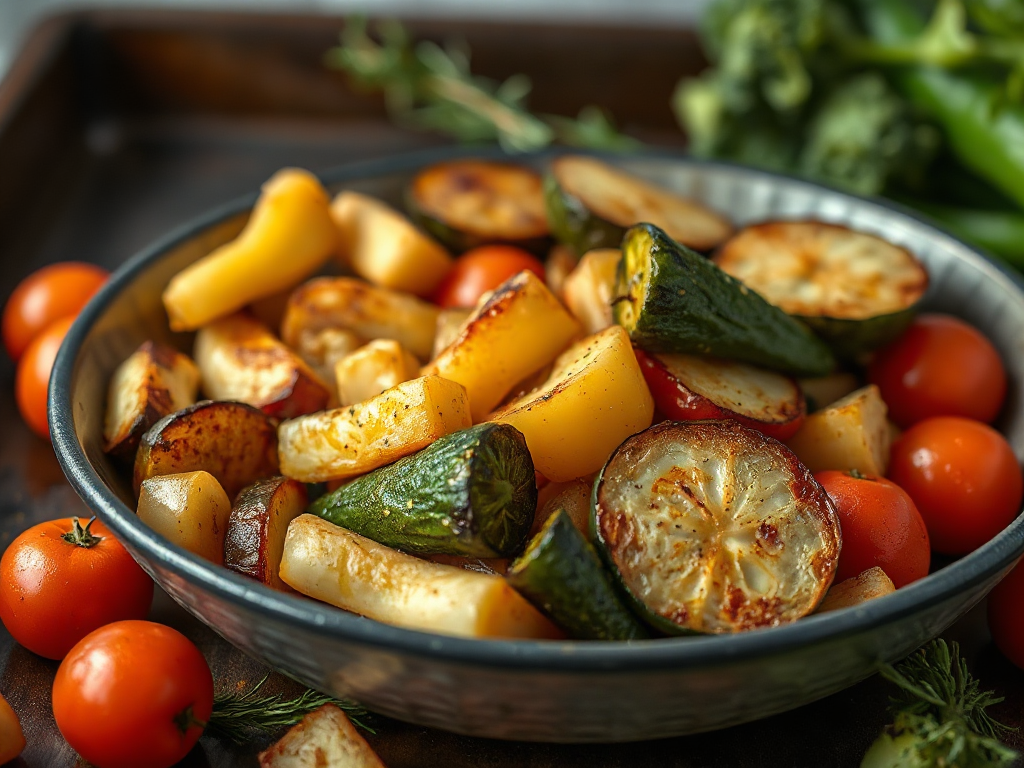
Roasting changes organic vegetable carbohydrates mainly by removing water, softening cell walls, concentrating sugars by weight, and creating browned flavor compounds at the surface. The vegetable usually keeps most of its total carbohydrate, but a cooked serving can contain more carbohydrate per gram because moisture evaporates, while starches become easier to digest as tissues soften. High heat and prolonged cooking may increase sweetness in carrots, onions, squash, and sweet potatoes, yet roasting does not automatically make them nutritionally equivalent to refined foods. Use moderate portions, avoid charring, and compare vegetables by the amount served rather than appearance alone. Cooling roasted leftovers may also alter some starch into less-digestible resistant starch.
What Heat Does to Vegetable Carbohydrates
Roasting does not simply add or remove carbohydrate from a vegetable. Its main effects are physical: heat breaks down cell-wall structure, drives off water, softens starch-containing tissues, and changes how readily the mouth and digestive system can access the food. A raw sweet potato and a roasted sweet potato may contain broadly similar carbohydrate in the whole item, but they will not have the same texture, weight, sweetness, or eating speed.
Starch is especially relevant in potatoes, sweet potatoes, winter squash, parsnips, and corn. Moist heat often gelatinizes starch efficiently, while dry roasting combines internal softening with surface dehydration. The result is a tender center and a drier exterior. That texture may make a portion easier to chew and eat quickly than a firm raw vegetable. Easier eating does not prove that roasting creates a harmful food, but it can affect how much reaches the plate.
Leafy greens, zucchini, mushrooms, and peppers behave differently because they contain less starch and more water. Roasting these foods mostly reduces volume and concentrates flavor. By contrast, a tray of cubed potatoes can lose substantial water while retaining much of its carbohydrate, so the finished pieces become denser by weight. This distinction matters when comparing nutrition labels, weighed portions, or meal plans.
A useful comparison is raw versus roasted carrots. The raw carrot is crisp and bulky; the roasted version is softer, smaller, and often sweeter. The carrot has not become a confectionery product, but a cup of roasted pieces may represent more original carrot than a cup of raw slices. Readers using carbohydrate targets should compare equal starting amounts or consistent serving weights rather than relying on volume alone. The related topic how roasting changes organic vegetable carbohydrates is therefore best assessed through moisture, texture, and portion size together.
Why Roasted Vegetables Taste Sweeter
Roasted vegetables taste sweeter because dehydration intensifies existing sugars and because heat changes the balance of flavor compounds. Onions, carrots, beets, sweet potatoes, and winter squash can develop pronounced sweetness as their water content falls. Browning at the surface also produces complex roasted flavors through reactions involving sugars and amino compounds. Those reactions create aroma and color; they do not mean that every carbohydrate molecule has turned into sugar.
Temperature, cut size, oil coverage, and cooking time control the outcome. Small cubes expose more surface area and lose moisture faster than large wedges. A crowded pan traps steam and tends to produce soft, pale vegetables, while a spacious pan encourages drying and browning. A thin layer of oil improves heat transfer and surface texture, but excess oil can make a naturally carbohydrate-rich side dish much more energy-dense without reducing its carbohydrate.
Sweet flavor can mislead portion judgment. A person may eat more roasted squash than steamed squash because the caramelized edges and concentrated taste make it feel like a richer dish. The carbohydrate content of the vegetable still depends on the food and amount served, not on whether it tastes dessert-like. Pairing the roasted portion with beans, eggs, tofu, fish, yogurt, or another protein-rich food can make the meal more substantial, while nonstarchy vegetables can increase volume without relying on a large serving of starch.
Burning is a separate issue from ordinary browning. Dark, bitter, or blackened surfaces indicate excessive heat or time and can make the food less pleasant. Browning should be treated as a flavor target, not a reason to keep cooking until the edges char. For routine meals, golden-brown edges and a tender interior are a more sensible endpoint than maximum darkness.
Moisture Loss, Portions, and Blood Sugar Considerations
The clearest carbohydrate change caused by roasting is concentration. Water evaporates, but carbohydrate remains in the food, so the roasted vegetable can contain more carbohydrate per 100 grams than the raw vegetable. This does not mean the total carbohydrate in a fixed batch has multiplied. It means the same batch weighs less after cooking. A person who weighs 150 grams of roasted potato may be eating more original potato than a person who weighs 150 grams of raw potato.
For practical tracking, choose one measurement system and use it consistently. Weighing the raw ingredient before cooking is useful when a recipe divides a known batch into portions. Weighing the finished food can also work, but the carbohydrate value must match the cooked state. Measuring by cups is convenient but less precise when roasting changes density and volume. The most common mistake is comparing a raw-food database entry with a roasted portion as though water loss had not occurred.
Roasting may also influence the pace of eating and digestion. Soft, hot vegetables are often consumed faster than crisp raw ones, and starch gelatinization can make carbohydrate more accessible. Still, the blood-glucose response depends on the entire meal, the vegetable type, portion size, individual physiology, and preparation. A roasted sweet potato eaten with lentils and greens is a different situation from a large plate of heavily roasted potatoes eaten alone.
Cooling and reheating may change part of the starch structure in some cooked starchy foods, with some starch becoming more resistant to digestion. The effect varies by food, cooking conditions, storage, and reheating, so it should not be used to cancel out a large portion. Food safety also matters: refrigerate leftovers promptly in a shallow container and reheat them thoroughly. People managing diabetes or another condition affected by carbohydrate intake should use their own clinician-approved monitoring plan rather than assume that roasting has a predictable effect for everyone.
A Better Roasting Method for Carbohydrate Control
A sound roasting method begins with the vegetable, not the seasoning. Separate high-starch vegetables from low-starch vegetables when planning portions. Potatoes, sweet potatoes, beets, parsnips, corn, and winter squash generally contribute more carbohydrate per serving than broccoli, cauliflower, mushrooms, zucchini, or peppers. Organic production does not change this basic carbohydrate classification; it describes how the food was grown and handled under the applicable organic system.
Cut pieces to a similar size so that tender vegetables do not burn while larger pieces remain hard. Dry the surfaces, use a modest amount of oil, and spread the pieces in a single layer. A crowded tray steams instead of roasts, whereas an overloaded tray may encourage extra cooking time and uneven browning. Turn the vegetables once if the underside is coloring faster than the top. Check tenderness with a fork rather than extending the cooking time automatically.
A compact decision process helps:
- For a lower-carbohydrate plate: make nonstarchy vegetables the larger portion and use roasted potato or squash as a measured accent.
- For a more filling meal: combine the roasted starch with protein, legumes, or a substantial salad instead of adding another large starch.
- For accurate tracking: record the raw batch weight or use nutrition data that specifically describes the cooked food.
- For better texture: use enough space for dry heat and stop at tender, browned edges rather than charred surfaces.
Whole roasted vegetables remain different from processed carbohydrate foods. A plain roasted potato retains fiber and micronutrients in its intact structure, while fries, chips, and sweetened vegetable products often add refined ingredients, more salt, or much more oil. That comparison does not make every preparation interchangeable, but it does prevent the weak assumption that any increase in sweetness makes a vegetable equivalent to a sugary snack.
Common Mistakes and Practical Meal Choices
The most frequent error is treating “roasted” as a nutrition category by itself. Roasted cauliflower and roasted potatoes can share a cooking method while contributing very different amounts of carbohydrate. The food’s original composition, the edible portion, and added ingredients still matter. A second error is judging intake by the reduced appearance of the tray. Vegetables shrink during roasting, so a small-looking serving may represent a generous raw quantity.
Another problem is allowing oil, glaze, or toppings to obscure the carbohydrate question. Maple syrup, honey, sweet sauces, breadcrumbs, and large amounts of dried fruit can add carbohydrate beyond that supplied by the vegetable. Oil does not add carbohydrate, but it increases calories and can make it easier to serve a larger portion. Read the complete recipe rather than assigning the nutrition of plain roasted vegetables to a glazed dish.
Consider a weeknight meal of roasted carrots, onions, and sweet potatoes with chickpeas and a lemony cabbage salad. The sweet potato and chickpeas provide much of the meal’s carbohydrate, while the cabbage adds volume and texture. If the dish feels too dense, reduce the sweet potato portion and add more cabbage or broccoli; if it lacks staying power, increase the protein-containing component rather than simply adding more oil. This adjustment preserves the roasted flavor while changing the meal’s balance.
Signs that the method is working include evenly tender pieces, moderate browning, a measured amount of starchy vegetables, and a plate that includes a protein source or other substantial accompaniment. Signs that it is failing include blackened edges, a tray so crowded that cooking becomes prolonged and uneven, or portions chosen by visual shrinkage alone. The practical goal is not to avoid roasted organic vegetables. It is to recognize concentration, preserve whole-food structure, and build the serving around the vegetable’s actual carbohydrate contribution.
Frequently Asked Questions
Does roasting add carbohydrates to organic vegetables?
Roasting does not normally create a meaningful new supply of carbohydrate. It removes water, so the cooked food may contain more carbohydrate per gram or cup even when the total batch contains roughly the same amount.
Are roasted vegetables higher on the glycemic index than raw vegetables?
Preparation can affect texture and starch accessibility, but there is no single result for all vegetables. Type, cooking time, portion size, meal composition, and individual response also influence blood-glucose changes.
Which roasted vegetables contain the most carbohydrate?
Potatoes, sweet potatoes, winter squash, parsnips, beets, and corn generally contribute more carbohydrate than roasted broccoli, cauliflower, mushrooms, zucchini, or peppers. Portion size remains decisive.
Does cooling roasted potatoes reduce their carbohydrate?
Cooling can convert some starch into resistant starch, which may be digested differently, but it does not remove all carbohydrate. Refrigerate leftovers safely and do not treat cooling as a substitute for portion awareness.
Is roasting less healthy than steaming?
Neither method is automatically better. Steaming preserves water and a soft texture without surface browning, while roasting concentrates flavor and may require oil. Choose based on the vegetable, portion, desired texture, and total meal.
Conclusion
Roasting changes the way organic vegetables deliver carbohydrates more than it changes the total carbohydrate in a fixed batch. Water loss makes portions denser, softened starch may be easier to digest, and browned surfaces make naturally occurring sugars taste stronger. The practical response is to separate starchy vegetables from nonstarchy ones, measure portions consistently, account for glazes and toppings, and stop cooking before bitterness or charring develops. Pairing roasted potatoes, squash, or sweet potatoes with protein and additional nonstarchy produce creates a more balanced plate than treating the roasted vegetable as the entire meal. For personal blood-glucose management, compare your own responses with guidance from a qualified clinician rather than relying on the cooking method alone.