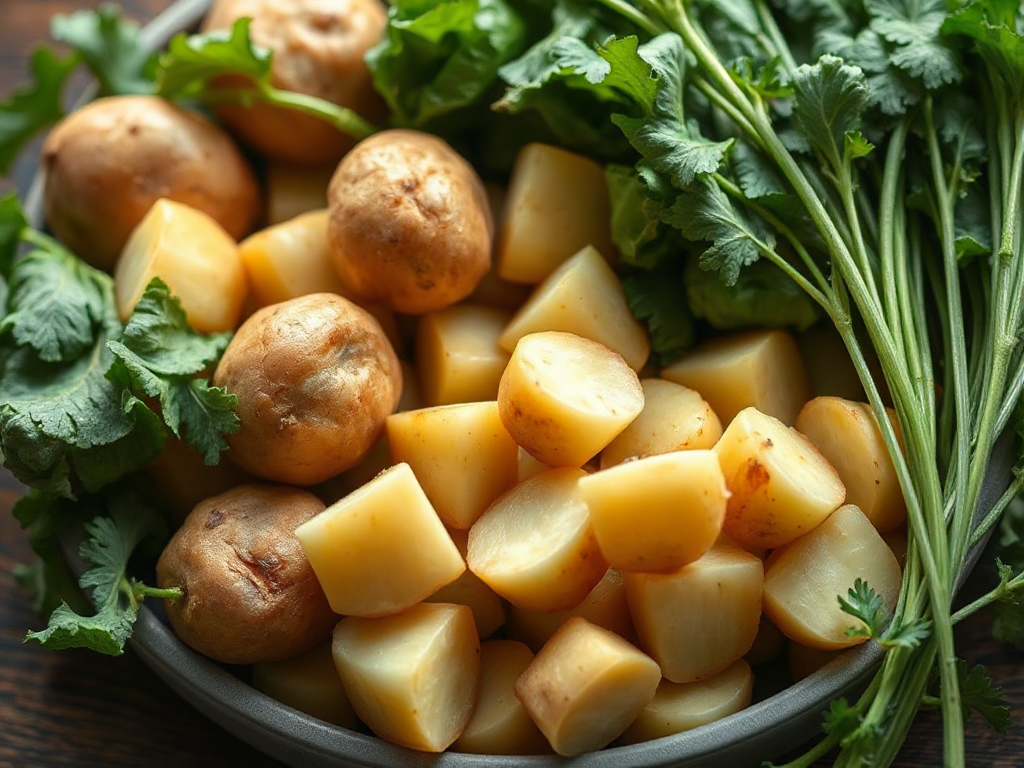
Organic vegetables with resistant starch after cooling are mainly cooked potatoes and other starchy vegetables whose digestible starch partly changes into retrograded starch as they chill. Cooling a thoroughly cooked potato, sweet potato, or green banana for several hours can increase resistant starch, while reheating may preserve some but not necessarily all of that change. The effect varies with vegetable type, cooking method, cooling duration, and starch structure, so it should not be treated as a precise carbohydrate calculation. Chill cooked vegetables promptly in shallow containers, refrigerate them, and use them within a reasonable food-safety window rather than leaving them at room temperature. Resistant starch may support fermentation by gut bacteria, but it is not a treatment for any condition.
Which Cooked Vegetables Develop Resistant Starch?
Resistant starch is a portion of starch that is not fully broken down in the small intestine. It passes farther into the digestive tract, where gut microbes can ferment some of it. Among organic vegetables, the clearest everyday example is the potato: cooking softens its starch, and cooling allows part of that starch to reorganize into a form that is less accessible to digestive enzymes.
Sweet potatoes may also develop some resistant starch after cooking and chilling, although the amount depends on their variety, maturity, moisture, and preparation. Green bananas are botanically fruits but are often used like a starchy vegetable; they contain substantial resistant starch even before cooking, with levels changing as they ripen. Beans and lentils are legumes rather than vegetables, yet they are relevant comparisons because their starch and fiber structure can also respond to cooking and cooling.
Leafy greens, cucumbers, tomatoes, peppers, mushrooms, and most non-starchy vegetables are not meaningful sources of cooling-induced resistant starch because they contain little starch to begin with. Cooling roasted broccoli may change texture and flavor, but it does not turn it into a major resistant-starch food. That distinction prevents a common mistake: treating every chilled organic vegetable as though refrigeration creates resistant starch from scratch.
A useful starting set includes:
- Cooked white or red potatoes, cooled in the refrigerator.
- Cooked sweet potatoes, tested in moderate portions.
- Green cooking bananas where they are available and culturally familiar.
- Beans, peas, and lentils as related foods with their own starch and fiber profiles.
The organic label concerns production methods, not a special chemical form of starch. An organic potato can develop resistant starch after cooling, but a conventionally grown potato can undergo the same starch change. Choosing organic may reflect farming preferences or residue concerns; it should not be presented as the reason resistant starch forms. Readers comparing options should prioritize the vegetable’s starch content, cooking process, portion, and storage rather than assume organic status changes the cooling mechanism.
What Cooling Changes in Vegetable Starch
Heat and water loosen the structure of raw starch granules during cooking. This process, commonly called gelatinization, makes starch easier for digestive enzymes to access. When the cooked food cools, some starch molecules realign and form tighter structures. This reorganization is often called retrogradation, and part of the reorganized material behaves as resistant starch.
Cooling does not remove carbohydrate from a potato or make the entire serving indigestible. It changes how a fraction of the starch is handled. The result can vary substantially between a boiled potato salad, a baked potato that has been chilled, and mashed potatoes stored overnight. Moisture, surface area, cooking temperature, cooling time, and the potato’s starch composition all influence the final structure.
Texture offers a practical clue, though it is not a laboratory test. A chilled potato may become firmer or slightly waxier because its starch network has tightened. Reheating can soften that texture and may preserve some resistant starch, but the final amount depends on the reheating conditions. A reader should not assume that cold food automatically contains more resistant starch than warm food in a fixed, predictable quantity.
Digestive response also differs between people. Resistant starch is fermented by microbes in the colon, which can produce short-chain fatty acids and gas. Some people tolerate a chilled potato salad comfortably; others notice bloating when they suddenly increase resistant starch. That response does not prove the food is harmful, but it does signal that portion size and gradual introduction matter.
Cooling should therefore be viewed as a food-structure technique, not a carbohydrate cancellation method. A chilled potato still supplies energy and should still be counted within an individual’s eating pattern when carbohydrate management matters. Pairing it with vegetables, beans, eggs, fish, tofu, or another protein can make the meal more balanced, but pairing does not guarantee a particular blood-glucose response. The useful question is not whether cooling makes a food “free,” but whether the altered texture and digestion fit the person’s goals and tolerance.
Cooking, Cooling, and Reheating Methods
The most practical method is to cook a starchy vegetable until tender, cool it promptly, refrigerate it, and use it as a chilled or gently reheated component. Boiled potatoes work well in salads because their pieces remain distinct after cooling. Roasted potatoes may develop a firm interior and crisp exterior, but their exposed surfaces can dry during refrigeration. Mashed potatoes can be cooled too, although their dense texture makes rapid chilling more important.
Use a simple process:
- Cook the potato or sweet potato thoroughly rather than relying on cooling to correct undercooking.
- Divide it into shallow portions so heat leaves the food efficiently.
- Refrigerate the portions promptly instead of holding them on the counter for extended periods.
- Eat them cold, or reheat gently until evenly hot if a warm meal is preferred.
- Judge tolerance by portion and symptoms, not by a promise of a specific resistant-starch increase.
A potato salad illustrates the tradeoff. Chilled potato pieces mixed with vinegar, herbs, olive oil, and crunchy vegetables may be satisfying and convenient. Heavy mayonnaise, prolonged warm holding, or repeated temperature changes create separate quality and safety concerns that cooling itself does not solve. A batch prepared for several days should be divided before storage rather than repeatedly opened, warmed, and returned to the refrigerator.
Reheating is a preference decision. Cold potatoes may retain more of the reorganized starch than aggressively reheated potatoes, but a warm serving can be easier to enjoy and may still contain some resistant starch. Gentle reheating avoids turning the outside dry while the center remains cool. Microwaving in a covered container with a small amount of moisture can improve texture, whereas high heat for too long may produce a leathery surface.
Common mistakes include cooling an undercooked potato, leaving a large hot dish to cool slowly at room temperature, and treating one preparation as nutritionally identical to another. Another weak assumption is that longer refrigeration always produces proportionally more resistant starch. Food structure does not respond in a simple consumer-facing schedule, and safety should never be sacrificed to chase a theoretical increase.
Storage, Digestion, and Practical Meal Decisions
Food safety comes before resistant-starch optimization. Cooked vegetables should be moved into shallow containers, kept refrigerated, and protected from repeated warming. A large, deep pot cools slowly, so it is less suitable for storing a batch than several smaller containers. If the food smells sour, shows mold, develops unusual slime, or has been held under uncertain temperature conditions, discard it rather than tasting it to decide.
Portion size is the most controllable variable for people who are new to chilled starchy foods. Begin with a modest serving alongside protein and non-starchy vegetables, then observe fullness, bowel changes, and comfort over the next day. Gas or bloating can occur because resistant starch reaches microbes that ferment it. Increasing portions rapidly, especially alongside beans, onions, or large amounts of other fermentable carbohydrates, may make the digestive load feel greater.
People managing diabetes or another carbohydrate-sensitive condition should not use cooling as a substitute for individualized monitoring. The total carbohydrate in the meal, potato variety, portion, fiber, cooking method, and personal response all matter. A chilled potato may produce a different glucose pattern from a freshly mashed potato for some people, but the direction and size of that difference are not guaranteed. A clinician or registered dietitian can help interpret readings and fit the food into a specific plan.
Organic purchasing also involves practical tradeoffs. Organic potatoes may cost more or have a shorter usable life depending on storage conditions. Scrubbing and removing damaged areas remain sensible preparation steps; organic certification does not eliminate spoilage or contamination risk. If budget is tight, buying the freshest suitable starchy vegetables and storing them safely may matter more to this specific starch question than paying a premium for the label.
For a useful trial, prepare one batch of boiled potatoes, chill it in separate portions, and compare a cold serving with a gently reheated serving on different days. Keep the portion and meal companions reasonably similar. Record comfort, texture, and any personally relevant glucose information without treating the result as a universal experiment. The approach is working when the food is enjoyable, safely stored, and tolerated; it is failing when portions trigger persistent symptoms or storage becomes difficult to control.
Readers seeking a broader view can connect this topic with organic vegetables with resistant starch after cooling while keeping the central distinction clear: cooling affects starchy foods, not vegetables simply because they are served cold.
Frequently Asked Questions
Which organic vegetables gain the most resistant starch after cooling?
Potatoes are the most practical example. Sweet potatoes may develop some as well, while leafy and non-starchy vegetables contribute little cooling-induced resistant starch.
How long should cooked potatoes cool?
Cool them promptly in shallow containers and refrigerate them rather than leaving them at room temperature for an extended period. The exact resistant-starch amount cannot be predicted from time alone.
Does reheating destroy resistant starch?
Reheating can alter the starch structure and may reduce some of the cooling-related effect, but it does not necessarily remove all resistant starch. Gentle reheating is a reasonable texture-focused option.
Are organic potatoes better for resistant starch?
Organic production does not create resistant starch. The relevant variables are the potato's starch structure, cooking method, cooling, reheating, portion, and storage.
Can chilled potatoes lower blood sugar?
Cooling may change the digestion of part of the starch, but it is not a treatment and does not guarantee a lower glucose response. Individual monitoring and professional dietary advice may be appropriate.
Conclusion
Cooling cooked potatoes is a practical way to create some resistant starch through starch retrogradation, but the effect is variable and limited to a portion of the food’s starch. Choose a genuinely starchy vegetable, cook it fully, divide it into shallow containers, refrigerate it promptly, and select cold or gently reheated portions according to texture and tolerance. Keep organic status separate from the chemistry: it may reflect purchasing values, but it does not determine whether resistant starch forms. Treat chilled potatoes as carbohydrate-containing food, introduce them gradually if digestive sensitivity is a concern, and never extend room-temperature holding to pursue a nutritional theory. A small, consistently stored serving gives more useful personal information than making large assumptions about cooling alone.
Further Reading
Authoritative Sources
- Cooling Some Foods After Cooking Increases Their ...
healthline.comOne type of resistant starch is formed when foods are cooled after cooking. This process is called starch retrogradation (11). It occurs when ...
- Harnessing the power of resistant starch: a narrative review of ...
pmc.ncbi.nlm.nih.govCooling/storage. Storage conditions, particularly cooling after cooking, play key role for the RS content in foods. Cooling after cooking is ...
- Does cooling starchy food after cooking really lower its calories?
health.osu.eduGenerally it's recommended the carbohydrate be refrigerated for at least 24 hours. Recommended Read. Your weight is determined by many factors, ...
- Resistant starch: Can you make the carbs you eat a little ...
health.harvard.eduResistant starch feeds beneficial gut bacteria and may improve blood sugar control. But does this trendy carbohydrate really make the carbs ...