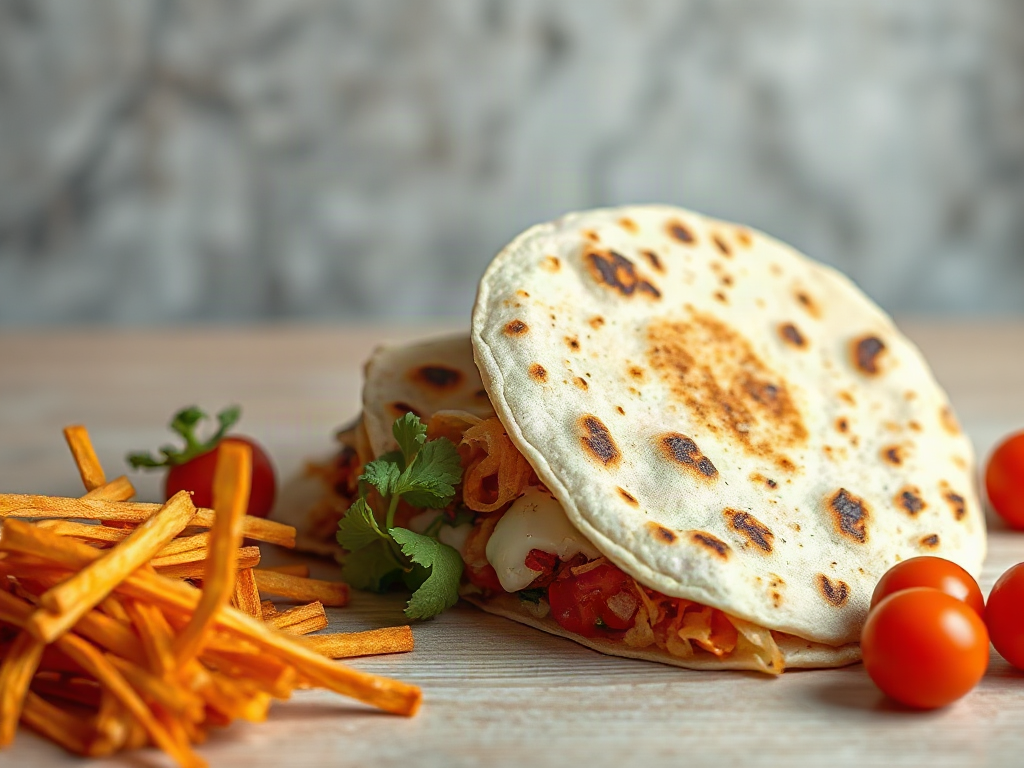
Tortilla nutrition varies most with the grain used, tortilla size, filling, and number served: corn tortillas are often smaller and portion-friendly, while large flour tortillas can contribute more calories, sodium, and refined carbohydrate before fillings are added. Whole-grain options may provide more fiber, but the ingredient list and Nutrition Facts panel matter more than color or front-label claims. Beans, vegetables, eggs, fish, chicken, and modest amounts of cheese create different protein, fiber, and saturated-fat profiles. For a balanced meal, compare serving sizes first, then pair one or two appropriately sized tortillas with a protein-rich filling, vegetables, and sodium-conscious sauces.
How Do Tortilla Grains Change Nutrition?
The grain establishes the tortilla’s basic carbohydrate, fiber, fat, and mineral profile, but the finished product matters more than the grain name alone. Traditional corn tortillas are commonly made from treated corn, water, and salt. Flour tortillas usually contain wheat flour plus added fat, salt, and leavening agents. Whole-wheat and other whole-grain versions retain more of the grain kernel, which may raise fiber and micronutrient content compared with a similar refined product.
Corn tortillas are frequently smaller than supermarket flour tortillas, so a one-to-one comparison can be misleading. A small corn tortilla may appear much lighter nutritionally because it contains less food, not solely because corn has an inherent advantage. Compare equal weights or the amount actually eaten. Two small corn tortillas and one medium flour tortilla may occupy similar roles in a meal, whereas a large wrap can represent several times the surface area and food weight of one street-taco tortilla.
Processing and formulation create meaningful differences within each category. Some flour tortillas contain substantial added oil, shortening, or sodium to improve softness and shelf life. A whole-wheat label does not guarantee that whole wheat is the first ingredient, and a brown color does not prove that a product is predominantly whole grain. Corn tortillas can also vary in sodium, thickness, and additives. Check the ingredient order alongside calories, fiber, saturated fat, and sodium per labeled serving.
Nixtamalized corn—the alkaline-treated corn traditionally used for tortillas—has different culinary and mineral characteristics from untreated cornmeal. That distinction does not make every corn tortilla nutritionally identical, however. Formulation, fortification, portion weight, and preparation still affect the final values. Wheat tortillas may supply more protein per piece, partly because of gluten-containing wheat and often because the tortilla itself is larger.
A practical grain choice depends on the meal and the eater. Corn tortillas can suit smaller tacos and are naturally free of wheat, although people avoiding gluten should still check packaging for ingredients and cross-contact statements. Whole-wheat tortillas can be useful when additional fiber is wanted and the flavor works with the filling. Refined flour tortillas may offer flexibility and a neutral taste, but oversized versions can dominate the meal. The common mistake is declaring one grain universally healthiest without matching product weight, ingredient quality, and serving count.
Why Do Size and Serving Count Matter?
Diameter, thickness, and count often influence the meal more than whether the tortilla is corn or wheat. Package servings are not standardized to a single physical size: one label may define a serving as one large tortilla, while another lists two or three small tortillas. Comparing only the numbers in the nutrition panel without checking grams per serving can produce the wrong conclusion.
Use the labeled gram weight as the comparison anchor. If one product lists 30 grams per tortilla and another lists 70 grams, the larger option should be expected to contain more total carbohydrate and energy even when their ingredients are similar. For the meal actually planned, multiply the label values by the number of servings eaten. This step is particularly relevant for sodium because tortillas, cheese, seasoned meat, canned beans, salsa, and packaged sauces can each contribute salt.
| Serving Pattern | What to Check | Practical Interpretation |
|---|---|---|
| Two small corn tortillas | Total gram weight and sodium | Often supports portioned fillings, but values from both tortillas must be counted |
| One medium flour tortilla | Added fat, saturated fat, and fiber | May be comparable to several smaller tortillas depending on weight |
| One large wrap | Servings per package and calories per piece | Can become the meal’s largest carbohydrate source before fillings |
| Three or more tacos | Combined tortillas, toppings, and sauces | Repeated small additions can produce a substantially different total |
Preparation can add another layer. Heating a tortilla on a dry skillet changes texture but adds no cooking fat. Frying it for a crisp shell or tostada introduces oil, and the amount retained varies with technique. Brushing a tortilla with oil before baking also changes its fat and calorie content, even if it is described as baked rather than fried. The Nutrition Facts panel for a plain tortilla does not account for oil added at home.
Portion needs are personal and can shift with appetite, activity, age, medical considerations, and what accompanies the tortillas. A single taco may be too little for a full meal, while a restaurant-sized burrito tortilla may be more wrapper than someone wants. A useful sign that the portion is working is that the plate has room for a meaningful filling and vegetables rather than relying on extra tortillas for fullness. If the meal feels bread-heavy, leaves little space for protein or produce, or repeatedly exceeds a sodium target advised by a clinician, reassess tortilla size before eliminating the entire food.
How Do Fillings Reshape the Meal?
The filling determines whether tortillas become a fiber-rich bean meal, a protein-focused breakfast, a vegetable-forward lunch, or a dish high in sodium and saturated fat. Tortillas provide structure and carbohydrate, but they rarely account for the complete nutritional character of tacos, enchiladas, quesadillas, or wraps. Evaluating the assembled plate is therefore more useful than ranking wrappers in isolation.
Beans and lentils add plant protein, fiber, potassium, and carbohydrate. A pair of corn tortillas filled with black beans, cabbage, tomato, and avocado has a different profile from the same tortillas filled mainly with cheese and sour cream. The first combination spreads volume across legumes and vegetables; the second can supply protein and calcium but may contain more saturated fat and sodium, particularly when generous portions are used.
Eggs, poultry, fish, tofu, and lean meat can make a tortilla meal more protein-dense. Preparation still matters. Grilled fish with slaw is not nutritionally equivalent to battered fish with creamy sauce, even when the tortilla is unchanged. Likewise, plain shredded chicken differs from heavily salted packaged chicken or cured meats. Choose a filling based on the nutrient the meal otherwise lacks rather than adding protein automatically to an already substantial combination.
Vegetables contribute volume, texture, and a broader mix of nutrients, but their effect can be diluted by how they are prepared. Peppers and onions cooked in a modest amount of oil are different from deep-fried vegetables. Fresh salsa can add produce and flavor, yet commercial salsa may also be a meaningful sodium source. Guacamole contributes unsaturated fat and fiber; cheese, crema, and mayonnaise-based sauces tend to add more saturated fat, although exact values depend on the product and portion.
Consider three practical combinations. For breakfast, a whole-wheat tortilla with egg, sautéed spinach, and tomato balances carbohydrate with protein and vegetables. For lunch, corn tortillas with pinto beans, cabbage, salsa, and a small amount of cheese provide a mixed plant-based meal. For dinner, a flour tortilla with grilled chicken, peppers, lettuce, and yogurt-based sauce can work when the tortilla is proportionate to the filling. A frequent failure mode is using several calorie-dense toppings together—cheese, crema, avocado, and oily sauce—without recognizing that each may be reasonable alone but collectively changes the meal.
Building a Balanced Tortilla Meal
A balanced tortilla meal is assembled by checking the wrapper, choosing a substantial filling, adding produce, and controlling concentrated extras. Balance does not require a perfect nutrient ratio or a special tortilla. It means the serving combination fits the person’s needs and does not allow one component—an oversized wrap, salty filling, or heavy topping—to crowd out the rest.
Begin with the intended format. Small tacos naturally divide fillings across multiple pieces, while a burrito concentrates everything in one large tortilla. Quesadillas place cheese at the center, so vegetables, beans, or lean protein can broaden the meal, and the cheese portion can be chosen deliberately. Enchiladas include sauce and often cheese, making sodium across all components more relevant than tortilla grain alone.
- Confirm the serving: Check tortilla weight, pieces per serving, and how many pieces you expect to eat.
- Select a protein and fiber anchor: Use beans, lentils, eggs, tofu, fish, poultry, or another filling appropriate to the meal.
- Add vegetables: Cabbage, lettuce, tomatoes, peppers, onions, mushrooms, squash, and greens add volume and contrast.
- Choose concentrated toppings intentionally: Account for cheese, crema, guacamole, oil, and sauces rather than treating them as nutritionally invisible.
- Review sodium across the plate: Check the tortillas, canned or seasoned filling, cheese, salsa, and sauce together.
Budget and convenience affect the best combination. Canned beans are quick and economical; draining and rinsing may reduce some surface sodium, though the final amount varies. Frozen vegetables can be practical when fresh produce is unavailable. Rotisserie chicken saves time but may be saltier than home-cooked chicken. Store-brand corn tortillas with beans and cabbage can form a satisfying meal without specialty products.
Dietary constraints require label-level decisions. Anyone with celiac disease or medically necessary gluten avoidance should not assume that every corn tortilla is safe; wheat ingredients and manufacturing cross-contact need to be assessed from the package and, when necessary, the manufacturer. People managing diabetes, kidney disease, food allergies, or clinician-directed sodium restrictions may need individualized guidance because grain, carbohydrate portion, potassium, phosphorus, and sodium priorities can conflict.
Judge the approach by repeatable outcomes rather than health claims on the package. A useful combination should fit appetite, be practical to prepare, and leave room for protein and produce. If the meal repeatedly relies on extra tortillas because the filling is sparse, increase beans, vegetables, or another substantial filling first. If sodium or saturated fat is the concern, inspect sauces, cheese, processed meat, and portion count before blaming the tortilla alone.
Conclusion
Choose tortillas by evaluating the meal you will actually assemble, not by relying on grain labels alone. Start with gram weight and serving count, then compare fiber, sodium, added fat, and ingredients among products that serve the same purpose. Build the filling around beans, eggs, tofu, fish, poultry, or another suitable protein source, and use vegetables for volume and variety.
Pay particular attention to large wraps, fried preparation, processed fillings, cheese, and bottled sauces because their effects can accumulate quietly. A smaller corn tortilla is not automatically the right choice, and a whole-grain tortilla does not compensate for an unbalanced filling. Read the package, total every tortilla eaten, and adjust the combination to appetite, budget, dietary restrictions, and clinician-directed needs. That meal-level comparison gives a more accurate picture than ranking a single tortilla in isolation.
Frequently Asked Questions
Are corn tortillas healthier than flour tortillas?
Neither is automatically healthier. Corn tortillas are often smaller and may have simpler ingredient lists, while whole-wheat flour tortillas may offer more fiber. Compare equal serving weights, sodium, added fat, fiber, and the planned number of tortillas.
How many tortillas make a reasonable serving?
There is no universal number because tortilla diameters and weights vary widely. Use the package serving as a reference, calculate the number you will eat, and adjust for the filling, side dishes, appetite, and any individualized nutrition goals.
Does a whole-grain label guarantee more fiber?
No. Check whether a whole grain appears first in the ingredient list and compare fiber per equal gram weight. Product formulations vary, and color or front-package wording alone does not establish whole-grain content.
Which tortilla filling adds both protein and fiber?
Beans and lentils provide both nutrients and work with corn, flour, or whole-grain tortillas. Tofu can contribute protein, while vegetables add additional fiber; exact amounts depend on the food and portion.
What is the easiest way to lower sodium in a tortilla meal?
Compare lower-sodium tortillas, then limit stacked sources such as seasoned meat, cheese, canned fillings, salsa, and bottled sauce. Flavor can come from lime, herbs, fresh vegetables, chiles, or salt-free spices.